Common aeration devices in aquaculture include paddle-wheel and impeller aerators, floating aerators, microporous bottom aeration with tubes or discs, nano-tube aeration and blower-driven diffuser systems. They move the same gas into the same water in very different ways, and the difference decides which one fits a given pond, depth and power bill.
Paddle-wheel and impeller aerators (叶轮式增氧机)
The classic surface aerator: an impeller or paddle wheel throws water into the air so oxygen dissolves at the splash, and the surface current pushes the oxygenated water outward.
| Pros | Cons |
|---|---|
| Simple, robust, widely available | Only oxygenates the top 30-50 cm |
| Easy to service with basic tools | High power draw per kg of oxygen transferred |
| Works as a strong surface current in still ponds | Noisy, and the splash damages fry in nursery ponds |
Best for: shallow ponds (under 1.5 m), emergency aeration, and ponds where the main problem is surface stagnation rather than bottom oxygen debt.
Floating aerators (浮水式增氧机)
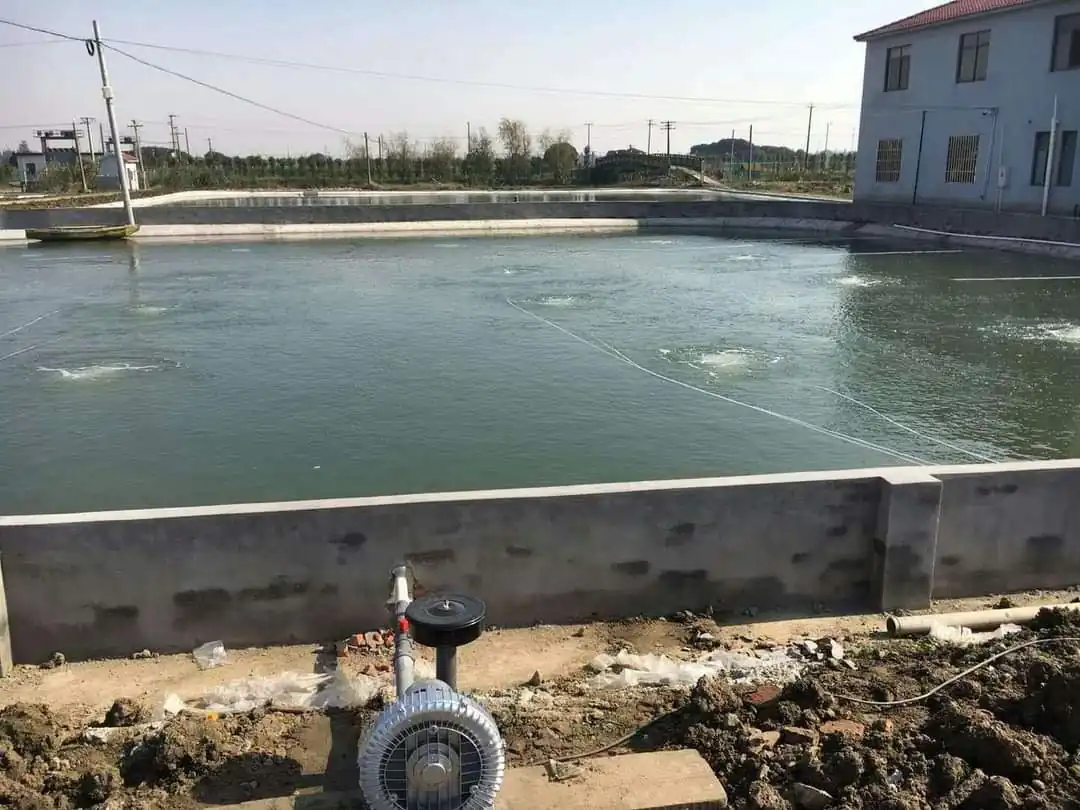
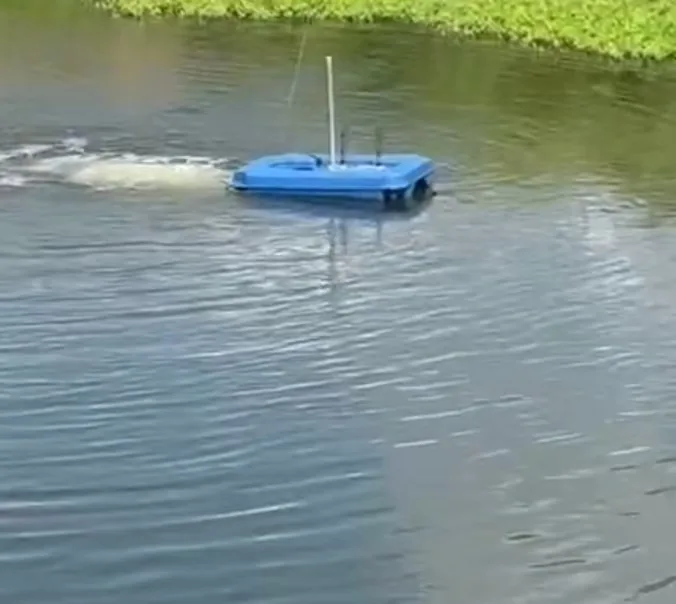
A float-mounted unit that lifts water, stirs and aerates from one hull — paddle-wheel and wave types both belong here, and most pond farms in South and Southeast Asia run this shape.
| Pros | Cons |
|---|---|
| Set up in minutes, movable between ponds | Mechanical wear points (bearings, shaft seals) |
| No civil works, no draining | Surface action only — the bottom stays anoxic |
| Good for emergency and hot-weather use | Multiple units needed as stocking rises |
A pond aerator of this type is the right first purchase for a farm that has to see a result this season; it is rarely the last one, because the sludge layer keeps growing underneath it.
Microporous bottom aeration (tubes and discs) (微孔底增氧)
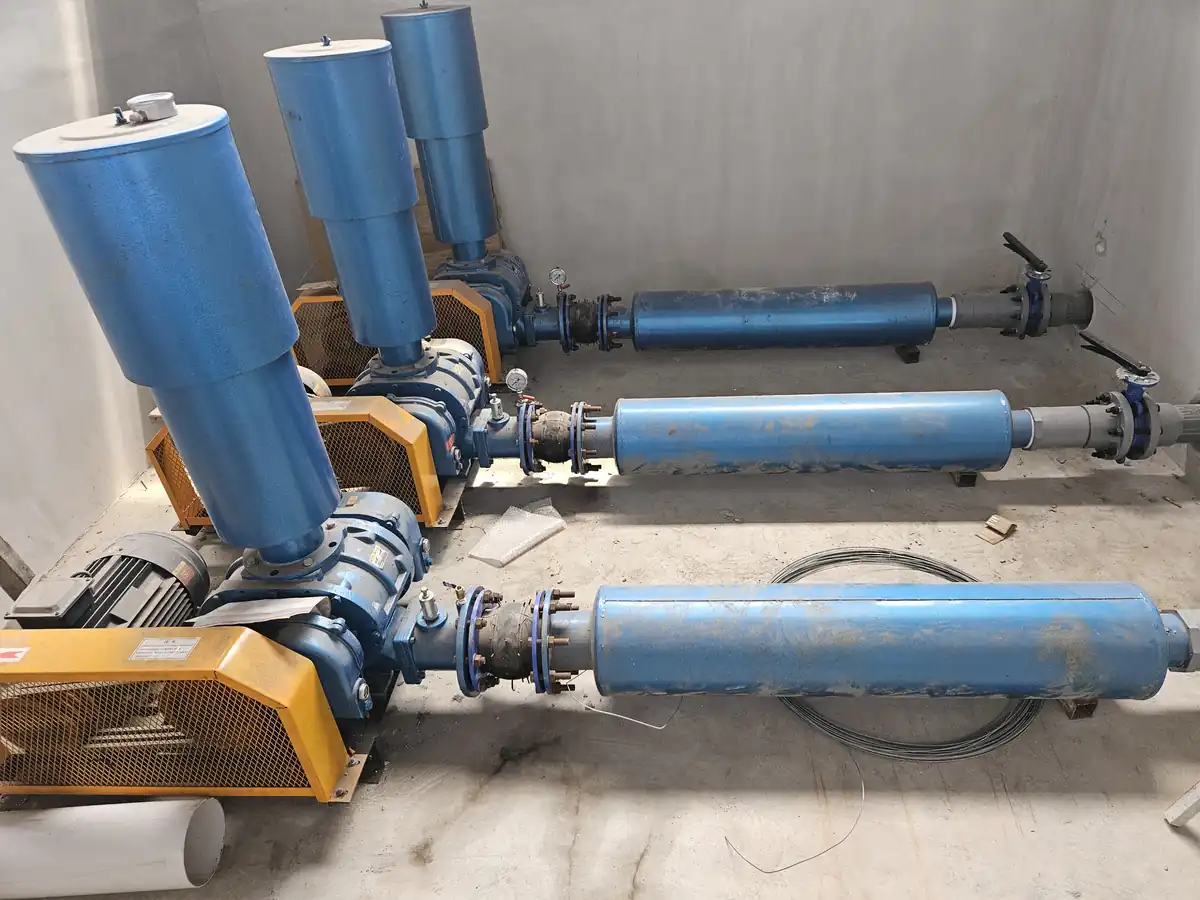
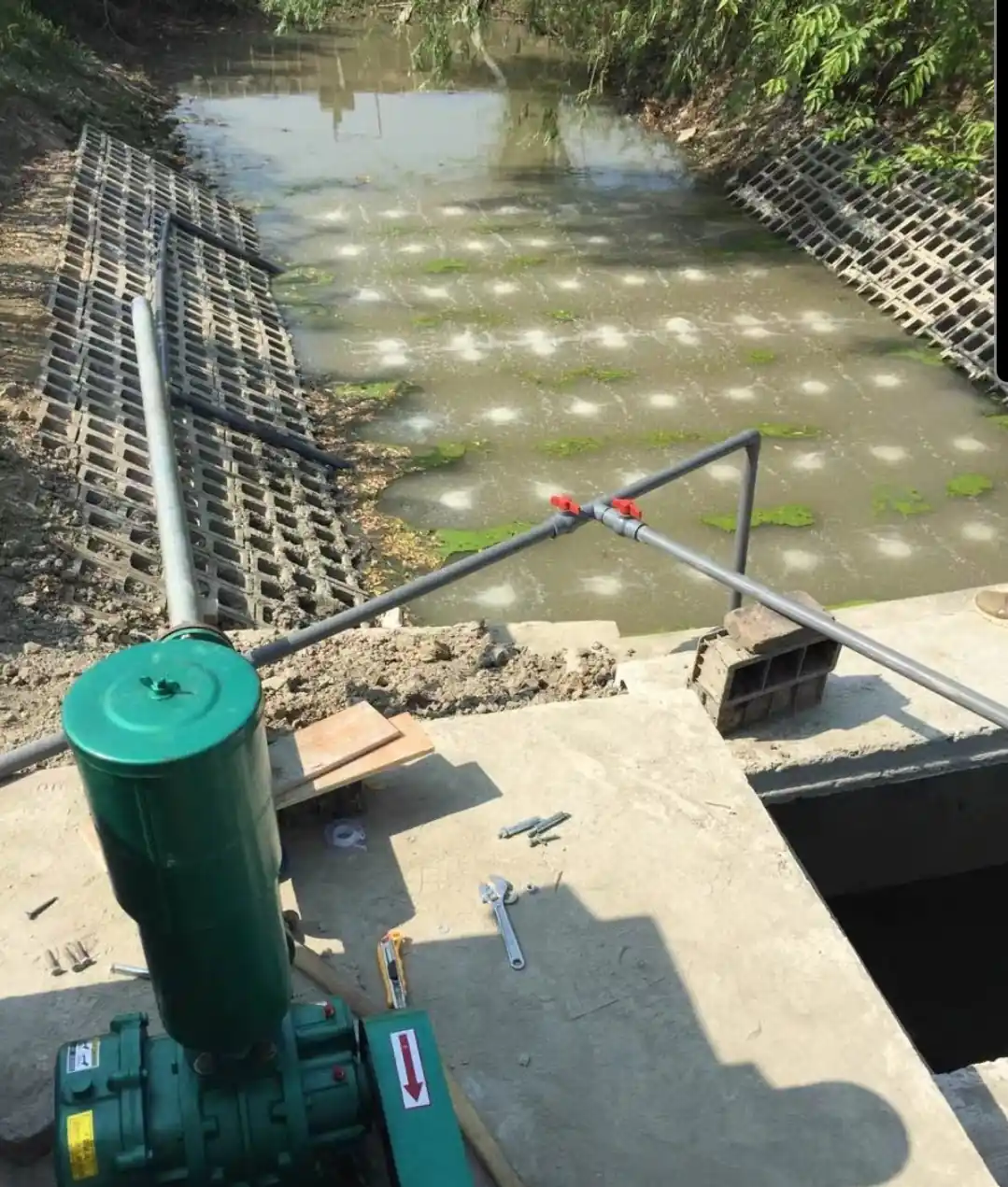
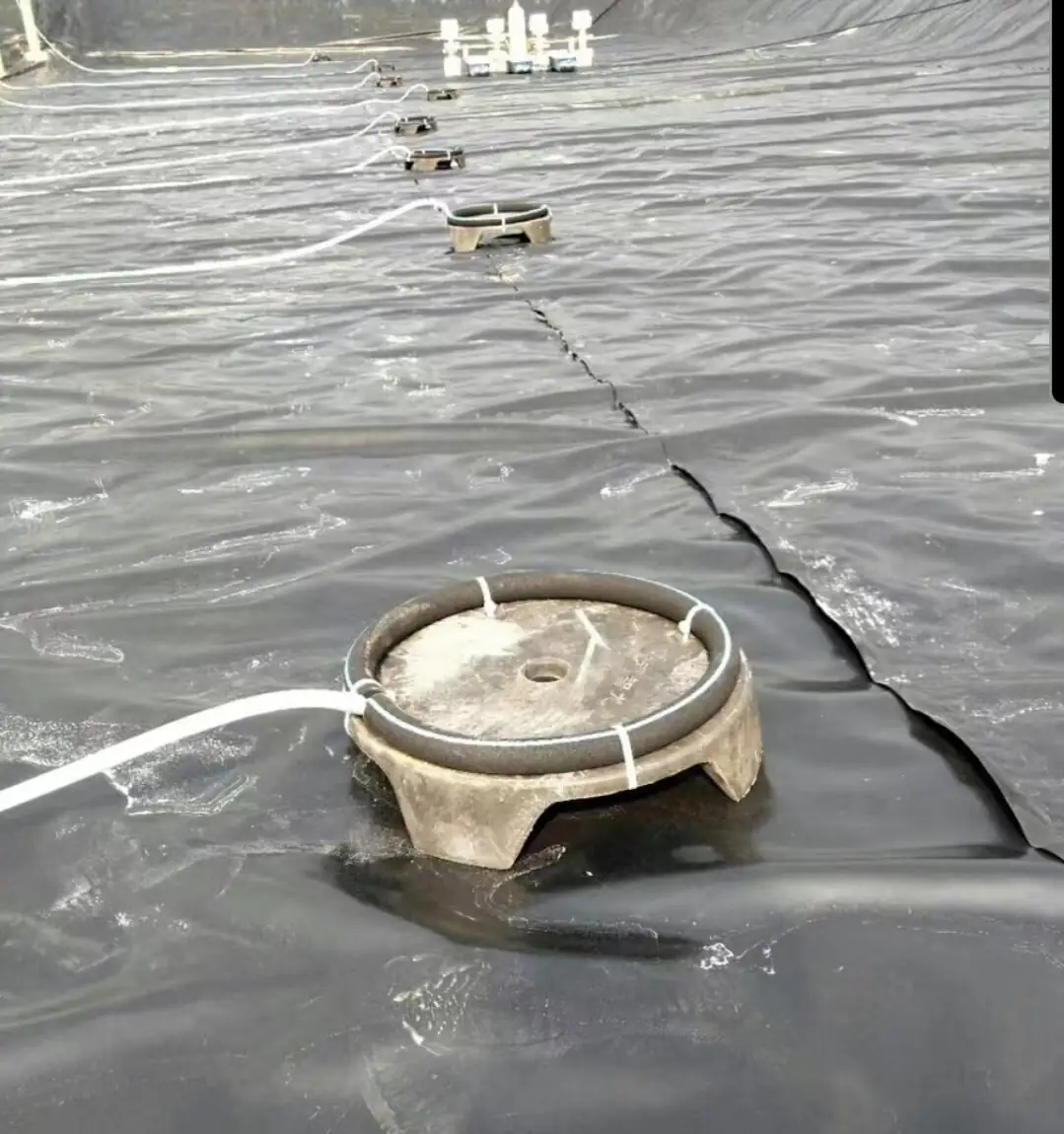
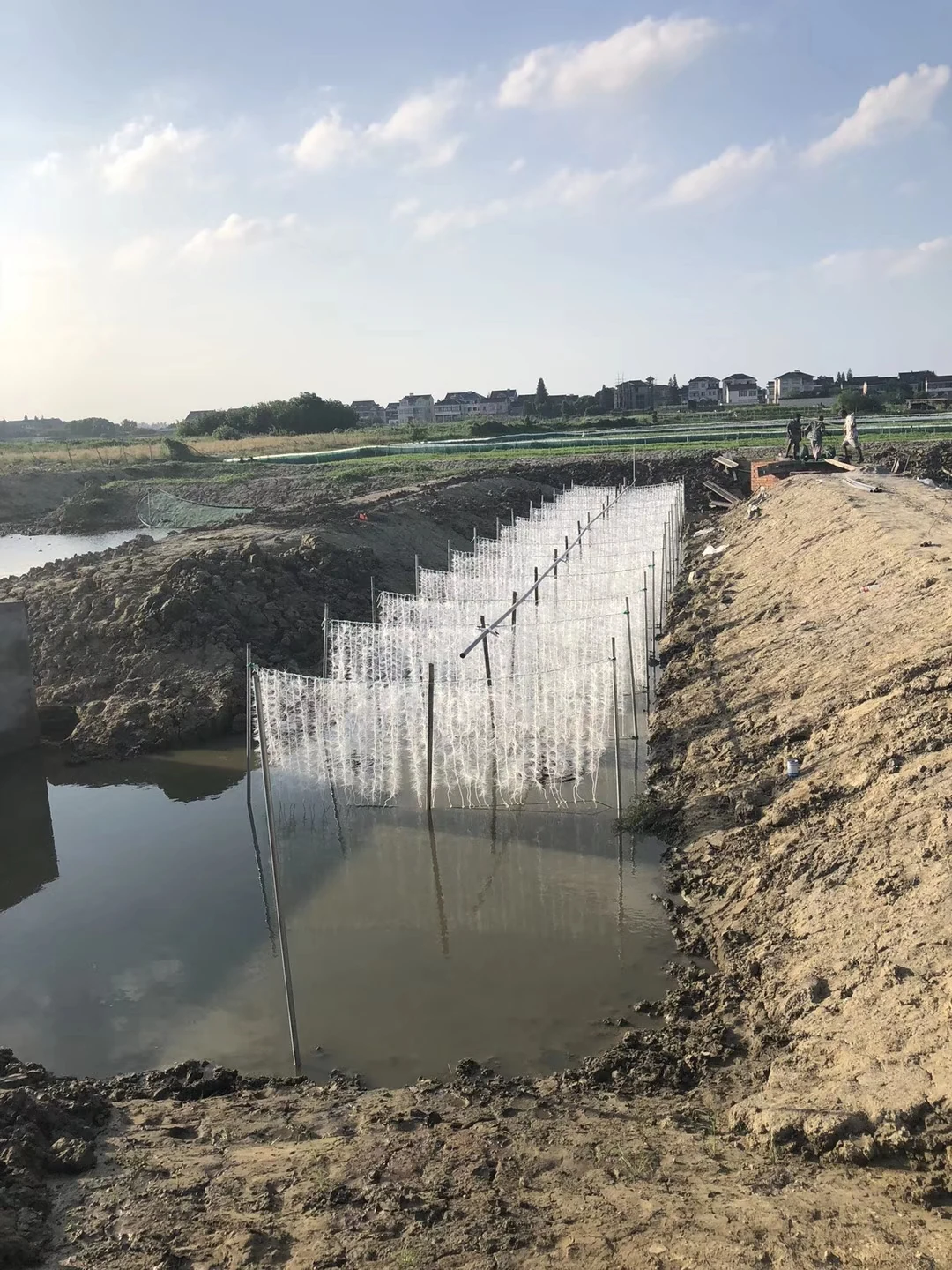
Air is pushed through a roots blower on the bank, along PVC mains and branch lines, and released at the pond bottom through microporous tubes or discs as fine bubbles 0.5-2 mm across. The bubbles dissolve as they rise, and the rising column drags oxygen-rich surface water back down.
| Pros | Cons |
|---|---|
| Oxygen dissolves where the demand is — at the bottom | Higher up-front cost than a single surface unit |
| 60-80% less electricity than splashing for the same effect | Tubing is a consumable; sludge and algae need managing |
| Raises stocking density without adding ponds | Needs a blower room or weatherproof housing |
| No electrics in the water; tubes resist debris | Sizing mistakes are expensive (too small a blower) |
Design rules that hold up in practice: tubing 10-15 cm above the bottom, rows 3-5 m apart, about 60 m of tubing and roughly 0.1-0.15 kW of blower power per mu, and one blower per 100-150 m of tubing.
Nano-tube aeration (纳米管增氧)
A finer-pore version of the same idea: the tube wall releases a denser curtain of smaller bubbles, so the same air volume contacts more water. It suits ponds with heavy organic loading — shrimp grow-out, high-density crab ponds, and ponds converting from extensive to intensive farming.
| Pros | Cons |
|---|---|
| Highest oxygen-transfer efficiency of the bottom systems | Pores clog faster in dirty water — filtration and cleaning matter |
| Keeps sludge oxidised, reducing BOD at the bottom | Higher tube cost per metre |
| Works at 2 m and deeper without losing efficiency | Requires correct pressure; an undersized blower wastes the advantage |
Blower-and-diffuser systems in deep water
Where depth exceeds 3 m, surface machines lose their reach and the practical answer is a microporous aeration system driven by a positive-displacement blower, with the pressure rating chosen for the water column plus line losses.
Choosing between them
1. Depth first. Under 1.5 m, surface aerators are competitive; over 2 m, bottom aeration wins on both oxygen transfer and electricity.
2. Then the oxygen demand. Stocking density, feeding rate and species set how many kilograms of oxygen the pond consumes overnight — the daily minimum arrives at 5-6 AM, not at noon.
3. Then the budget shape. Surface units are cheap to start and expensive to run; bottom aeration is the reverse, and the payback shows up in the electricity bill within a few seasons.
4. Then the power supply. Off-grid sites combine a bottom system with solar and battery at roughly 1 kW of panel per kW of blower.
FAQ
Q: Which type of aeration equipment is best for a fish pond? A: For ponds deeper than about 2 m or any high-density operation, microporous bottom aeration transfers the most oxygen per kilowatt-hour. For shallow ponds under 1.5 m, a surface machine such as a paddle-wheel or floating aerator is often enough.
Q: Is a paddle-wheel aerator or bottom aeration cheaper to run? A: Bottom aeration. Field figures quoted in our own guides put the saving at 60-80% of electricity for the same oxygen transfer, because fine bubbles dissolve gas instead of throwing water into the air.
Q: Can I mix types on one farm? A: Yes, and many farms do: a floating unit for emergencies and hot afternoons, plus bottom tubing for the pre-dawn minimum. Keep at least one independently powered unit so a single failure cannot cause a total kill.
Q: How many aerators do I need per hectare? A: Work from oxygen demand rather than a fixed count. A practical starting point is 15-20 kW per hectare for intensive shrimp ponds with bottom aeration, then adjust after measuring dissolved oxygen at dawn for a week.
Q: What is the biggest mistake when buying aeration equipment? A: Sizing from a neighbour's setup. Pond volume, depth, species and feed rate all change the answer, and an undersized blower cannot be fixed by running it longer.