Microporous Aerator Tubes & Discs for Ponds
Microporous aeration delivers oxygen to the bottom layer where it is needed — the aeration tube and disc diffusers, laid as aeration tubing on the pond bottom, release fine 0.3–2 mm bubbles.
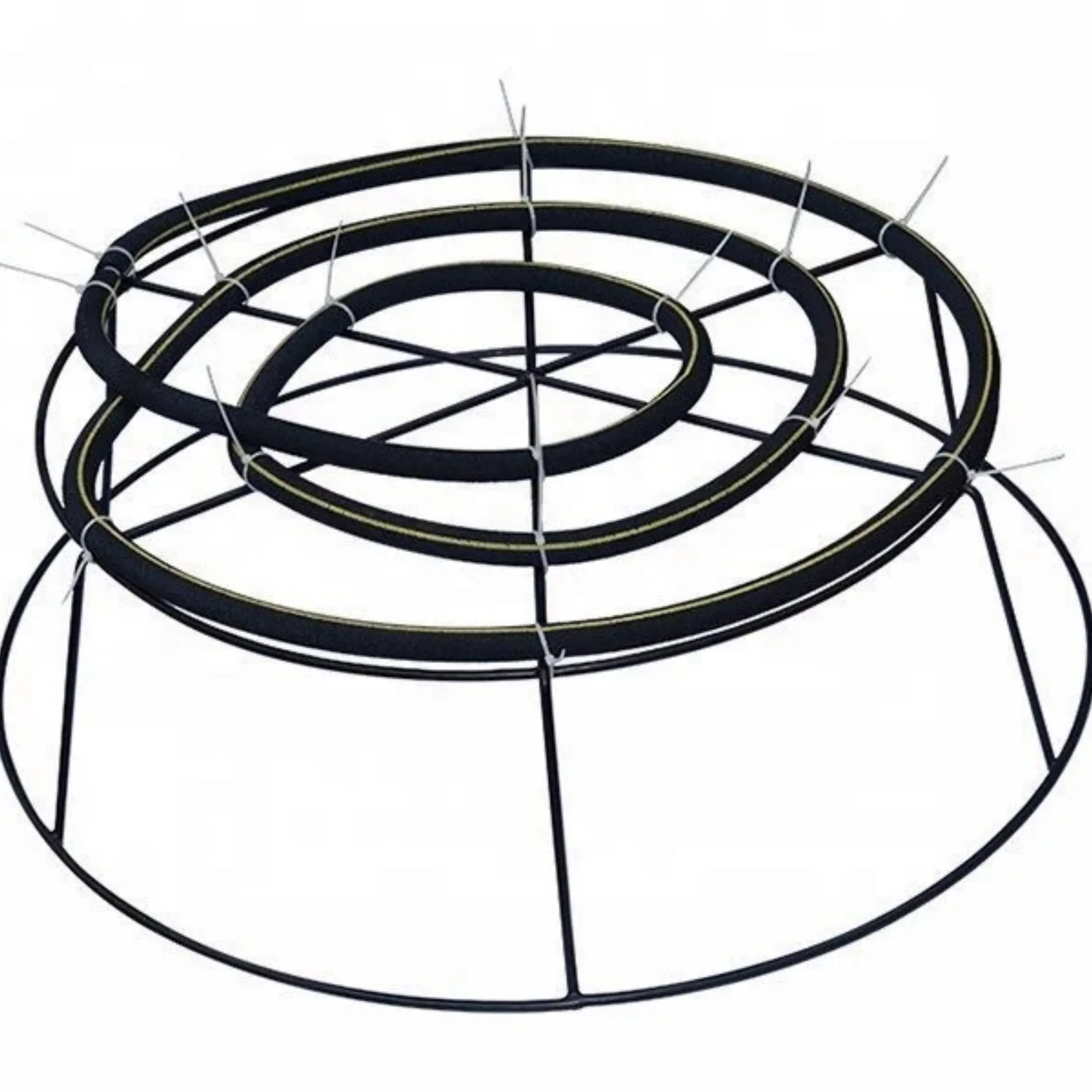
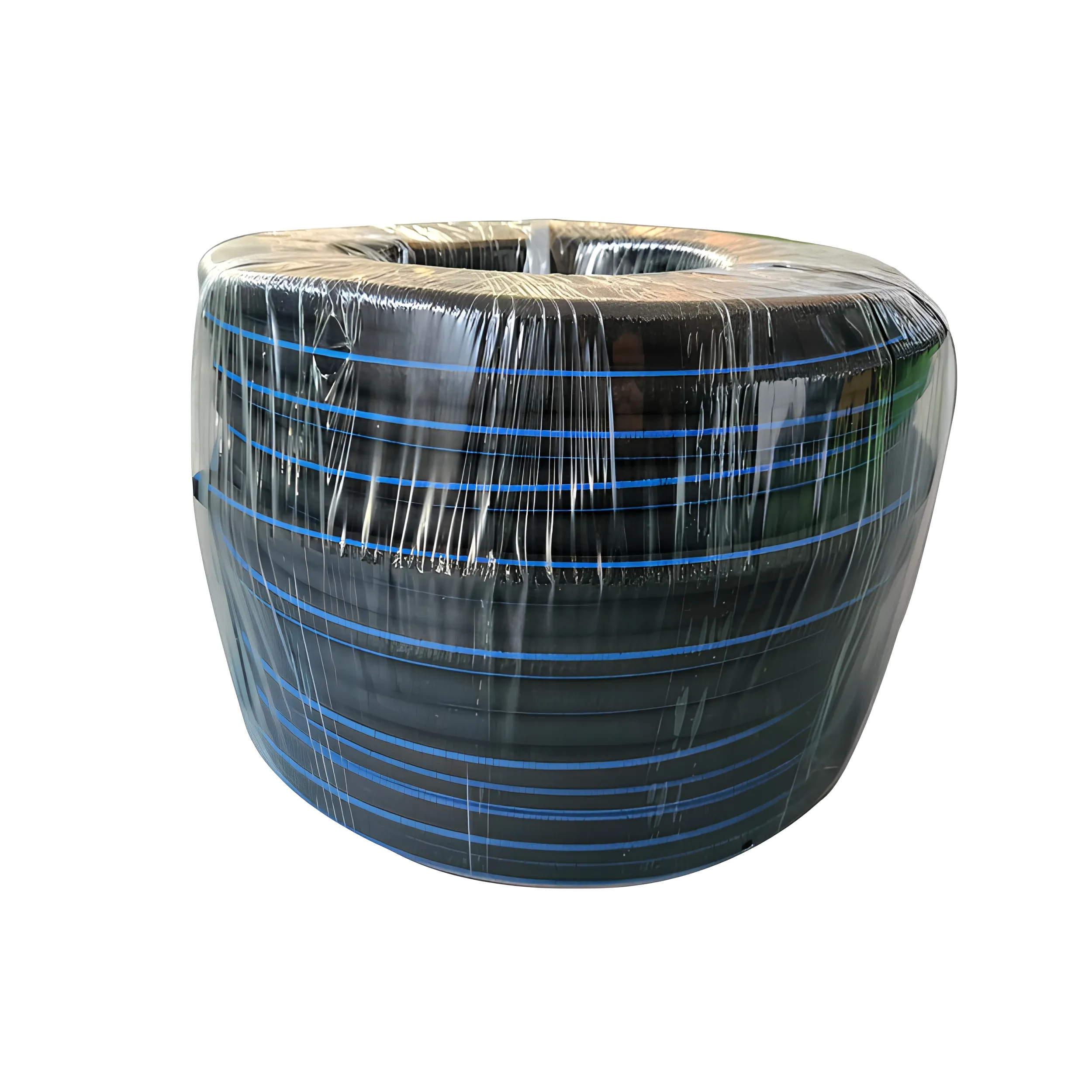
Aeration tube specifications
Technical specifications
| Parameter | Value |
|---|---|
| Bubble diameter | 0.3–2 mm (freshwater) / 0.5–3 mm (seawater) |
| Pore density | 1,000–1,600 pores/m (60–80 mesh / 40 mesh) |
| Air output | 0.002–0.006 m³/min·m |
| Working airflow | 0.1–0.4 m³/h·m |
| Service area | 1–8 m²/m |
| Setup reference | 1 kW motor ↔ 100–150 m of tubing |
| Energy use | ≈ 0.15 kW per mu (667 m²) |
| Water depth | 0–5 m; supply pressure 0.05–0.10 MPa |
Tubing size selection (inner × outer)
| Tube size (mm) | Typical use | Notes |
|---|---|---|
| 10×16 | Shallow ponds, live transport tanks | Lightest, easiest to handle |
| 10×20 | Standard pond rows | Most common all-round size |
| 10×25 | Deeper ponds, larger areas | Higher air output per metre |
| 12×25 | Deep ponds, high-density rows | Balanced flow and strength |
| 16×25 | Larger areas, heavier duty | High air output |
| 20×28 | Heavy-duty / RAS basins | Maximum air flow |
Blower selection guide (ZXMSR series)
| Pond area (mu) | Blower model | Tubing length |
|---|---|---|
| 1–3 | ZXMSR-65 | 100–300 m |
| 3–8 | ZXMSR-80 | 300–800 m |
| 8–15 | ZXMSR-100 | 800–1,500 m |
| 15–25 | ZXMSR-125 | 1,500–2,500 m |
| 25–40 | ZXMSR-150 | 2,500–4,000 m |
| 40–50 | ZXMSR-175 | 4,000–5,000 m |
Energy comparison
| Aeration method | Energy (per mu) | Note |
|---|---|---|
| Microporous bottom aeration | ≈ 0.15 kW/mu | Oxygenates the bottom layer where it is needed |
| Paddle-wheel aerator | ≈ 2× microporous | Mixes the surface only |
| Air stone / coarse bubbles | Higher | Lower transfer efficiency, more energy |
Air volume conversion: m³/min, m³/h and CFM
| Application | m³/min | m³/h | CFM |
|---|---|---|---|
| Air output per metre of tubing (as rated) | 0.002–0.006 | 0.12–0.36 | 0.07–0.21 |
| Working airflow per metre (design value) | 0.002–0.007 | 0.1–0.4 | 0.06–0.24 |
| A 100 m tubing run | 0.17–0.67 | 10–40 | 5.9–23.5 |
| A 500 m tubing run | 0.83–3.33 | 50–200 | 29.4–117.7 |
What microporous aeration does for a pond
Microporous aeration forces air through pores measured in fractions of a millimetre, so it leaves as a cloud of fine bubbles rather than a few coarse ones. Bubbles of 0.3–2 mm present far more surface per unit of air, so oxygen transfers faster and the bubbles are carried sideways through the water. The aim is to oxygenate the bottom layer, where stock rests and sediment consumes oxygen overnight — at roughly 0.15 kW per mu, down to about 5 m.
What a microporous aerator is made of
A microporous aerator is a sintered diffuser element on a rigid pipe. The element carries 1,000–1,600 pores per metre — 60–80 mesh in freshwater, 40 mesh in seawater — and the pipe carries air along the pond floor without the tubing floating or kinking. The element is the part that wears, so it can be replaced on its own, and fine pores resist debris: that is what keeps a microporous aerator working a full season without being lifted and scrubbed.
Microporous aeration disc or aerator pipe
Both release the same fine bubble; they differ in shape and in where they fit. A microporous aeration disc sits on a base plate and spreads air outward in all directions, which suits basin corners and grids of small cells. A microporous aerator pipe runs in straight rows, which suits long rectangular ponds. Most farms use both: pipe rows down the middle, discs at the ends and in the corners.
Choosing tube size for your pond
Tube size sets how much air one metre carries. 10×16 mm suits shallow ponds and live-transport tanks; 10×20 mm is the all-round size for standard pond rows; 10×25 mm and 12×25 mm carry more air per metre for deeper, high-density ponds; 16×25 mm and 20×28 mm are for larger areas and RAS basins. Working airflow is typically 0.1–0.4 m³ per hour per metre.
Matching a microporous aerator to a roots blower
The diffuser and the blower are one system — a microporous aerator can only release the air the blower delivers. The rule of thumb is 1 kW per 100–150 m of tubing: ZXMSR-65 for 1–3 mu, ZXMSR-80 for 3–8 mu, ZXMSR-100 for 8–15 mu, up to ZXMSR-175 for 40–50 mu. Sizing one without matching the pressure is the common mistake. The roots blower range lists the models and their pressure curves.
Bottom microporous aeration vs floating aerators
A floating aerator mixes the surface and deploys in minutes. A microporous aerator treats the bottom layer, where oxygen is scarcest before dawn, at far less power per mu. Floating units are the usual emergency backup where there is no blower house or mains supply. Many farms run both: bottom tubing for routine duty and floating aerators for heat peaks and power cuts.
Energy and oxygen transfer compared
Per mu, microporous bottom aeration draws about 0.15 kW against roughly twice that for a paddle-wheel aerator, which mixes only the surface. Coarse air stones sit higher again, because a large bubble gives up less of its oxygen before it breaks the surface. The saving comes from two things: fine bubbles transfer more oxygen per unit of air, and the air is released where the deficit is.
Installation, airflow and seasonal care
Lay tubing in rows or rings with the diffuser elements facing up, keep runs as straight as the pond allows, and check supply pressure at the manifold before the first full run — 0.05–0.10 MPa is the working range. Uneven bubbling along a run usually means a leak at a joint or a blocked element. In winter, drain the air line so condensate cannot freeze inside the element.
Rated by aquaculture farms worldwide
The ZXMSR blower has run two full seasons without a single stop, and the factory layout support was excellent.
We switched eight ponds to microporous tubing — electricity dropped by about a third and the crop grew through the hot season.
Buying direct from the factory
Jiangyin Zhongxin Machinery Equipment Co., Ltd. is an industrial aeration system manufacturer based in Jiangyin, Jiangsu, China. We build the roots blowers, the microporous tubing and diffusers, and the floating pond aerators ourselves in our own workshops — so a pond aeration system is matched as one design, not assembled from three different suppliers.
The notes below apply to our aeration tubes & discs as well as to the rest of the range.
- OEM & ODM: Custom voltage (220 / 380 / 460 V, 50 or 60 Hz), freshwater or seawater-rated materials, your brand on the nameplate and packaging.
- MOQ & samples: MOQ depends on the model and how far the customization goes — quoted per order; sample units are available for evaluation on standard configurations.
- Lead time: Quoted per configuration and quantity, and counted from the point the specification is frozen.
- Trade terms: FOB (Shanghai / Ningbo) and CIF supported; export documentation handled in-house.
- Engineering support: Send pond area, depth and stocking density — we size the pond aerators or the blower-and-tubing system for you. Off-grid ponds run the same equipment on solar and battery supply: a solar pond aerator setup is sized at roughly 1 kW of panel per kW of blower, as set out in our off-grid solar aeration guide.
See the factory and the full product line · Ask for a sizing sheet and quotation
Buying direct: common questions
Can you customize the voltage for my country?
Yes. Motors are wound for 220 / 380 / 460 V at 50 or 60 Hz and the control panel is configured for the same grid. Tell us the voltage, phase and frequency at the quotation stage — a mismatched or rewound motor runs hot and loses performance, so this is decided before production, not at shipping.
Do you offer OEM / private-label production?
Yes, both OEM (built to your drawing or specification) and ODM (our existing designs adapted to your market). Nameplates, model coding, cartons, manuals and float colours can carry your brand, and the branding details are fixed at the sampling stage so the first batch matches what you sell.
What is your MOQ and lead time?
Both depend on the model and the level of customization, so they are quoted per order and confirmed in writing rather than published as fixed figures. Standard configurations can usually be sampled; customized SKUs need a minimum batch because of tooling and material minimums. Lead time runs from the moment the specification is frozen.
How do I verify a factory before placing an order?
Ask for the plant address (city and province, not just "China"), a video of the production process for the product you are buying, the list of parts made in-house versus bought in, a pressure/airflow record at your duty point, and references at your scale. We are the manufacturer rather than a trading company, so these answers come with data — and a video call through the workshop can be arranged during your due diligence.
Ask about Aeration Tubes & Discs
Request specifications, prices and lead times — our engineers reply within 24 hours.