Aquaculture ponds
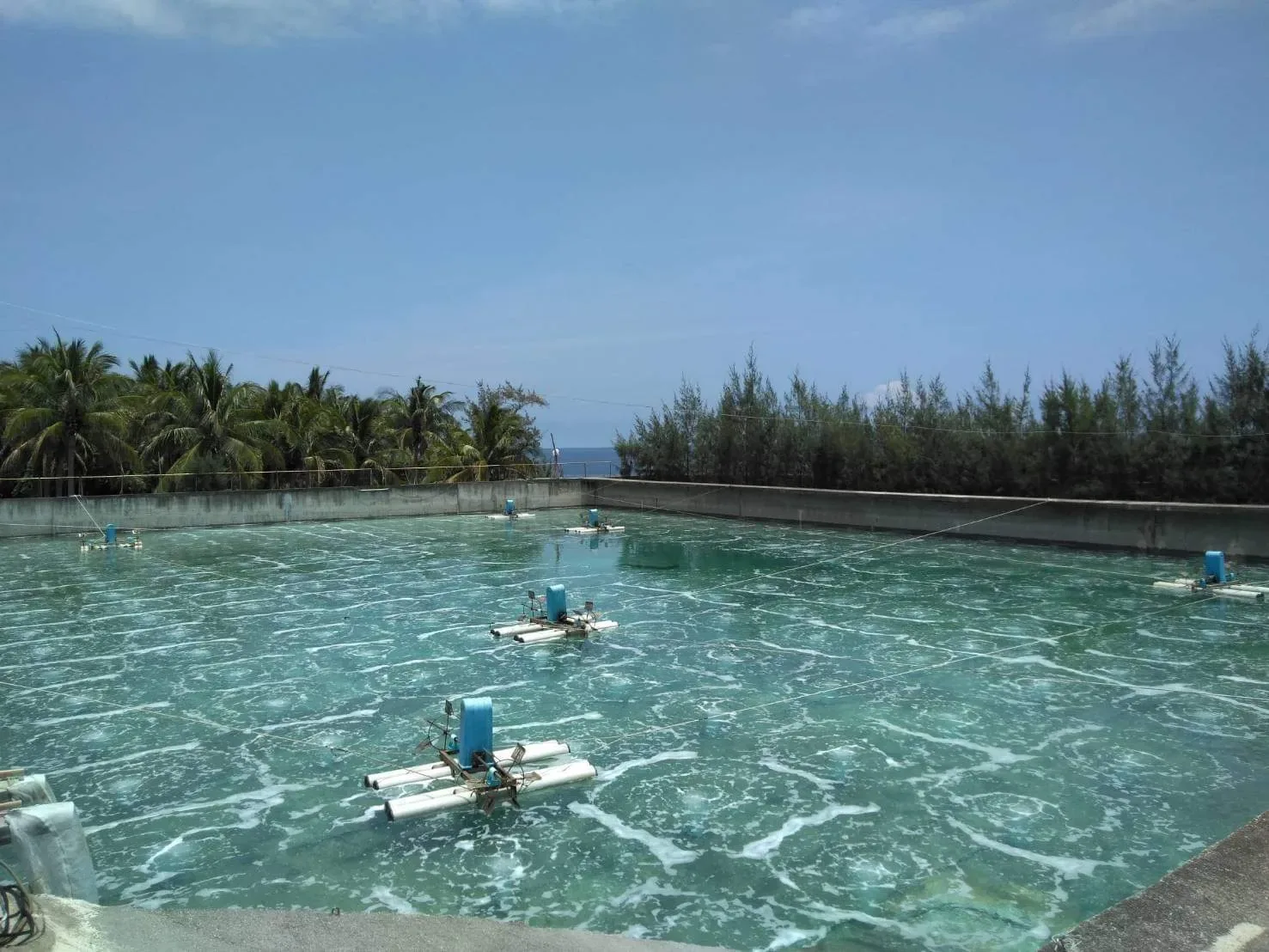
Surface aerators oxygenate the top layer only — the bottom, where waste settles, stays hypoxic and breeds disease.
Our solution
Microporous tubes or discs laid on the pond bottom release fine 0.3–2 mm bubbles that rise slowly, oxygenating the full water column — including the hypoxic bottom layer.
- Bubble diameter 0.3–2 mm (FW) / 0.5–3 mm (SW) — large gas-liquid contact surface
- Works to 5 m water depth at 0.05–0.10 MPa supply pressure
- Reported energy saving of about 50% vs paddle-wheel aeration
- Self-sealing pores prevent clogging when the blower is off
Recommended system
Roots blower + microporous tube/disc array — aeration for shrimp ponds, fish ponds or RAS tanks, sized by pond area and depth
Why surface aeration leaves the bottom untreated
A paddle wheel or spray aerator mixes roughly the top 30–50 cm and leaves the rest of the column alone. In a 2 m pond that is under a quarter of the volume. Water below that band stays stratified, and because oxygen is consumed fastest where the organic load is heaviest, depletion starts at the sediment. Bottom-diffused air changes the geometry of the problem: bubbles released at depth rise through the whole column, so oxygen arrives where the demand is rather than where it is easiest to mix.
Sizing a pond system
Two numbers decide the blower. The first is tubing length: plan on 60–100 m of microporous tubing per 667 m², laid in runs 3–5 m apart and set 10–20 cm above the bottom so the diffusers are not buried in sludge. The second is the aeration coefficient you are designing to — about 0.15 kW per mu for extensive stocking, 0.20 for semi-intensive ponds and 0.3 for intensive shrimp. Convert tubing length to airflow at roughly 0.004 m³/min per metre, then choose the ZXMSR model that delivers that flow at your working pressure.
What to check after installation
Measure dissolved oxygen at the bottom at 5–6 a.m., the daily minimum, rather than at the surface at midday. A dawn reading that holds above 3 mg/L at depth means the system is matched to the load. If the dawn figure keeps falling week on week, the usual answer is more tubing rather than a larger blower — a blower that exceeds what the diffusers can pass only raises discharge pressure and power draw without adding oxygen to the pond.
Running cost compared with paddle wheels
Because fine bubbles transfer a much larger share of their oxygen before reaching the surface, reported energy use is around half that of paddle-wheel aeration for the same dissolved-oxygen target. The gap widens at night, when the pond is at its minimum and surface units are working against a depleted water column. The blower is also the only electrical load, so there is a single point to monitor rather than a set of floating units to service.
Need a system for your setup?
Tell us about your aquaculture ponds — our engineers reply within 24 hours on business days.