Quick Answer
A grass-carp farmer in Yuwotou Town, Guangdong, runs a single 28-mu (1.9 ha) pond with 9 aerators, 1 paddle-wheel aerator and 1 bottom aeration system - 11 aeration devices in total, about 3,000 yuan (~$420) per month in electricity. The payoff: his pond produced two extra batches of fish per year compared with neighbours, kept feeding normally through rainy low-oxygen days, and lost no fish during regional disease events. His aeration schedule and equipment mix are the competitive edge, not luck.
Twelve Years of Fish-Duck Co-Farming
Chen Chao has farmed grass carp for 12 years on his 28-mu pond in Yuwotou Town, running fish-duck co-farming with bottom fish in the mix. The model improves water circulation, and duck droppings become feed for the bottom fish - both fish and ducks grow well. Today the pond produces about 130,000 jin (65 t) of ducks a year, and the bottom mixed fish yield 1,300-1,400 jin per mu - extra income on top of the grass carp.
On the carp side he uses rotation harvesting and restocking: the pond is never drained, fish are caught and fry restocked year-round, keeping grass-carp density at 1,300-1,700 per mu with three size classes (large 2.5-3 jin, medium 1-1.5 jin, small ~0.5 jin). This spreads the feeding load, improves feed conversion, and lets him sell whenever prices are good - especially late-season large fish.
The Aeration Setup: 11 Devices on 28 Mu
| Device | Count | Role |
|---|---|---|
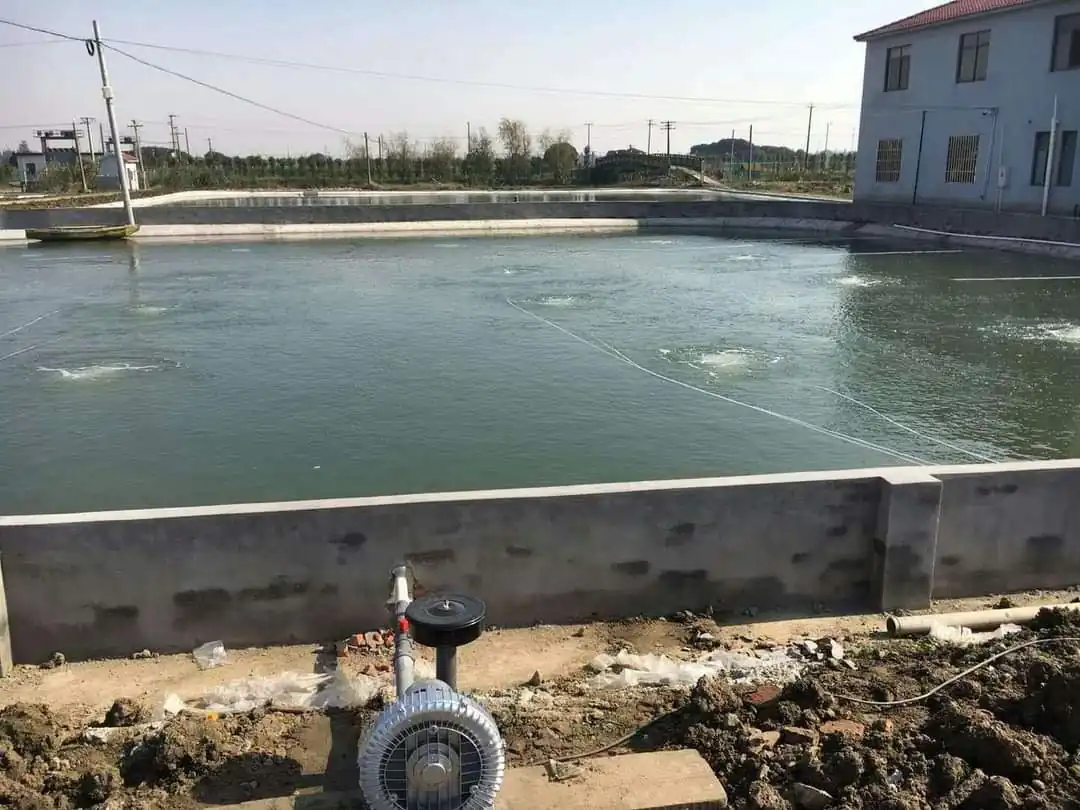
| Aerators | 9 | Nighttime oxygen supply, standard pond circulation |
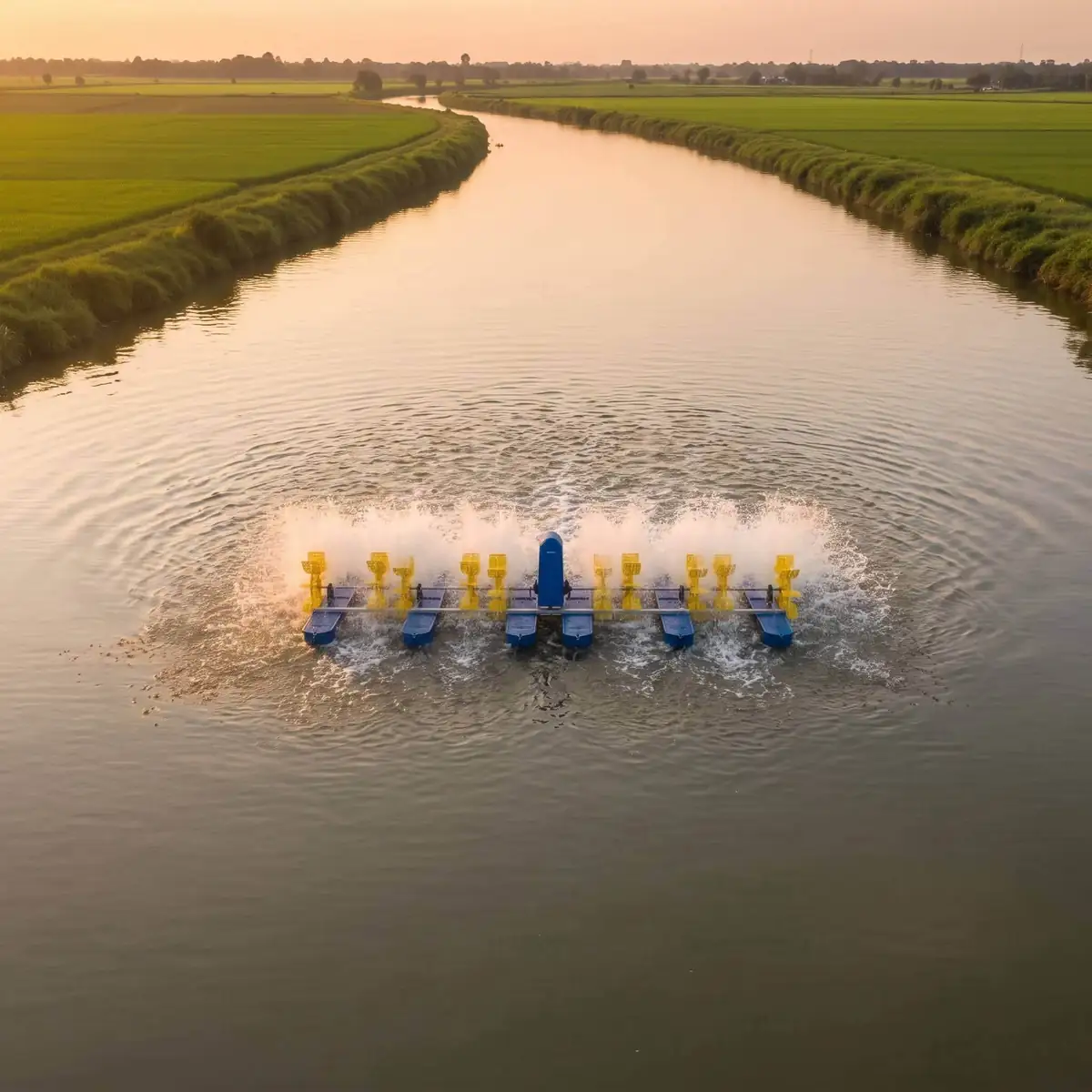
| Paddle-wheel aerator ("rake machine") | 1 | Daytime water movement, temperature control |
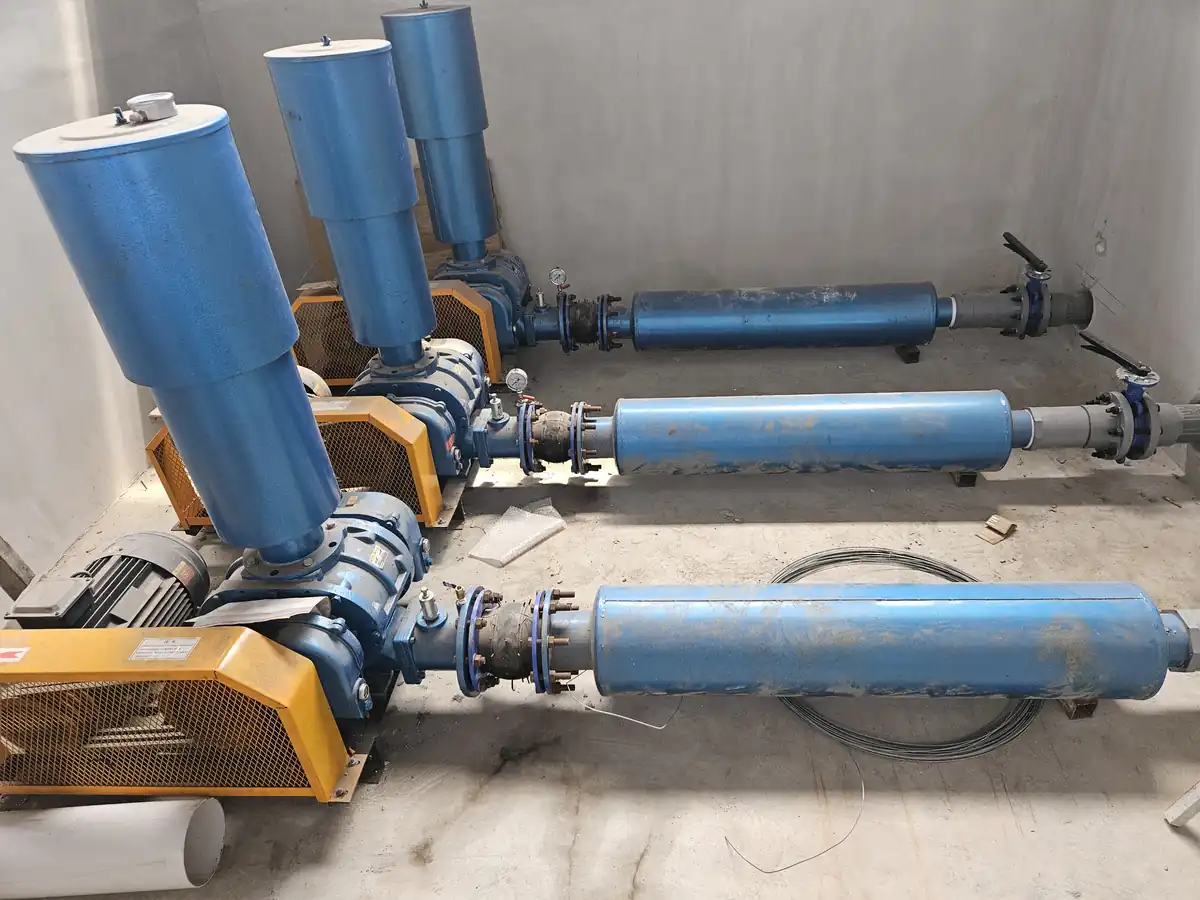
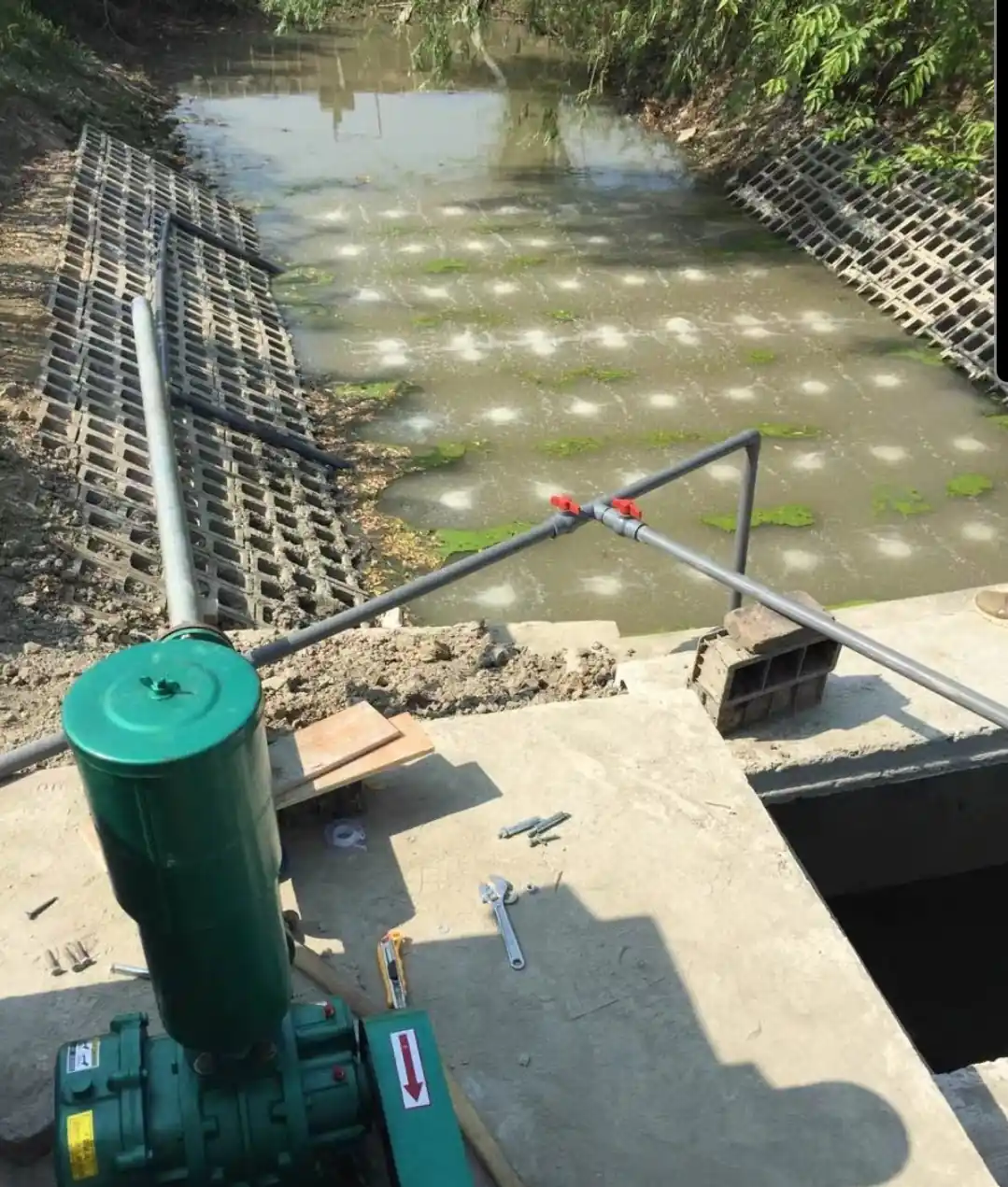
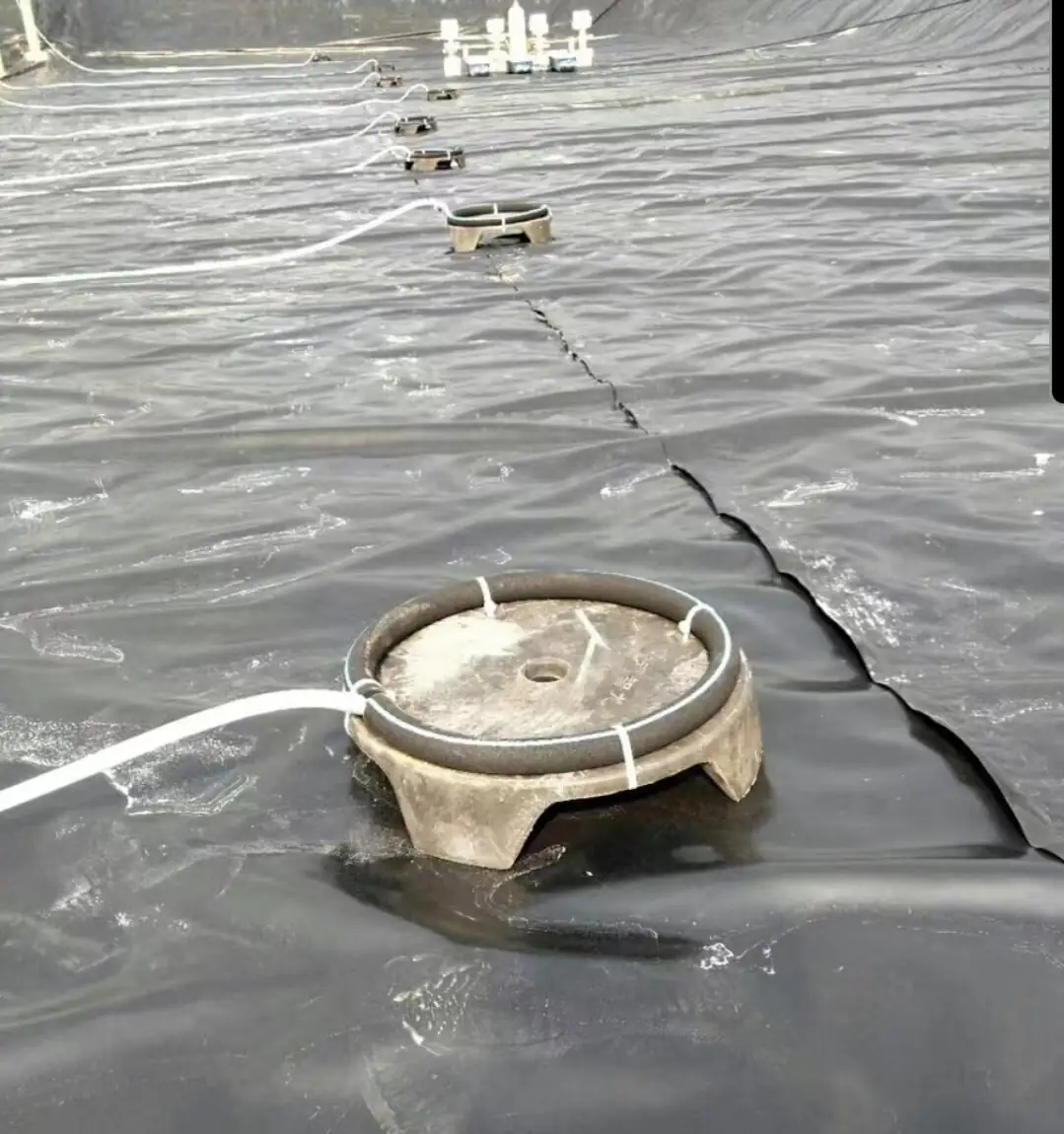
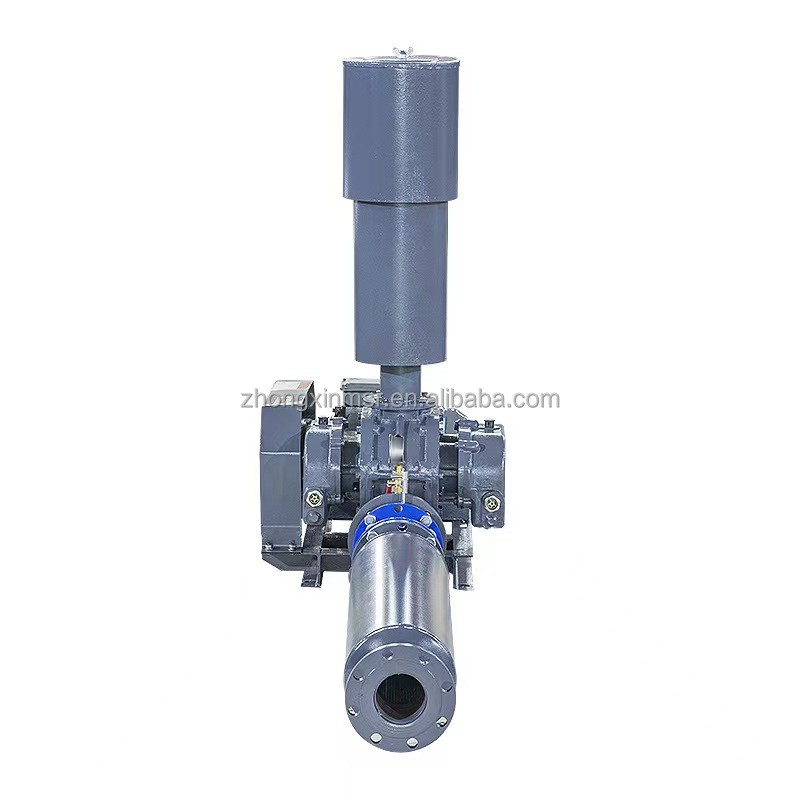
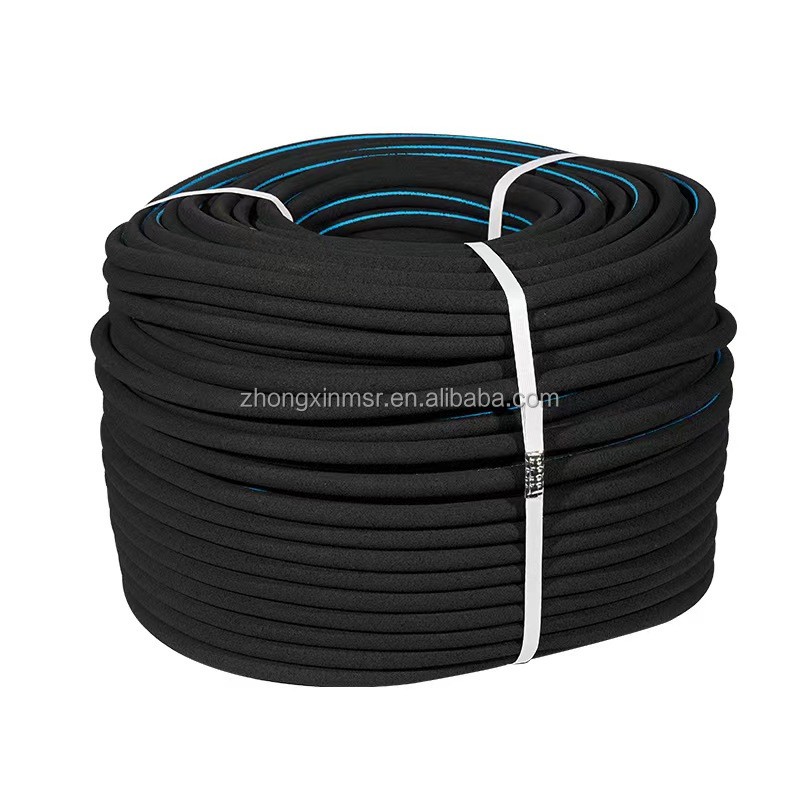
| Bottom aeration (roots blower + nano tubing) | 1 set | Feeding-zone oxygen, sludge/ammonia control |
| Electricity cost | ~3,000 yuan/month | Higher input, higher return |
The paddle-wheel is normally seen on shrimp farms, not grass-carp ponds - which is exactly what makes his setup unusual. He adopted it after testing: it makes aeration more flexible, moves the water much harder (relieving the eutrophication pressure of fish-duck co-farming), speeds up exchange between upper and lower layers, and in hot weather lowers the upper-layer water temperature by about 3 degrees Celsius.
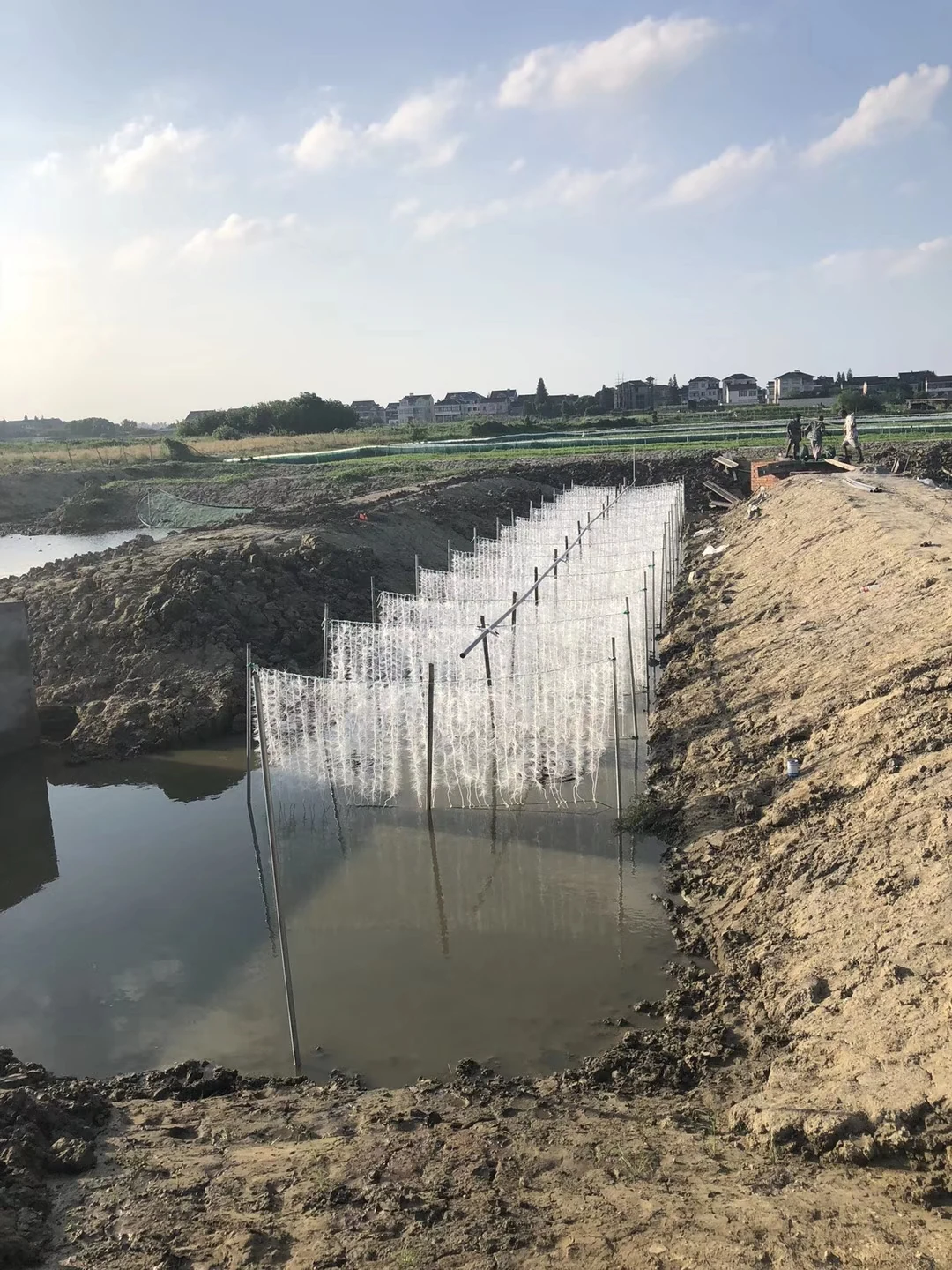
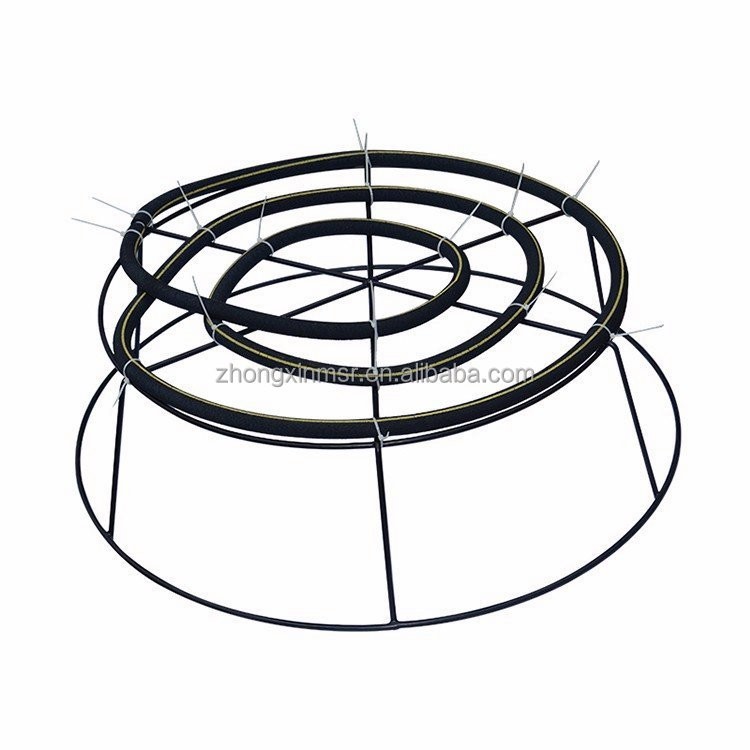
The bottom aeration is the second special point. Starting from the feeder, he extends bottom aeration across about 2 mu of the feeding zone: a roots blower pushes air through nano-tubing laid on the pond bottom, keeping the bottom layer well oxygenated, reducing harmful substances, and preventing fish from crowding at the surface.
His Daily Schedule
- 8:00-17:00: paddle-wheel aerator runs during the day (water movement + temperature management)
- Night: aerators run for oxygen supply
- Feeding: up to 18 bags of feed per day in peak season - 3 more than the average farmer
The Results, in Numbers
| Metric | His pond | Typical neighbour |
|---|---|---|
| Fish losses during regional disease events | None | Hundreds to thousands of jin dead |
| Feeding on rainy low-oxygen days | Normal | Reduced (worried about DO) |
| Peak-season feed | 18 bags/day | ~15 bags/day |
| Annual feed | Over 110 t on 28 mu | - |
| Fish output cadence | Half the stock sold within 6 months | - |
| Batches per year | Two extra | Baseline |
Because the oxygen was managed well, when neighbouring ponds repeatedly lost hundreds to thousands of jin of fish in the first half of the year, his pond was unaffected - and while most farmers cut feeding on cloudy rainy days, he fed normally.
What Other Farmers Can Take From This Case
1. Match aeration to management style, not to tradition. Using a shrimp-pond paddle-wheel on a carp pond looks unusual but solved a real problem: high-temperature stratification in a fish-duck system.
2. Put bottom aeration where the feed goes. The feeding zone is the highest-load area; oxygenating those 2 mu directly around the feeder protects the fish at the most stressful time of day.
3. Run equipment on a schedule, not on panic. A fixed daytime/night split - water movement by day, oxygen at night - is cheaper and more effective than reacting to visible symptoms.
FAQ
Q: How many aerators does a 28-mu pond need? A: This farmer runs 11 aeration devices (9 aerators + 1 paddle-wheel + 1 bottom system) at about 3,000 yuan per month. That is a heavy investment, but it bought two extra fish batches per year - the equipment paid for itself several times over.
Q: What is a "rake machine" (paddle-wheel aerator)? A: A paddle-wheel aerator, common in shrimp farming, throws water into the air and moves large volumes of surface water. On this carp pond it improved water circulation, eased eutrophication from fish-duck co-farming, and cut upper-layer water temperature by about 3 degrees in summer.
Q: Why use bottom aeration around the feeder? A: The feeding zone has the highest oxygen demand and the most waste. Bottom aeration (roots blower + nano tubing) keeps that area oxygenated, reduces harmful substances, and prevents fish from surfacing during feeding.
Q: How much electricity does this setup cost? A: About 3,000 yuan (~$420) per month for the whole 28-mu pond. It is high for the area, but the extra batches and zero disease losses make it clearly profitable.
Q: Can a small farmer copy this setup? A: The principle scales, not the exact numbers: match your aeration to your feeding load, oxygenate the bottom around feeders, and run a fixed day/night schedule. A 5-mu pond needs roughly 1.5-2.2 kW of blower for bottom aeration - see our sizing guide.
Conclusion
This case shows what deliberate aeration buys: resilience. The same 28-mu pond that neighbours wrote off as "lucky" was actually a tightly managed oxygen system - paddle-wheel by day for temperature and circulation, aerators by night, bottom aeration under the feeder. The equipment cost real money, and it returned two extra batches a year.
At Zhongxin we manufacture the pieces this farmer uses - roots blowers (ZXMSR series), microporous/nano tubing and floating aerators - as complete matched systems with free sizing design. Send us your pond area, depth and species.
Related reading: How to Size a Roots Blower for Your Pond | Aquaculture Aeration Equipment: Complete Selection Guide | Pond Aeration System Installation Guide | Dissolved Oxygen Management in Aquaculture
The tubing and disc layout used here is the standard microporous aeration system configuration.