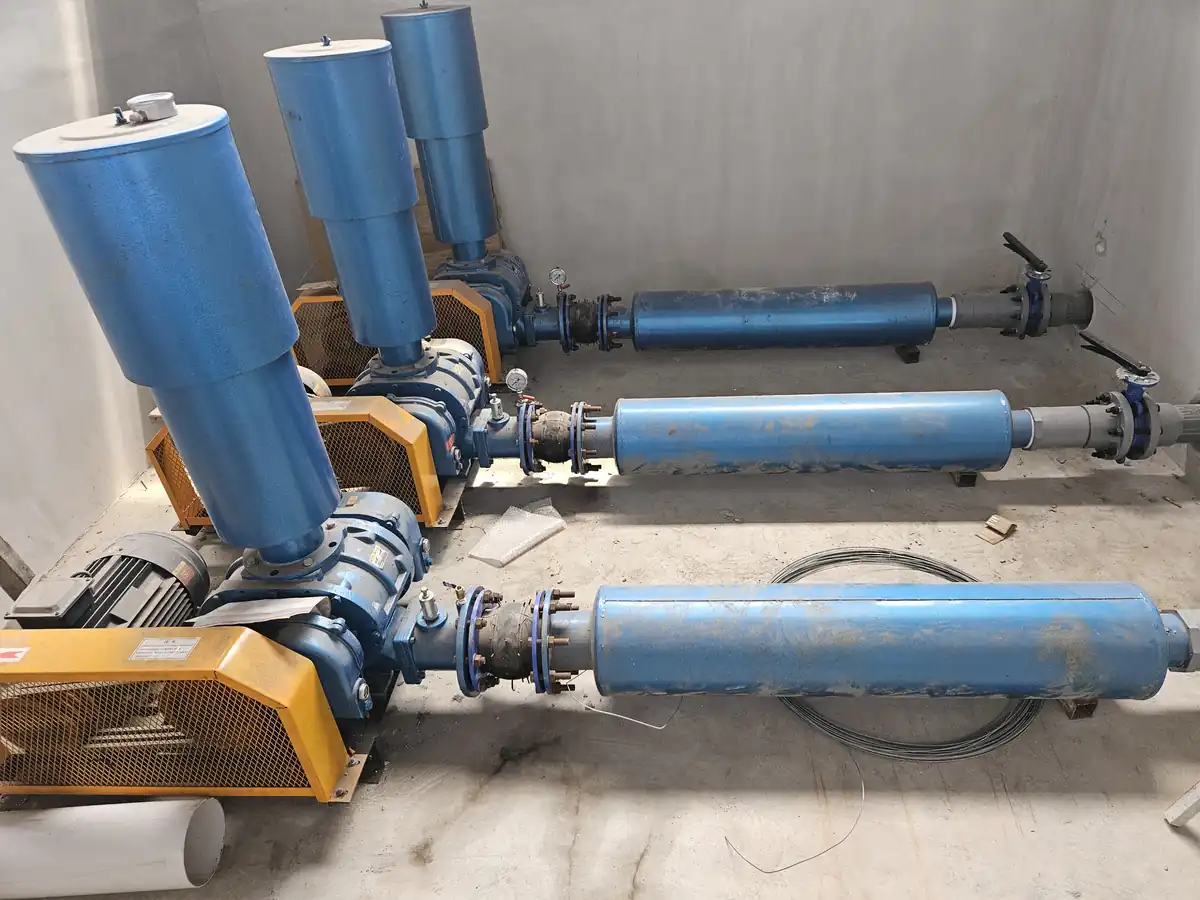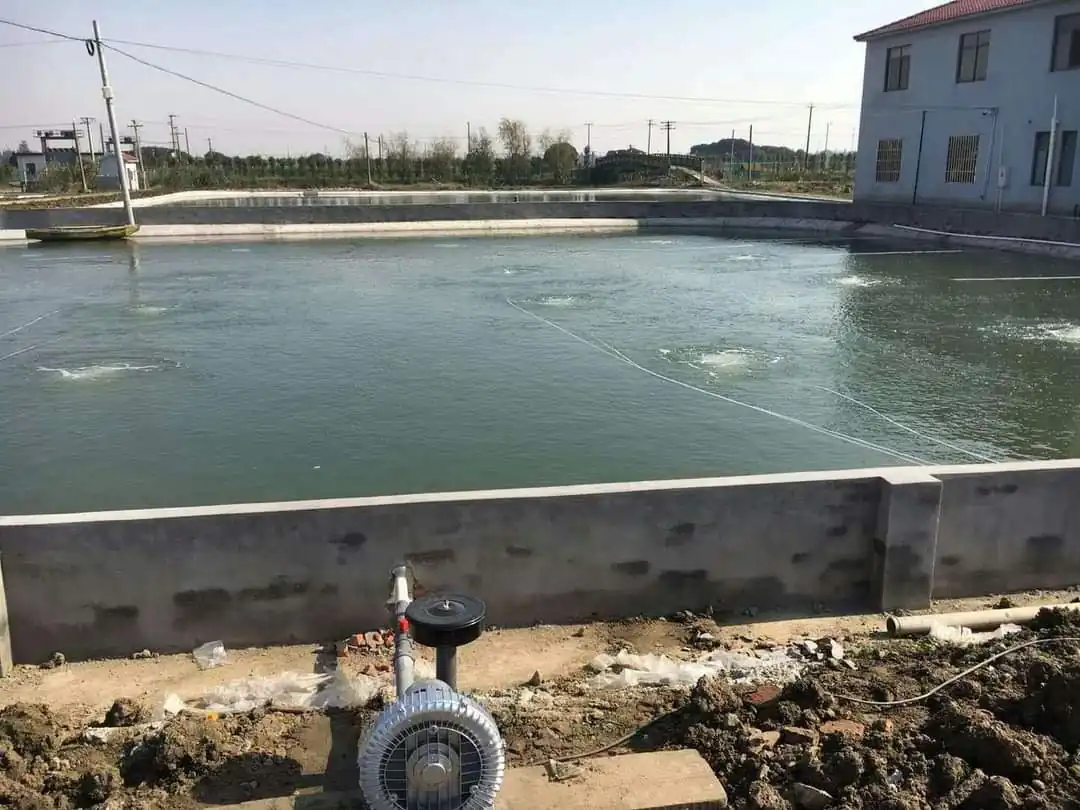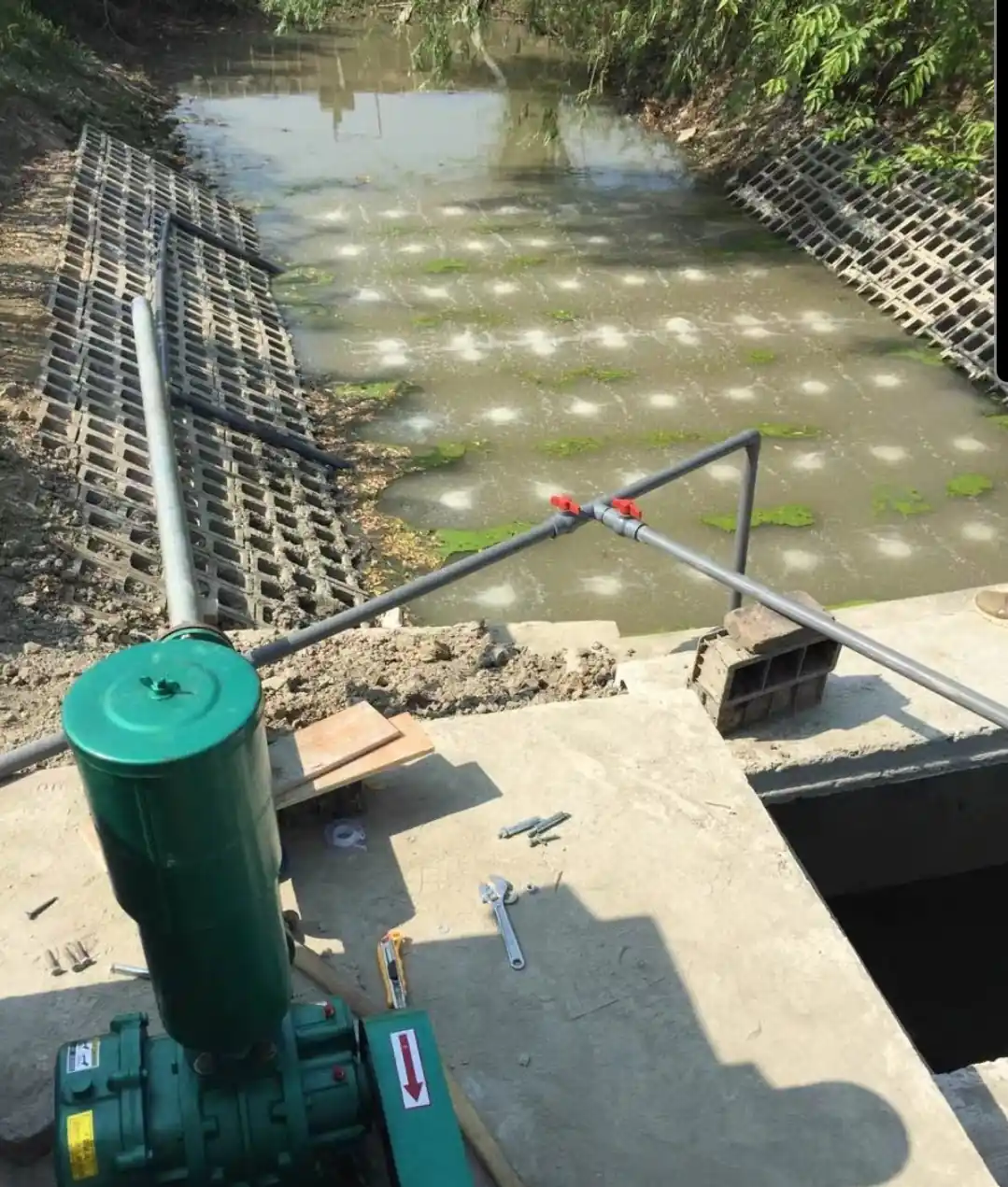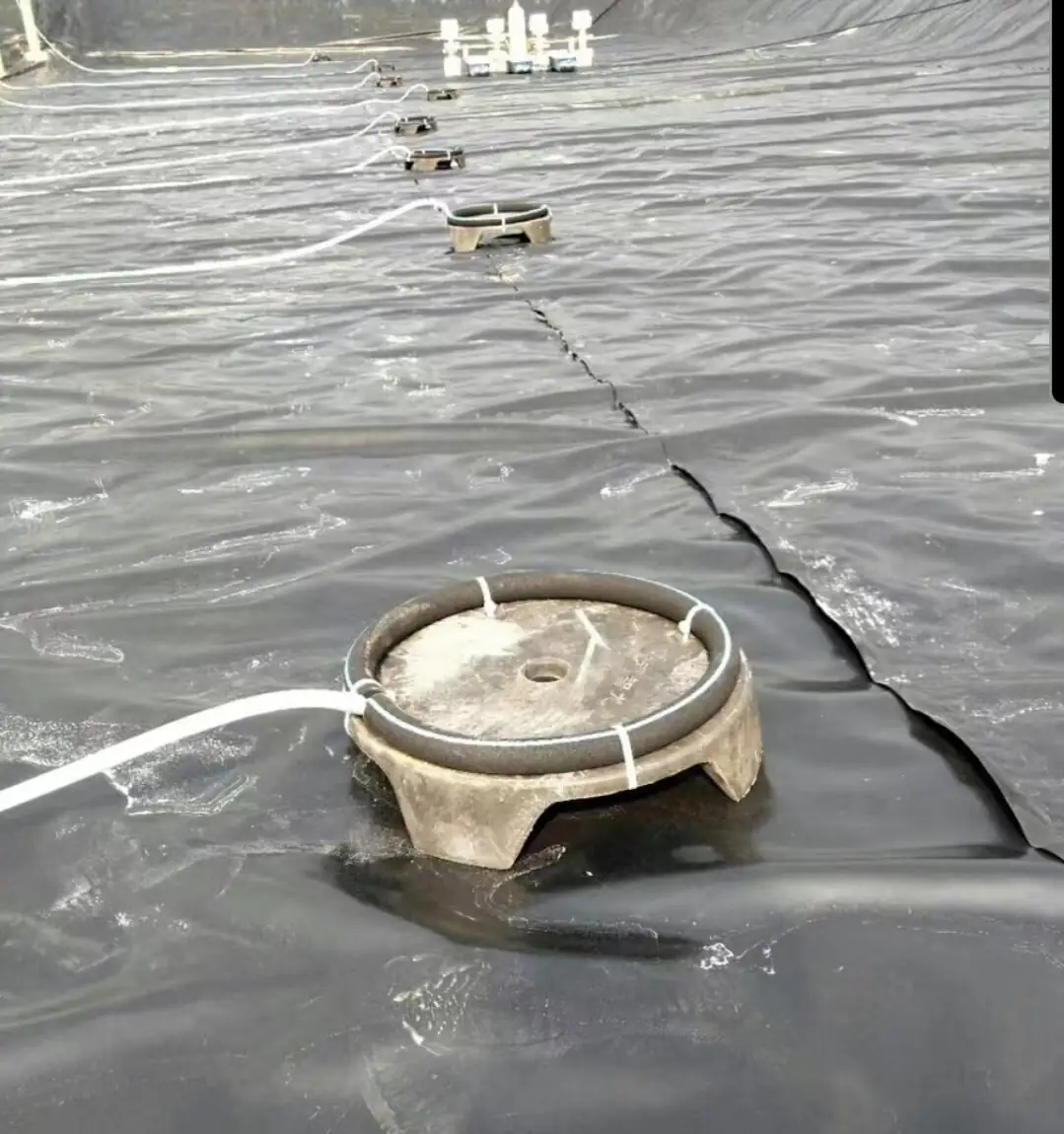
A commonly used 16×10 mm high-density nanotube delivers about 0.002–0.005 m³/min effective gas per meter; low-density tubing gives about 0.003–0.007 m³/min. From these values you can estimate disc output — for example, a 60 cm disc with 5 m of 16×10 mm tube outputs roughly 0.025 m³/min, about 1.5 m³/hour (theoretical, with some error). The aeration effect depends mainly on the blower, not the tube — the tube is only the air outlet. For small areas with low density, a vortex aerator is economical. For more than about 4 acres (approx. 16,000 m²), a Roots blower is recommended: stronger power, stable operation, the professional standard for commercial farms. Selecting tube specification by water depth: 16×10 mm (high density) for 0.3–1.2 m; 18×10 or 20×10 mm (high density) for 1.2–2 m; 25×12 mm (low density) for 2–3 m; 25×16 mm (low density) for 3–5 m — increasing inner diameter raises air output. With more than 10 years of aquaculture experience, our engineers can help you choose the right blower size for your site. Matching tube output to a blower is why we publish microporous aeration system specifications per model.