Whether you run a 5-mu tilapia pond or a 100-mu shrimp farm, aeration equipment is the single biggest factor between a profitable season and a disaster. The old view was that an aerator is only a "fish rescue machine" for sudden oxygen emergencies. In practice, aeration equipment is a production machine: it raises stocking density, improves feed conversion, reduces disease and cuts electricity bills - if you choose the right type and size.
This guide compares the main types of aquaculture aeration equipment, gives the real specs of microporous bottom aeration systems, and walks through sizing so you do not overpay or under-oxygenate.
The four main types of aquaculture aeration equipment
| Type | How it works | Aeration depth | Energy use | Best for |
|---|---|---|---|---|
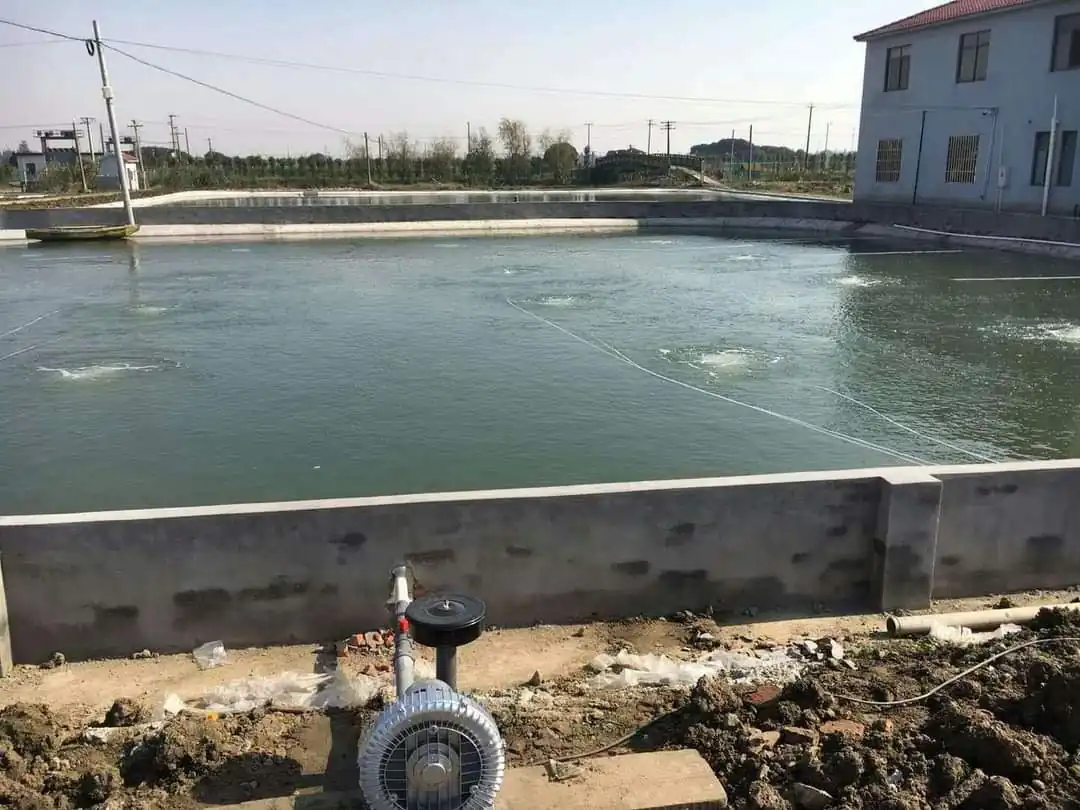
| Impeller (paddle wheel) aerator | Blades throw water into the air at the surface | Surface layer only | High | Shallow ponds, emergency rescue |
| Paddle-wheel (water wheel) aerator | Rotating paddles splash and circulate surface water | Surface layer | High | Shallow ponds, shrimp ponds |
| Spray/water-pump aerator | Pumps water up and sprays it | Surface layer | Medium | Small ponds, koi/ornamental |
| Microporous bottom aeration | Roots blower pushes air through microporous tubes/discs at the pond bottom | Bottom, middle and surface (whole water column) | 30-40% of traditional | Grow-out ponds 1-3 m deep, all species |
The critical difference is depth. Impeller and paddle-wheel aerators only move the top layer of water. In ponds deeper than 2 m, the bottom water stays oxygen-poor no matter how many surface aerators you run - and bottom anoxia is where most "disease outbreaks" actually start.
Why microporous bottom aeration is taking over
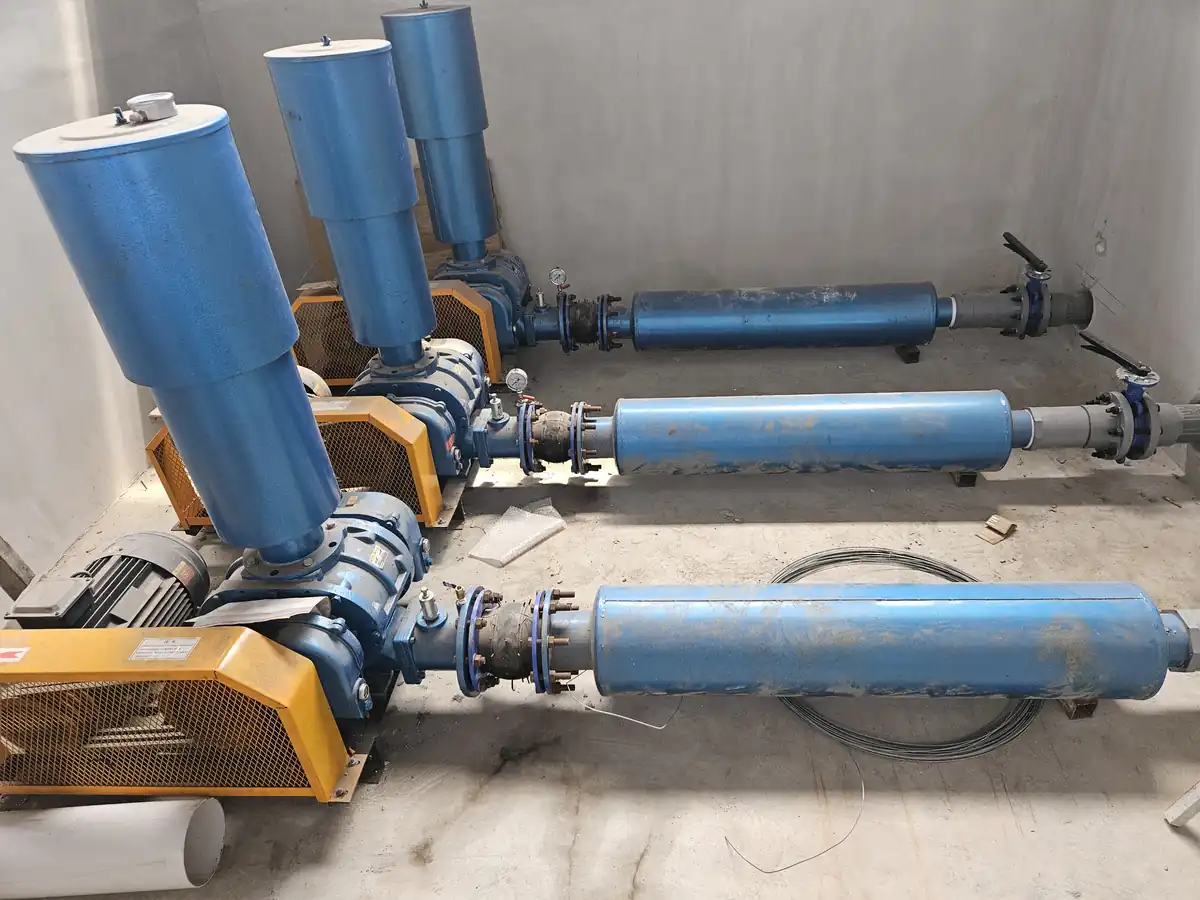
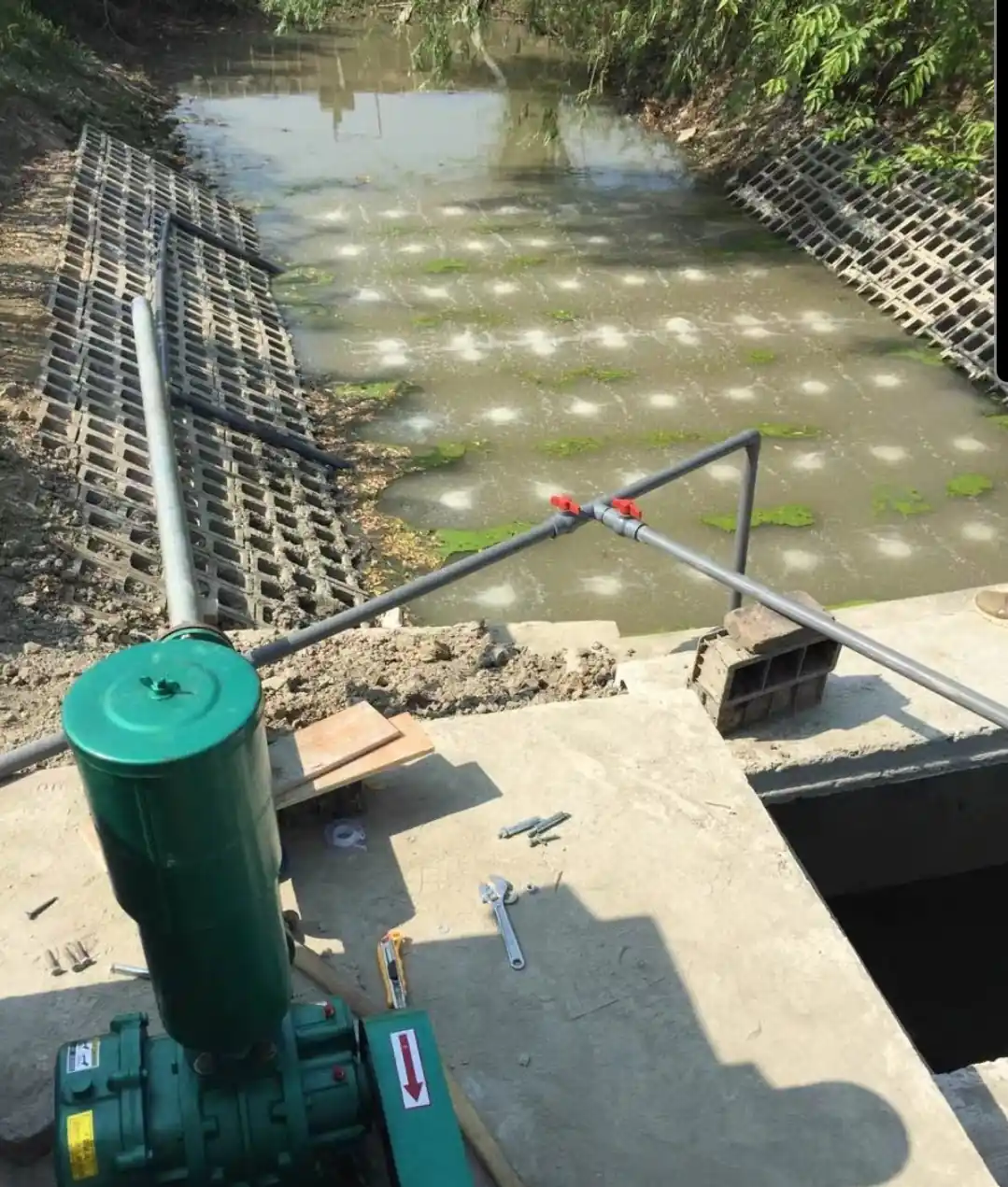
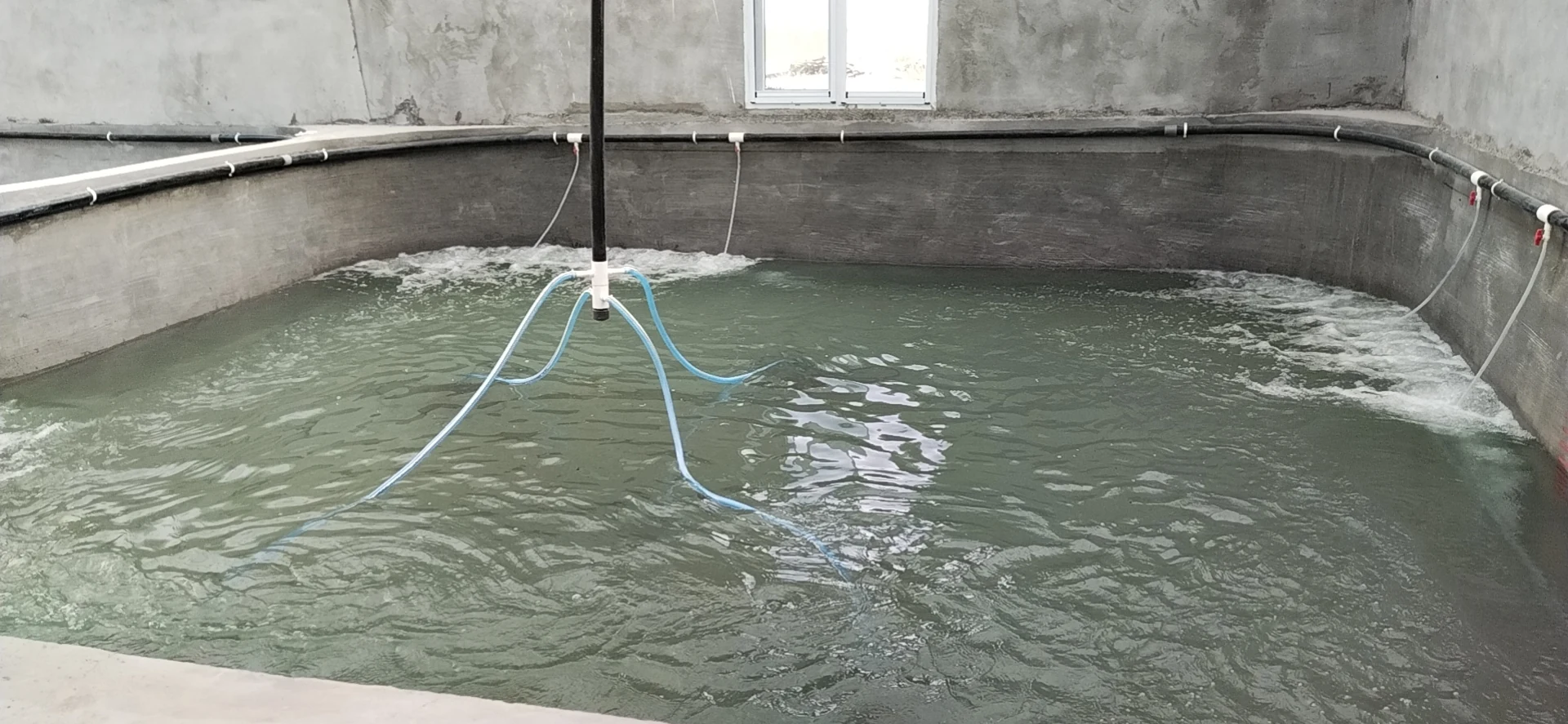
Microporous aeration equipment consists of three parts: a roots blower, air delivery pipes, and microporous tubes or discs. The blower compresses air through the pipes; the air leaves the microporous material as fine bubbles and rises through the whole water column. As the bubbles rise they also pull bottom water upward, creating vertical circulation - so oxygen reaches the bottom instead of staying at the surface.
Field comparisons show four clear advantages over traditional surface aerators:
1. Three-dimensional oxygenation. Bottom and middle water get oxygen directly; surface aerators cannot reach below about 2 m.
2. Better water quality. Studies show ammonia nitrogen and nitrite stay lower with microporous aeration: the rising bubbles carry bottom water into the oxygen-rich upper layer, where nitrifying bacteria convert ammonia and nitrite into harmless nitrate.
3. 70% lower energy cost. A roots blower needs only about 0.1-0.3 kW per mu - just 30-40% of the power of traditional equipment. One 1.5 kW roots blower delivers the oxygenation of four 1.5 kW paddle-wheel aerators.
4. Low noise and safer operation. The power unit sits on the bank; only hoses and diffusers are in the water, so there is no motor-in-water shock risk and less stress for shrimp and crab.
Real specs of a microporous bottom aeration system
Specifications below are from our own production data - not generic EPDM marketing numbers:
| Component | Specification |
|---|---|
| Roots blower (ZXMSR series) | Airflow 0.4-136+ m3/min, pressure 9.8-98 kPa, motor 0.5-280 kW |
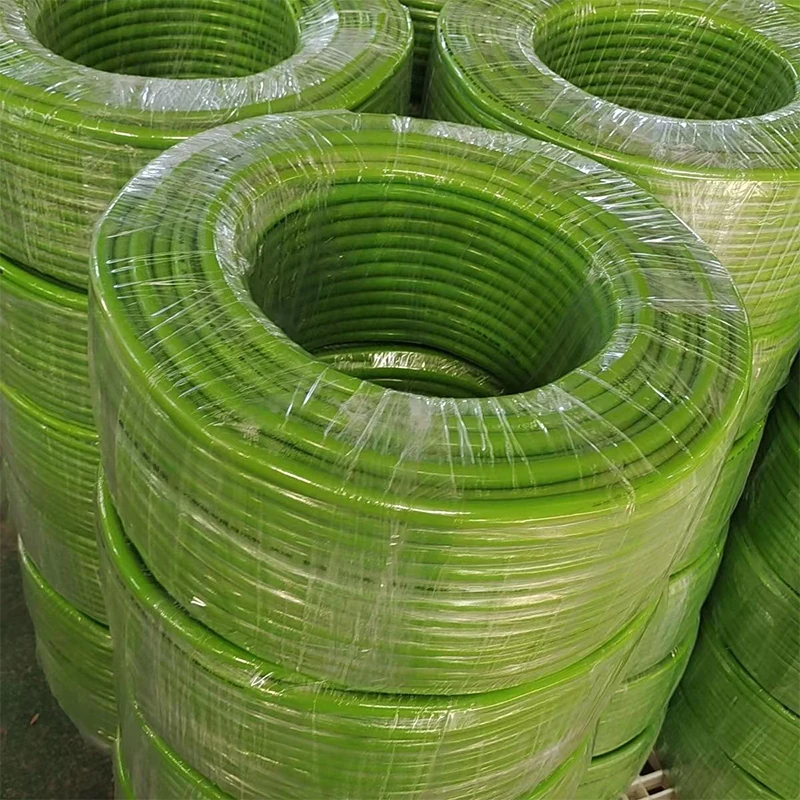
| Microporous tube | Bubble size 0.3-2 mm (freshwater) / 0.5-3 mm (seawater); 1000-1600 micropores per meter; service area 1-8 m2 per meter; air flow 0.002-0.006 m3/min per meter; tube sizes 10x16 to 20x28 mm; working depth 0-5 m |
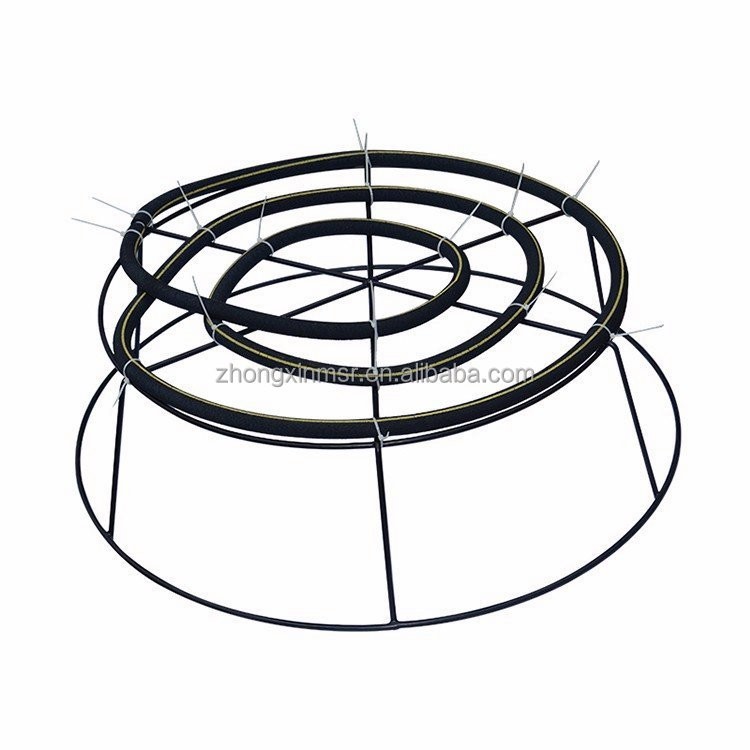
| Aeration disc | Diameter 30-100 cm (custom); about 10 m2 service area per disc |
| Sizing rule | About 1 kW of blower per 100-150 m of tubing; about 0.15 kW per mu; tubing installed 10-20 cm above the bottom |
Sizing table: matching the equipment to your pond
| Pond area | Recommended blower | Tubing/discs | Notes |
|---|---|---|---|
| Up to 5 mu | 1.5-2.2 kW | 300-500 m tube or 30-50 discs | Single outlet, blower on bank |
| 5-10 mu | 2.2-4 kW | 500-1000 m tube | Consider two distribution zones |
| 10-30 mu | 5.5-11 kW | 1000-3000 m tube | Use a distribution tank and branch pipes |
| 30-100 mu | 15-45 kW | Multiple distribution zones | Parallel blowers recommended |
The deeper the pond, the better microporous aeration performs relative to surface aerators: with the same air volume, aeration efficiency rises with depth.
Buy the complete system, not loose parts
Most US suppliers sell only the tube (Aero-Tube is a single-SKU brand) and leave the blower, pipe, fittings and layout to you. Aeration is only as good as the whole match: an undersized blower, an over-long pipe run or tubing buried in sludge can each cut efficiency by half. As a factory-direct manufacturer, we supply the complete matched system - blower, main pipe, distribution tank, saddle connectors, microporous tubes or discs - sized together for your pond, at factory prices. Full write-ups on blower selection and tube-versus-disc choices are in our other guides.
FAQ
Q: What size aerator do I need for my pond?
A: As a rule of thumb, 1 kW of roots blower per 100-150 m of microporous tubing, and about 0.15 kW per mu, with tubing 3-5 m apart and 10-20 cm above the bottom. For a specific recommendation, send us your pond area, average depth and species - we size it for free.
Q: How much electricity does microporous aeration use?
A: About 0.1-0.3 kW per mu, which is 30-40% of the power draw of paddle-wheel or impeller aerators. A 10-mu pond typically runs a 1.5-2.2 kW blower instead of 6-9 kW of surface aerators.
Q: Microporous aeration or paddle wheel - which is better?
A: For grow-out ponds deeper than 1.5 m, microporous bottom aeration is more efficient and uses far less electricity. Paddle wheels still make sense for very shallow ponds, emergency rescue, and pushing water in circular raceways.
Q: How deep should aeration tubing be installed?
A: 10-20 cm above the pond bottom. Laying it on the bottom buries it in sludge and drops efficiency to nearly zero; hanging it too high wastes the bottom oxygenation.
Q: Can one blower serve multiple ponds?
A: Yes, with a distribution tank and properly sized branch pipes. This is common from about 10 mu upward. We supply the matching distribution kit.
Q: What maintenance does the equipment need?
A: Very little. Clean or backflush the microporous tubes once per season, keep the blower intake filter clean, and check belts and oil per the manual. With no moving parts in the water, maintenance cost is far below surface aerators.
For the full step-by-step calculation with worked examples, see our detailed sizing calculation guide. Ready to size your system? We are a factory-direct manufacturer of roots blowers, microporous tubes and aeration discs. Contact us at +86 180 1341 8091 / +86 180 1341 8097 (backup) - one-stop aquaculture aeration equipment supply.
Sizing Rules That Actually Work (1-2 m deep ponds)
These are the numbers we give every customer, and they work across tilapia, carp, catfish and shrimp:
- Blower size: 1 kW per 100-150 m of microporous tubing
- Tubing length: 60-100 m per mu (667 m²), lines spaced 3-5 m apart
- Tubing height: 10-20 cm above the bottom - buried in sludge, efficiency drops to nearly zero
- Service area: each metre of microporous tubing covers 1-8 m² of pond bottom
- Bubble size: 0.3-2 mm in freshwater, 0.5-3 mm in seawater
| Pond size | Tubing needed | Blower suggestion |
|---|---|---|
| 1 mu (667 m²) | 60-100 m | 1-1.5 kW roots blower |
| 5 mu (3,335 m²) | 300-500 m | 5.5-7.5 kW roots blower |
| 10 mu (6,670 m²) | 600-1000 m | 11-15 kW roots blower |
Rule of thumb: 1 kW / 100-150 m of tubing regardless of pond shape.
Roots Blower vs Regenerative Blower: The Difference Most Buyers Miss
This is the single most common mistake we see. A regenerative blower is fine for shallow tanks (0.5-1 m), but its pressure limit (typically under 30 kPa) means it cannot overcome the water depth + tubing resistance of a real grow-out pond. A roots blower delivers 9.8-98 kPa of pressure, which is what pushes air through 100+ metres of tubing sitting 1-2 m underwater.
| Roots blower | Regenerative blower | |
|---|---|---|
| Pressure range | 9.8-98 kPa | typically < 30 kPa |
| Flow range | 0.4-136+ m³/min | small to medium |
| Best depth | 1-3 m ponds | < 1 m tanks |
| Efficiency at depth | High | Drops sharply with depth |
| Example series | ZXMSR (0.5-280 kW) | - |
If your pond is deeper than 1 m and you plan to use bottom aeration, spec a roots blower - not a regenerative blower.
Factory-Direct vs Dealer: What the Price Difference Buys
Most US dealers sell the same categories of equipment at a significant markup for local service and support. For a commercial farm buying multiple ponds' worth of equipment, the savings of going factory-direct (we manufacture roots blowers, microporous tubing and floating aerators in one facility) can fund the entire aeration upgrade of a second pond. What you give up in local response time, you get back in direct engineering support, custom sizing and OEM-level pricing.