Wastewater treatment
Aeration basins need reliable, energy-efficient oxygen transfer for the bacteria that clean the water — with minimum maintenance.
Our solution
Microporous aeration discs deliver a dense cloud of fine bubbles that keeps activated sludge aerobic, transfers oxygen efficiently, and resists clogging.
- Suitable for municipal and industrial aeration basins
- High oxygen transfer efficiency from fine bubbles
- Low maintenance — pores self-seal when not in use
- Available in variable microporous aerator formats
Recommended system
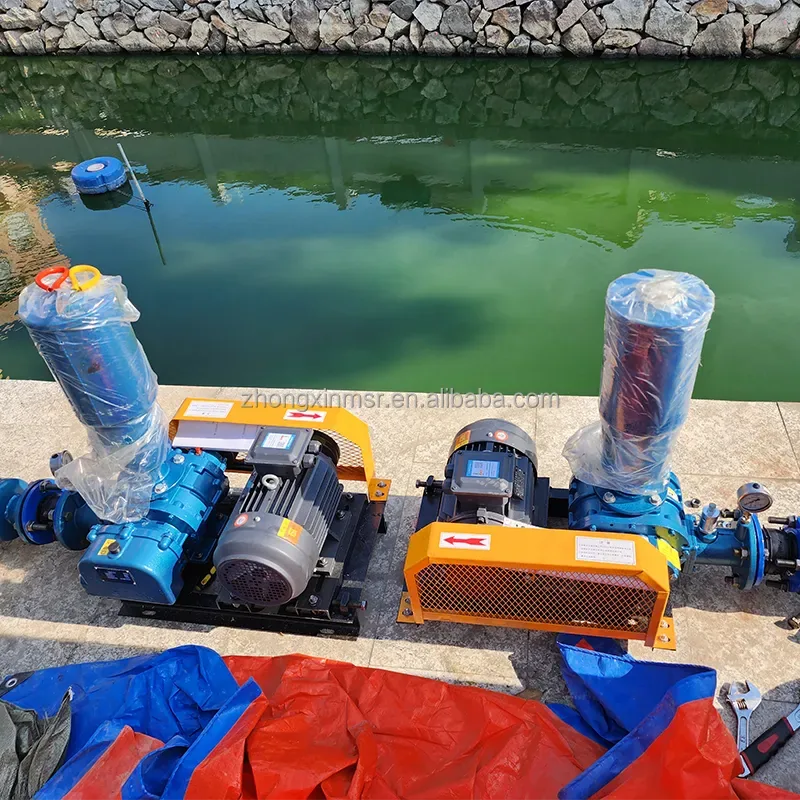
Roots blower + aeration discs or variable microporous aerators
Oxygen transfer is most of the operating cost
In an activated-sludge basin, aeration is normally the largest single electricity item, so the running economics of the plant are decided by how much oxygen each kilowatt-hour delivers. Fine-bubble diffusion wins on that measure for two reasons: the gas-liquid surface area per unit of air is far higher than with coarse bubbles or surface agitation, and the bubbles stay in contact with the water long enough to transfer a useful fraction of their oxygen before they break the surface.
Matching diffusers to basin geometry
Layout matters as much as diffuser type. A grid covering the basin floor gives a more uniform dissolved-oxygen profile than a single header, and it avoids dead zones where sludge settles and turns anaerobic. Supply pressure has to cover the static head of the water plus the diffuser loss; microporous discs work to about 5 m of water depth at 0.05–0.10 MPa, which covers most municipal and industrial aeration tanks without moving to a different type of diffuser.
The failure mode that erodes efficiency quietly
Fouling is the problem that does not announce itself. Biological growth and mineral scale raise the pressure needed to pass the same airflow, so the blower gradually draws more power for less oxygen and the plant pays for it on every electricity bill. Pores that self-seal when the blower stops help, because they keep basin water out of the membrane between cycles. Even so, plan periodic inspection and cleaning, and treat a slow upward drift in discharge pressure as the earliest warning that the diffusers need attention.
Where this type of aeration is used
The same fine-bubble approach is applied across municipal and industrial aeration basins and in aquaculture effluent treatment, where the objective is the same: keep the bacterial population aerobic so it can oxidise the organic load. Variable microporous aerator formats suit basins where the airflow needs to be adjusted by zone, which is common where the load arrives unevenly across the day rather than at a steady rate.
Need a system for your setup?
Tell us about your wastewater treatment — our engineers reply within 24 hours on business days.