The Short Answer
For most shrimp ponds, choose microporous aeration tubing with a bubble diameter of 0.3–2 mm in freshwater (0.5–3 mm in seawater), 1,000–1,600 micropores per metre, and a service area of 1–8 m² per metre of tubing. Size your tubing at roughly 100–150 m per 1 kW of blower motor power and pair it with a correctly matched roots blower. Bottom aeration delivers oxygen at the pond floor where shrimp actually live, and a well-sized microporous system typically runs at about 0.15 kW per mu (667 m²) of pond — far below the energy cost of surface aerators.
---
Why Aeration Tubing Matters for Shrimp Ponds
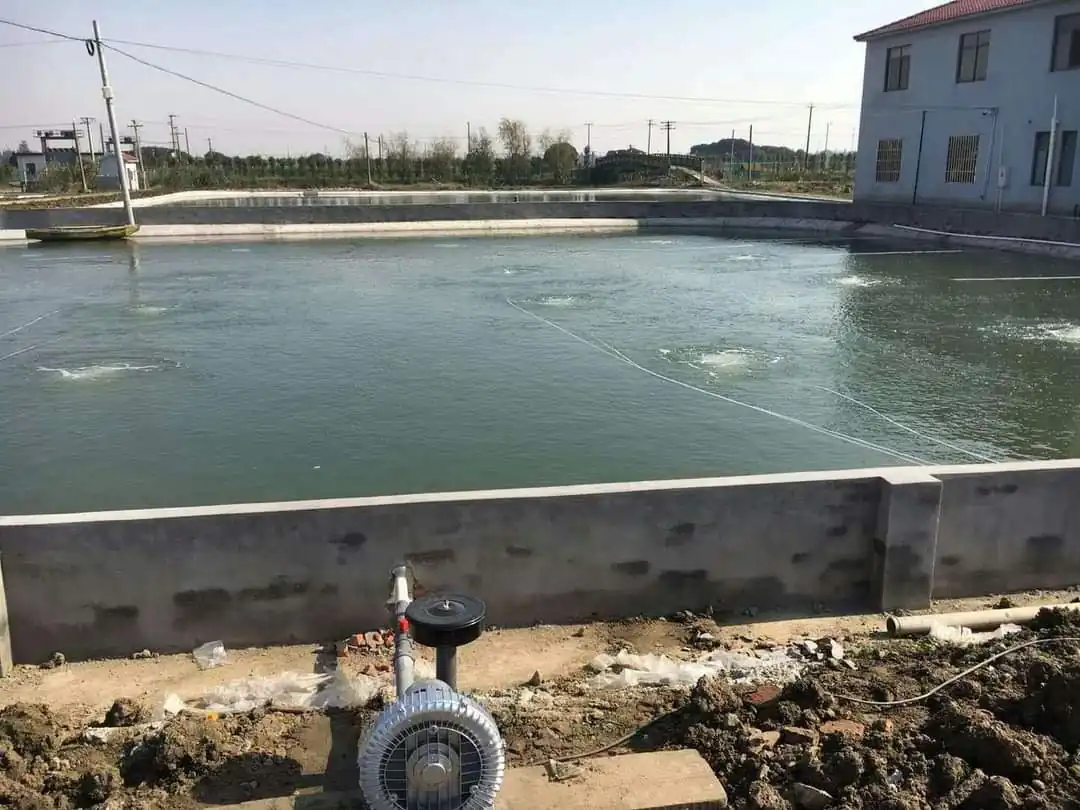
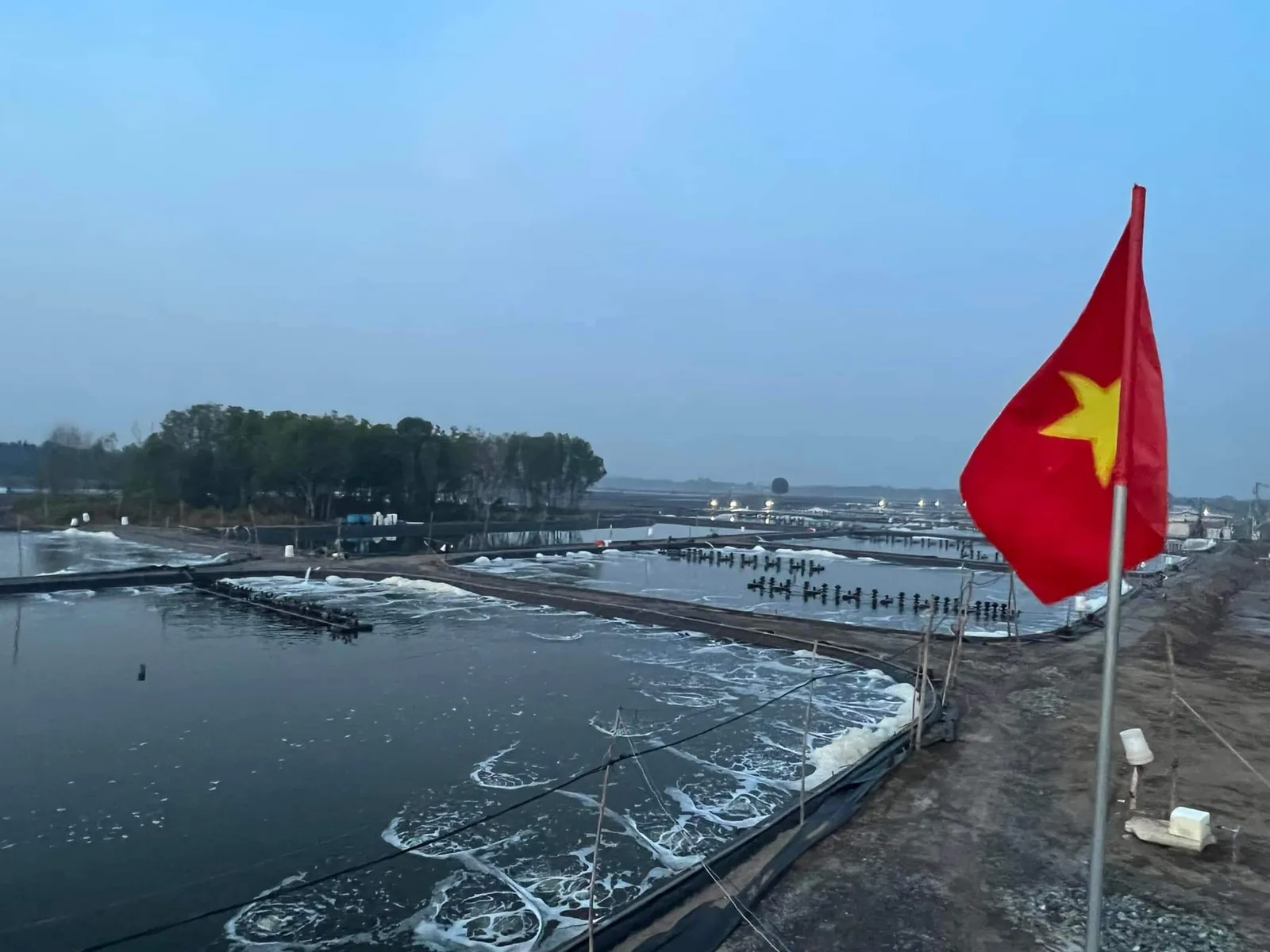
Shrimp are bottom dwellers. Paddle-wheel aerators oxygenate the surface layer, but the bottom zone—where shrimp spend most of their time—often stays hypoxic. The FAO and university extension services consistently recommend bottom aeration for high-density shrimp farming:
- DO requirement: most farmed shrimp species (including L. vannamei and P. monodon) perform best at 4–6 mg/L dissolved oxygen; growth slows below 3 mg/L and mortality risk rises sharply below 2 mg/L.
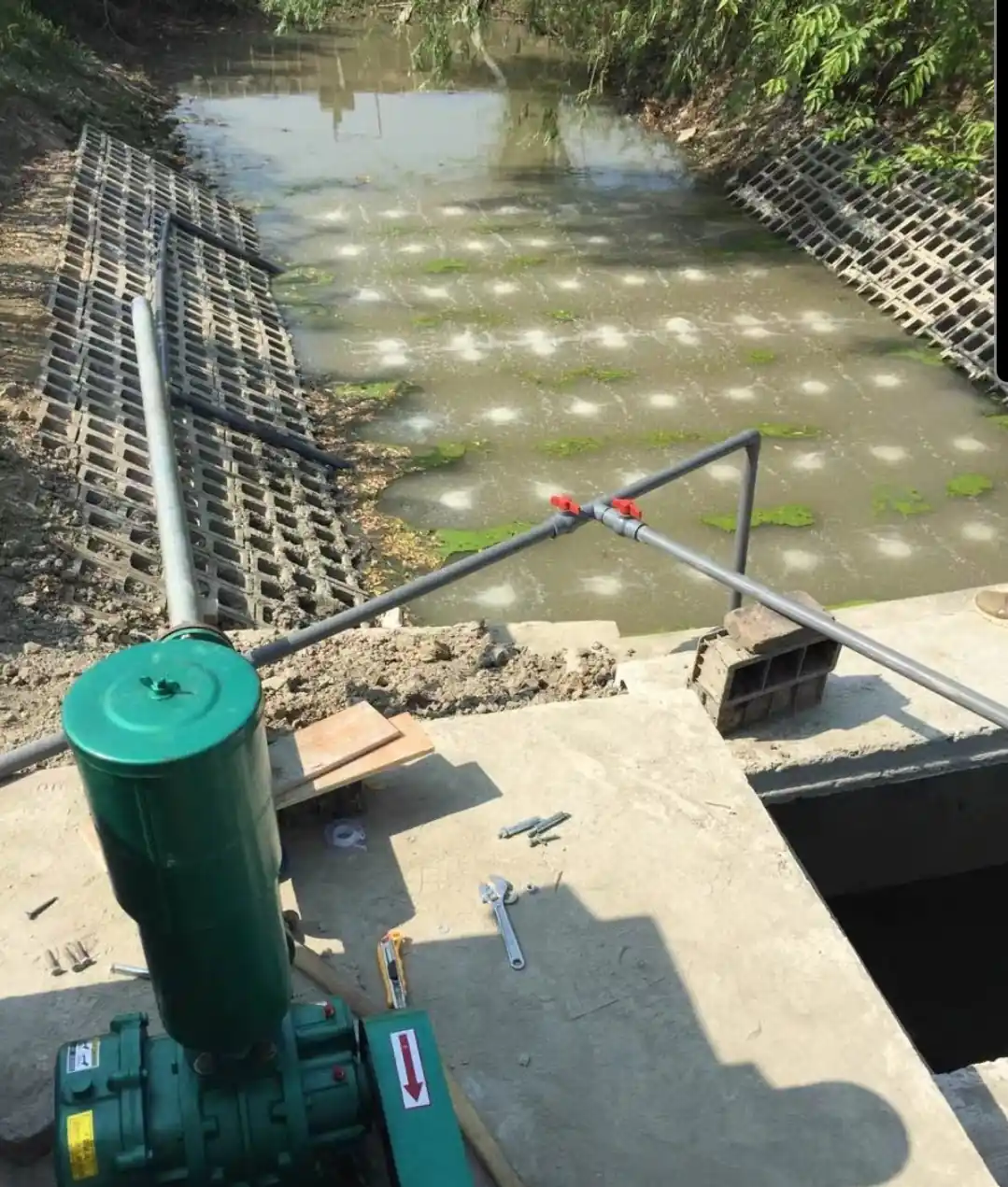
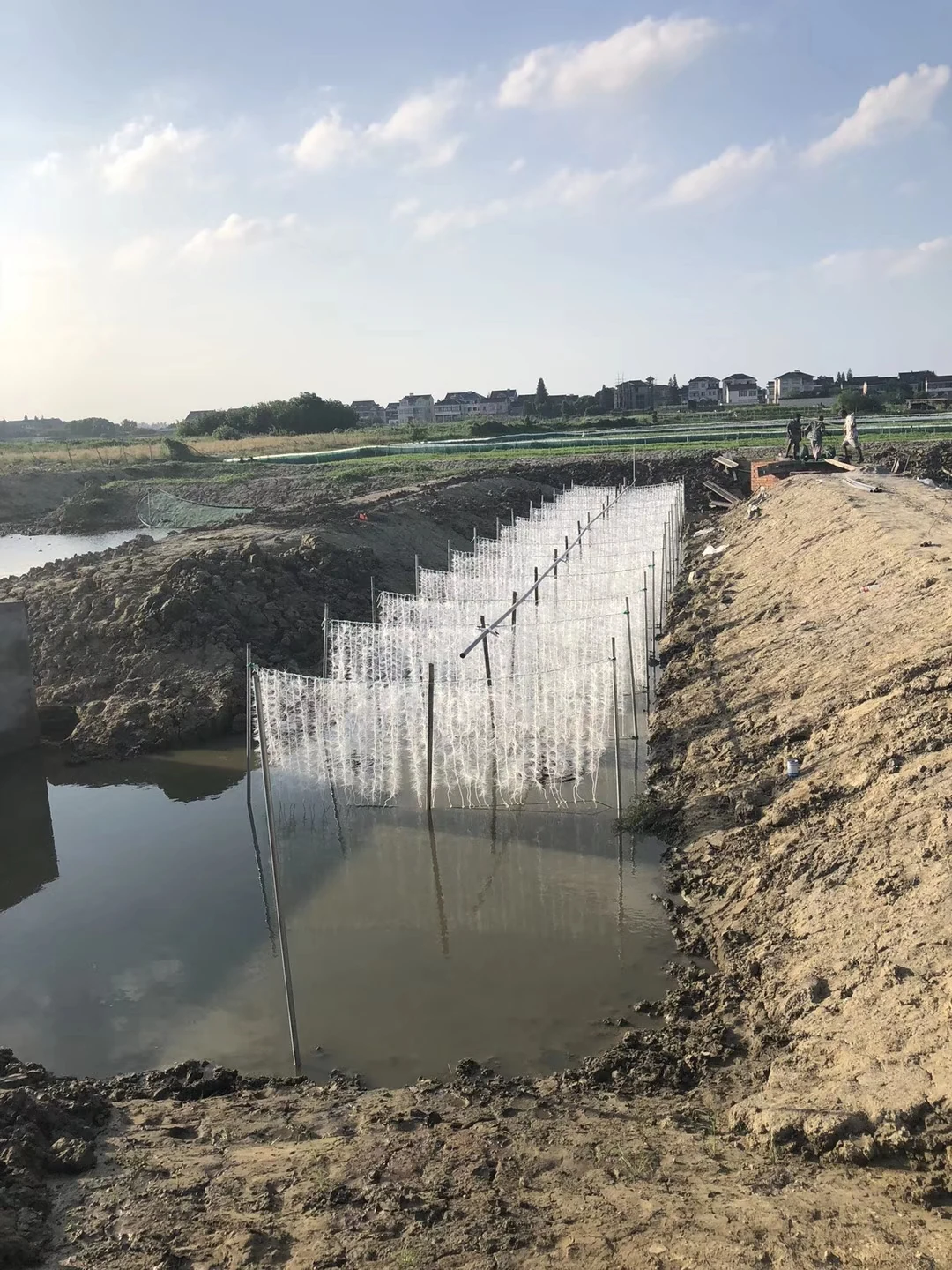
- How microporous tubing works: a roots blower pushes air through millions of microscopic pores (1,000–1,600 per metre in Zhongxin's tubing), creating fine bubbles that rise slowly and dissolve oxygen along the entire water column. A properly run microporous system can bring dissolved oxygen to about 6 mg/L quickly across the pond.
- Bottom-up effect: because oxygen dissolves from the sediment–water interface upward, microporous aeration activates the whole water body, supports the natural ecosystem, and restores the water's self-purification function—something surface aeration cannot do.
---
How to Choose Aeration Tubing: 5 Steps
Step 1: Match the bubble size to your water type and depth
| Water type / depth | Recommended bubble diameter | Why |
|---|---|---|
| Freshwater ponds | 0.3–2 mm | Standard range for freshwater shrimp and fish ponds |
| Seawater / brackish ponds | 0.5–3 mm | Slightly larger bubbles hold up better in salt water |
| Shallow ponds (< 1.5 m) | Upper end of the range | Faster turnover is fine when the column is short |
| Deep ponds (> 3 m) | Lower end of the range + higher blower pressure | Smaller bubbles need longer rise time; check blower static pressure |
Step 2: Calculate tubing length from pond area
A practical starting point used by aquaculture engineers:
| Pond area | Water depth | Recommended tubing length | Blower suggestion |
|---|---|---|---|
| 1–3 mu (0.07–0.2 ha) | 1.5–2 m | 30–50 m | 0.75–1.5 kW roots blower |
| 3–5 mu (0.2–0.33 ha) | 2–2.5 m | 50–80 m | 1.5–3 kW roots blower |
| 5–10 mu (0.33–0.67 ha) | 2.5–3 m | 80–150 m | 3–5.5 kW roots blower |
Rule of thumb: 1 kW of blower motor power supports roughly 100–150 m of microporous tubing, and each metre of tubing covers 1–8 m² of pond area (check the manufacturer's spec sheet for the exact value).
Step 3: Match blower capacity to tubing
Two numbers matter:
- Air flow: typical working flow is 0.1–0.4 m³/h per metre of tubing (aeration rate 0.002–0.006 m³/min·m). Multiply by total tubing length to get the blower's required free air delivery (FAD).
- Pressure: sum of water depth pressure + pipe friction. A 3 m deep pond needs roughly 0.35–0.4 bar of blower pressure; always add 10–20% headroom.
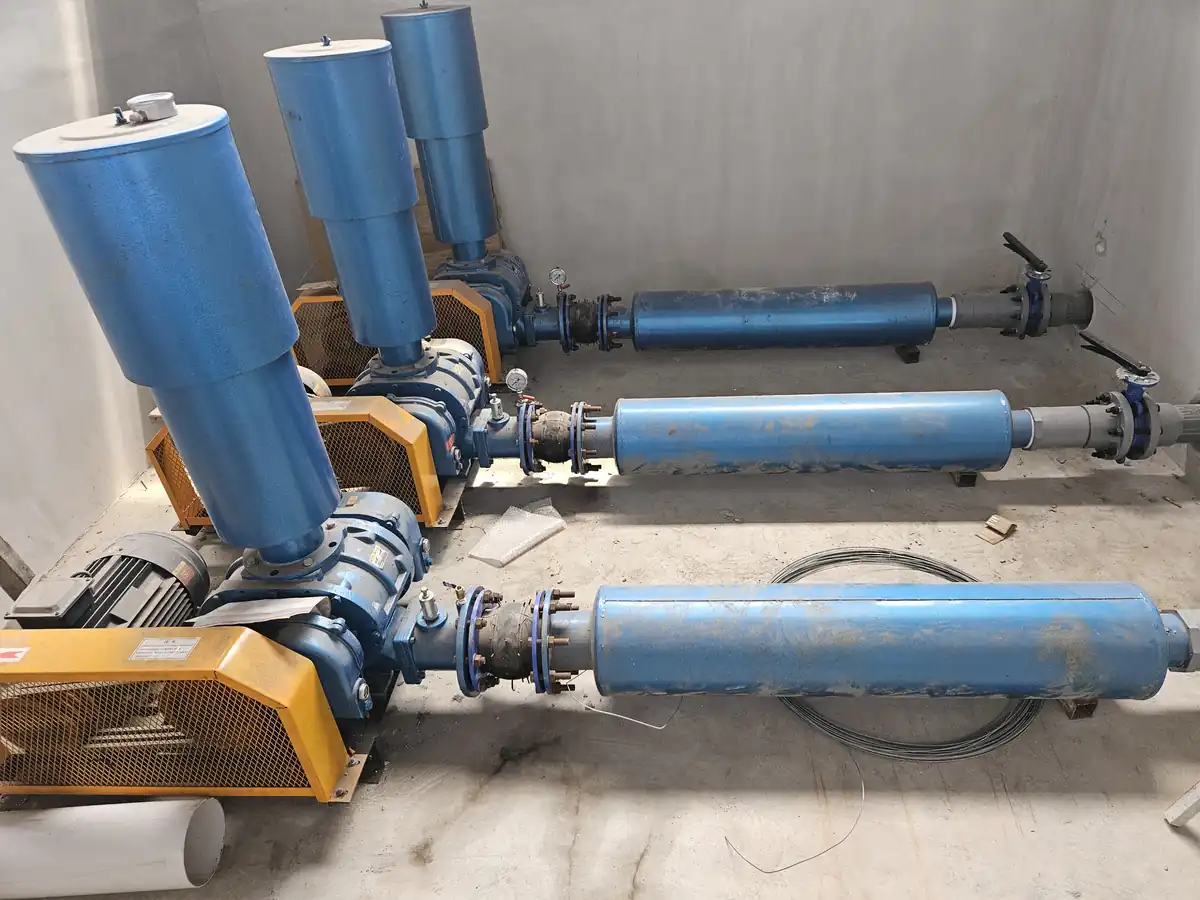
Roots blowers (positive displacement) are the right choice for bottom aeration: they hold pressure well when tubing is partially blocked or when several lines run from one manifold. Choose a model whose pressure–flow curve covers your total length at your pond depth.
Step 4: Choose the right tube size and quality
- Check the micropore density (Zhongxin's aeration tube: 1,000–1,600 micropores per metre, 60–80 mesh / 40 mesh) — this number determines bubble size and energy efficiency.
- Common tube sizes: 10×16 mm, 10×20 mm, 10×25 mm, 12×25 mm, 16×25 mm, 20×28 mm (inner × outer). Larger sizes suit bigger ponds and longer runs.
- Ask the supplier for the effective aeration rate (m³/min per metre) and service area (m² per metre), not just the diameter.
Step 5: Plan the layout
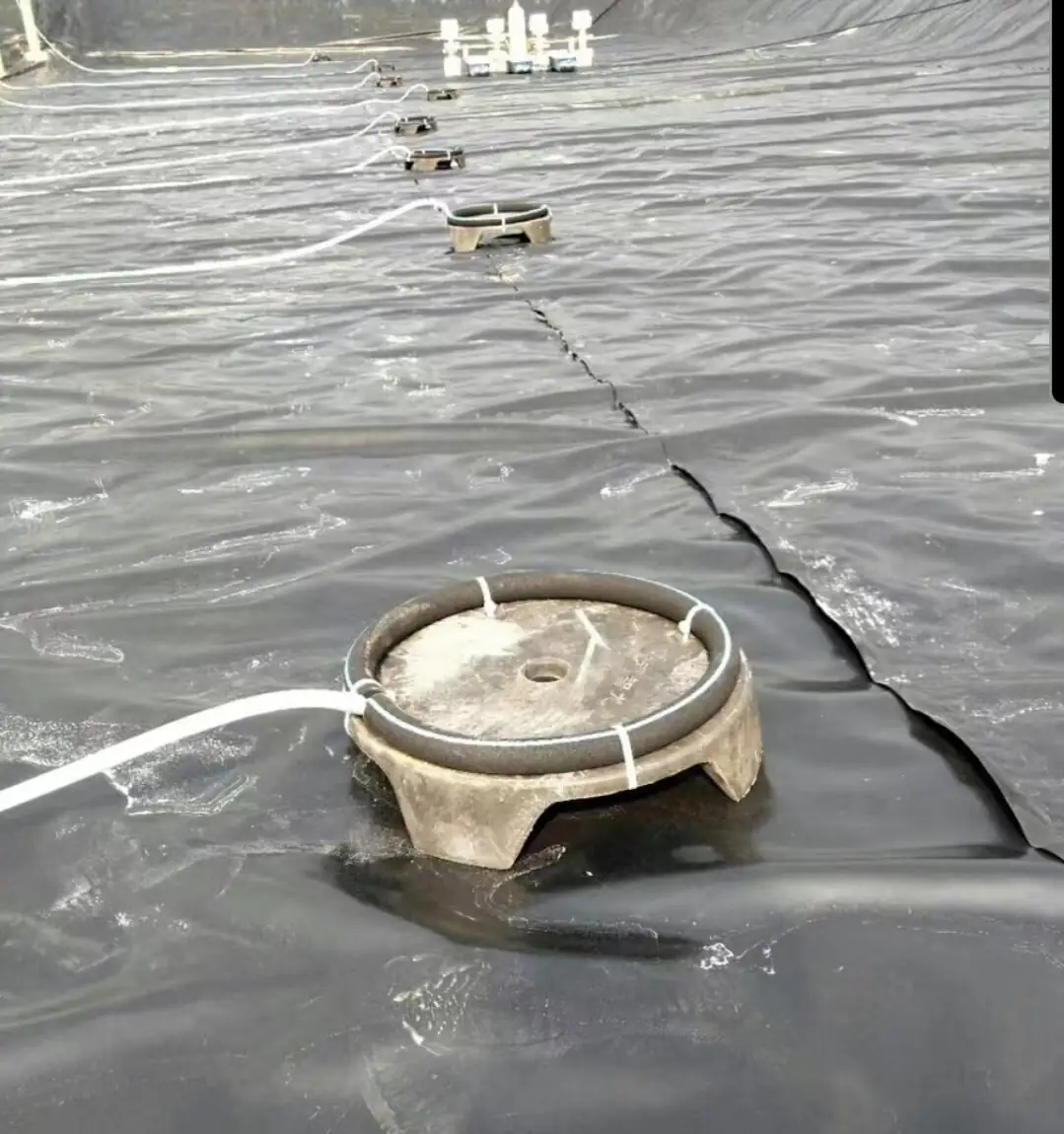
Run the tubing along the bottom in parallel lines, 3–5 m apart, fixed 10–20 cm above the sediment so settled sludge does not clog the pores. Connect all lines to a main manifold sized so friction loss stays under 10% of total pressure. Position the blower on shore in a dry, ventilated shelter.
---
Microporous Tubing vs. Paddle Wheel vs. Air Stone: Which One Fits?
| Criterion | Microporous tubing (bottom) | Paddle wheel aerator | Air stone / coarse diffuser |
|---|---|---|---|
| Bubble size | 0.3–2 mm (fine) | Coarse splash | Coarse bubbles (3–5 mm) |
| Oxygenates pond bottom | Yes, directly | No—surface only | Partially |
| Energy use (same DO) | Baseline (lowest, ~0.15 kW/mu) | ~1.5–2× higher | ~1.2–1.5× higher |
| Noise on site | Low (blower on shore) | Moderate (motor on water) | Low |
| Maintenance | Low—no moving parts in water | High—gearbox, shaft, impeller | Low |
| Best for | Shrimp ponds, RAS, deep ponds | Large open ponds, emergency aeration | Small tanks, hatcheries |
---
5 Common Mistakes to Avoid
1. Undersizing the blower — the most common failure. A blower that is too small cannot overcome water pressure, and the whole system underperforms. Always oversize pressure by 15–20%.
2. Using coarse bubbles in deep ponds — large bubbles rise too fast and vent most of the oxygen at the surface.
3. Laying tubing directly on the sediment — sludge seals the pores. Raise lines 10–20 cm off the bottom.
4. Ignoring micropore density — two tubes with the same diameter can have very different oxygen output. Compare spec sheets, not just price.
5. Skipping a backup — a 2-hour blower outage during a hot summer night can crash DO below lethal levels. Keep a spare blower or a backup aerator.
---
Frequently Asked Questions
Q: How deep can microporous aeration tubing work? A: Microporous aeration systems are designed for the pond depths typical of aquaculture (up to 3–5 m). Beyond that, you need a blower with higher static pressure.
Q: How much energy does microporous bottom aeration save compared to paddle wheels? A: A well-sized system runs at about 0.15 kW per mu (667 m²), and farmers typically report 30–50% energy savings for the same dissolved oxygen level, because nearly all the oxygen is dissolved into the water instead of being splashed into the air.
Q: How long does aeration tubing last? A: Quality microporous tubing lasts 3–5 years with regular cleaning. Rinse lines with fresh water and run the blower at full pressure for a few minutes after harvest to clear the pores.
Q: Can I use aeration tubing in a brackish or saltwater shrimp pond? A: Yes—choose tubing rated for seawater (bubble diameter 0.5–3 mm). Confirm the material and salt tolerance with the supplier.
Q: How many metres of tubing do I need for my pond? A: Start from service area: divide your pond area by the manufacturer's service-area rating (typically 1–8 m² per metre). As a cross-check, budget 100–150 m of tubing per 1 kW of blower motor.
Q: Do I need a separate air pump for each line? A: No. One roots blower can feed several lines through a manifold, as long as FAD and pressure cover the total load.
Q: How do I clean clogged aeration tubing? A: Run the blower at 1.2–1.5× normal pressure for 10–15 minutes, or flush with dilute acid if calcium fouling is present. Replace tubing that no longer clears.
---
The Bottom Line
Microporous bottom aeration is the most energy-efficient way to keep dissolved oxygen at 4–6 mg/L across the full depth of a shrimp pond. Match bubble size to your water type, size tubing to pond area (100–150 m per kW), pair it with a correctly rated roots blower, and you get better survival rates at a lower electricity bill than surface aerators.
Manufacturers that produce both blowers and tubing—such as Zhongxin Machinery, which has supplied integrated aeration systems to shrimp farms in Southeast Asia, Latin America, and Africa since 2014—can help you size the complete system rather than buying components blindly. Send your pond dimensions and target stocking density to a supplier's engineering team; a properly sized system pays for itself within one to two growing seasons.
---
References: FAO aquaculture guidelines on pond aeration; University of Florida IFAS extension notes on dissolved oxygen management; SRAC publications on aeration for aquaculture ponds; Global Seafood Alliance shrimp farming resources; scientific reviews on diffused aeration efficiency.