The Short Answer
RAS (recirculating aquaculture systems) and pond farming are not competitors — they are different answers to different questions. RAS costs 5–10× more per kg of capacity to build and needs skilled operators, but uses 90%+ less water and enables very high densities (50–100+ kg/m³). Ponds cost little, tolerate mistakes, and dominate commodity species like tilapia and shrimp — but they are weather-dependent and water-hungry. Your choice should follow your water, capital, species and team — and in both systems, aeration is the highest-value equipment you will buy.
The Quick Comparison
| Criterion | RAS | Pond farming |
|---|---|---|
| Capital cost | High (equipment-intensive) | Low–medium |
| Water use | 90%+ less | High (evaporation + exchange) |
| Stocking density | 50–100+ kg/m³ | 5–15 kg/m³ (aerated) |
| Disease control | High (closed system) | Medium (open environment) |
| Weather dependence | Low | High |
| Skill required | High (water chemistry, biofilters) | Low–medium |
| Best for | High-value species, scarce water, cold climates | Commodity species, low cost, tropical regions |
| Main operating cost | Electricity (pumps + aeration + heating) | Feed + aeration |
Aeration in Each System — The Roles Are Different
In ponds: oxygen is the growth ceiling
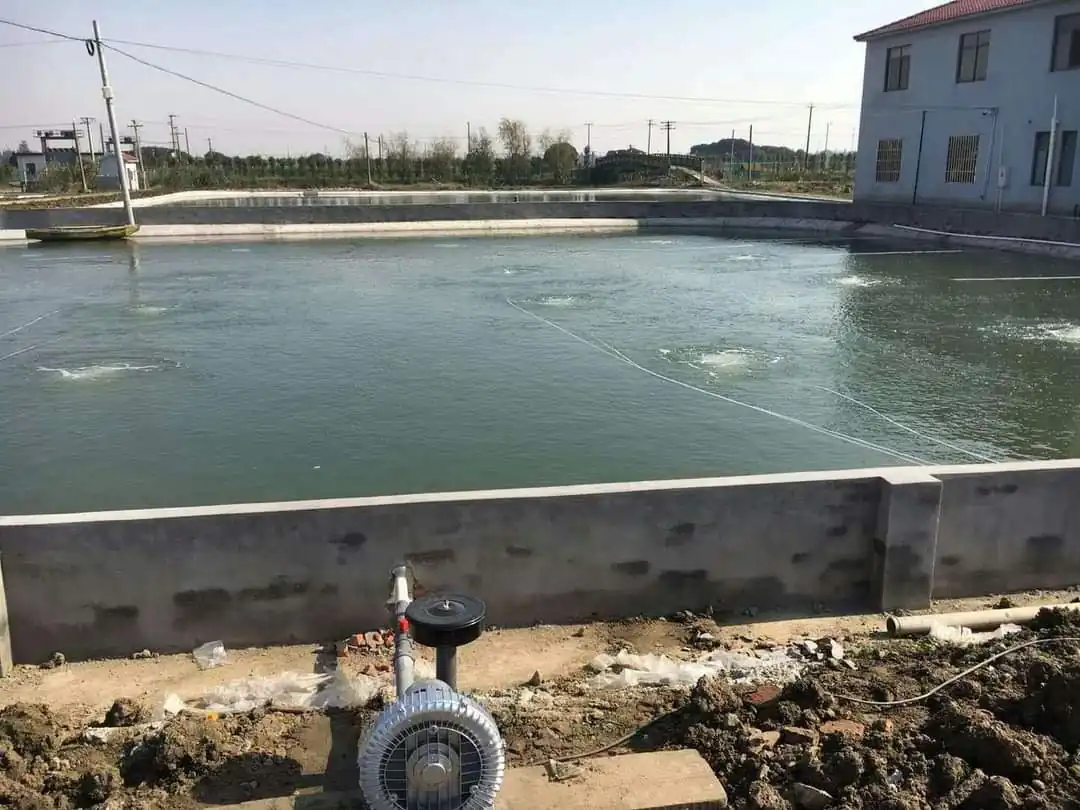
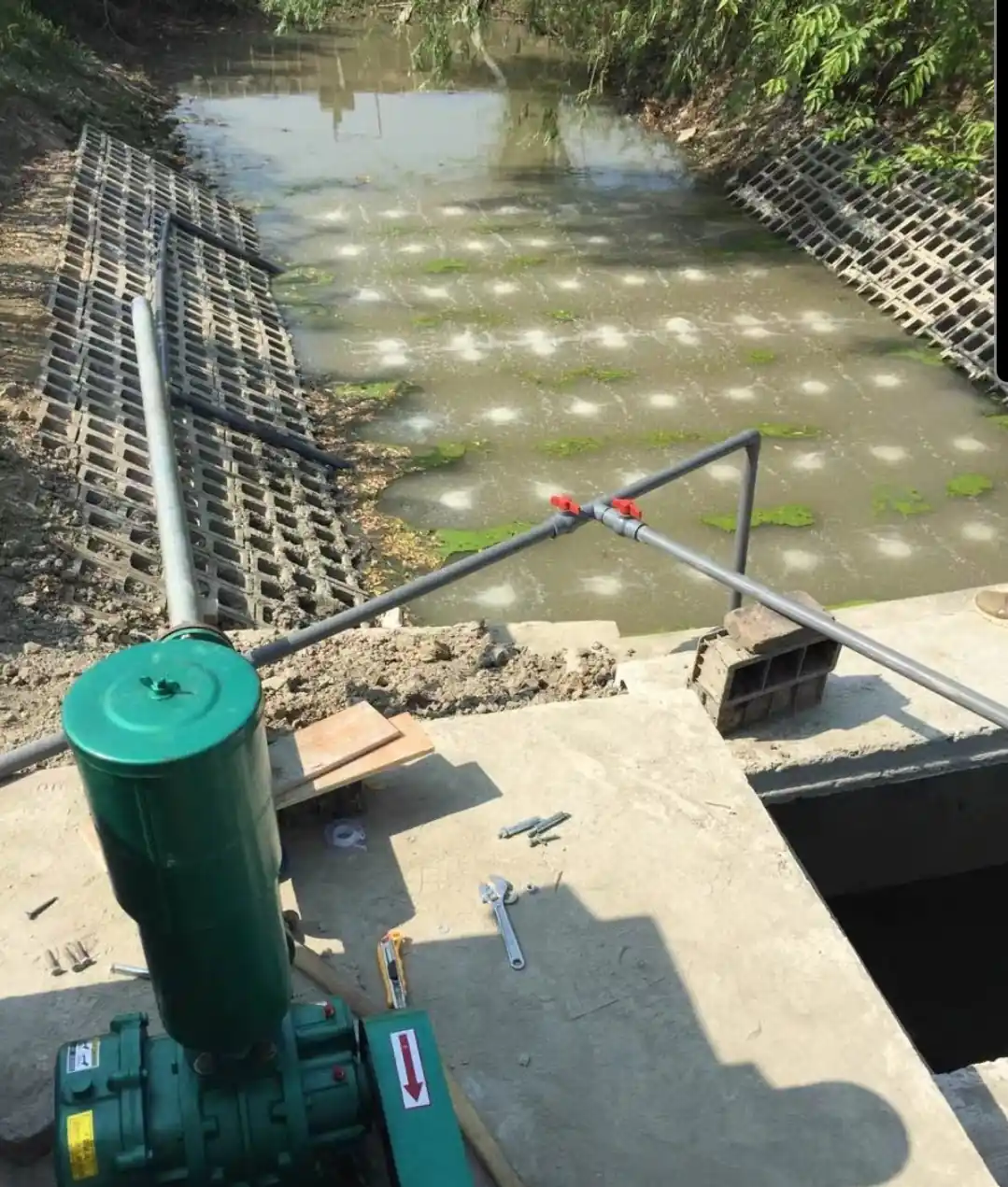
As covered in our pond guides, aeration raises the pond's carrying capacity — more oxygen, more feed, more fish. Microporous bottom aeration at 3–5 mg/L DO is the workhorse: cheap to run (about 0.15 kW/mu), and it oxygenates the bottom where fish rest at night.
In RAS: oxygen is the life support of the biofilter
In a RAS, dissolved oxygen does double duty:
1. Fish respiration — target 5–8 mg/L in the culture tank (higher than ponds, because density is much higher).
2. Biofilter function — nitrifying bacteria (the core of water treatment) consume large amounts of oxygen to convert ammonia to nitrate. If DO in the biofilter drops, ammonia rises and fish die — often within hours.
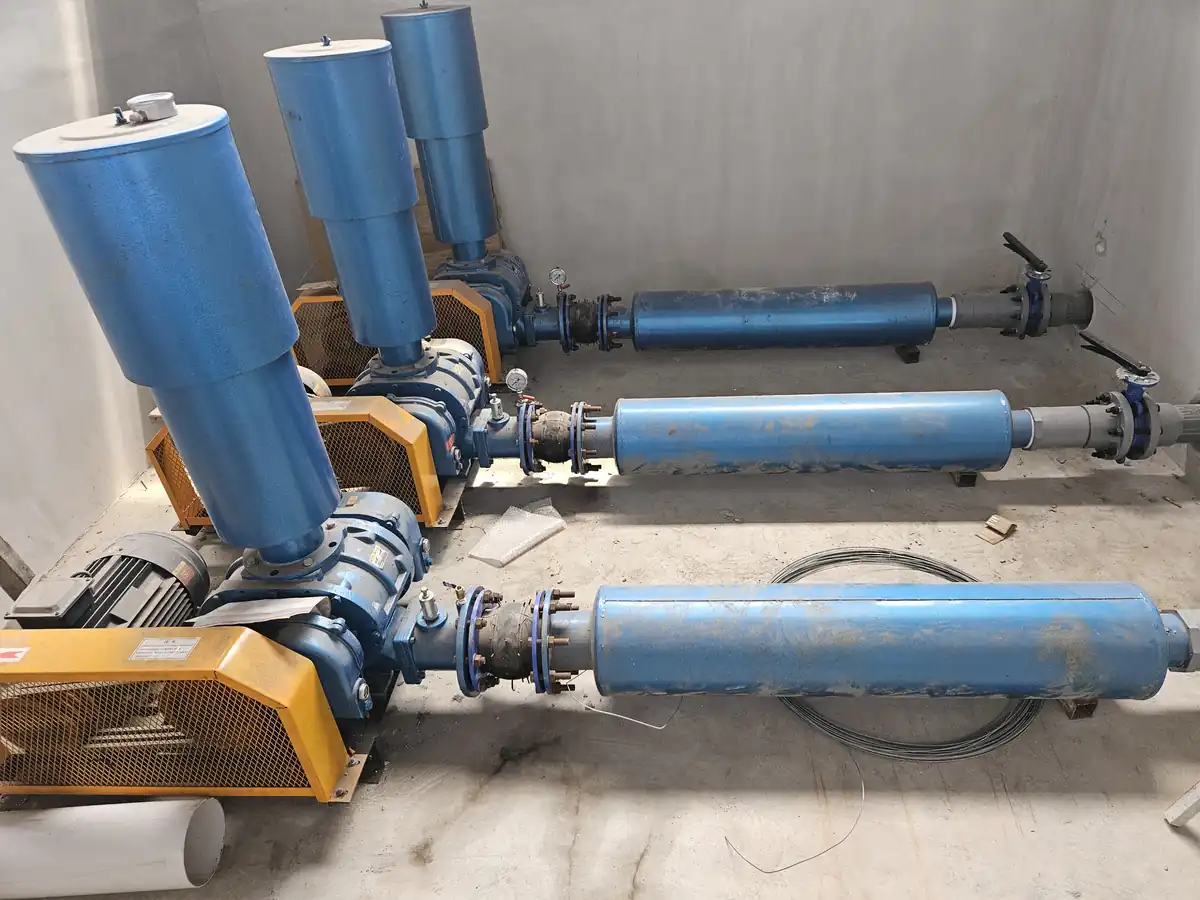
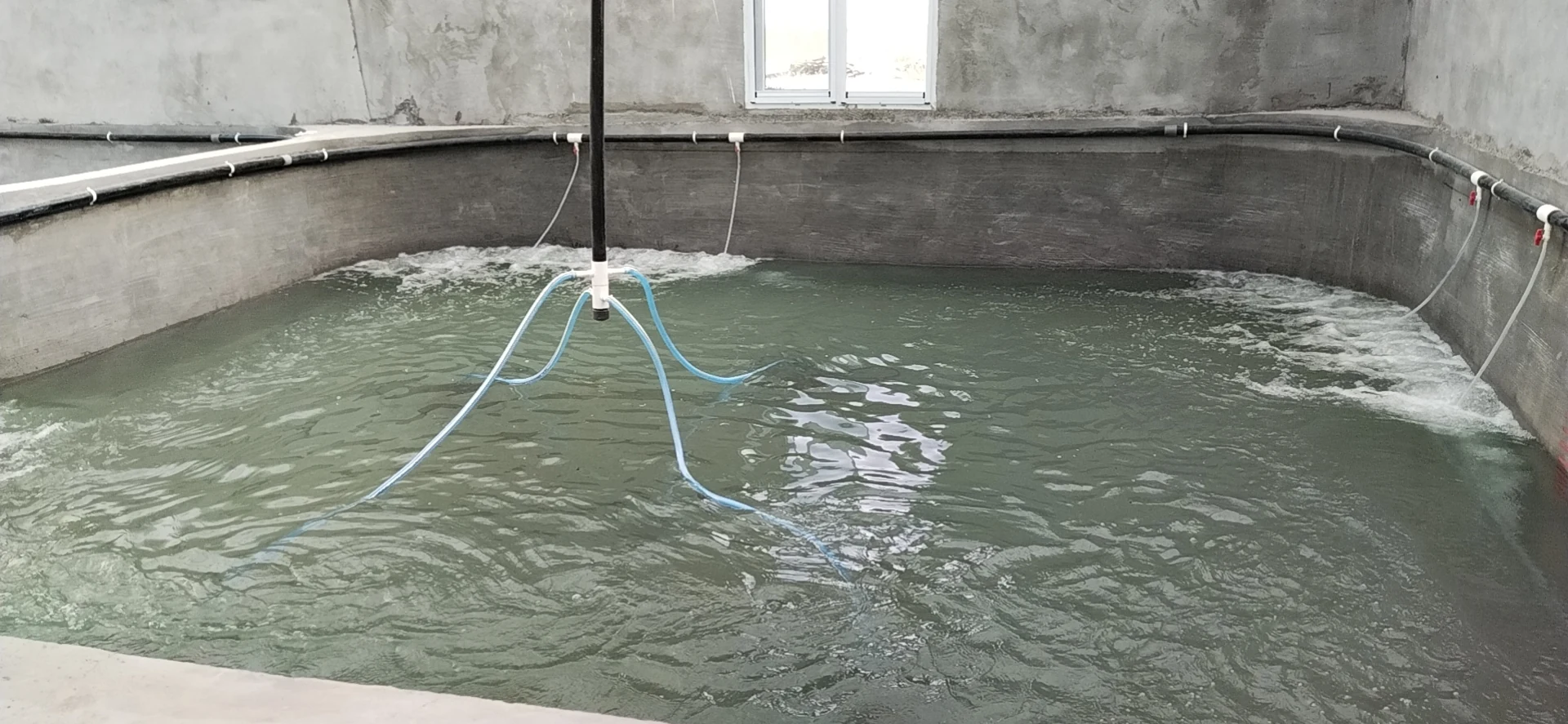
This is why RAS systems run continuous aeration 24/7: aeration is not an optimization in RAS, it is the system's pulse. The classic setup is a roots blower feeding microporous diffusers or oxygen cones, sized for peak oxygen demand (typically 2–4× the average demand to cover feeding peaks).
The energy reality
Both systems are electricity-hungry, but differently:
- Pond: aeration is the dominant load; efficient bottom aeration (0.15 kW/mu) directly cuts the bill.
- RAS: pumps + aeration + (often) heating all compete for power; efficient blowers with VFD control and dissolved oxygen sensors that modulate output save 15–25% on the aeration share.
The Middle Path: Hybrid Systems
Most farms do not have to choose 100% one way:
| Hybrid approach | What it is | Who it suits |
|---|---|---|
| Aerated ponds (semi-intensive) | Ponds + bottom aeration, 5–15 kg/m³ | Most tropical farms — the upgrade path |
| Biofloc | High-density ponds with strong continuous aeration, no water exchange | Shrimp farms with limited water |
| Pond + RAS nursery | RAS for hatchery/nursery stage, ponds for grow-out | Farms wanting biosecure juveniles |
| Partial recirculation | Reuse 20–50% of water with treatment | Farms under water stress |
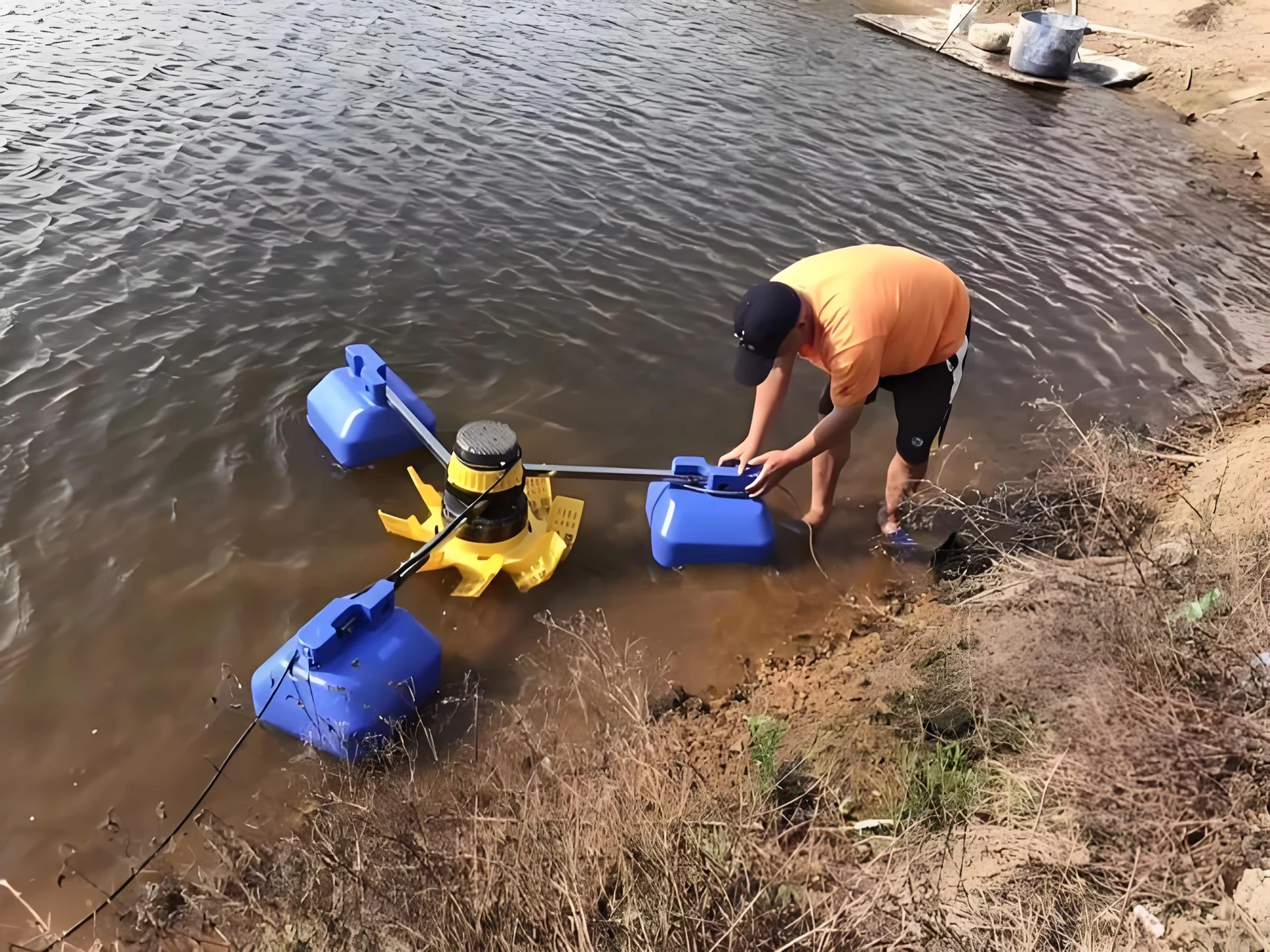
The aeration equipment is largely the same across all of these: blowers, microporous tubing/diffusers, and (for ponds) floating aerators — sized differently, but from the same product family.
How to Choose (A 5-Question Decision Flow)
1. How scarce is your water? Scarce → RAS or partial recirculation. Abundant → ponds.
2. What is your capital budget? Tight → aerated ponds first (smallest step up). Ready for serious investment → RAS.
3. What species? High-value (e.g. seabass, eel, salmonids) justify RAS. Tilapia, carp, shrimp at commodity prices → ponds or biofloc.
4. Do you have the team? RAS fails without daily water-quality management. Ponds forgive weekends off.
5. What is your electricity cost? High tariffs punish RAS (pumps 24/7). Pond aeration at 0.15 kW/mu is far cheaper to run.
Practical recommendation for most readers: start with aerated ponds — it is the same aeration technology you would need in RAS anyway, it pays back fast, and it does not lock you in. Upgrade to RAS only when water or climate forces it, or when you target species that ponds cannot grow.
Frequently Asked Questions
Q: Is RAS really 5–10× more expensive? A: Per unit of production capacity, yes — RAS build cost is typically several times higher per kg of fish than ponds. But it also produces far more per square meter. The right comparison is total cost per kg produced over the system's life, not the build cost.
Q: Can shrimp be farmed in RAS? A: Yes — shrimp RAS exists and grows (biofloc and clear-water RAS both work). But shrimp are more sensitive to water chemistry swings, so RAS shrimp demands even higher management discipline. Most producers still use aerated ponds or biofloc.
Q: Do I need different aeration equipment for RAS? A: The same product family works: roots blowers + microporous diffusers. RAS needs tighter control (DO sensors, VFD, possibly oxygen cones for the highest densities), but the core blower + diffuser technology is identical.
Q: When should I upgrade from pond to RAS? A: When water is scarce/expensive, land is limited, or you want year-round production of high-value species in a cold climate. If none of those apply, aerated ponds remain the better economics.
Q: Can I use my pond aeration knowledge in RAS? A: Mostly yes — DO management principles (targets, diurnal curves, feed-related oxygen demand) transfer directly. The main new skill is biofilter management.
The Bottom Line
RAS and ponds are not an either/or — they are a spectrum, and most farms sit somewhere on it (aerated ponds, biofloc, partial recirculation). What every point on that spectrum has in common is aeration as the core investment. Get the blower and diffuser sizing right, run it efficiently, and your system works — whether it is a 5-mu pond or a 50-tank RAS.
Zhongxin Machinery supplies aeration for the whole spectrum: microporous tubing, ZXMSR roots blowers with VFD options, and floating aerators — sized for ponds, biofloc systems, or RAS. Send us your system type, volume, density and species, and we will reply with the aeration configuration and quote.