The Short Answer
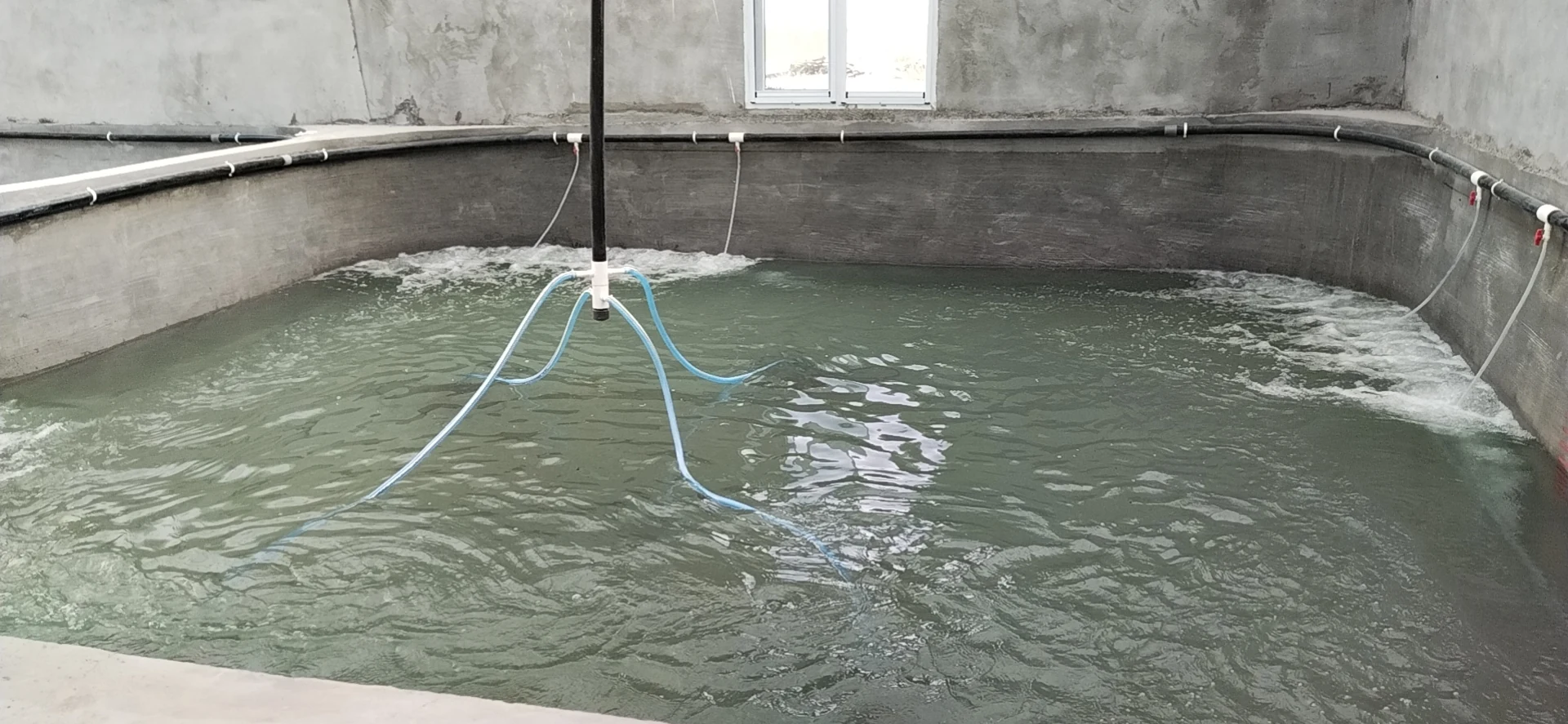
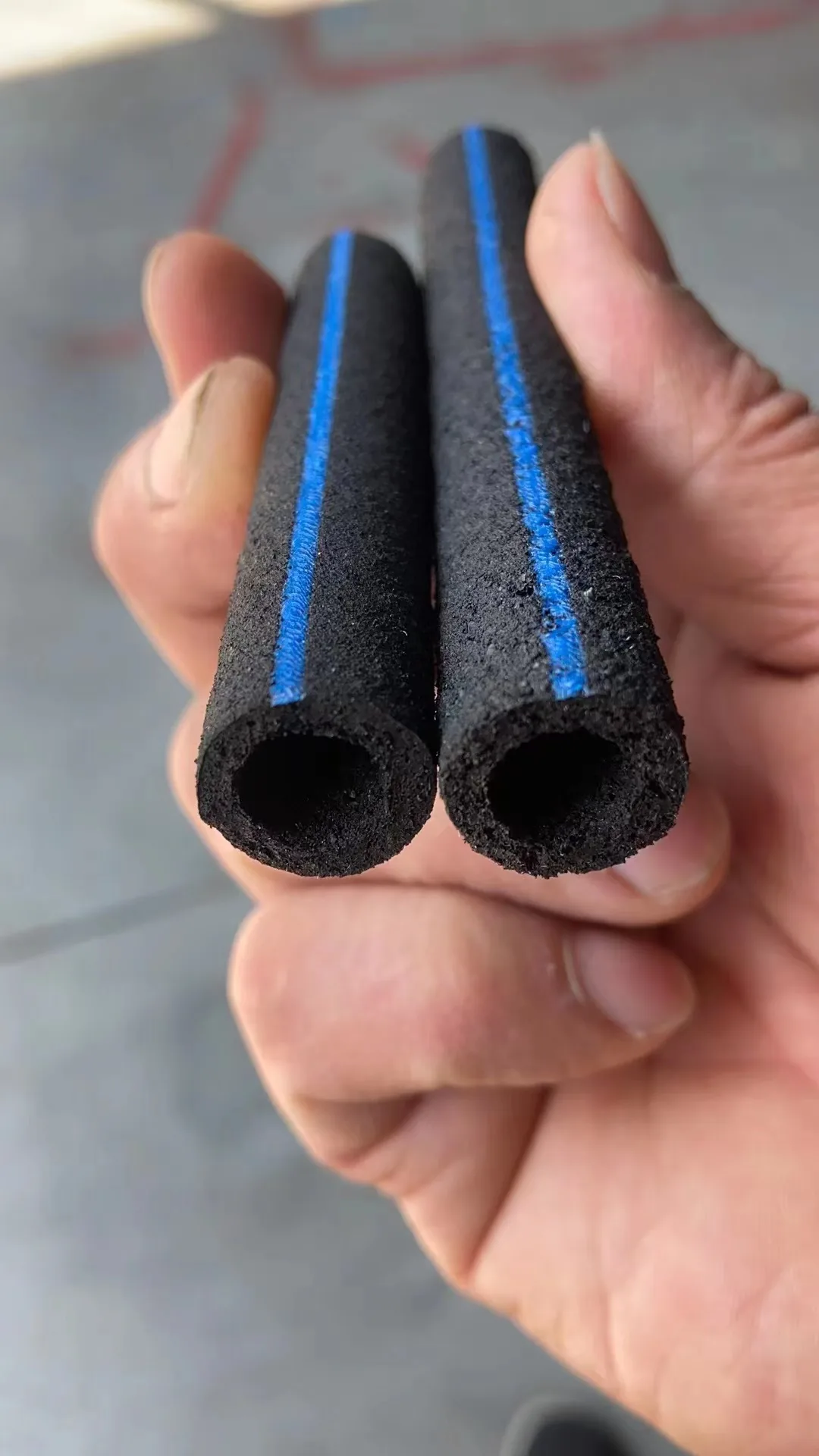
Aeration is usually the largest electricity cost on a tropical shrimp farm — often 30–60% of the power bill. You can cut it by 30–50% without reducing shrimp survival by: (1) switching from paddle wheels to microporous bottom aeration (about 0.15 kW per mu vs roughly double for paddle wheels), (2) running aeration by the DO curve instead of 24/7 — full power at night and after feeding, reduced during peak photosynthesis hours, (3) keeping tubing and blowers maintained so the system runs at spec. On a 10-mu pond, this typically saves thousands of dollars per season.
Why Tropical Farms Pay More for Aeration
Tropical shrimp farms face a double penalty:
- Hot water holds less oxygen — dissolved oxygen saturation at 30°C is about 15% lower than at 25°C.
- Shrimp metabolism rises with temperature — higher DO demand exactly when oxygen is harder to dissolve.
The result: tropical farms must aerate more hours and more power per mu than farms in temperate regions. The pre-dawn minimum is the binding constraint — the whole system is sized for that one dangerous window.
The Energy Math (Real Numbers)
| Item | Microporous bottom aeration | Paddle wheel (typical) |
|---|---|---|
| Energy per mu | ~0.15 kW | ~0.3–0.35 kW |
| 10-mu farm installed | ~1.5 kW | ~3–3.5 kW |
| Daily run (20 h) | 30 kWh | 60–70 kWh |
| Season cost (180 days, $0.10/kWh) | ~$540 | ~$1,080–1,260 |
Switching from paddle wheels to microporous bottom aeration saves roughly $500–700 per 10-mu farm per season — before counting the extra benefit that bottom aeration also reaches the pond bottom where paddle wheels don't.
Note: savings vary with local tariffs and run hours. At higher tariffs ($0.15–0.25/kWh — common in Vietnam, Indonesia, the Philippines), the saving scales up proportionally.
6 Ways to Cut Aeration Energy (Without Losing Shrimp)
1. Switch to bottom aeration (biggest lever)
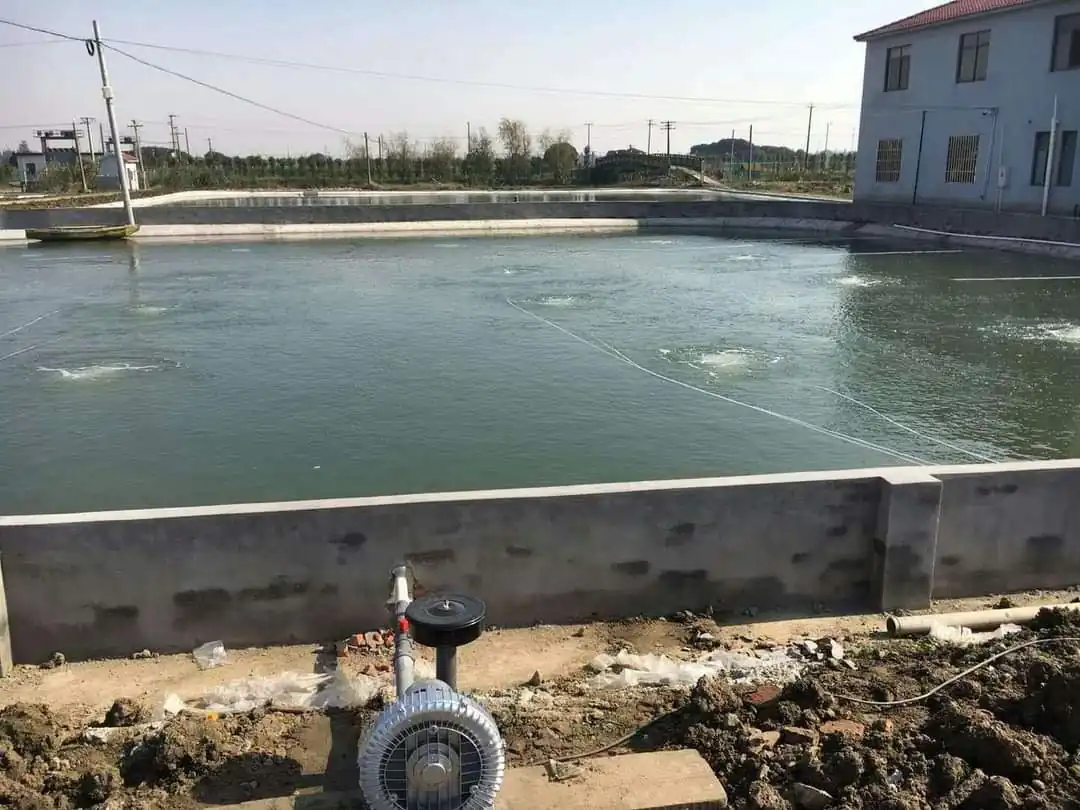
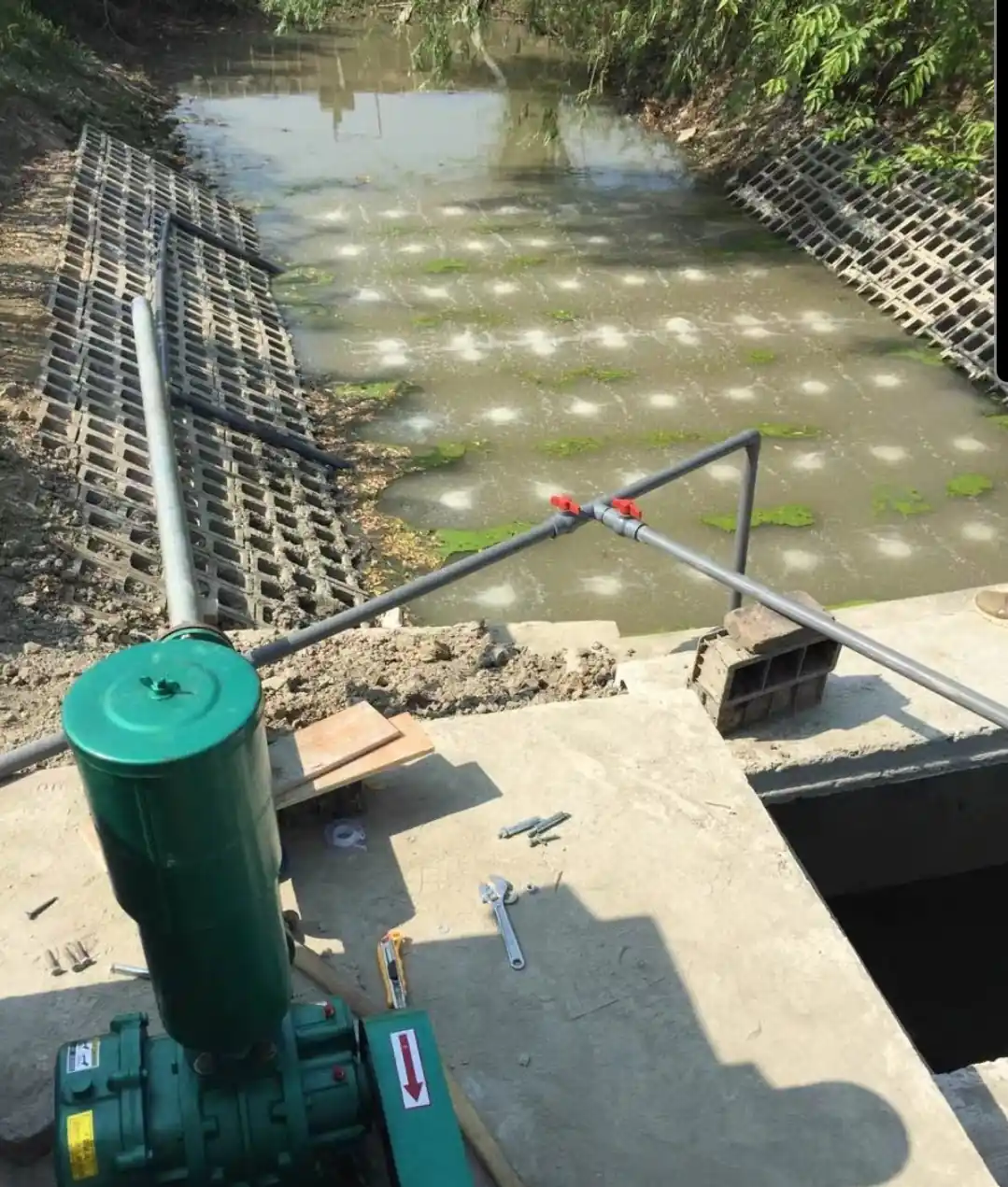
Microporous tubing dissolves nearly all the oxygen into the water; paddle wheels splash much of it into the air. Same DO, roughly half the energy.
2. Run by the DO curve, not the clock
| Period | DO situation | Aeration |
|---|---|---|
| Night – pre-dawn (20:00–7:00) | Falling, lowest at dawn | Full power |
| After feeding (1–2 h) | Metabolism spike | Full power |
| Midday (11:00–15:00) | Peak photosynthesis | Reduced / off (if DO > 5 mg/L) |
| Cloudy/hot afternoons | Photosynthesis drops | Back to full |
Running 20 h instead of 24 h on a 10-mu farm saves ~17% energy; smart midday reduction saves more.
3. Use variable-frequency drives (VFD)
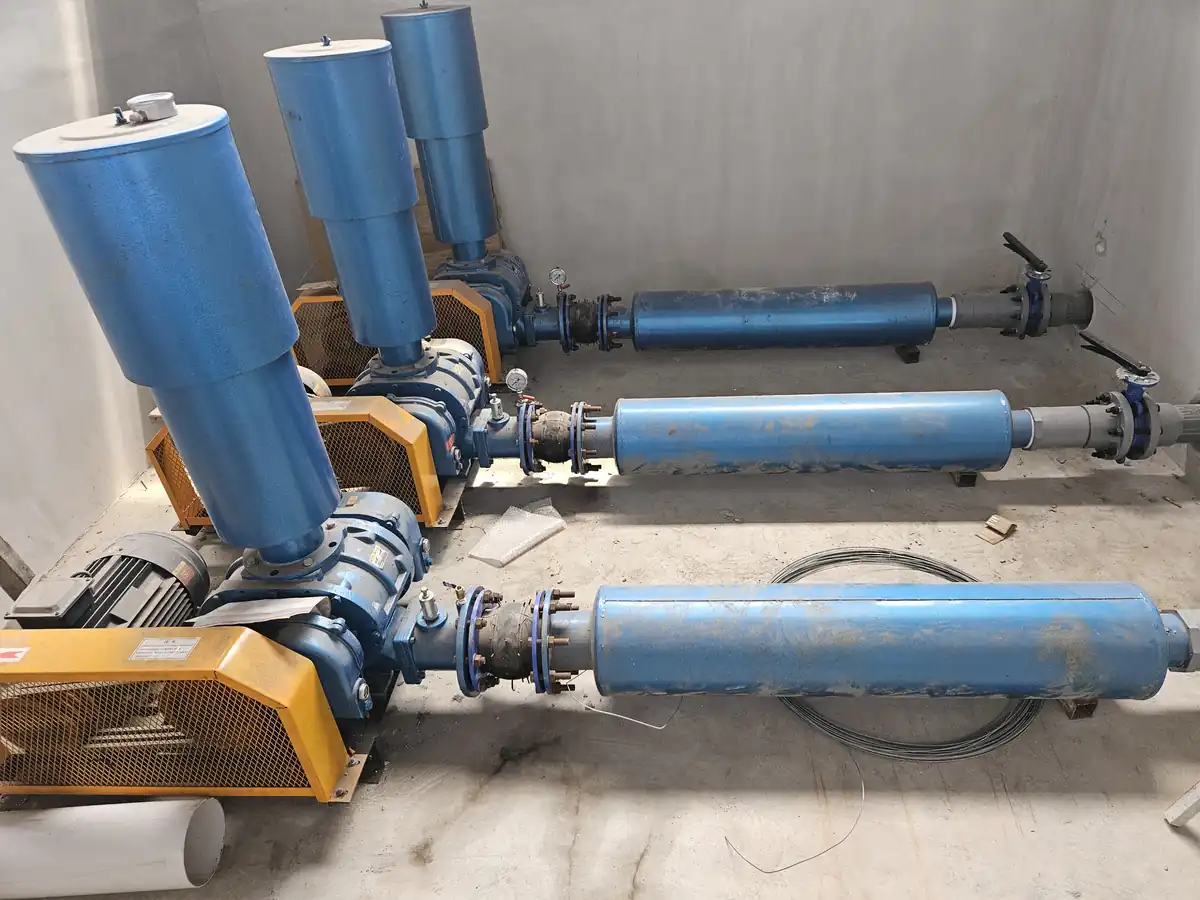
Blowers with VFD match air output to demand instead of running flat out. Typical saving: 15–25% on blower electricity. (Zhongxin's permanent-magnet VFD aerators and blower packages include this.)
4. Keep the system at spec
- Clean tubing after harvest (clogged pores = more back pressure = more energy for less oxygen).
- Clean the blower intake filter monthly.
- Check for leaks in pipes and manifolds — leaks are pure waste.
5. Check your electricity tariff
Run heavy loads off-peak where time-of-use tariffs exist (often night rates are 30–50% cheaper — and night is when you need full aeration anyway).
6. Right-size, don't oversize
A blower too large for the pond wastes electricity every hour. Size from tubing length (1 kW per 100–150 m), not from guesswork.
Quick Savings Checklist
- [ ] Bottom aeration (microporous) instead of paddle wheels → up to 50% saving
- [ ] Run 20 h/day by DO curve → ~15–20% saving
- [ ] VFD on blower/aerator → 15–25% saving
- [ ] Clean tubing + filters monthly → maintain efficiency
- [ ] Off-peak scheduling where available → 30–50% on night hours
Combined, these typically cut aeration energy 30–50% — the difference between an electricity bill that eats profit and one that doesn't.
Frequently Asked Questions
Q: Isn't solar cheaper for tropical farms? A: Often yes for remote farms with unreliable grids — see our solar aeration guide. For farms with stable grid power, grid + VFD is usually the cheapest total solution; solar suits off-grid or high-tariff locations.
Q: How much can I really save on a 20-mu farm? A: Following the checklist, expect 30–50% on the aeration portion of the bill. At 0.15 USD/kWh, a 20-mu farm saving 35% on aeration typically saves $1,000–1,800 per season.
Q: Will reducing aeration hours hurt shrimp? A: No, if you follow the DO curve: full power at night and after feeding, reduced only when DO is safely above 5 mg/L (midday). The risk window is pre-dawn — never reduce aeration then.
Q: What is the cheapest way to start? A: If you already have paddle wheels, add microporous bottom aeration as the baseline and keep paddle wheels for emergencies — this cuts energy while improving bottom DO.
Q: Does dirty tubing really cost energy? A: Yes. Fouled pores increase blower back pressure and reduce oxygen transfer — the blower works harder for less result. Clean after every harvest.
The Bottom Line
Tropical shrimp farming doesn't have to mean expensive aeration. Bottom aeration at 0.15 kW/mu, running by the DO curve with VFD control and routine maintenance, cuts aeration energy 30–50% — thousands of dollars per season on a typical farm — while keeping DO in the safe 4–6 mg/L range.
Zhongxin Machinery supplies the energy-efficient package: microporous bottom aeration, VFD blowers and permanent-magnet aerators, plus a pond-specific energy calculation. Send us your pond area, depth, electricity tariff and current equipment — we will show you the saving on your numbers.