The Short Answer
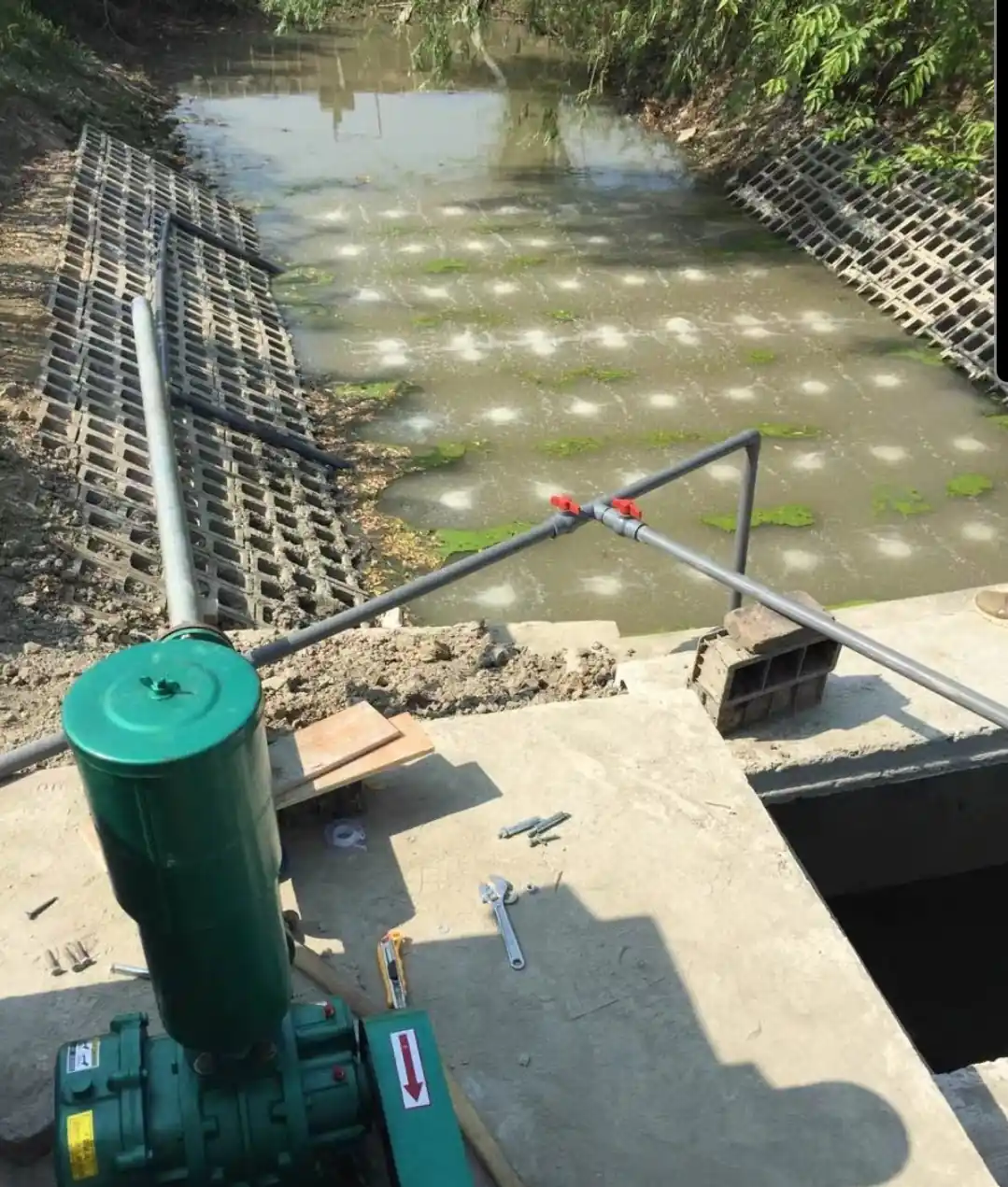
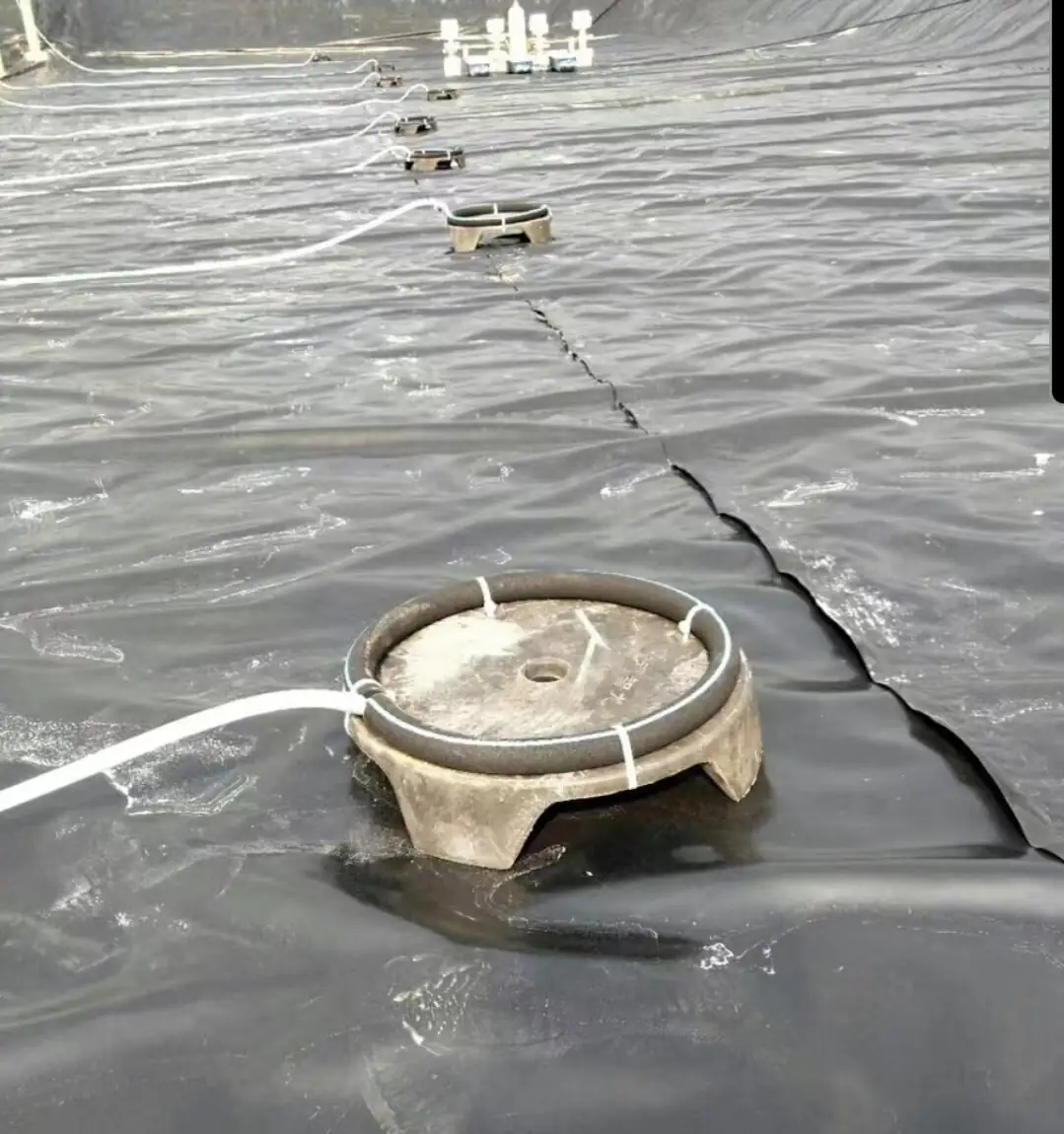
For a given dissolved oxygen (DO) target, microporous bottom aeration uses roughly 0.15 kW per mu (667 m²) of pond — about half the electricity of a paddle wheel aerator. Paddle wheels oxygenate only the surface; fine-bubble systems dissolve oxygen across the full water column and deliver it to the pond bottom where shrimp and fish actually live. In a 10-mu pond, that difference typically adds up to tens of thousands of yuan (several thousand USD) of electricity per growing season.
---
Why the Energy Comparison Matters
Aeration is usually the single largest electricity cost in aquaculture after feeding. Farmers often choose equipment by purchase price and overlook the operating cost that repeats every season:
- Aeration can account for 30–60% of a pond farm's total electricity bill.
- A 10% reduction in aeration energy is often worth more than a 10% price discount on the equipment itself.
- Energy efficiency depends on where oxygen is dissolved, not just how much air you push.
---
Head-to-Head: Fine Bubble Bottom Aeration vs Paddle Wheel
| Criterion | Microporous bottom aeration | Paddle wheel aerator |
|---|---|---|
| Bubble / spray size | 0.3–2 mm fine bubbles | Coarse splash and spray |
| Where oxygen is dissolved | Full water column + pond bottom | Surface layer only |
| DO at shrimp/fish level | Directly delivered to bottom | Reaches bottom slowly, if at all |
| Energy consumption (per mu, same DO) | ~0.15 kW | ~2× higher |
| Water exchange | Upper/lower layers mixed by rising bubbles | Horizontal surface movement |
| Noise | Low (blower on shore) | Moderate (motor mounted on floats) |
| Moving parts in water | None | Impeller, shaft, gearbox |
| Maintenance | Low | High (seals, gears, bearings) |
| Best for | Shrimp ponds, RAS, deep ponds, daily base aeration | Large open ponds, emergency aeration, moving surface water |
---
The Numbers: A 10-Mu Pond Energy Example
Assumptions: 10 mu (0.67 ha), 2 m depth, target DO 4–6 mg/L, 6-month growing season, electricity ¥0.7/kWh.
| Item | Microporous system | Paddle wheel (2× energy) |
|---|---|---|
| Installed power (per mu) | ~0.15 kW → 1.5 kW total | ~0.3 kW/mu → 3 kW total |
| Running hours per day | 20 h | 20 h |
| Daily consumption | 30 kWh | 60 kWh |
| Season electricity cost | ~¥3,780 | ~¥7,560 |
Season saving: roughly ¥3,780 (~$530) per 10-mu pond — before considering that paddle wheels still leave the bottom zone under-oxygenated. Scale that across a 100-mu farm and the annual saving is a five-figure yuan sum.
Note: actual figures vary with pond shape, stocking density, and local electricity tariffs. Ask your supplier for a sizing calculation with your real numbers.
---
When a Paddle Wheel Still Makes Sense
Fine-bubble bottom aeration is the right baseline for most shrimp and fish ponds, but paddle wheels have legitimate roles:
1. Emergency aeration — a paddle wheel moves a large volume of surface water fast when DO crashes on a hot night.
2. Very large, shallow open ponds — where installing bottom manifolds is impractical.
3. Water circulation — paddle wheels can push surface water toward a drain or skimmer.
The most robust setups use both: microporous bottom aeration as the energy-efficient baseline, with a paddle wheel or jet aerator as backup for emergencies.
---
Frequently Asked Questions
Q: How much can I really save switching from paddle wheels to microporous aeration? A: Farmers typically report 30–50% aeration energy savings for the same DO level, because nearly all the oxygen dissolves into the water instead of being splashed into the air. In the example above, a 10-mu pond saves ~¥3,780 per season.
Q: Doesn't a paddle wheel oxygenate faster? A: It moves more water at the surface, but shrimp and fish live at the bottom. Surface oxygenation only reaches the bottom after the water column mixes—which in a calm pond can take hours. Bottom aeration delivers oxygen exactly where it is needed.
Q: Is microporous aeration suitable for seawater shrimp ponds? A: Yes. Choose tubing rated for seawater (bubble diameter 0.5–3 mm) and a blower with adequate pressure for the water depth.
Q: What if my pond already has paddle wheels? A: You don't have to throw them away. Add microporous bottom aeration as the baseline and keep paddle wheels for emergency use—this combination cuts energy while improving survival rates.
Q: How do I measure whether my aeration is efficient? A: Track two numbers: dissolved oxygen at the pond bottom (target 4–6 mg/L) and kWh consumed per mu per day. If DO is fine but energy is high, or DO is low with high energy, your aeration configuration is not optimal.
---
Q: Is a paddle wheel aerator cheaper to run? A: On purchase price, usually yes. On running cost, usually no. A paddle wheel aerator spends its energy throwing water into the air, so the oxygen it transfers per kilowatt-hour is far lower than a diffused system — in the 10-mu example on this page the diffused side ran at a fraction of the paddle-wheel figure. A paddle wheel is still the right machine as backup or for emergency surface aeration, where speed of response matters more than energy per kilogram of oxygen.
The Bottom Line
Microporous bottom aeration wins the energy comparison on two fronts: it uses about half the electricity of paddle wheels for the same DO target, and it oxygenates the bottom zone where paddle wheels cannot. The ~0.15 kW/mu figure is a realistic planning number for well-sized microporous systems.
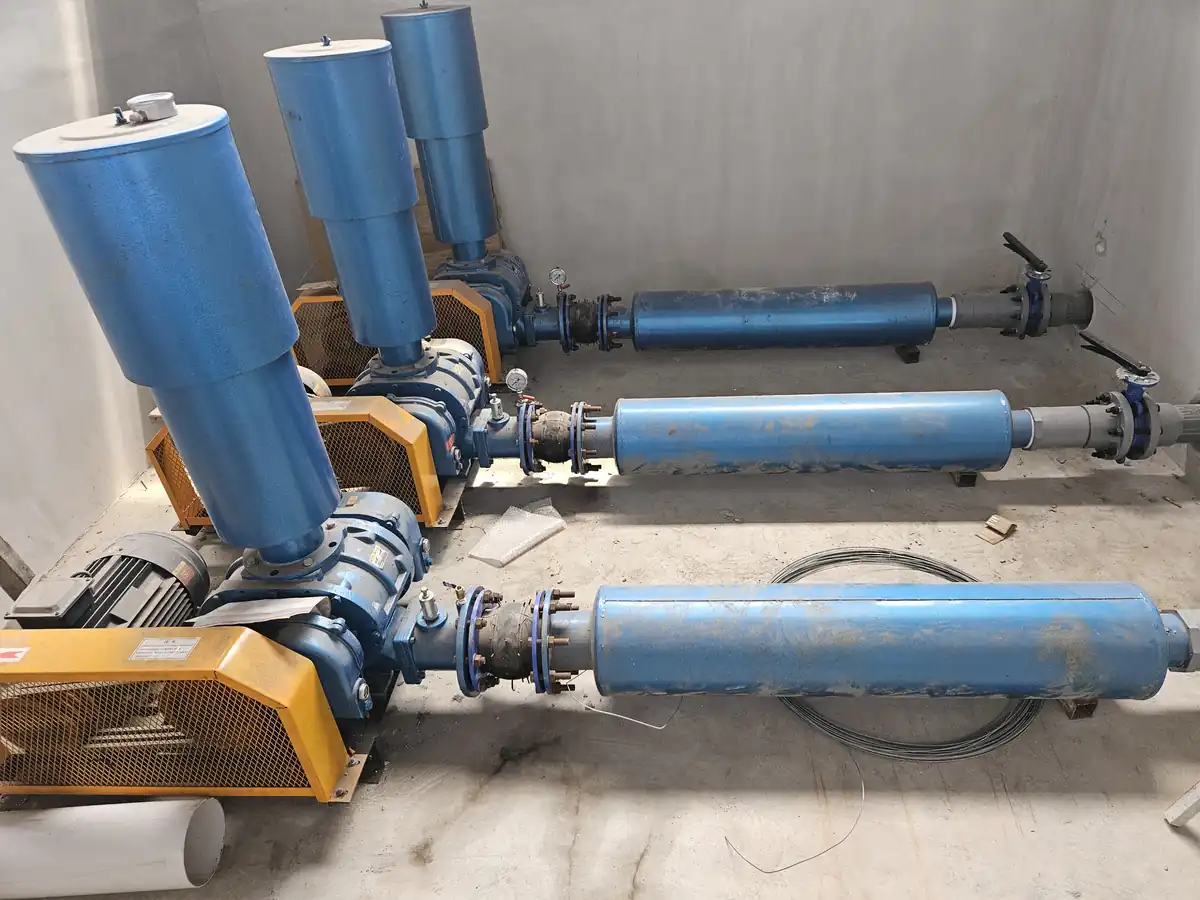
Manufacturers that supply both the tubing and the blower—such as Zhongxin Machinery, which sizes complete aeration systems for shrimp farms in Southeast Asia, Latin America, and Africa—can give you a pond-specific energy calculation before you buy. Send your pond area, depth, and stocking density; a properly sized system typically pays back its cost difference within one growing season.
Need to compare tubing options? Browse microporous aeration tubing →
---
References: FAO aquaculture guidelines on pond aeration; University of Florida IFAS extension notes on dissolved oxygen management; SRAC publications on aeration for aquaculture ponds; Global Seafood Alliance shrimp farming resources; scientific reviews on diffused aeration efficiency.
Both routes sit inside a full pond aeration systems design; sizing both from the same pond data is what makes the comparison fair.
Why the Tropics Are Different
Tropical ponds face three conditions that temperate ponds don't:
1. Hot water holds less oxygen — saturation at 30°C is ~15% lower than at 25°C.
2. Metabolism runs faster — fish and shrimp consume more oxygen at higher temperatures, exactly when it is hardest to dissolve.
3. Intense afternoon sun + heavy rain — sudden stratification, plankton die-offs and temperature crashes make DO swing violently within hours.
These three forces mean tropical farmers pay more per unit of oxygen produced — so the efficiency of the aeration method matters more than anywhere else.
The Head-to-Head Comparison (Tropical Conditions)
| Criterion | Fine bubble (microporous bottom) | Paddle wheel |
|---|---|---|
| Energy per mu | ~0.15 kW | ~0.3–0.35 kW |
| Where oxygen goes | Bottom first (where fish rest at night) | Surface only |
| DO swing control | Smooth — diffused across the bottom | Bumpy — surface spikes, bottom lags |
| Rain/storm resilience | Works in any weather | Splash effect reduced in rain |
| Moving parts in water | None (tubing only) | Motor + impeller submerged |
| Maintenance | Clean tubing after harvest | Bearing/seal replacements, fouling |
| Backup role | Needs blower backup | Often kept as the emergency unit |
| Solar compatibility | Excellent (low power, can run off solar) | Poor (high surge power) |
The tropical summary: fine bubble wins on energy (half), bottom oxygen (direct), storm reliability (no submerged parts) and solar compatibility — the four things that matter most in hot climates. Paddle wheels win on surface circulation and are a sensible backup, not the primary.
The Energy Math in the Tropics
| Item | Fine bubble | Paddle wheel |
|---|---|---|
| 10-mu farm, installed power | ~1.5 kW | ~3–3.5 kW |
| 20 h/day running | 30 kWh | 60–70 kWh |
| 180-day season at $0.10/kWh | ~$540 | ~$1,080–1,260 |
| Season saving with fine bubble | — | ~$540–720 per 10 mu |
In high-tariff tropical countries (Vietnam, Indonesia, Philippines at $0.15–0.25/kWh), the saving scales to $800–1,800 per 10 mu per season — a number that shows up directly in the farm's profit.
When Paddle Wheels Still Make Sense (Tropical Edition)
1. Emergency backup — keep one per pond or per 5 mu as insurance (see our emergency aeration guide).
2. Water circulation — shallow ponds where bottom aeration alone leaves surface stagnation.
3. Pre-existing investment — if you already own paddle wheels, keep them running during peak demand and add fine bubble as the baseline; the hybrid cuts energy while improving bottom DO.
Tropical Operation Tips
| Situation | Fine-bubble strategy |
|---|---|
| Normal hot season | Run 15–20 h/day; full power at night and after feeding |
| Midday sun peak | Can reduce aeration if DO > 5 mg/L (photosynthesis doing the work) |
| Heavy rain / cold front | Full aeration — plankton die-off consumes oxygen fast |
| Pre-dawn minimum | Never reduce aeration in the 3–7 am window — this is when the crop is decided |
| After feeding | 1–2 h full power (feed = oxygen demand spike) |