Three ways to put oxygen in a pond
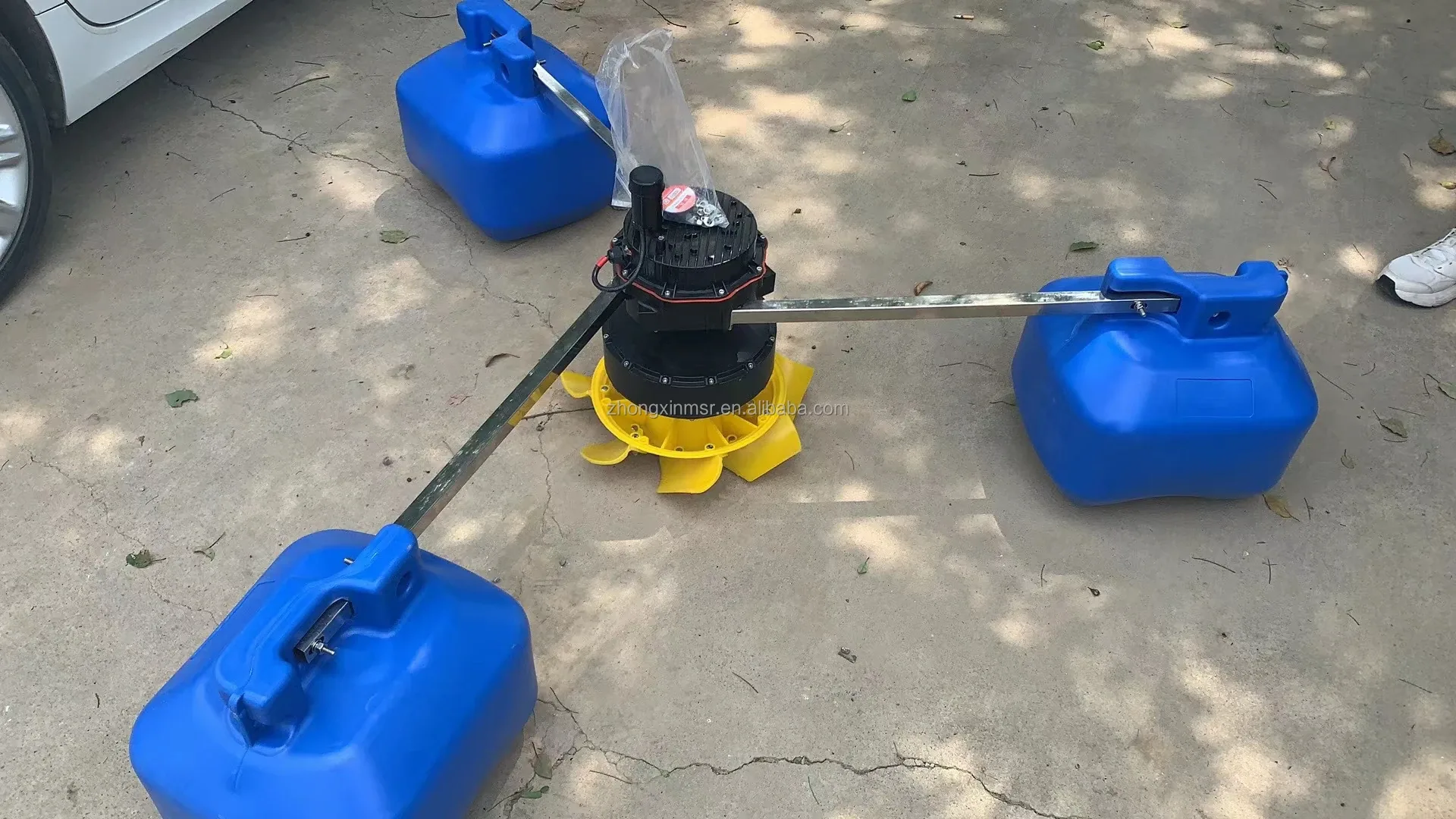
- Paddle wheel aerators hang on floats and throw water into the air with rotating paddles. They create strong horizontal circulation, which also drives waste toward the pond center. Standard for shallow, large-surface ponds.
- Floating aerators (surface propeller or spray types) sit on the surface and circulate or spray the top layer. Compact and easy to move — a common choice for smaller ponds, tanks and emergency aeration.
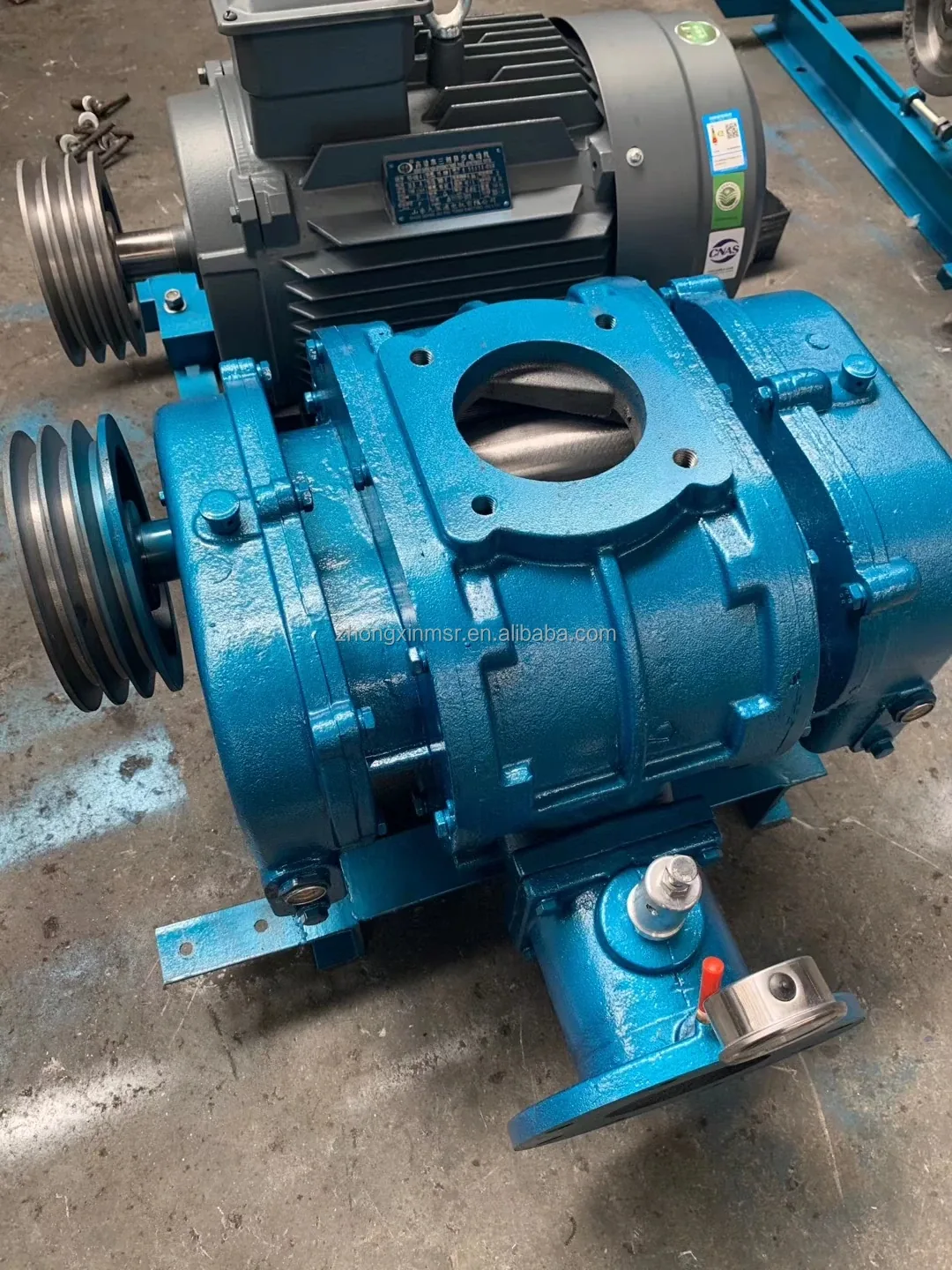
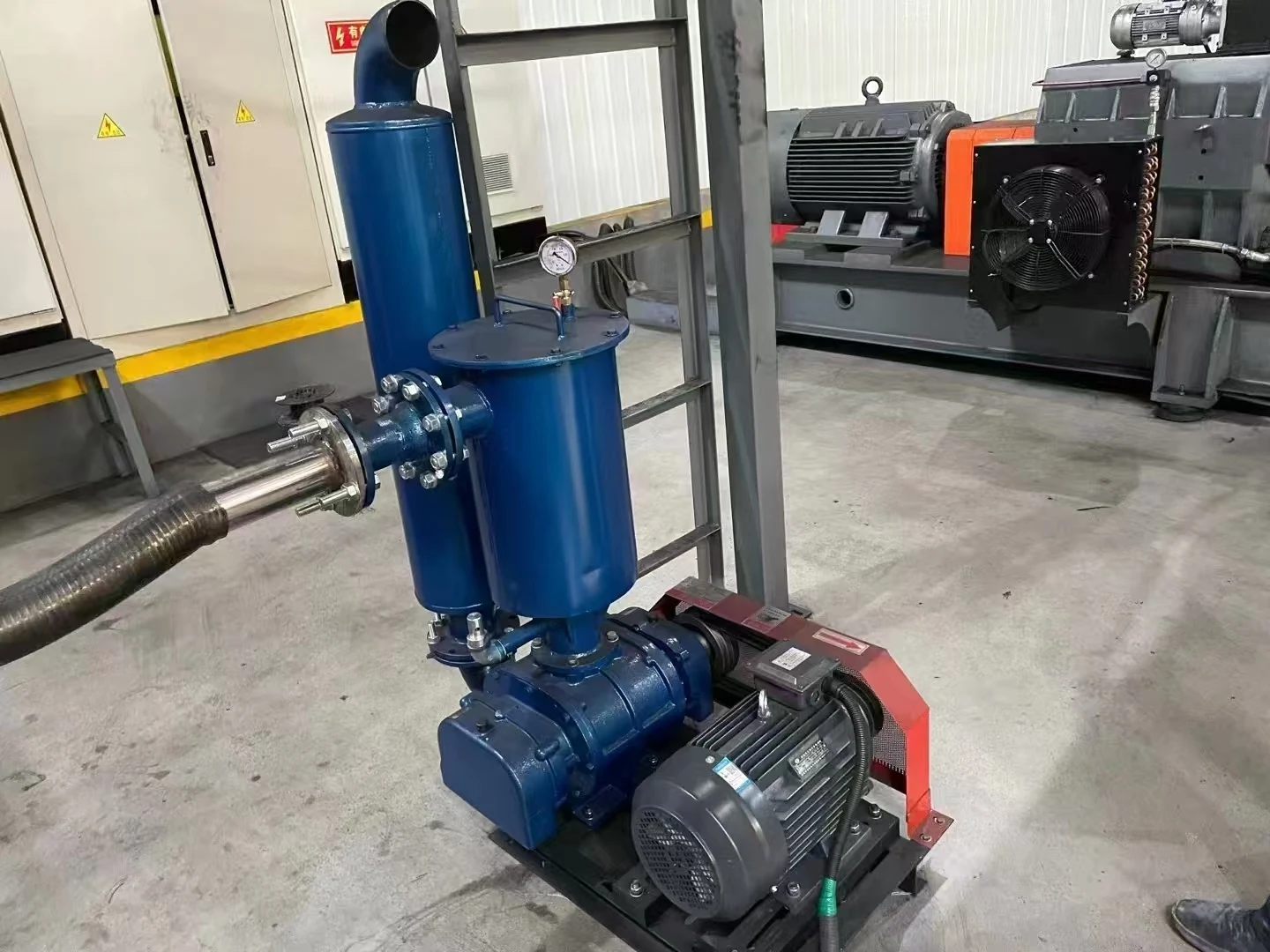
- Bottom (diffused/microporous) aeration pushes fine bubbles through tubes or discs on the pond floor. The bubbles rise slowly and oxygenate the water column from the bottom up — the most efficient transfer per kWh in deep water, and the only option that directly oxygenates the night-time bottom layer.
Efficiency data
Standard-format oxygen-transfer figures from published paddle wheel tests (ScienceDirect): a conventional paddle wheel delivers about 1.434 kg O₂/kWh at 20‰ salinity, while a modified impeller design reaches about 2.018 kg O₂/kWh at 35‰. Bottom diffused aeration does not publish the same standard-format number, but its advantage is structural: bubbles stay in contact with the water far longer than a spray, and oxygen is released at depth where it is needed, so transfer efficiency is highest in deeper columns.
| Technology | Strength | Efficiency / fit |
|---|---|---|
| Paddle wheel (conventional) | surface transfer + circulation | ≈1.43 kg O₂/kWh @20‰ (ScienceDirect); best ≤1.8 m depth |
| Modified paddle impeller | higher transfer | ≈2.02 kg O₂/kWh @35‰ (ScienceDirect) |
| Bottom microporous | depth transfer | highest SOTE per metre of depth; low energy at equal DO |
| Floating (small surface) | portability, small ponds | convenient but lower absolute capacity than paddle wheels |
Decision tree: which one for your pond?
- Pond deeper than ~1.8 m, or high density, or DO trouble at dawn → bottom microporous aeration (alone or combined), because only bottom aeration fixes the night-time bottom layer.
- Shallow pond (under ~1.5 m) with a large surface → paddle wheel: strong circulation, standard in semi-intensive shrimp farming, easy for farm staff to maintain.
- Small pond, tank, hatchery, or emergency spare → floating aerator: cheap per unit, quick to deploy, easy to store between crops.
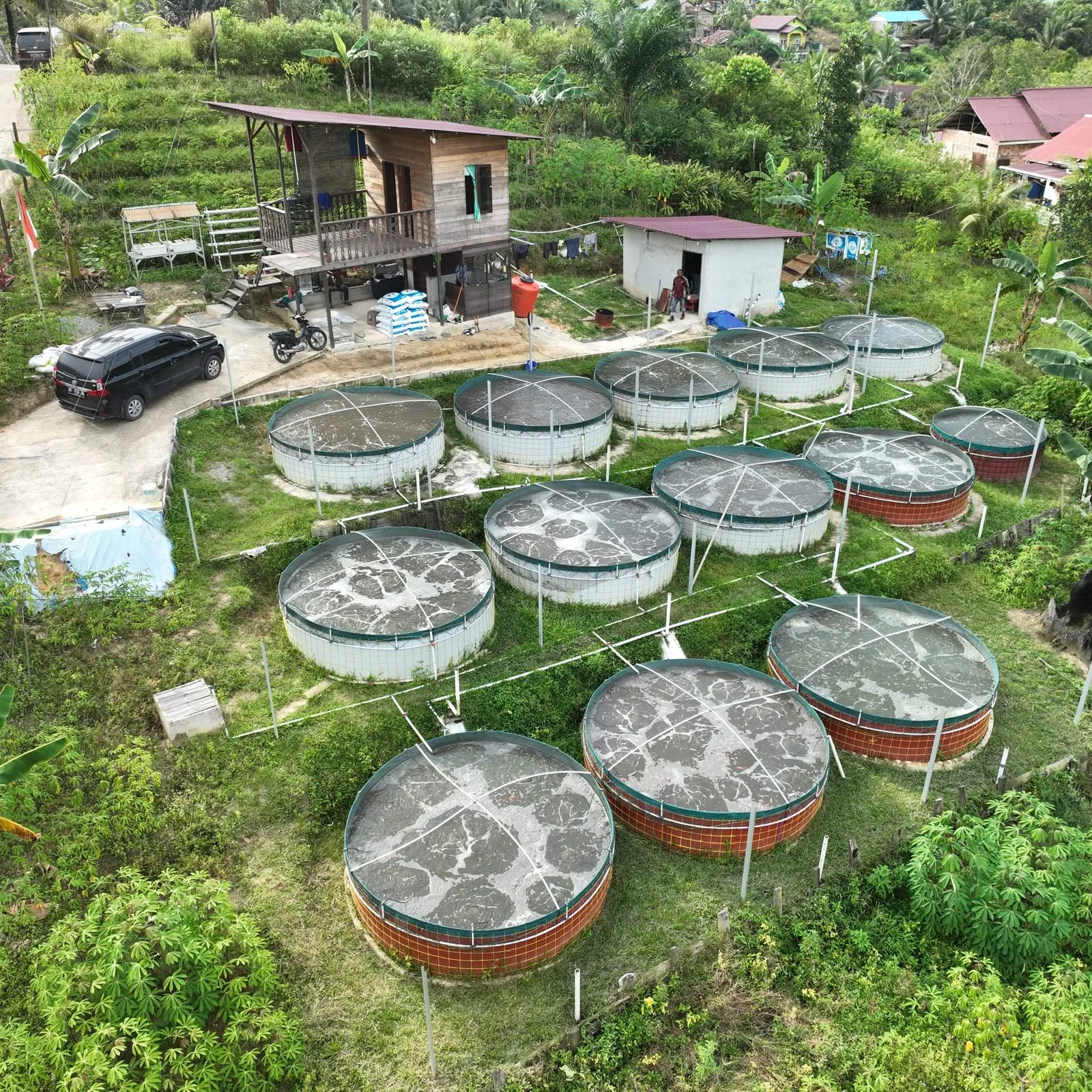
- Intensive shrimp (80-150 PL/m²) → combine: paddle wheels around the perimeter for circulation plus bottom aeration toward the center, which concentrates waste and keeps the deepest water oxygenated. This "paddle ring + central bottom" layout is the practical best practice on intensive farms.
Cost in three dimensions
| Cost | Paddle wheel | Floating | Bottom microporous |
|---|---|---|---|
| Purchase per kW | mid | low-mid | highest (blower + tubing) |
| Running electricity per kg O₂ | mid-high | high | lowest (long bubble contact) |
| Maintenance | paddles/bearings/belt | motor/seal | blower service + tubing replacement |
Bottom aeration has the highest upfront cost per kW because you buy the blower, the air lines and the diffusers — but it returns the lowest electricity cost per kilogram of oxygen and the best deep-water performance, which is why intensive and RAS farms standardize on it.
Combination play
You rarely need to pick just one. A robust layout on an intensive shrimp pond:
1. Paddle wheels (or long-arm units) around the perimeter, sized at 3-4 kW/ha, running hardest in the afternoon and at night in hot months.
2. Central bottom aeration lines or discs under the feeding area, run at night to hold bottom DO above 3 mg/L.
3. A floating unit kept as an emergency spare, ready to drop into any pond that crashes.
The paddle wheels move water and surface-oxygenate; the bottom system guarantees the deepest layer; the spare protects you against equipment failure at the worst possible moment.
FAQ
Q: Which aerator is cheapest to run?
A: Bottom microporous aeration transfers oxygen most efficiently per kWh because fine bubbles stay in contact with the water longest — see the principle explained here. Paddle wheels cost less to buy per kW but more to run per kilogram of oxygen; floating units are in between on both.
Q: Is a paddle wheel enough for a deep pond?
A: Not alone. Paddle wheels move the surface layer; below about 1.8 m their circulation fades. In deeper ponds add microporous bottom aeration (pond and equipment requirements) or the pond bottom will go anoxic at night.
Q: Why do intensive shrimp farms still use paddle wheels if bottom aeration is more efficient?
A: Because circulation matters too. Paddle wheels push waste toward the center where it can be drained, and they keep the whole water column moving. Bottom aeration on its own does not create the same directional flow. The two are complementary, which is why intensive farms combine them.
Q: Which is better for a 1,000 m² concrete tank?
A: For tanks, bottom microporous or a small floating unit are usually the right scale — paddle wheels are built for hectares. In a tank you also control depth and stocking more precisely, so the diffuser's efficient transfer pays off.
Q: How do I compare quoted "kg O₂/kWh" numbers?
A: Only compare figures measured under the same standard (same salinity, temperature, test method — the paddle wheel figures above are standard-format). A number without its test conditions is marketing, not data. Ask the supplier for the standard used.
Choosing with data
Browse our floating aerator range for paddle wheel and VFD machines, and the microporous aeration technology overview for bottom systems — or send us your pond depth, area and density for a layout recommendation.
The floating machine option is on the VFD aeration machine page.