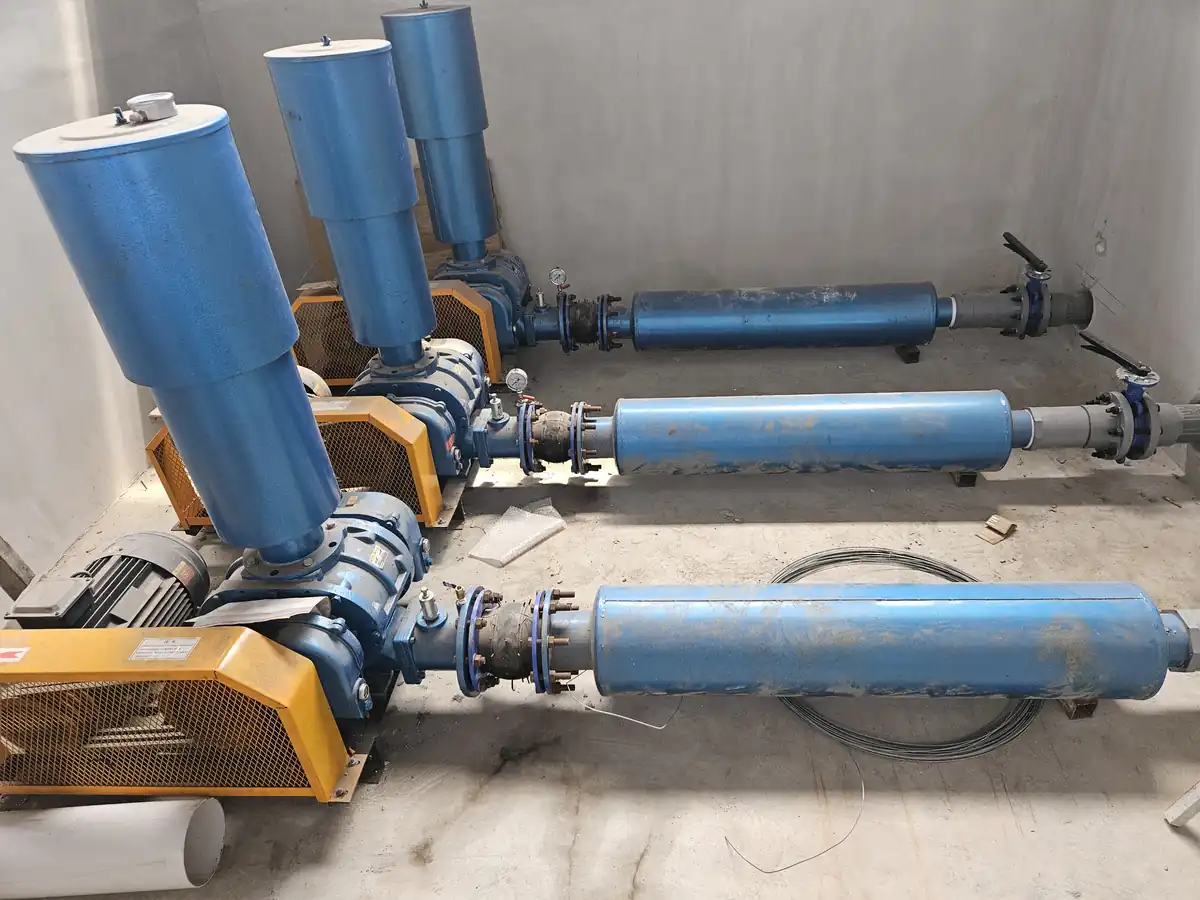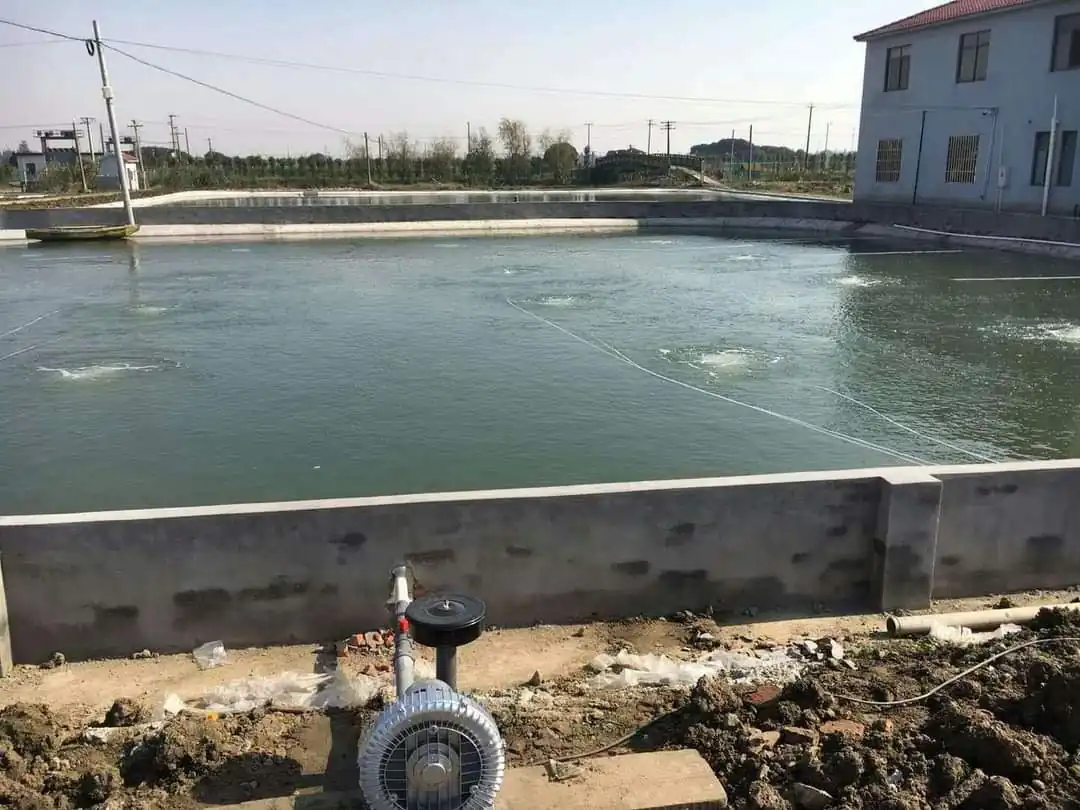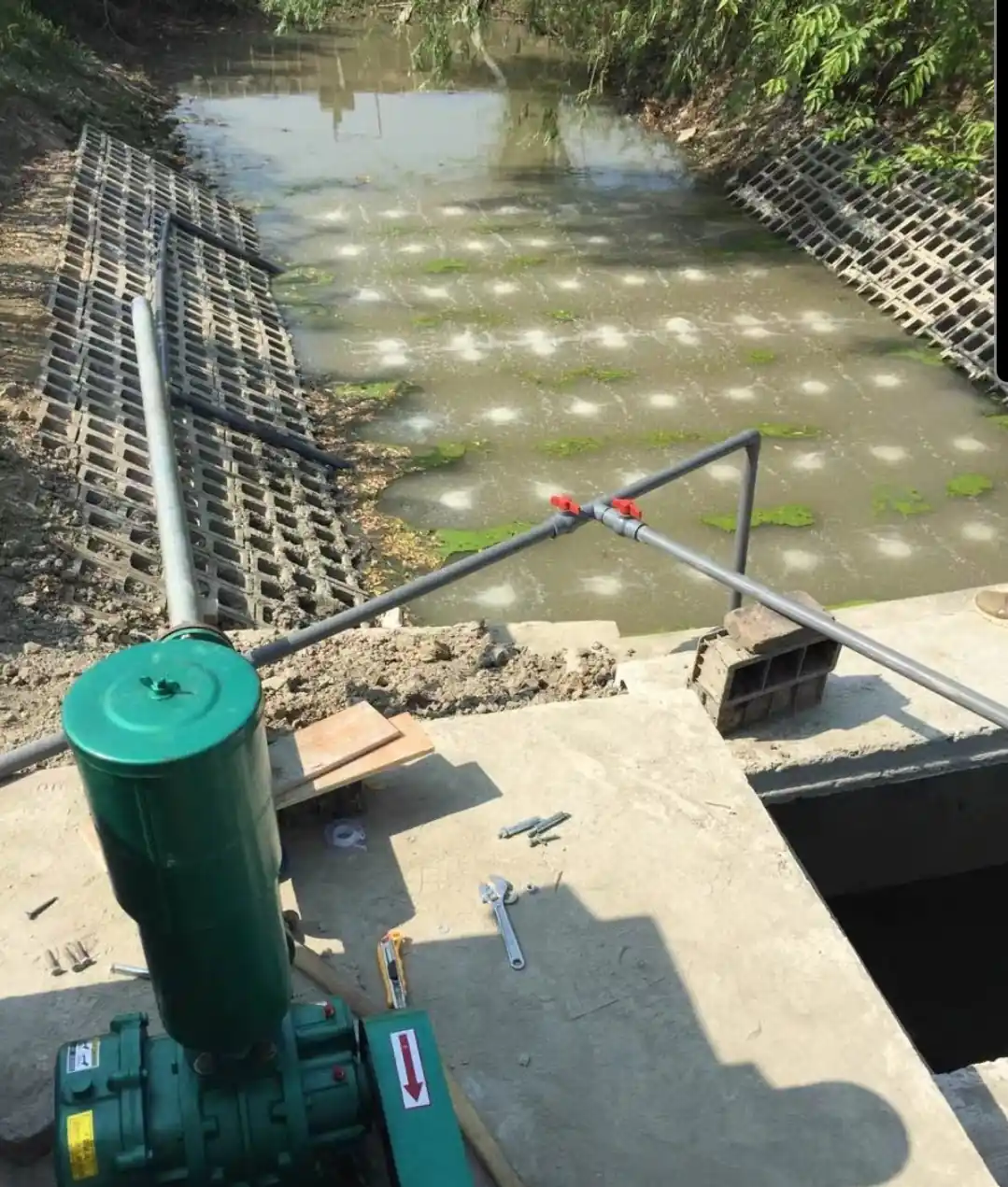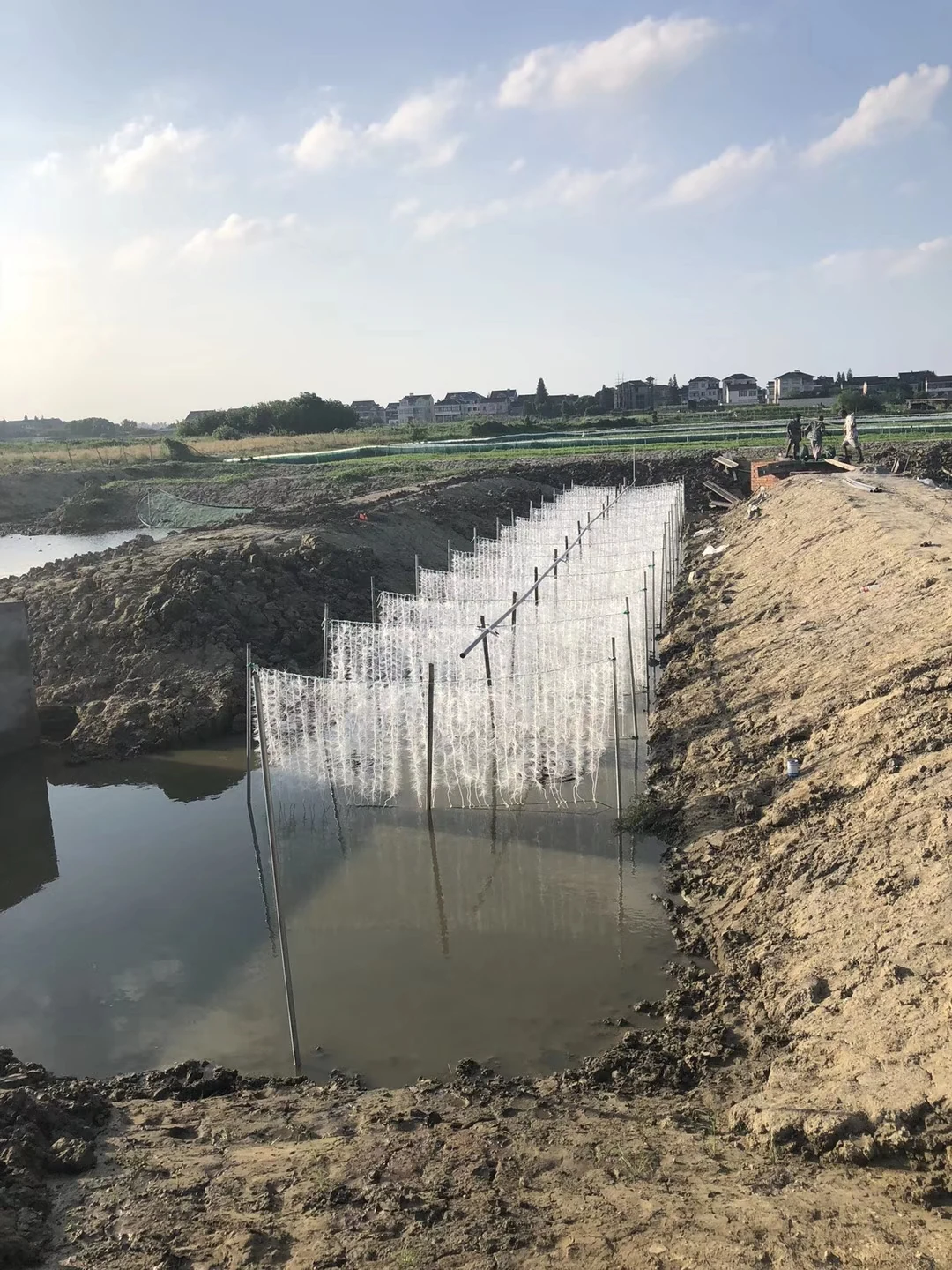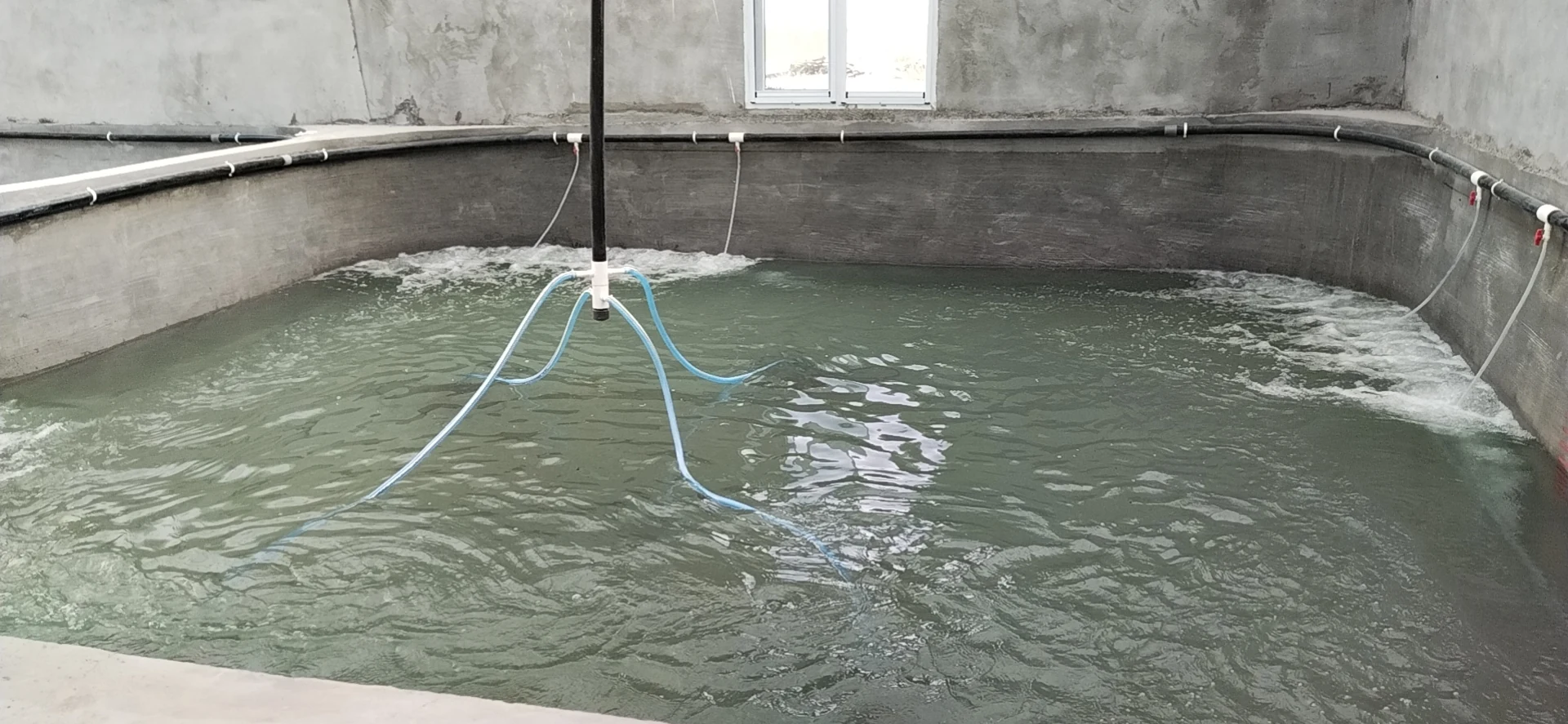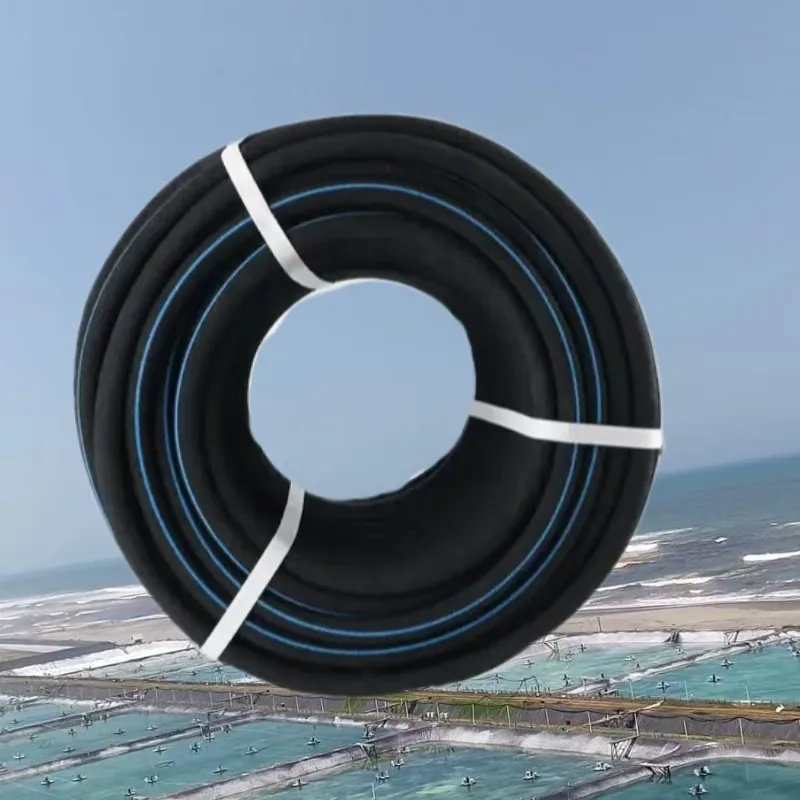
Microporous aeration technology uses a roots blower to rapidly oxygenate the bottom and surrounding water of a farming pond through microporous pipes. It aerates a wide area, distributes dissolved oxygen evenly, speeds up the oxidation of ammonia nitrogen, nitrite and hydrogen sulphide at the bottom, and inhibits the growth of harmful bottom micro-organisms. Years of practice show that this technology reduces the disease rate of pond-farmed fish, eels and soft-shell turtles by 15%, raises fish yield by 10% per mu, and increases overall benefit by 20-60%. Microporous aeration also saves about 30% of electricity compared with traditional aerators.
1. Pond requirements
The farm should have the corresponding electrical facilities or matched power equipment. Family-fish ponds should preferably be 4.5-30 mu, square or rectangular (length-to-width ratio 2:1), 1.5-2.5 m deep, with a level bottom.
2. Equipment requirements
Equipment includes the blower, power unit (electric motor or diesel engine), galvanised steel pipe, microporous tube or plastic (PVC) pipe, valves and timers, plus water-quality testing instruments.
1. Blower. A roots blower is recommended. Its quality should meet the environmental product requirements of HJ/T225-2006, and its discharge pressure should be no lower than 3,500-5,000 mm water column.
2. Piping. The main pipe should be galvanised steel pipe or PVC pipe, with a diameter matched to the blower outlet - generally 75-100 mm. The aeration pipes can be microporous tubes or PVC pipe, with a diameter of 10-15 mm.
Oxygenation comparison between microporous tube and PVC pipe (night test): the DO increase at the surface was 1.53 mg/L for the microporous tube group and 1.18 mg/L for the PVC group; at the bottom it was 1.58 mg/L and 1.26 mg/L respectively. In the daytime test, the bottom DO of the microporous tube group was 7.77 mg/L versus 6.11 mg/L for the PVC group - the microporous tube group was slightly higher. Considering investment, convenience and durability, PVC pipe is more economical and practical as the bottom-aeration pipe for ordinary commercial pond farming.
3. Power configuration. The best aeration mode combines microporous pipe aeration with water-wheel aeration. The blower power depends on water depth, water environment, stocking density and the oxygen demand of the stock. A blower power of 0.30 kW per mu for microporous aeration plus 0.15 kW per mu for the water-wheel aerator meets the minimum dissolved-oxygen requirement of a farming pond.
3. Equipment and pipe installation
1. Blower installation. Install an air-distribution device at the blower outlet, or an exhaust valve on the main pipe near the blower.
2. Piping installation requirements.
(1) Install an air buffer tank or exhaust valve at the blower outlet. Air supply can be centralised or per-pond, with single-pond or multi-pond parallel configurations.
(2) Bury the main pipe in the soil. Use galvanised steel pipe or plastic (PVC) pipe with a main-pipe diameter of 100 mm and an aeration-pipe diameter of 25 mm, with valves between the main pipe and the aeration pipes so the air volume can be adjusted.
(3) Arrange the aeration pipes mainly in a single-sided layout or in a herringbone ("fei"/non) pattern. DO measurements at different pipe spacings show very little horizontal difference between the pipe line and the area between two pipes; the "water-layer difference" in DO between surface and bottom is 0.04-0.47 mg/L. For ponds with high stocking density or valuable species, when PVC pipe is used as the aeration pipe, space the pipes 4-6 m apart with air holes every 1 m and hole diameters of 0.4-0.6 mm. With microporous tubes, space the pipes about 6 m apart. Lay the PVC pipe on the pond bottom; keep microporous tubes 10 cm above the bottom, fixed with stakes.
(4) Keep the installation height of the aeration pipes as even as possible. In ponds with a bottom ditch, lay the pipes for the flat area and the ditch on separate circuits, each controlled by its own valve.
4. How to use
1. Installation time. Complete the aeration system 15-20 days before farming starts.
2. Running time. Family-fish ponds generally use it in the hot season: run it at noon on sunny days, and at night on overcast days or when pressure is low. In special weather such as typhoons or heavy rain, run the microporous aeration system and the water-wheel aerator at the same time, and extend the running time according to the pond water quality.
5. Precautions
1. Keep good pond water quality. Control the algae density properly, use fish medicine cautiously, and prevent algae die-off. Keep water transparency at 20-30 cm and the algae fresh. Master water-quality control correctly - never use algaecides in the hot season, and be careful to avoid mass algae death and decay.
2. Prevent motor overheating. Check that the blower pressure meets the requirement and that the aeration pipe outlet holes match the blower air volume.
3. Prevent PVC pipe damage. Bury the PVC main pipe in the soil to avoid sun ageing; never pull or fold the microporous aeration pipes, which can crease and leak. After a period of use the holes tend to block - dry the pipes in the sun before reuse.
4. Use together with a water-wheel aerator where possible. One point of microporous aeration that must not be ignored is combining it with a water-wheel aerator to keep the dissolved oxygen even across the whole water body.
5. Check frequently. Inspect the aeration system regularly and repair any problems promptly.
6. Use judgment. In high-density ponds, run the microporous aerator almost continuously.