Microporous aeration technology developed from the air-injection oxygenation technology used in indoor factory high-density culture, and has been tested in pond culture since the beginning of this century. It is a new aquaculture technology that greatly raises and improves the dissolved-oxygen content of the water, thereby increasing pond yield, product size, survival rate and product quality. It supports ecological, healthy, high-quality and safe aquaculture, reduces the use of medicines, achieves higher farming returns and ensures the safety of aquatic product quality.
Causes of low-oxygen syndrome in farming water
1.1 Cloudy weather
Dissolved oxygen in a pond is produced mainly by photosynthesis of phytoplankton. If sunlight is weak or absent for several days, photosynthesis is limited and low-oxygen syndrome appears.
1.2 Thunderstorms and monsoon seasons
Thunderstorms cause vertical convection of the pond water; convection also occurs during the monsoon, producing a "turnover" (over-turning) phenomenon and low-oxygen syndrome.
1.3 Mass death of plankton
This usually appears when large amounts of algae scum cover the surface or transparency drops below 15 cm. Decomposition of dead plankton consumes a lot of oxygen. The characteristic sign is that the pond water suddenly becomes clear and transparency rises 2 times or even several times. When this happens, the low-oxygen syndrome is already very serious and oxygen supplementation must be started immediately.
1.4 Heavy snow cover in winter can also cause low oxygen.
Working principle of microporous pipe aeration
2.1 Working principle
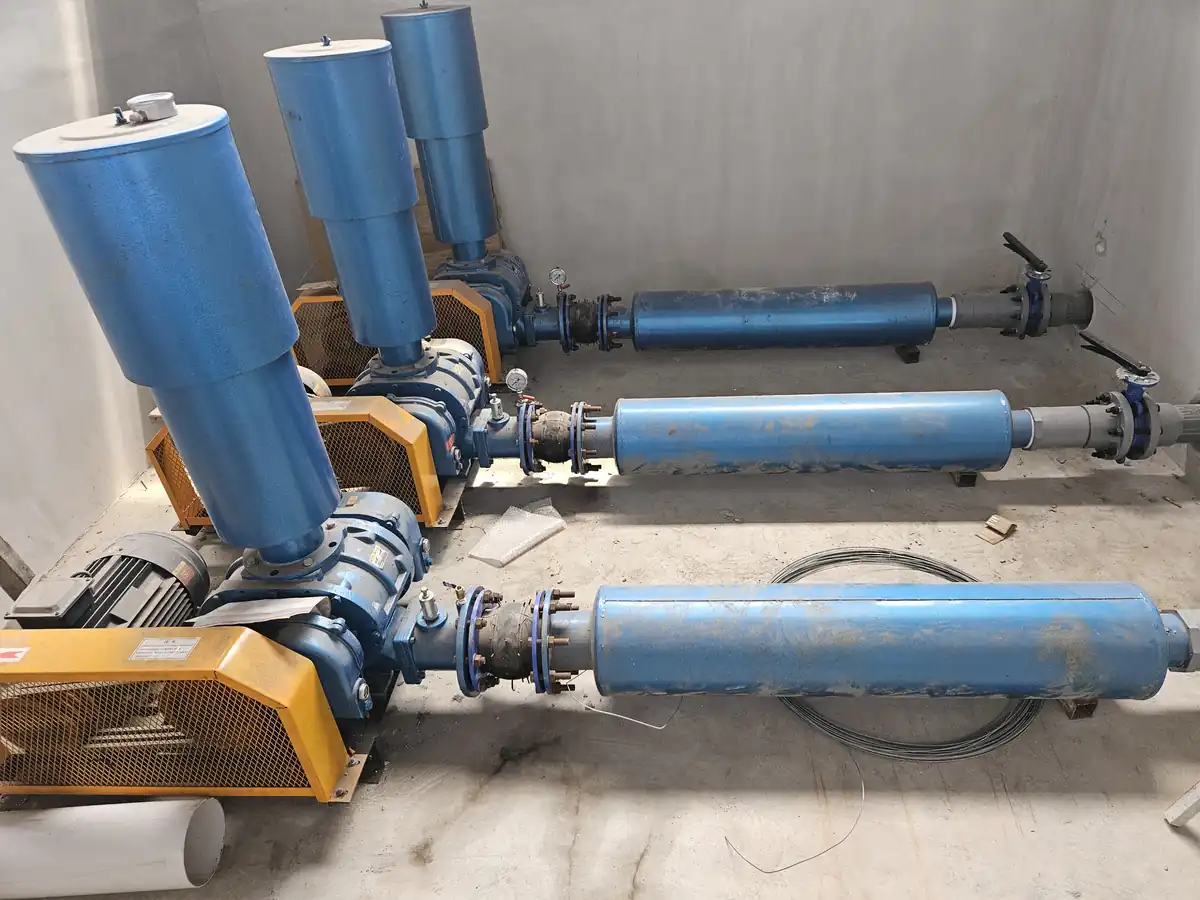
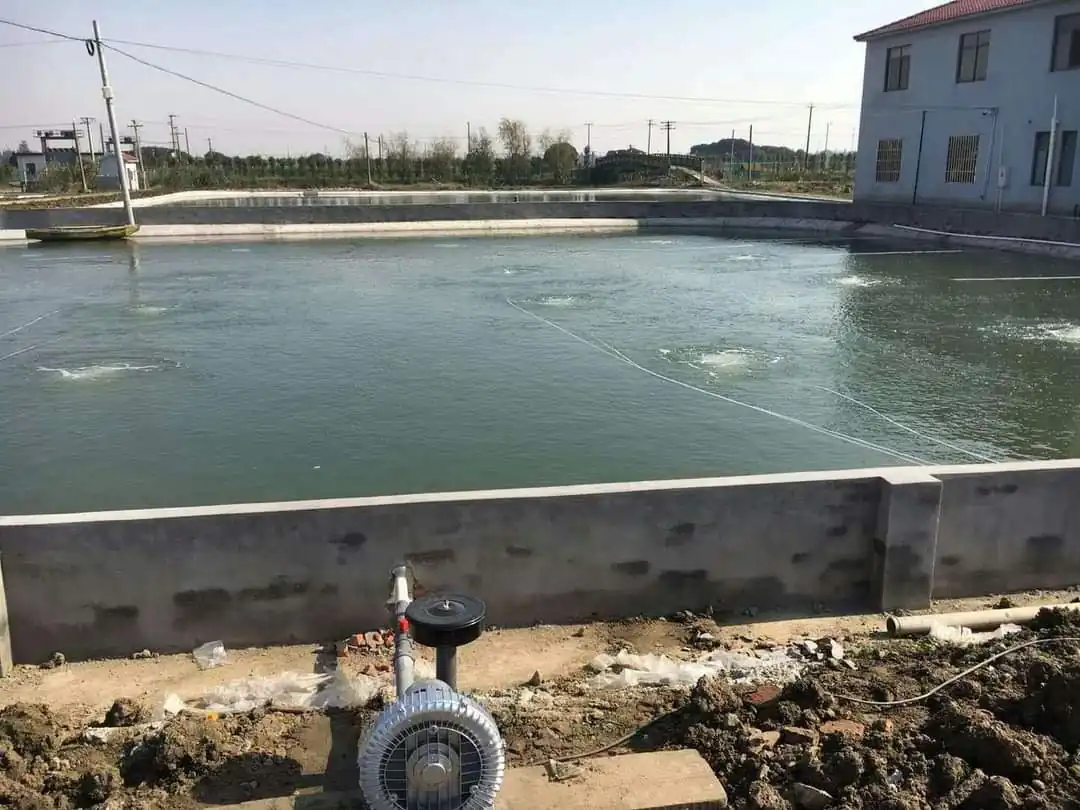
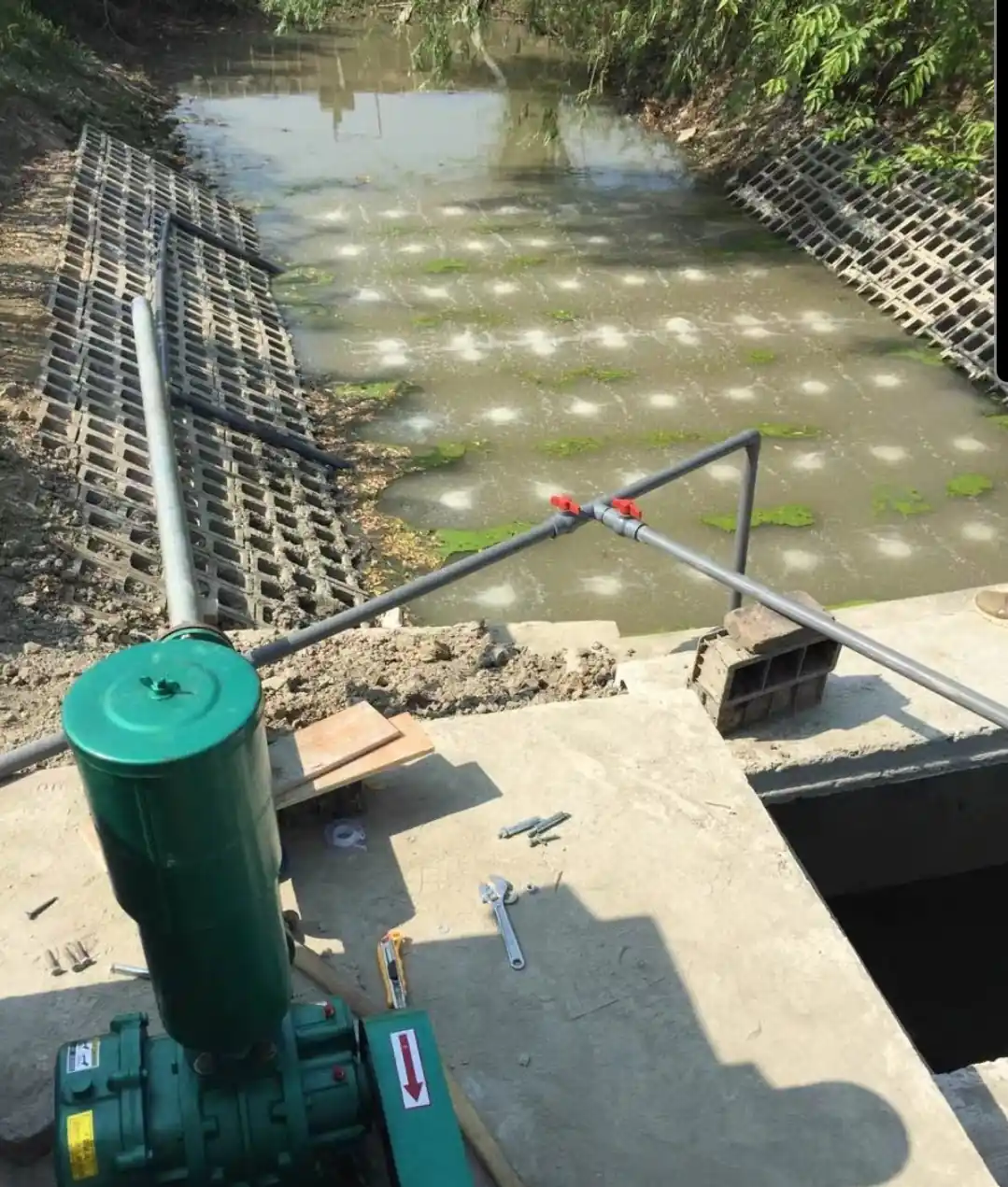
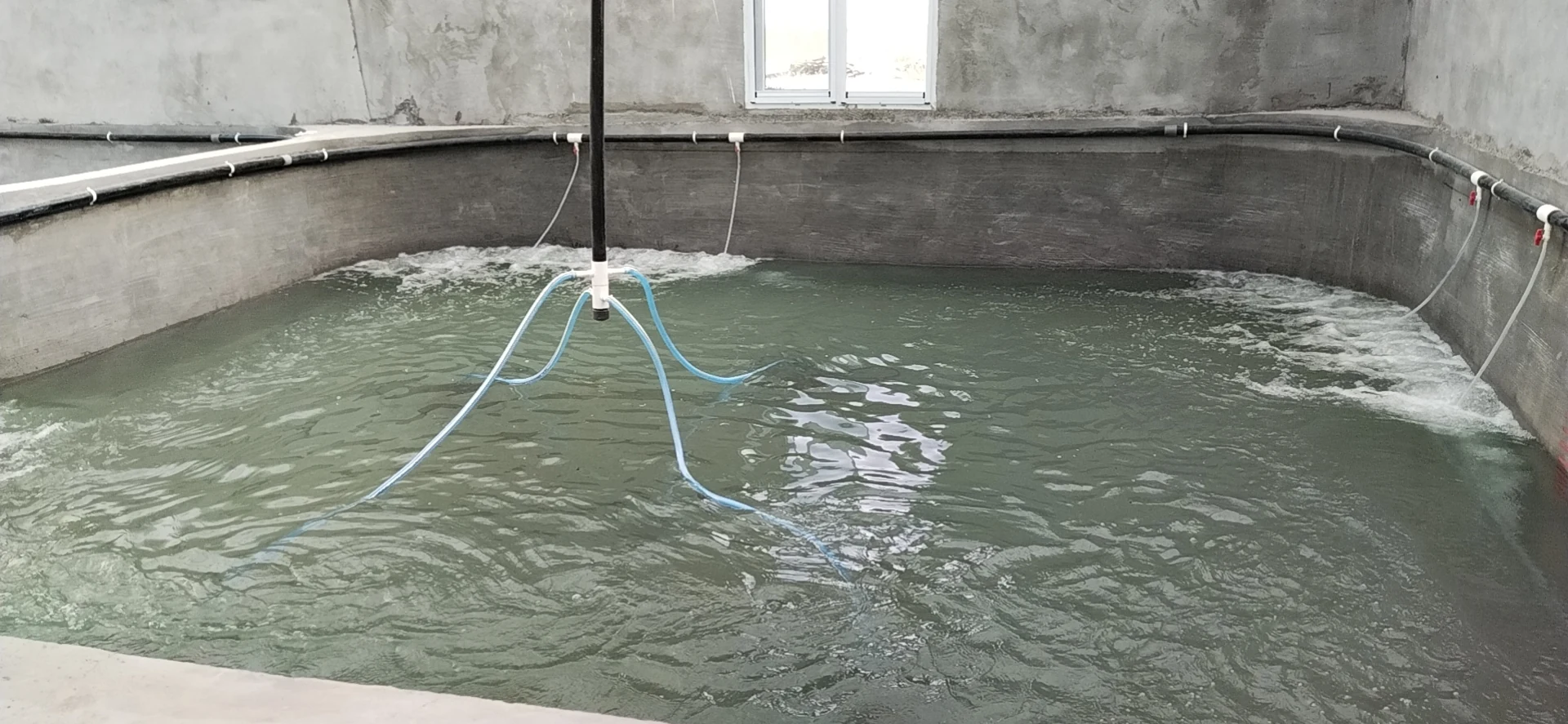
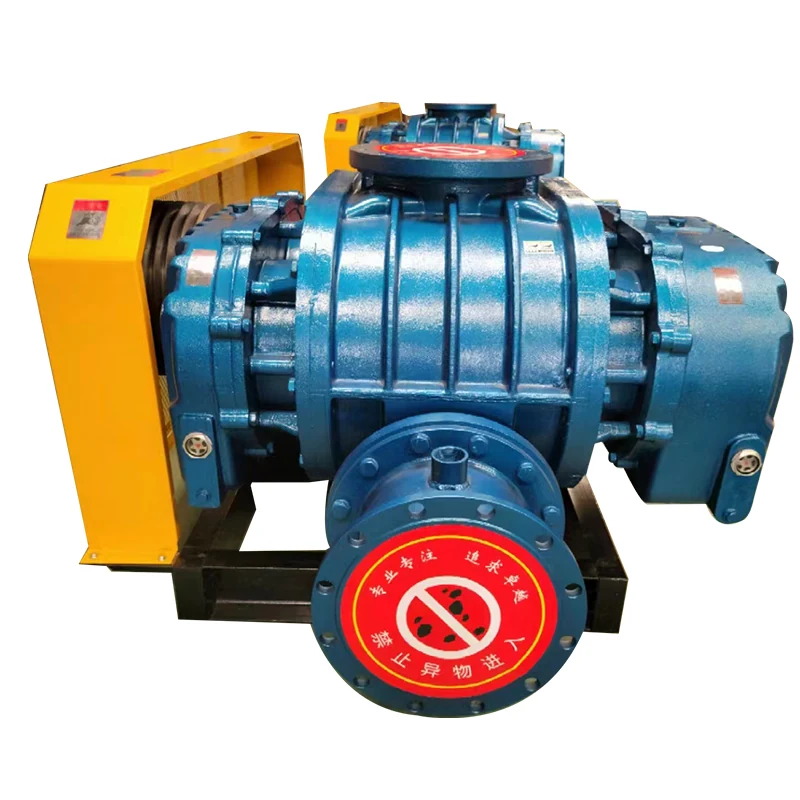
Microporous aeration uses a roots blower plus microporous tubes to form a bottom aeration system that transfers oxygen from the air directly to the pond bottom, releasing air upward through the water. This keeps the bottom water at a high dissolved-oxygen level, prevents oxygen shortage caused by anoxic bottom water, greatly raises the DO content of the whole water body and removes the oxygen debt. It also promotes the degradation of organic waste in the pond, activates the pond bottom, reduces medication costs and ultimately increases growth speed, survival rate and yield.
Background of the technology
2.2.1 Improved living conditions for the stock
Oxygenating the bottom oxidises ammonia nitrogen, nitrite and hydrogen sulphide, inhibits the growth of pathogenic bacteria in the pond, activates the water quality and keeps the physical and chemical factors of the water stable.
2.2.2 The need for high-efficiency fisheries (premium aquatic product farming)
The good water quality brought by high dissolved oxygen not only allows higher stocking density but also raises production - on average increasing yield by 20-30%.
2.2.3 Safety of aquatic product quality
Improving the farming environment strengthens the resistance of aquatic animals, reduces disease and medicine use, and increases product safety. Research on dissolved oxygen shows that DO levels directly affect feed intake, digestion and absorption, growth speed and feed conversion ratio. Generally, farmed aquatic animals grow best when the DO is kept above 5 mg/L. Studies show that fish killed by oxygen shortage account for 60% of total deaths. Grass carp grown in water with 5.5 mg/L DO gain flesh 9.88 times faster than at 2.7 mg/L, with a feed conversion ratio 5.5 times lower.
Advantages of microporous aeration technology
3.1 High aeration efficiency; activates the water
The bubbles produced by ultra-fine micropores contact the water fully, rise slowly, stay in contact longer, and dissolve oxygen with high efficiency and good effect. Sufficient dissolved oxygen lets the water body build a natural ecosystem and turns "dead" water alive.
3.2 Improves the farming environment
Microporous aeration changes surface aeration into bottom aeration and point aeration into whole-pond aeration, meeting the growth needs of the stock. It greatly raises pond aeration efficiency, releases sufficient oxygen and speeds up the decomposition of organic matter, improving the bottom farming environment.
3.3 Low operating cost
While improving aeration efficiency, microporous aeration consumes less than one quarter of the energy of traditional aeration equipment - a large saving.
3.4 Safe and environmentally friendly
Microporous aeration equipment is generally installed on the bank, is easy to operate and maintain, has good safety and brings no pollution to the water - especially suitable for shrimp and crab farming.
3.5 Energy-saving
Microporous aeration points are evenly distributed, the oxygen balance across the pond is good and energy consumption per unit is low. For example, on 10 mu of water surface at 1.5-2 m depth, reaching an aeration capacity of 10 kg O2/h consumes only 1.5 kW, whereas an impeller aerator needs 6-9 kW. Running 8 hours a day for 180 aeration days saves up to 10,000 kWh - more than 5,000 yuan in operating cost.
The hardware side of this is covered on our microporous aeration system page.
Frequently asked questions
Q: What causes low-oxygen syndrome in a pond? A: Three situations dominate: several days of weak or absent sunlight, which limits phytoplankton photosynthesis; thunderstorms and the monsoon season, which cause vertical convection and pond turnover; and a mass die-off of plankton, where decomposition consumes a large amount of oxygen.
Q: How much does microporous aeration increase pond yield? A: On average 20-30%, by supporting higher stocking density and better water quality.
Q: How much energy does it save compared with traditional aeration? A: Microporous aeration consumes less than one quarter of the energy of traditional aeration equipment.
Q: What dissolved oxygen level should I keep in the pond? A: Farmed aquatic animals grow best when dissolved oxygen is kept above 5 mg/L.
Q: Why did my pond suddenly turn clear? A: Sudden clearing means plankton has died off. If transparency rises two or several times, the low-oxygen syndrome is already serious and oxygen supplementation must start immediately.
Q: Does snow cover in winter affect pond oxygen? A: Yes. Heavy snow cover in winter blocks light and can also cause low oxygen.
Q: Is microporous aeration suitable for shrimp and crab ponds? A: Yes. The equipment is normally installed on the bank, is easy to operate and maintain, and brings no pollution to the water, which makes it especially suitable for shrimp and crab farming.
To see how a microporous system actually works - the tubing, the bubble physics and the three oxygen-transfer mechanisms - see how microporous aeration works.