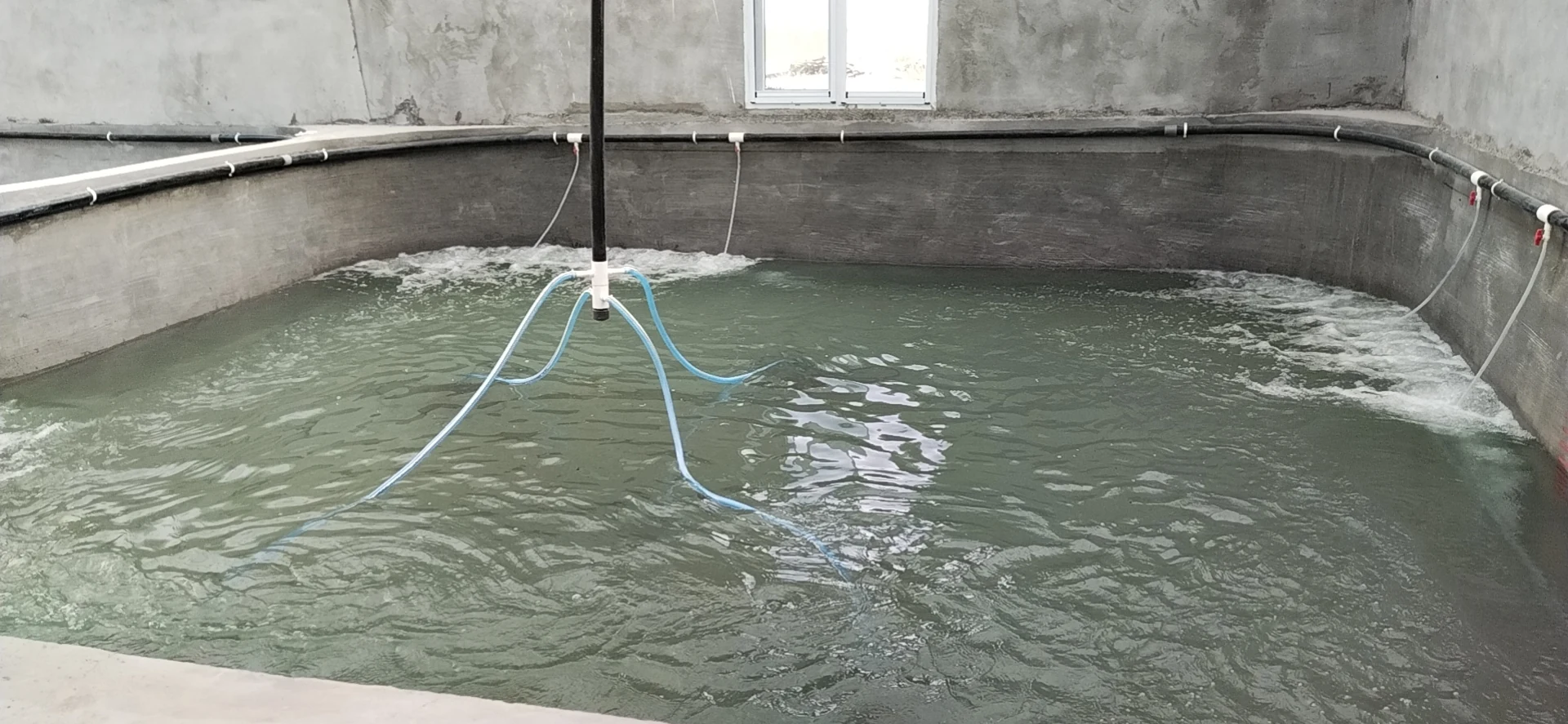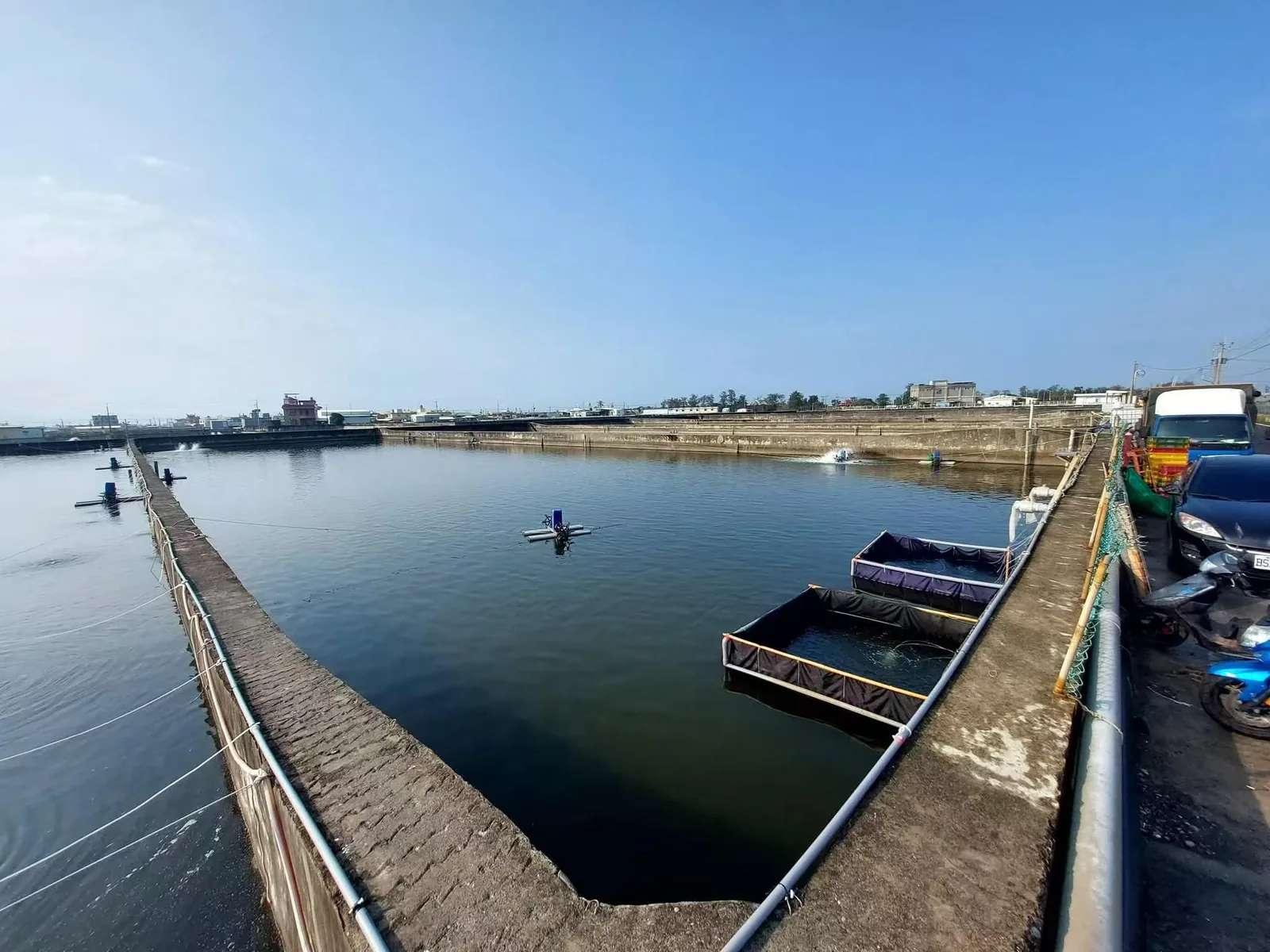
The Short Answer
A power outage during the hot season is the most dangerous hour of the year for a fish or shrimp pond: without aeration, dissolved oxygen can fall below lethal levels in 2–4 hours at high density. The fix is not luck — it is a prepared plan. Keep battery/solar backup aeration sized for your pond, test it monthly, and know your action sequence: cut feeding immediately, start backup aeration, then reduce biomass if the outage lasts. A backup system that costs a few hundred dollars can save a crop worth thousands.
Why Outages Are So Deadly for Ponds
Three forces combine during an outage:
1. Oxygen demand keeps running — fish/shrimp metabolism, bacterial decomposition and plankton respiration consume oxygen 24/7.
2. Aeration stops — the artificial oxygen supply that ponds depend on disappears instantly.
3. Pond water is a closed system — unlike a river, there is no fresh inflow to rescue it.
The result is a predictable DO crash. In a high-density pond at 28–32°C, the timeline is:
| Time since outage | DO condition | Risk |
|---|---|---|
| 0–1 h | DO falling | Low — monitor |
| 1–2 h | DO approaching critical | Medium — prepare |
| 2–4 h | DO below critical at density | High — mortality begins |
| 4+ h | Mass mortality | Critical |
At 30°C with 10 kg/m³ biomass, expect roughly 0.5–1.0 mg/L DO drop per hour without aeration.
The Emergency Aeration Plan (Prepare Before You Need It)
1. Backup aeration options (choose by your grid reliability)
| Option | Best for | Cost | Coverage |
|---|---|---|---|
| Solar + battery aeration | Farms with daily blackouts | Medium | Continuous, no fuel |
| Gasoline/diesel generator + blower | Long outages (4+ h) | Medium | Full capacity, fuel needed |
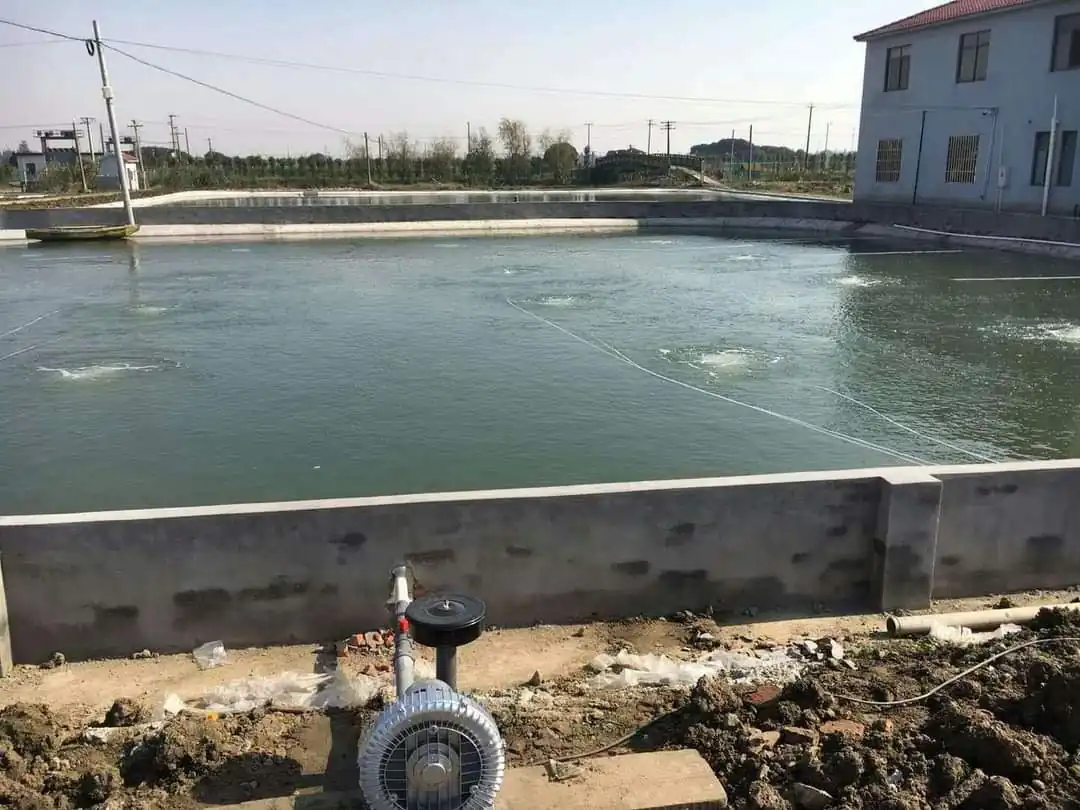
| Portable battery aerator | Small ponds, short outages | Low | 2–4 h per charge |
| Chemical oxygen (peroxide-based) | Emergency only, small ponds | Low per use | Hours — not a system |
| Water exchange (pump) | Farms with well/river access | Low | Depends on source |
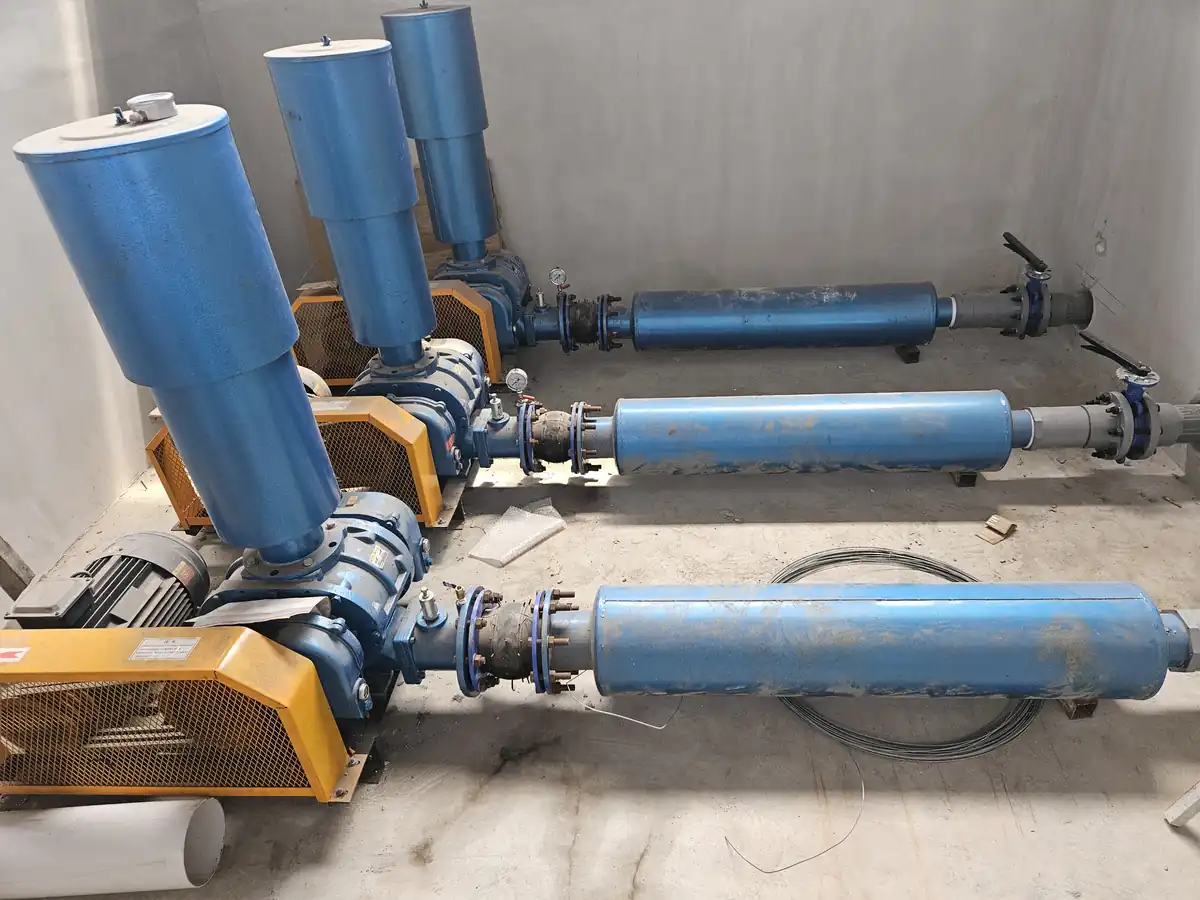
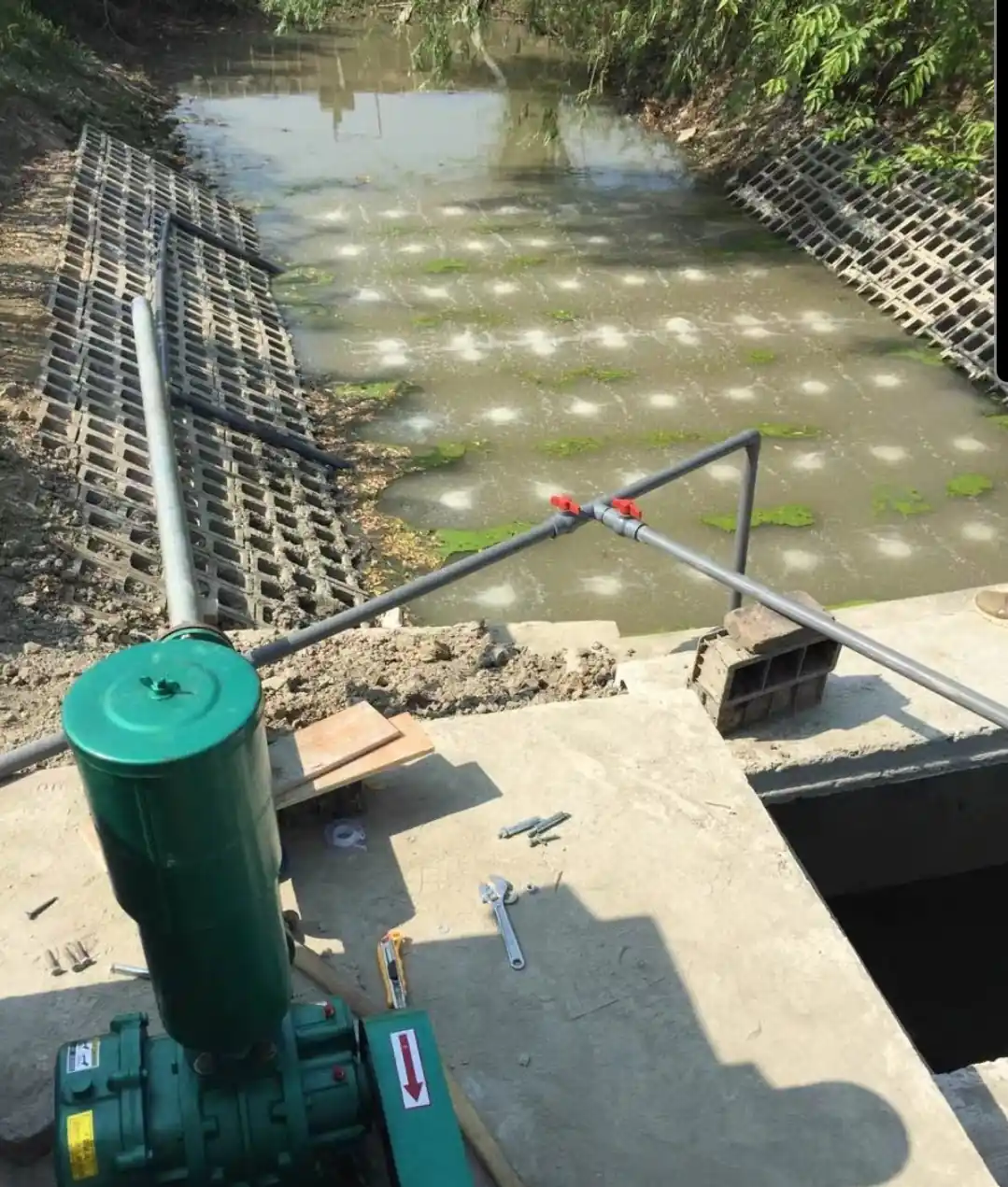
The golden rule: backup power for your existing aeration is better than a new aeration method. A generator or battery bank running your existing blower keeps the same oxygenation efficiency — no learning curve in an emergency.
2. The 5-step emergency sequence
1. Cut feeding immediately — uneaten feed is pure oxygen demand. Feed skipped = hours gained.
2. Start backup aeration — the moment power drops, not when fish gasp.
3. Reduce biomass load — if outage exceeds 4 h, harvest/transfer part of the crop or reduce density.
4. Watch the pre-dawn minimum — even with backup, check DO at 4–6 am; that is when the system is most stressed.
5. Document and fix — after power returns, log the outage duration and DO readings; fix the root cause (grid, blower, wiring).
3. Sizing your backup (real numbers)
- Battery/solar: size for 4–6 h of continuous operation at your normal blower power. A 1 kW blower needs roughly a 5–8 kWh battery bank (with inverter losses).
- Generator: size at 1.2–1.5× blower rated power (starting surge). A 1.5 kW blower → 2.2–2.5 kVA generator.
- Portable aerator: 1 unit per 2–3 mu (0.13–0.2 ha) as emergency coverage.
Common Mistakes in Emergency Preparedness
1. No plan at all — most farms lose crops to outages they could have survived with a $200–500 backup.
2. Backup equipment never tested — a generator that hasn't run in 6 months may not start when you need it. Test monthly, run 30 minutes.
3. Feeding during the outage — feed adds oxygen demand at exactly the wrong time.
4. Waiting for visible gasping — by the time fish are at the surface, DO is already critical. Act on the clock, not on symptoms.
5. Backup only for the pond, not the system — remember the blower needs power, but so do the manifold valves, monitoring and lights. Prioritize the blower circuit.
Frequently Asked Questions
Q: How long can a pond survive without aeration? A: At high density and 30°C, roughly 2–4 hours before critical DO. Low-density ponds (under 2 kg/m³) can survive longer — sometimes 6–12 hours — but never rely on it.
Q: Is solar backup worth it in the tropics? A: Yes — tropical farms have reliable sun and frequent grid issues. A solar + battery system covers both daily blackouts and emergency outages (see our solar aeration guide).
Q: Can I just add oxygen chemicals during an outage? A: Hydrogen peroxide-based products buy 1–3 hours — useful as a stopgap while you start real backup aeration, not as a solution by itself.
Q: What is the minimum backup I should own? A: At minimum, a portable battery aerator or small generator per 3–5 mu. For farms with known grid instability, invest in a full solar/battery or generator system for the main blower.
Q: How do I know my backup works when I need it? A: Monthly test: run the backup for 30 minutes, measure DO before/after, and confirm the blower reaches normal operating pressure. Log every test.
The Bottom Line
Power outages are predictable events with unpredictable timing — the farms that survive them are the ones with a tested plan. Backup aeration sized for 4–6 hours, a clear 5-step sequence, and monthly testing turn a potential disaster into a manageable interruption.
Zhongxin Machinery supplies complete emergency aeration packages: portable battery aerators and floating aerators, solar-ready blower systems, generators matched to your blower size, and pond-specific emergency plans. Tell us your pond area, density and local grid reliability — we will size the backup that protects your crop.