The Short Answer
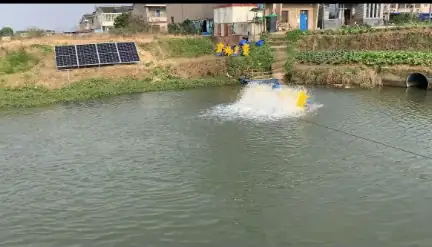
Solar pond aeration uses a solar panel + battery + DC blower/aerator to oxygenate ponds without grid power — ideal for remote shrimp and fish farms where electricity is unreliable or absent. A correctly sized system runs the aerator 4–8 hours per day on solar alone (more with battery storage), keeping dissolved oxygen above the critical 4 mg/L at the pond bottom during the hottest, highest-risk hours. Sizing rule of thumb: 1 kW of solar panel per kW of blower, plus battery capacity for 1–2 nights of backup.
Why Solar Aeration Matters (Especially in the Tropics)
Many shrimp- and fish-farming regions — coastal Vietnam, Indonesia, the Philippines, the Gulf, Latin America — share three problems:
1. Unreliable grid power — farms in rural/coastal areas face daily outages; a single outage during the pre-dawn window can crash DO below lethal levels.
2. High electricity cost — grid power at farm gate prices is expensive; aeration can be 30–60% of the electricity bill.
3. Abundant sunshine — tropical and subtropical farms have 5–7 peak sun hours per day, which is exactly what solar needs.
Solar aeration converts the farm's best resource (sun) into its most critical input (oxygen), and it pays for itself typically within 2–4 growing seasons versus grid-powered aeration, depending on local electricity prices.
How a Solar Aeration System Works
[Solar panel array] → [Charge controller] → [Battery bank] → [DC blower / aerator] → [diffusers]
| Component | Role | Sizing hint |
|---|---|---|
| Solar panels | Generate power | ~1 kW panel per 1 kW of blower |
| Charge controller (MPPT) | Regulate charging, protect battery | Match voltage (12/24/48 V DC) |
| Battery bank | Store energy for night/cloudy days | 1–2 nights of backup runtime |
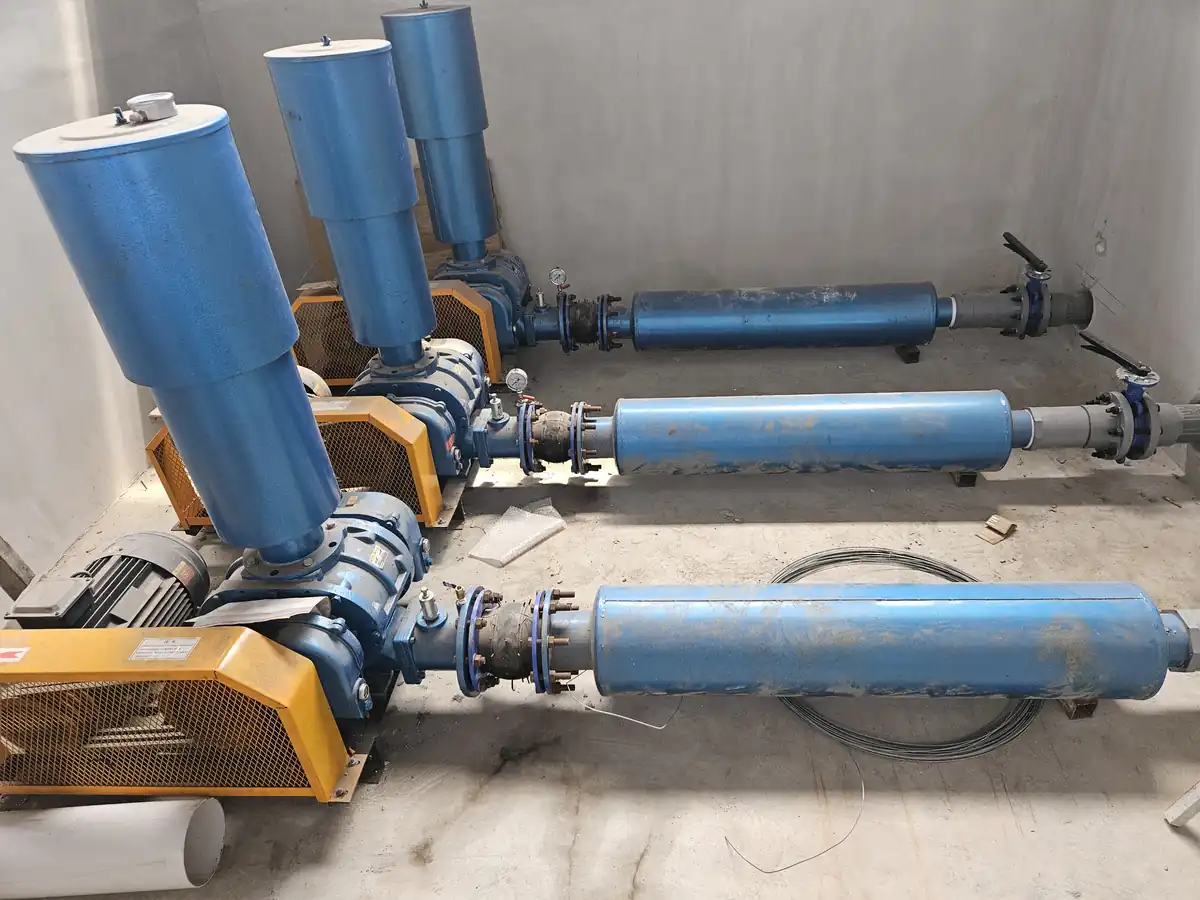
| DC blower / aerator | Push air to diffusers | 0.5–3 kW typical for ponds up to ~10 mu |
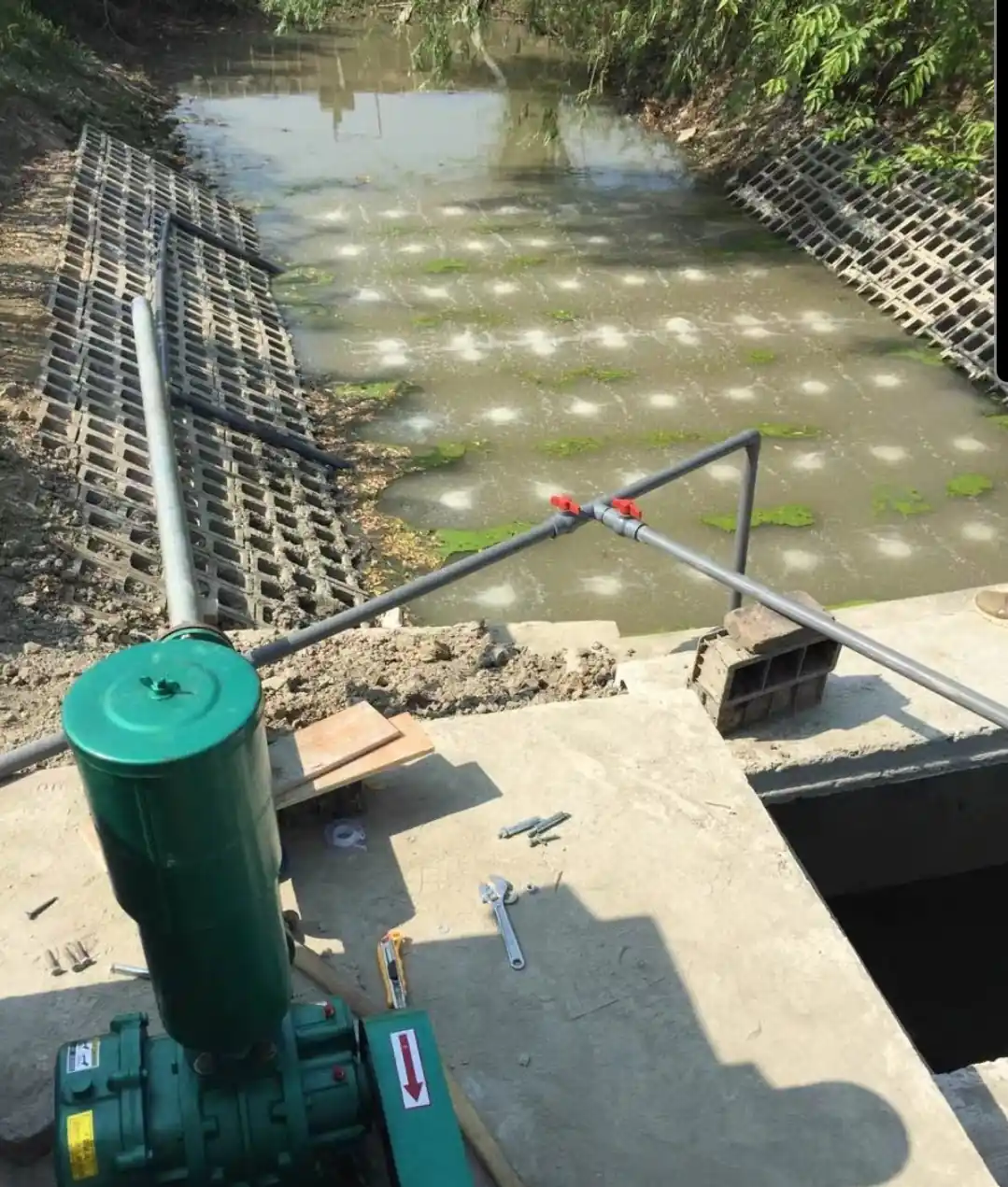
| Diffusers (tubing/discs) | Dissolve oxygen at the bottom | Same as grid systems: 1 kW ↔ 100–150 m tubing |
Operating logic: the system runs the aerator during peak sunlight hours (the hottest part of the day — exactly when DO is under stress from heat) and switches to battery power for critical periods (early morning) when needed.
Sizing a Solar Aeration System (Step by Step)
Step 1 — Aeration demand (same as grid systems)
| Pond | Tubing | Blower demand |
|---|---|---|
| 1–3 mu | 30–50 m | 0.5–1.5 kW |
| 3–5 mu | 50–80 m | 1.5–2.2 kW |
| 5–10 mu | 80–150 m | 2.2–3.7 kW |
Step 2 — Solar array
- Panel power ≈ blower power × 1.2–1.5 (compensate for cloudy days and system losses)
- Example: 2.2 kW blower → 2.6–3.3 kW of panels (≈8–10 × 330 W panels)
Step 3 — Battery
- Battery capacity = blower power × 6–10 hours (backup for night + early morning)
- Example: 2.2 kW blower × 8 h = 17.6 kWh → e.g. 48 V × 400 Ah battery bank (LiFePO4 recommended for cycle life in tropical heat)
Step 4 — Controller & wiring
- MPPT charge controller rated above the panel array current
- Keep panel-to-controller distance short to reduce DC losses
Solar Aeration vs. Grid Aeration: Honest Comparison
| Criterion | Solar | Grid |
|---|---|---|
| Upfront cost | Higher (panels + battery) | Lower |
| Running cost | Near zero after install | Electricity bill every month |
| Power reliability | Independent of grid | Subject to outages |
| Weather dependency | Reduced output on cloudy days | None |
| Best for | Remote farms, unreliable grid, sunny regions | Reliable grid, low electricity price |
| Payback | 2–4 seasons | — |
The honest answer: solar is not always cheaper — it wins where the grid is unreliable or expensive. For farms with stable cheap power, grid aeration with a backup generator may still make sense. For remote tropical farms, solar removes the single biggest operational risk: the pre-dawn power outage.
Solar Aerator Sizing: Panels, Battery and Run Hours
A solar aerator is sized in two steps, and the two are decided separately.
Panels. Budget roughly 1 kW of solar panel per kW of blower for a system that runs through the day and recharges for the night. A 1.5 kW blower therefore points at about 1.5 kW of panel, before any allowance for cloudy weather.
Battery and run hours. The battery bank — not the panel array — decides how long the system keeps running after dark. Work back from the hours you have to cover, and the pre-dawn window is the one that matters: it is when dissolved oxygen is lowest and when a power failure does the most damage. Size the bank for that window plus a margin for a second cloudy day. Oversizing the panels and undersizing the battery is the most common mistake: the pond gets good daytime aeration and still loses the night.
Frequently Asked Questions
Q: Will the aerator run at night?
A: Yes, on battery. The system charges during the day and runs the aerator on battery during critical night/early-morning hours. Battery sizing determines how long.
Q: How big a system do I need for my pond?
A: Size the aeration first (tubing length → blower kW), then solar ≈ 1.2–1.5× blower kW, battery for 6–10 hours of backup. Send us your pond area and depth for a full calculation.
Q: What about cloudy season?
A: A larger panel array and battery bank cover 1–2 cloudy days. Some farms keep a small generator as emergency backup for extreme weather.
Q: Can I add solar to my existing grid system?
A: Yes — hybrid setups (grid + solar + battery) are common upgrades: solar covers daytime peak load, grid/battery cover the rest.
Q: Do I need special equipment?
A: DC blowers/DC floating aerators (e.g. permanent-magnet variable frequency models) work well with solar systems due to high efficiency and wide voltage tolerance. Zhongxin supplies DC aerators and full solar packages.
Q: How long do solar components last?
A: Panels 20–25 years (output degrades slowly), LiFePO4 batteries 5–10 years, DC blower with brushless PM motor — maintenance-free for many seasons.
Q: How many solar panels does a solar aerator need for a 1-acre pond? A: Start from the blower. A 1-acre (6.07 mu) pond is normally sized at around 0.9–1 kW of blower, so it points at roughly 1 kW of panel, and a 1.5 kW blower at about 1.5 kW of panel. Then check the battery separately: the panels decide how fast the bank refills, while the bank decides how long the aerator runs after dark.
The Bottom Line
Solar pond aeration turns abundant sunshine into reliable bottom aeration for remote farms — removing the single biggest mortality risk (pre-dawn DO crashes during power outages) while cutting electricity costs to near zero. It pays back in 2–4 seasons and is the right choice wherever the grid is unreliable or expensive.
Zhongxin Machinery supplies complete solar aeration packages — DC permanent-magnet blowers, microporous tubing, panels, charge controllers and batteries — sized to your pond, or hybrid upgrades to your existing system. Send us your pond area, depth, grid availability and local electricity price, and we will reply with a full system quote and payback estimate.
Choosing a solar pond aerator is mostly an exercise in matching the panel to the blower: work back from the daily oxygen demand, then size the array so the system can carry the pre-dawn hours on battery. Our pond aerator range lists the floating models and the power each one draws, which is the figure the array has to cover.
Q: Does a solar pond aerator work at night? A: Not directly from the panels — at night the system runs on the battery bank, which is sized for the pre-dawn window when dissolved oxygen is lowest. A correctly sized array recharges that bank during the day, so the aerator covers 4-8 hours of running per day including the hours before sunrise.