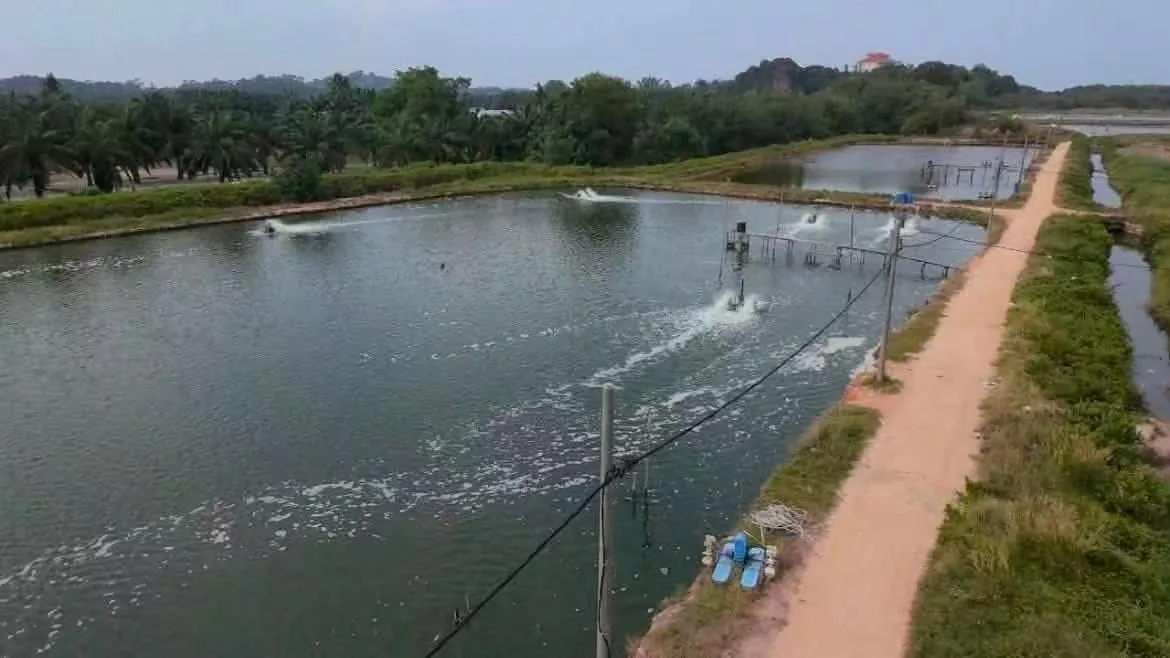
Many fish farmers assume winter means aeration can be switched off. In fact, an aerator still plays an important role in cold weather — but for a different reason than in summer. Around early November to early December, most ponds in our region have little actual oxygen demand, yet experienced farmers keep running the aerator. Here is what they know and how to use it correctly in winter.
Why run a pond aerator in winter
The aerator in winter is not mainly for adding oxygen. A small part of the benefit is oxygenation, but the main purpose is to balance the temperature between the surface layer and the bottom water.
In winter the surface water can reach 10-15 °C or higher, but 30-40 cm below the surface the temperature is still very low. Without circulation, the cold, dense bottom water stays at the bottom and the warm surface layer stays on top — a sharp temperature stratification that stresses the fish and slows their feeding.
Running the aerator mixes the upper and lower water so the whole pond warms evenly. This matters because we still feed the fish in winter — the goal is to keep the fish from losing condition ("falling off in weight"). Once the water temperature rises after aeration, the fish feed more eagerly, and the feed conversion ratio is also a little lower. In short, winter aeration = temperature balancing + steady feeding + lower feed cost.
Dissolved oxygen under the ice
Once a pond is sealed by ice, two things happen at once: photosynthesis from algae and plankton slows to a crawl under snow cover, while the pond keeps consuming oxygen — sludge, uneaten feed and the fish themselves. With a thick snow layer cutting light, dissolved oxygen can fall steadily for weeks.
The practical rule is to measure, not to assume: sample dissolved oxygen just under the ice in the morning. A pond that reads above 5 mg/L with healthy fish behaviour can be managed with short mixing cycles; a pond drifting toward 2-3 mg/L needs continuous aeration and a reduced feed ration. Winterkill is almost always a slow oxygen decline that nobody measured until the fish came up.
Should you break the ice?
Yes — but how you do it matters more than whether you do it:
- Open holes, don't smash them. Impact shocks travel through water and stress fish in a pond where they cannot escape. Clear holes with a pump, a slow aerator, or by pouring hot water on the surface.
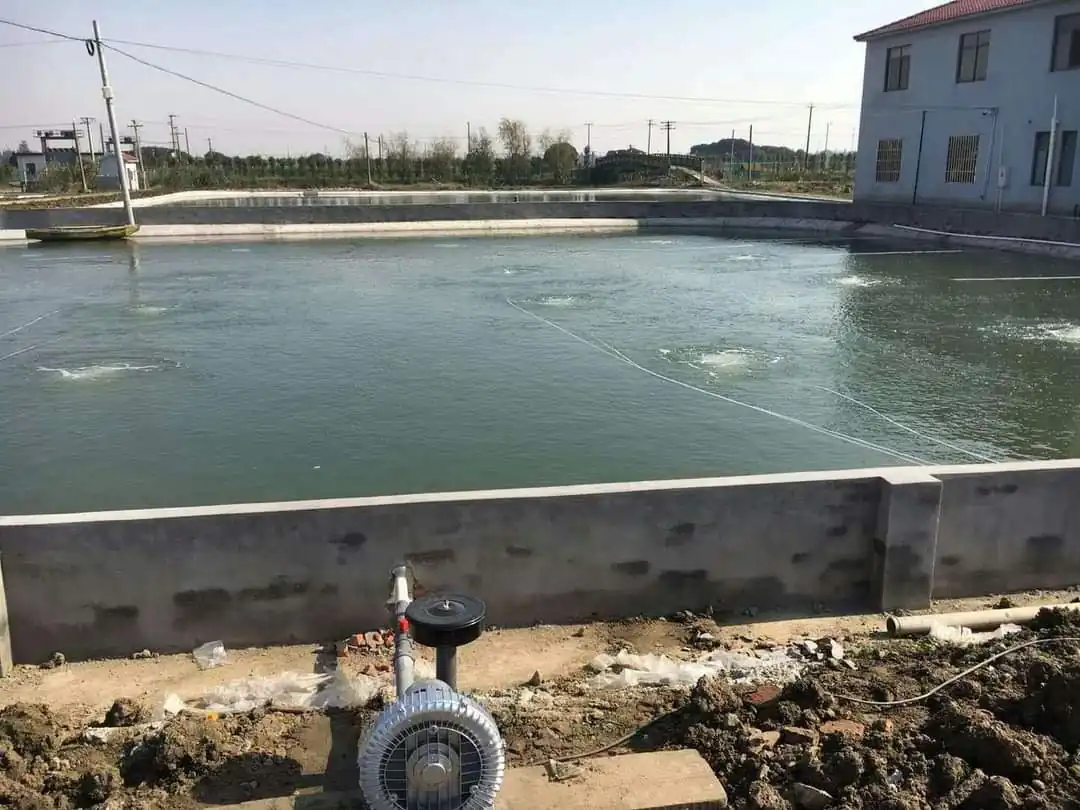
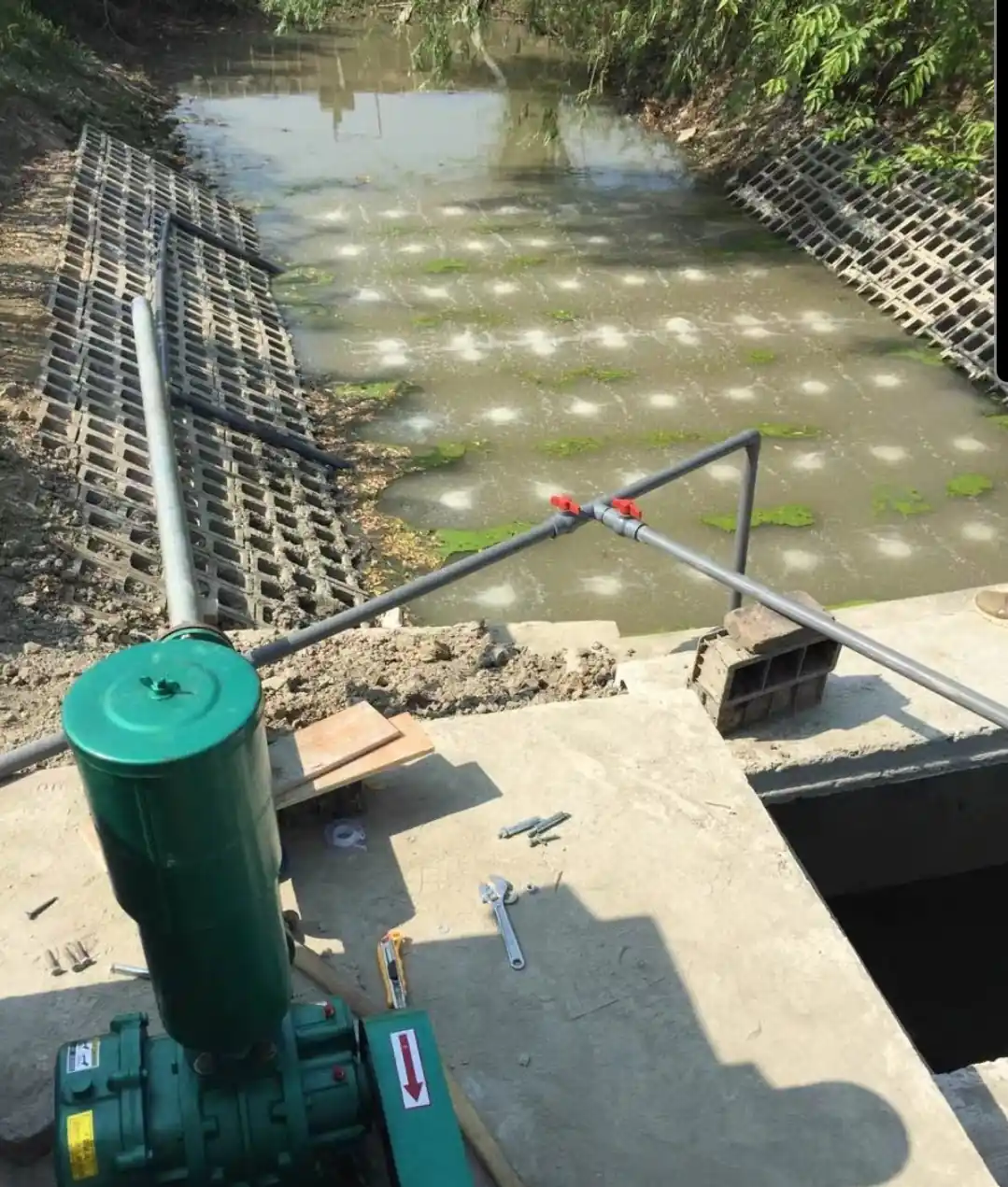
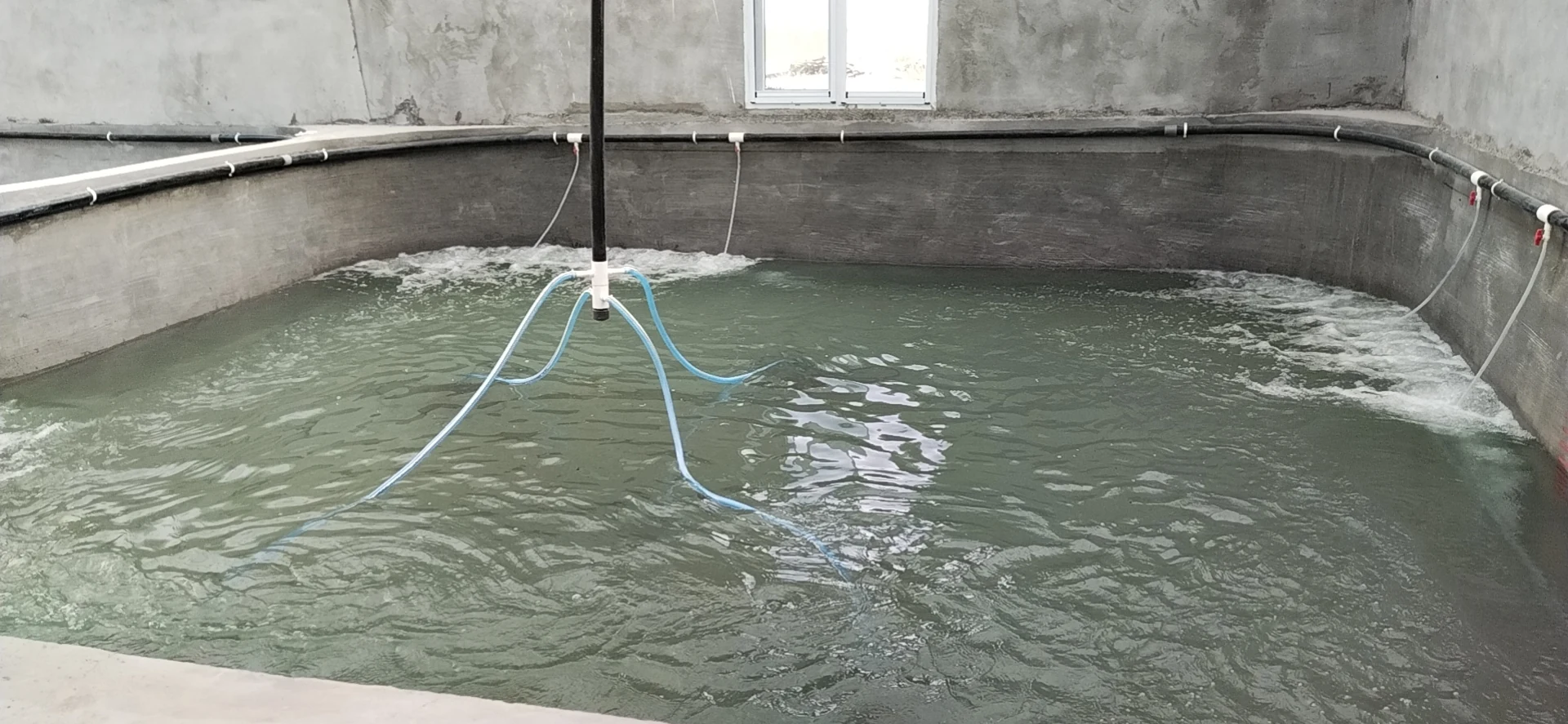
- Keep the holes open. A hole that refreezes traps the gas exchange you created. Bottom aeration with microporous tubing keeps a lead free while producing only gentle movement; a blower-driven setup is usually the practical way to hold a hole open overnight.
- Never pour chemicals or salt onto the ice to clear it — what melts into the water goes into the fish.
Air temperature, power and running hours
Winter aeration is about moving the water column, not about throwing water into freezing air. Three rules cover most situations:
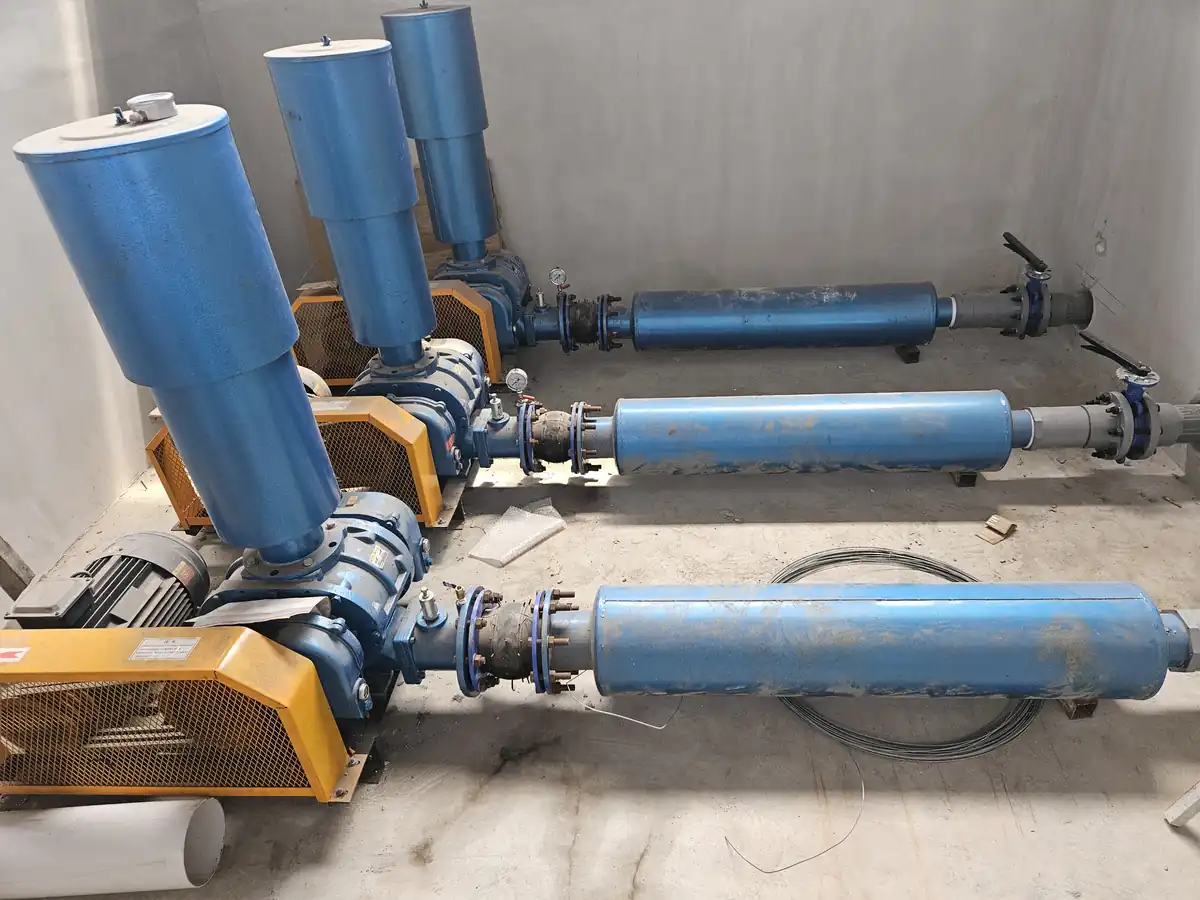
1. Run a gentler system than in summer. A roots blower with bottom tubing mixes the layers without the fine spray that surface machines create; spray cools the pond in freezing air and ices up the machine.
2. Shift the hours toward the warmest part of the day. Midday to mid-afternoon mixing takes advantage of the weak sun and avoids pumping heat out of the pond overnight. On very cold nights, run only what is needed to keep the ice hole open.
3. Match power to the job. A 1.5-2.2 kW blower on a standard 1-2 m pond is typically enough for temperature mixing and hole maintenance; the point is not to run the summer aeration schedule in winter.
Why turn the aerator off when feeding
This is a key point based on several years of farming experience. In winter, fish naturally have a low appetite. If the aerator keeps running during feeding, the water movement often directly scares the fish away from the feed — the fish simply sink down and stop feeding. So when you spread feed in winter, switch the aerator off first and let the fish feed calmly in still water; restart the aerator after feeding is finished.
Common winter mistakes
1. Switching aeration off entirely because "the fish don't need oxygen in winter". Mild days still bring feeding, and anoxic bottom water does not fix itself by spring.
2. Running a surface aerator at night in freezing air. It cools the pond that you are trying to warm and can ice up the machine.
3. Breaking ice with a hammer or an axe. The shock is worse for the stock than the ice itself.
4. Feeding hard to "keep condition". Winter feed should follow water temperature: feed only after the pond has warmed through mixing, and reduce the ration rather than pushing it.
5. Ignoring snow cover. Snow blocks the light that would otherwise keep mild photosynthesis going under clear ice — clearing snow off part of the pond is often worth more than adding aeration.
Winter aeration in short
1. Run the aerator mainly to balance surface and bottom water temperature, not just to add oxygen.
2. Feed only after the water has warmed up through aeration, so the fish eat better and use less feed per kilo of growth.
3. Always switch the aerator off during feeding in winter — moving water suppresses the already low winter appetite.
4. Keep an ice hole open with gentle bottom aeration; never smash the ice or add salt.
5. Choose a quiet, low-maintenance aerator for cold-weather operation; a roots blower with bottom aeration pipes works well for temperature mixing without excessive surface disturbance.
FAQ
Q: Should I run my pond aerator in winter? A: Yes, but with a different purpose: mixing the water column so the pond warms evenly and the fish keep feeding. Cut the hours back compared with summer and avoid night running of surface machines in freezing air.
Q: How do I know if my pond needs winter aeration? A: Measure dissolved oxygen under the ice in the morning. Above 5 mg/L with normal fish behaviour needs only short mixing cycles; a reading drifting toward 2-3 mg/L needs continuous aeration and a reduced feed ration.
Q: Is it bad to break the ice on a fish pond? A: Clearing holes is good for gas exchange, but the method matters: use a pump, hot water or a slow aerator rather than impact, which shocks fish that have nowhere to escape.
Q: Can a pond aerator stay in the water all winter? A: A floating unit can be left in place where the water does not fully freeze, but surface spray cools the pond and can ice the machine. Where the pond ices over, bottom aeration with tubing is the better winter arrangement.