The Short Answer
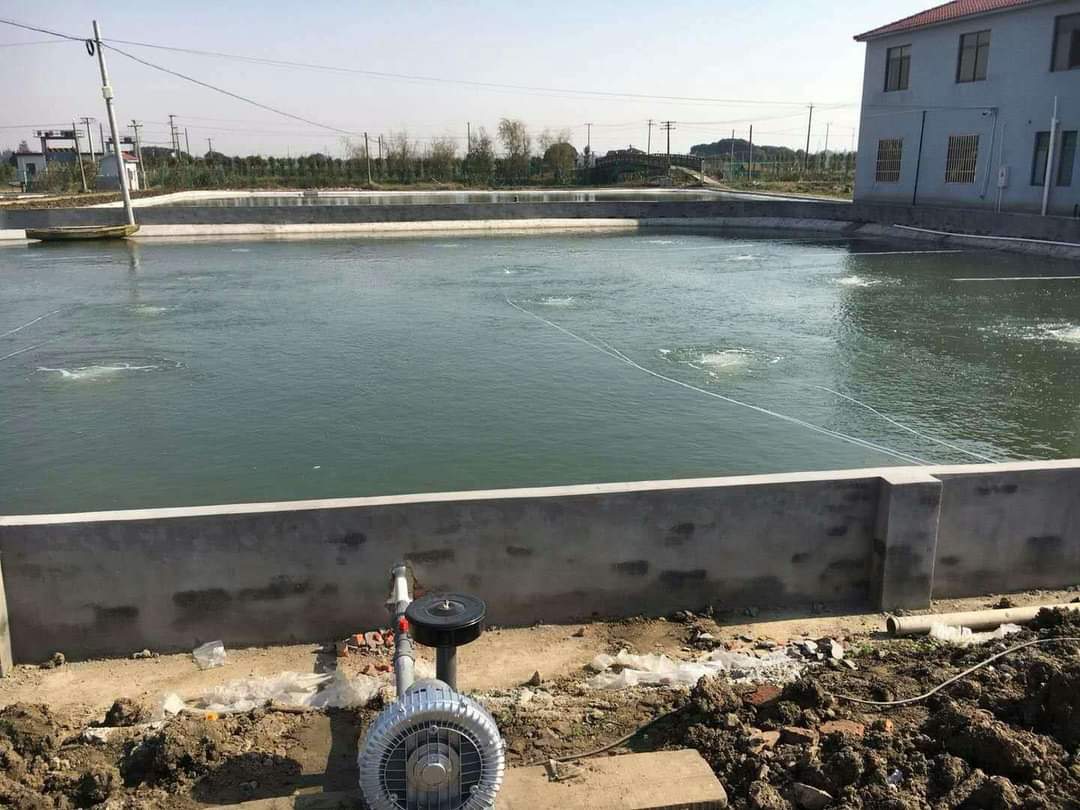
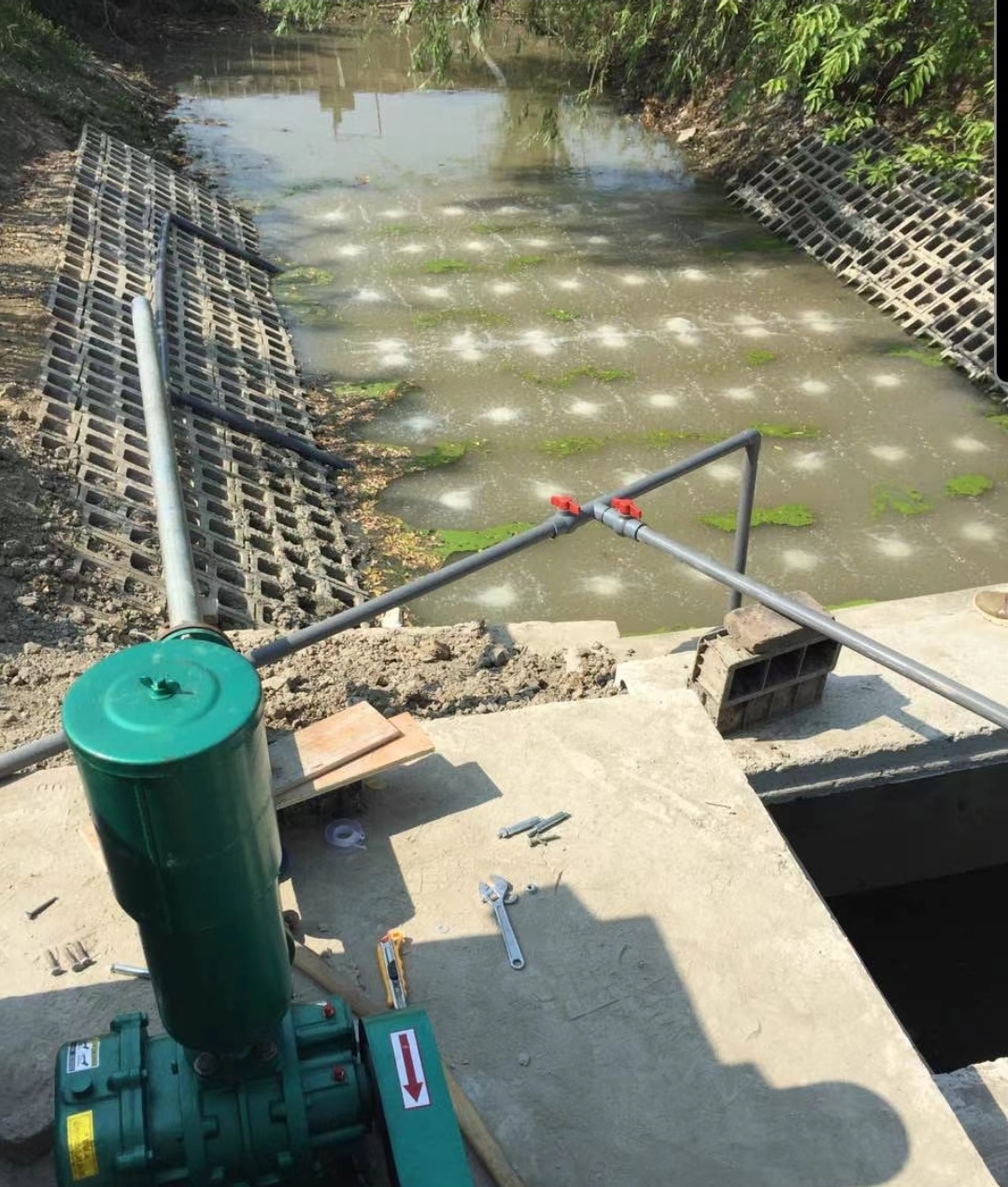
In tropical climates, fine-bubble bottom aeration (microporous tubing + blower) beats paddle wheels on energy, bottom oxygen and reliability — roughly half the power per mu (~0.15 kW vs ~0.3–0.35 kW), direct oxygenation of the pond bottom, and fewer moving parts in the water. Paddle wheels still have a role — surface circulation and emergency backup — but as the *primary* system in a hot climate, fine bubble wins on almost every number that matters to a tropical farmer.
Why the Tropics Are Different
Tropical ponds face three conditions that temperate ponds don't:
1. Hot water holds less oxygen — saturation at 30°C is ~15% lower than at 25°C.
2. Metabolism runs faster — fish and shrimp consume more oxygen at higher temperatures, exactly when it is hardest to dissolve.
3. Intense afternoon sun + heavy rain — sudden stratification, plankton die-offs and temperature crashes make DO swing violently within hours.
These three forces mean tropical farmers pay more per unit of oxygen produced — so the *efficiency* of the aeration method matters more than anywhere else.
The Head-to-Head Comparison (Tropical Conditions)
| Criterion | Fine bubble (microporous bottom) | Paddle wheel |
|---|---|---|
| Energy per mu | ~0.15 kW | ~0.3–0.35 kW |
| Where oxygen goes | Bottom first (where fish rest at night) | Surface only |
| DO swing control | Smooth — diffused across the bottom | Bumpy — surface spikes, bottom lags |
| Rain/storm resilience | Works in any weather | Splash effect reduced in rain |
| Moving parts in water | None (tubing only) | Motor + impeller submerged |
| Maintenance | Clean tubing after harvest | Bearing/seal replacements, fouling |
| Backup role | Needs blower backup | Often kept as the emergency unit |
| Solar compatibility | Excellent (low power, can run off solar) | Poor (high surge power) |
The tropical summary: fine bubble wins on energy (half), bottom oxygen (direct), storm reliability (no submerged parts) and solar compatibility — the four things that matter most in hot climates. Paddle wheels win on surface circulation and are a sensible *backup*, not the primary.
The Energy Math in the Tropics
| Item | Fine bubble | Paddle wheel |
|---|---|---|
| 10-mu farm, installed power | ~1.5 kW | ~3–3.5 kW |
| 20 h/day running | 30 kWh | 60–70 kWh |
| 180-day season at $0.10/kWh | ~$540 | ~$1,080–1,260 |
| Season saving with fine bubble | — | ~$540–720 per 10 mu |
In high-tariff tropical countries (Vietnam, Indonesia, Philippines at $0.15–0.25/kWh), the saving scales to $800–1,800 per 10 mu per season — a number that shows up directly in the farm's profit.
When Paddle Wheels Still Make Sense (Tropical Edition)
1. Emergency backup — keep one per pond or per 5 mu as insurance (see our emergency aeration guide).
2. Water circulation — shallow ponds where bottom aeration alone leaves surface stagnation.
3. Pre-existing investment — if you already own paddle wheels, keep them running during peak demand and add fine bubble as the baseline; the hybrid cuts energy while improving bottom DO.
Tropical Operation Tips
| Situation | Fine-bubble strategy |
|---|---|
| Normal hot season | Run 15–20 h/day; full power at night and after feeding |
| Midday sun peak | Can reduce aeration if DO > 5 mg/L (photosynthesis doing the work) |
| Heavy rain / cold front | Full aeration — plankton die-off consumes oxygen fast |
| Pre-dawn minimum | Never reduce aeration in the 3–7 am window — this is when the crop is decided |
| After feeding | 1–2 h full power (feed = oxygen demand spike) |
Frequently Asked Questions
Q: Don't paddle wheels circulate the whole pond better? A: They circulate the surface well, but tropical ponds stratify — the bottom, where fish rest at night, stays under-oxygenated. Fine bubble lifts bottom water directly, which is the oxygen that matters at the dangerous hours.
Q: Is fine bubble really half the energy? A: In our measured configurations: ~0.15 kW/mu vs ~0.3–0.35 kW/mu for comparable oxygenation. The exact ratio depends on pond depth and density, but fine bubble is consistently the lower-energy option.
Q: My pond is shallow (under 1 m). Does bottom aeration still work? A: Yes, but keep the tubing 10–20 cm off the bottom and reduce blower pressure. In very shallow ponds, surface aeration becomes relatively more attractive — the hybrid approach applies.
Q: Can I run fine bubble from solar in the tropics? A: Ideally suited — low power per mu and tropical sun. See our solar pond aeration guide for sizing and economics.
Q: What if my local supplier only sells paddle wheels? A: Buy fine bubble tubing and a blower directly from the manufacturer (Zhongxin exports worldwide) — the payback from energy savings usually covers the equipment within one season at tropical tariffs.
The Bottom Line
In tropical climates, fine-bubble bottom aeration is the primary system of choice: half the energy, oxygen where it is needed most, storm-proof, and solar-ready. Keep a paddle wheel or two for emergencies and circulation — but do not let them be your main oxygen bill.
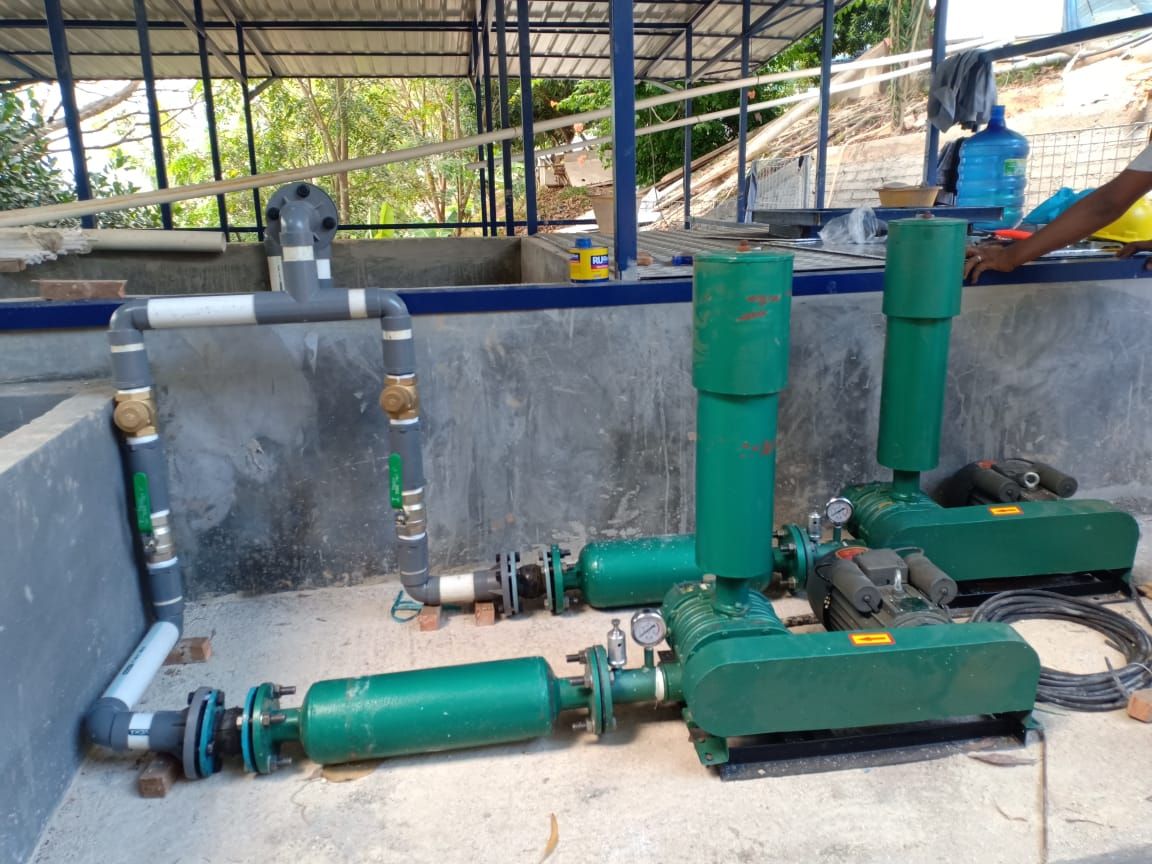
Zhongxin Machinery manufactures the tropical package: microporous tubing, ZXMSR roots blowers (with VFD options), and floating aerators for backup — plus free layout drawings and energy calculations for your pond. Send your pond area, depth and local electricity tariff, and we will show you the comparison on your numbers.
Jiangyin Zhongxin Machinery — one-stop aeration solutions. Contact: +86 180 1341 8091 / +86 180 1341 8097 (WhatsApp / WeChat).