Quick Answer
Four equipment types cover most aquaculture farms: roots blowers, regenerative blowers, surface aerators and microporous bottom aeration tubing. For grow-out ponds 1-2 m deep, the most energy-efficient setup is a roots blower feeding microporous tubing laid 10-20 cm above the pond bottom, sized at 1 kW of blower per 100-150 m of tubing (about 0.15 kW per mu / 667 m²). This guide explains how to choose between the four types, the sizing math that matters, and what a complete system looks like.
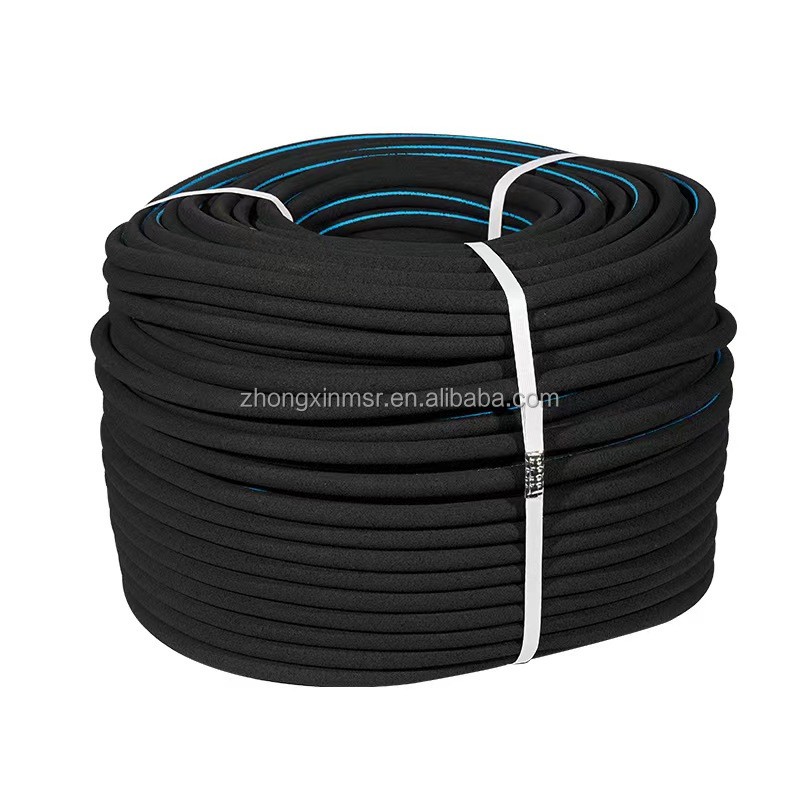
!Microporous aeration tubing for aquaculture
Why Aeration Is the #1 Priority on a Fish Farm
Dissolved oxygen (DO) is the first limiting factor for biomass in most aquaculture systems:
- DO below 3 mg/L at the pond bottom at 5-6 AM = fish stop feeding, growth stalls
- DO below 2 mg/L for a few hours = mortality risk
- In hot weather, a stocked pond can drop to lethal DO levels within 2-4 hours during a power outage
Aeration equipment is therefore not an "optional upgrade" - it is the insurance policy for your entire crop. The right system pays for itself in one or two seasons through faster growth and lower mortality.
The Four Main Types of Aquaculture Aeration Equipment
| Type | How it works | Best for | Typical energy use | Maintenance |
|---|---|---|---|---|
| Roots blower + microporous tubing | Positive-displacement blower pushes air through tubing with 1000-1600 pores/m; fine bubbles (0.3-2 mm) rise from the bottom | Grow-out ponds, shrimp ponds, deep water (1-3 m) | ~0.15 kW/mu - lowest of the four | Low; clean tubing every 2-4 years |
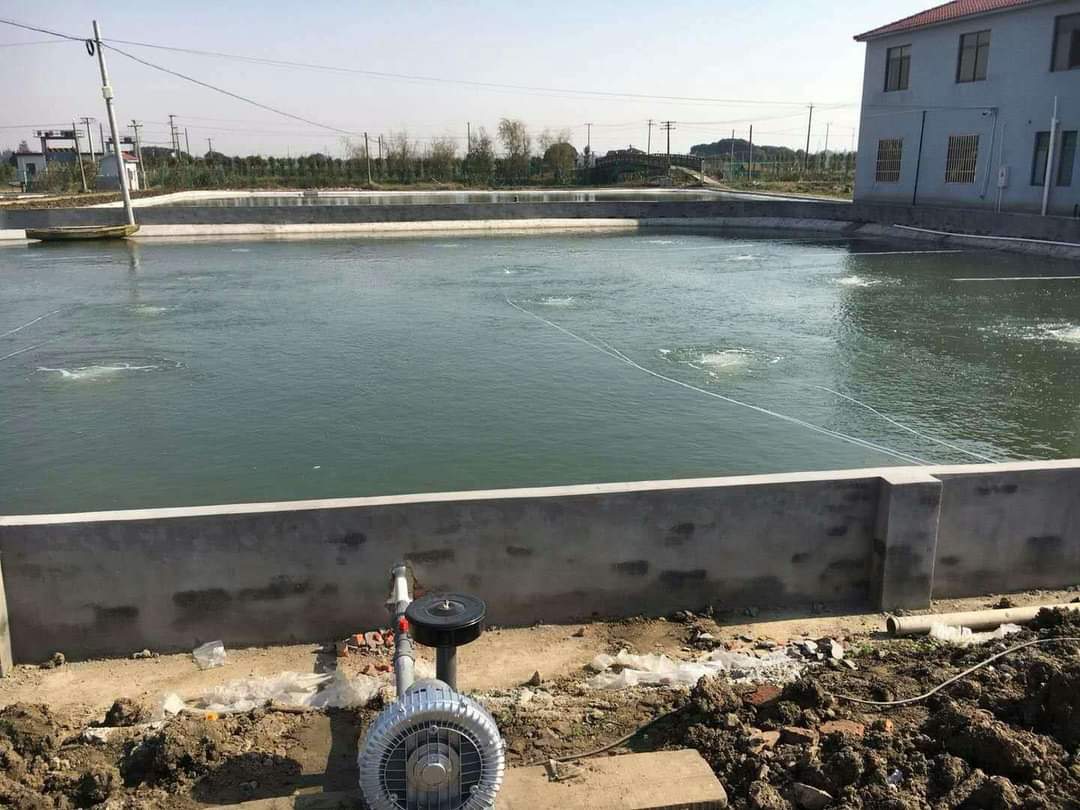
| Regenerative blower | Low-pressure fan used with diffusers or air stones | Shallow tanks, hatcheries, RAS | Moderate; limited by low pressure (cannot push air deep) | Low |
| Surface aerator (paddle wheel / impeller) | Motor-driven impeller splashes water at the surface | Emergency aeration, shallow ponds, cold-water systems | ~0.3-0.35 kW/mu - about double bottom aeration | Medium; mechanical parts, bearings |
| Submersible/float aerator (impeller + draft tube) | Underwater impeller mixes water column and transfers oxygen | Medium-depth ponds, mixing | Medium | Medium; seals and impeller |
Key insight: for ponds deeper than ~1.2 m, bottom aeration (roots blower + microporous tubing) moves oxygen to where the fish actually are, while surface aerators only oxygenate the top layer. Many farms save 30-50% on electricity by switching from paddle wheels to bottom aeration.
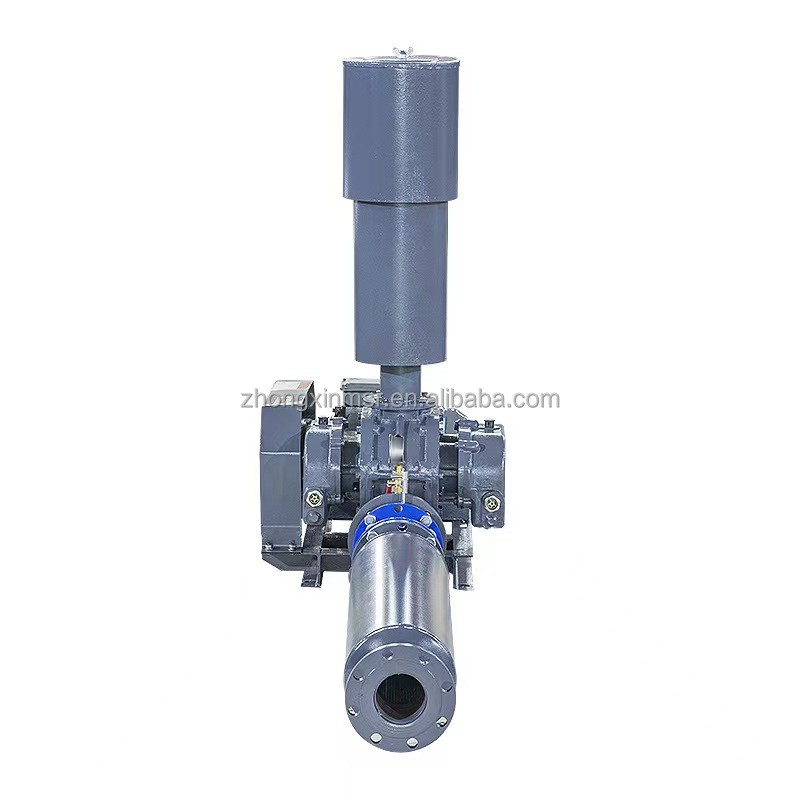
!Roots blower for aquaculture aeration equipment
Sizing Rules That Actually Work (1-2 m deep ponds)
These are the numbers we give every customer, and they work across tilapia, carp, catfish and shrimp:
- Blower size: 1 kW per 100-150 m of microporous tubing
- Tubing length: 60-100 m per mu (667 m²), lines spaced 3-5 m apart
- Tubing height: 10-20 cm above the bottom - buried in sludge, efficiency drops to nearly zero
- Service area: each metre of microporous tubing covers 1-8 m² of pond bottom
- Bubble size: 0.3-2 mm in freshwater, 0.5-3 mm in seawater
| Pond size | Tubing needed | Blower suggestion |
|---|---|---|
| 1 mu (667 m²) | 60-100 m | 1-1.5 kW roots blower |
| 5 mu (3,335 m²) | 300-500 m | 5.5-7.5 kW roots blower |
| 10 mu (6,670 m²) | 600-1000 m | 11-15 kW roots blower |
*Rule of thumb: 1 kW / 100-150 m of tubing regardless of pond shape.*
Roots Blower vs Regenerative Blower: The Difference Most Buyers Miss
This is the single most common mistake we see. A regenerative blower is fine for shallow tanks (0.5-1 m), but its pressure limit (typically under 30 kPa) means it cannot overcome the water depth + tubing resistance of a real grow-out pond. A roots blower delivers 9.8-98 kPa of pressure, which is what pushes air through 100+ metres of tubing sitting 1-2 m underwater.
| Roots blower | Regenerative blower | |
|---|---|---|
| Pressure range | 9.8-98 kPa | typically < 30 kPa |
| Flow range | 0.6-136.7 m³/min | small to medium |
| Best depth | 1-3 m ponds | < 1 m tanks |
| Efficiency at depth | High | Drops sharply with depth |
| Example series | ZXMSR (0.5-280 kW) | - |
If your pond is deeper than 1 m and you plan to use bottom aeration, spec a roots blower - not a regenerative blower.
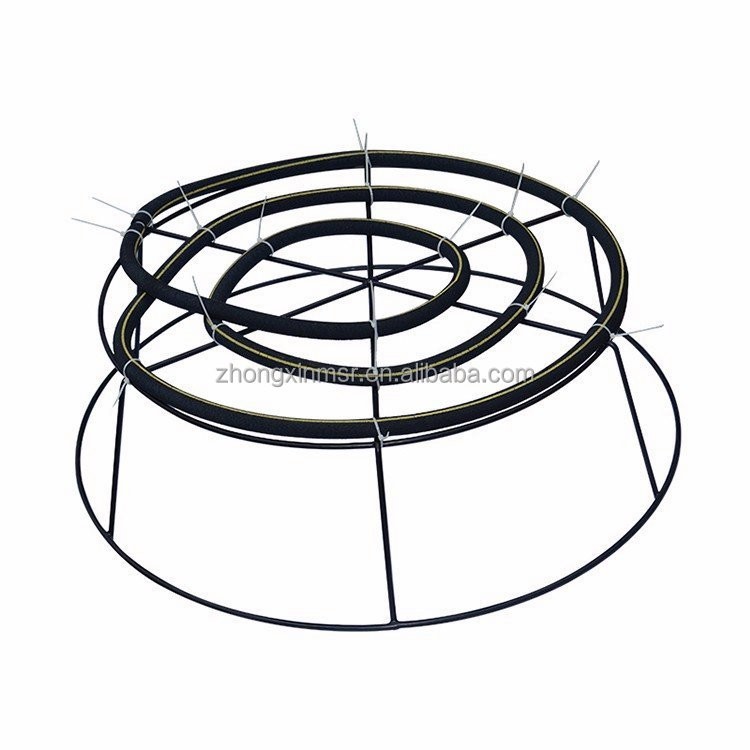
!Aeration disc for pond bottom aeration
What a Complete Aeration System Includes
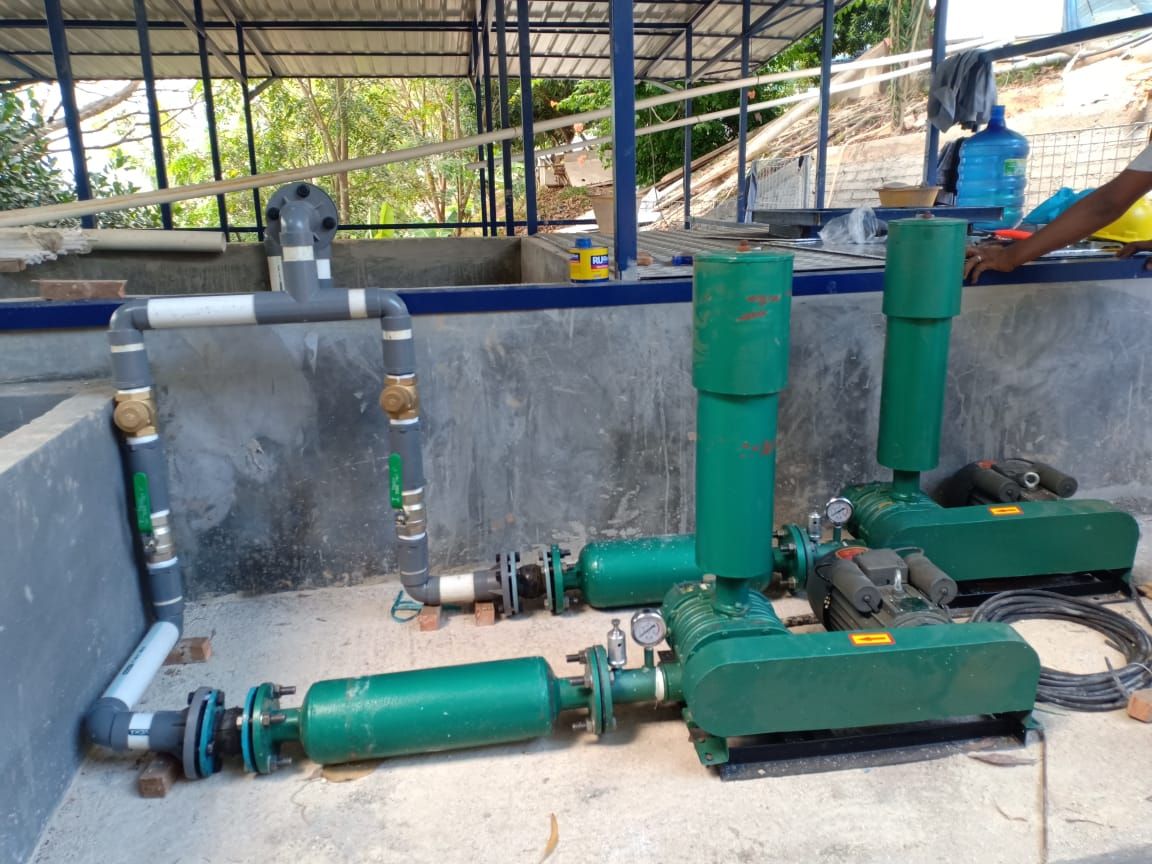
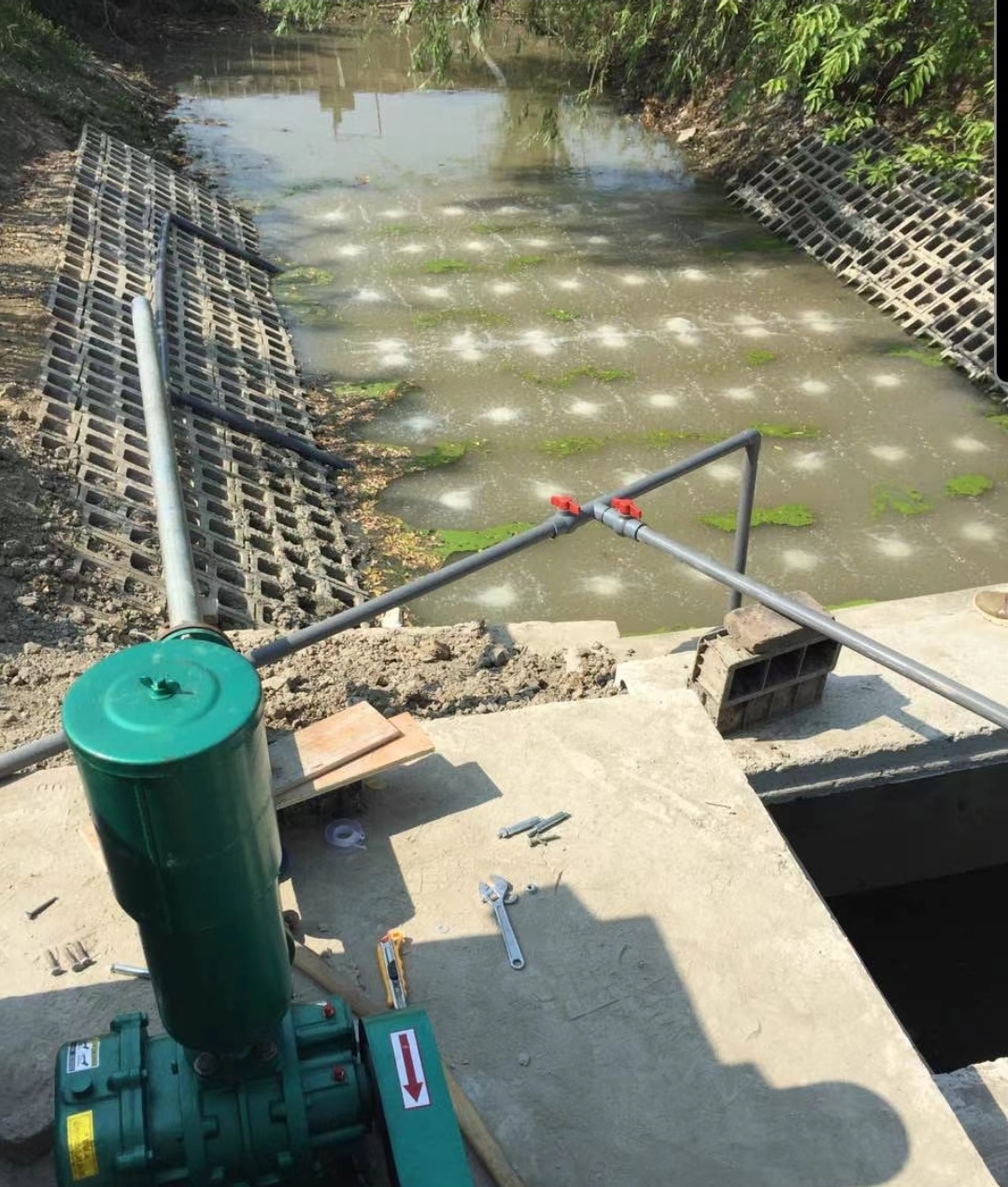
A complete system has four parts: blower / main pipe / manifold / microporous tubing on the bottom.
1. Roots blower (sized per the table above)
2. Main pipe (PVC/PE, Ø 50-110 mm) from the shore to the manifold
3. Manifold/distributor with individual valves per line - without valves you cannot balance flow between lines
4. Microporous tubing (10x16 to 20x28 mm) laid in parallel lines, 10-20 cm above the bottom, fixed every 2-3 m
Buying all four from one factory means the system is matched: the blower pressure, pipe diameter and tubing length are designed together, not guessed at separately. This is where "factory-direct + complete system" beats buying components from a dealer who simply resells. See our roots blower and microporous tubing product pages for the full range.
Factory-Direct vs Dealer: What the Price Difference Buys
Most US dealers sell the same categories of equipment at a significant markup for local service and support. For a commercial farm buying multiple ponds' worth of equipment, the savings of going factory-direct (we manufacture roots blowers, microporous tubing and floating aerators in one facility) can fund the entire aeration upgrade of a second pond. What you give up in local response time, you get back in direct engineering support, custom sizing and OEM-level pricing.
FAQ
Q: How much aeration does a fish pond need? A: 1-2 m deep grow-out pond needs about 0.15 kW of blower power per mu (667 m²), which translates to 1 kW per 100-150 m of microporous tubing. Measure DO at 5-6 AM - if it stays above 3 mg/L at the bottom, your system is adequately sized.
Q: Which is better, a paddle wheel or bottom aeration? A: For ponds deeper than about 1.2 m, bottom aeration (roots blower + microporous tubing) is roughly twice as energy-efficient (0.15 vs 0.3-0.35 kW/mu) and oxygenates the bottom layer where fish live. Paddle wheels still make sense for emergency aeration or very shallow ponds.
Q: Can I run aeration on solar power? A: Yes - with a properly sized battery bank for 1-2 nights of backup, a solar + battery + blower system can cut aeration electricity to near zero during daylight hours. Typical payback is 3-5 years in high-irradiation regions.
Q: How deep should microporous tubing be installed? A: 10-20 cm above the pond bottom. Buried in sludge, the bubbles cannot rise and efficiency drops to almost zero; too high, and you waste energy aerating mid-water instead of the bottom.
Q: How often does microporous tubing need replacing? A: With seasonal cleaning, microporous tubing typically lasts 2-4 years. Check for clogging each season and clean according to the manufacturer's instructions.
Q: What causes most aeration failures? A: Undersized blowers, tubing buried in sludge, leaks in the main pipe, and lines spaced more than 7 m apart (creating dead zones in the centre). All four are preventable with proper sizing and installation.
Q: Is a regenerative blower enough for my pond? A: Only for tanks shallower than about 1 m. For grow-out ponds, the pressure required to push air through long tubing lines underwater exceeds what regenerative blowers can deliver - use a roots blower.
Conclusion
The best aquaculture aeration equipment is not the most expensive - it is the best matched to your pond depth, species and electricity tariff. For most commercial farms, a roots blower + microporous bottom aeration system at 0.15 kW/mu is the most energy-efficient, lowest-maintenance choice. Size it right, install the tubing 10-20 cm above the bottom, and test your DO curve before stocking.
Need help sizing your system? Zhongxin manufactures roots blowers (ZXMSR series), microporous tubing and floating aerators - one factory, complete systems, with free sizing design. Send us your pond area and depth.
Related reading: How to Choose Aeration Tubing for Shrimp Ponds | Reduce Aeration Energy Costs in Tropical Shrimp Farming | Pond Aeration System Installation Guide | Roots Blower Selection for Aquaculture Aeration