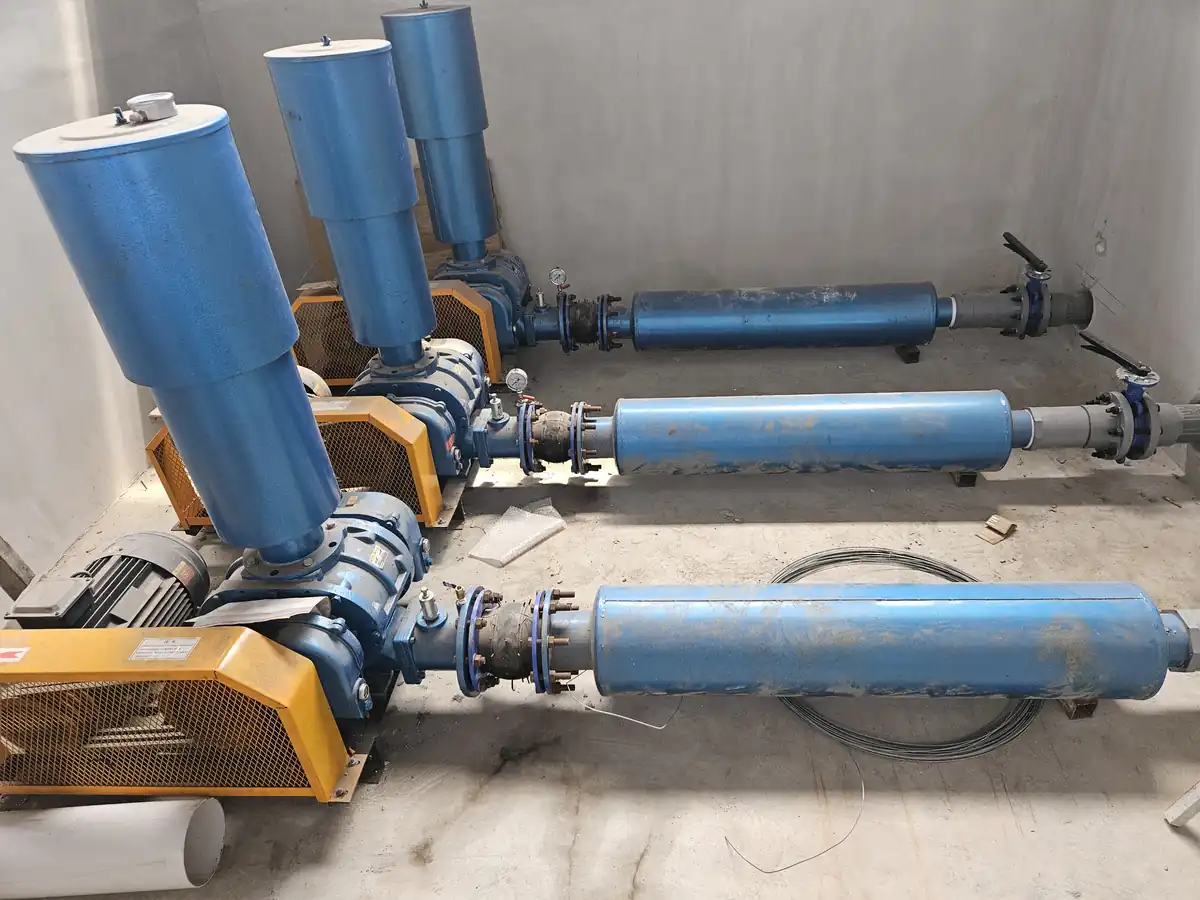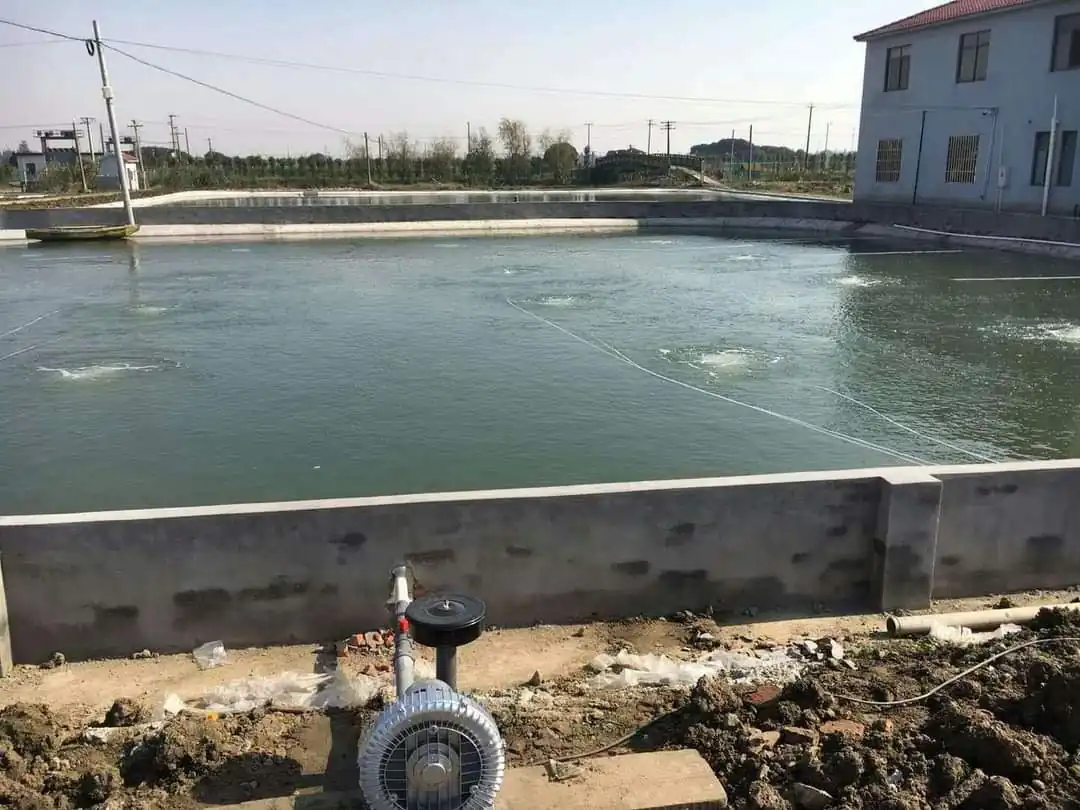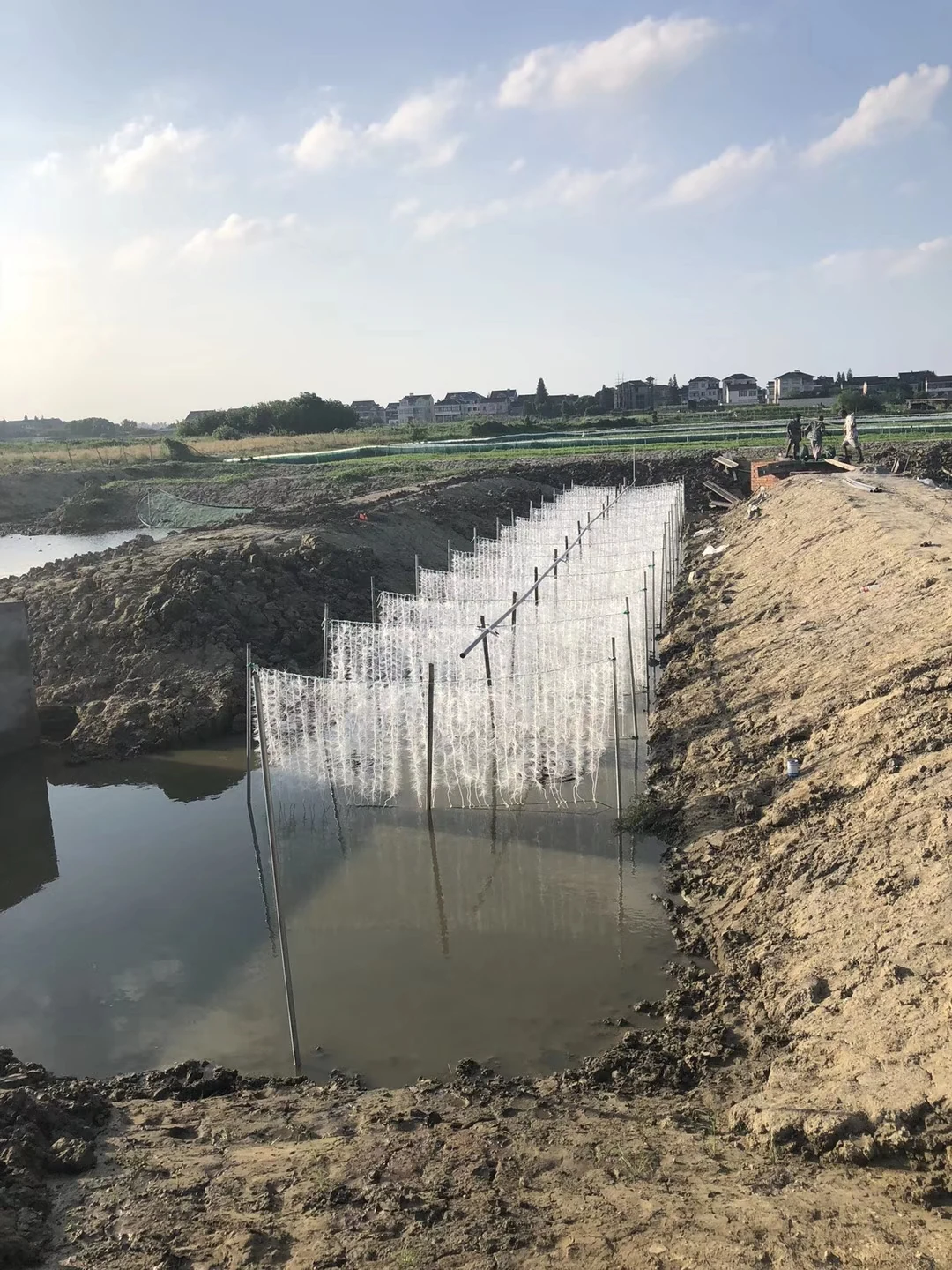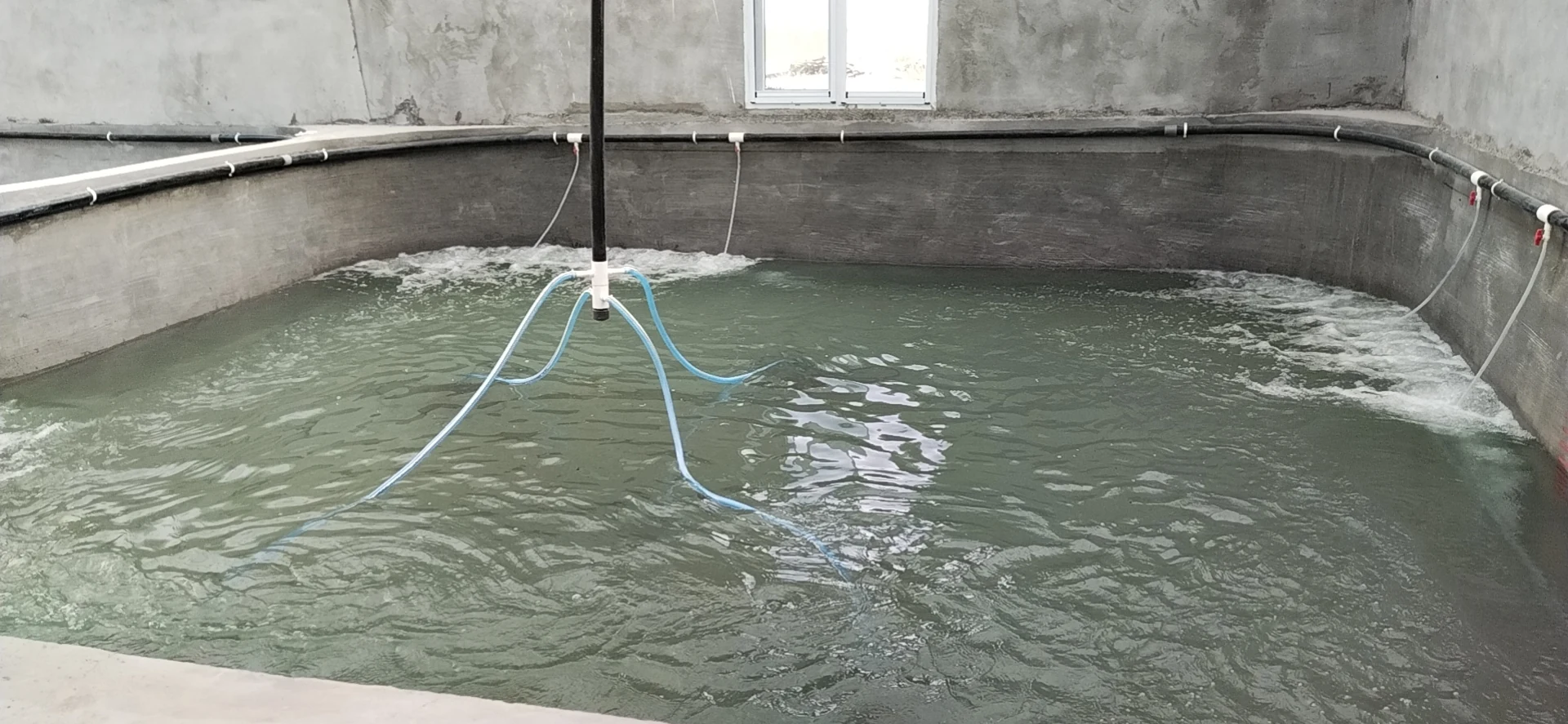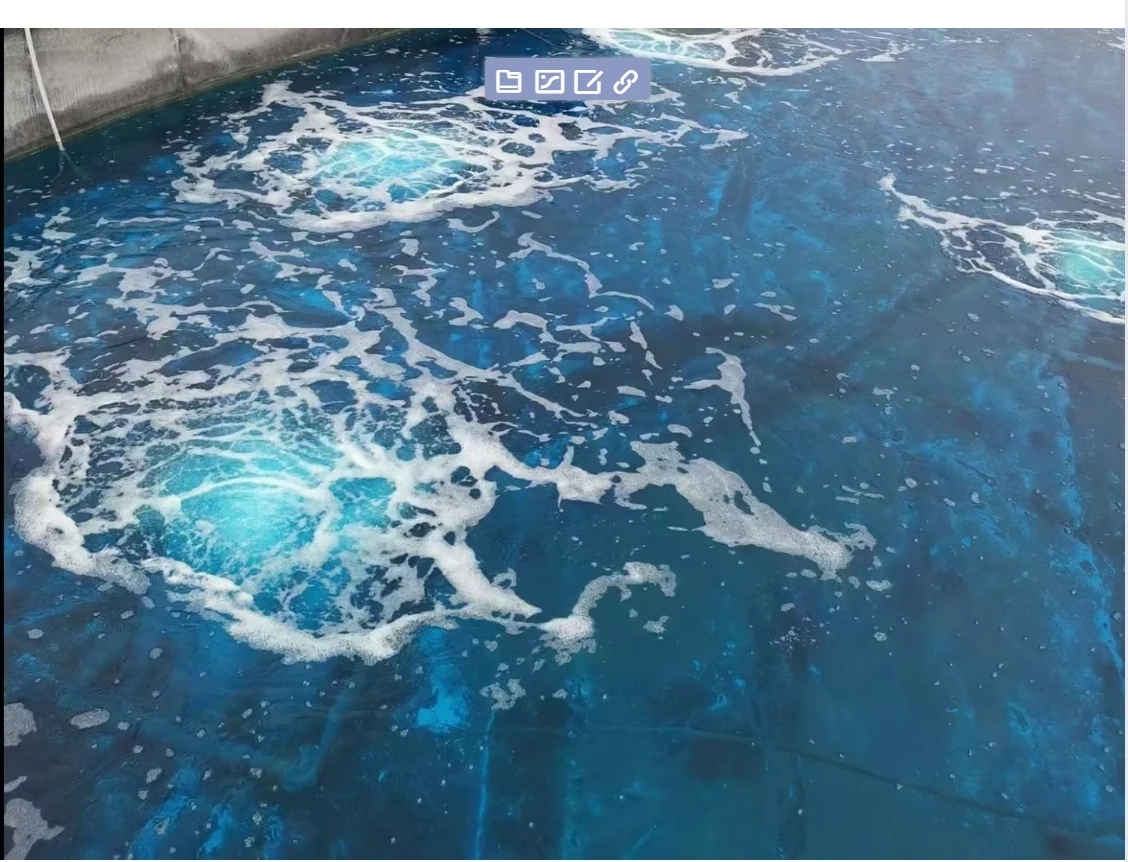
Using a pond aerator correctly not only greatly reduces running costs, but also effectively improves fish-pond water quality and reduces or prevents disease. It also lowers the feed conversion ratio and raises farming profit. On many fish farms, however, farmers do not understand the aeration principle and use the aerator wrongly - instead of aerating, they can even cause serious oxygen shortage.
An aerator is generally started in two time windows, with completely different principles and effects:
1. About one hour before oxygen shortage occurs at night - this helps the fish through the night-time oxygen-deficient period and saves the stock.
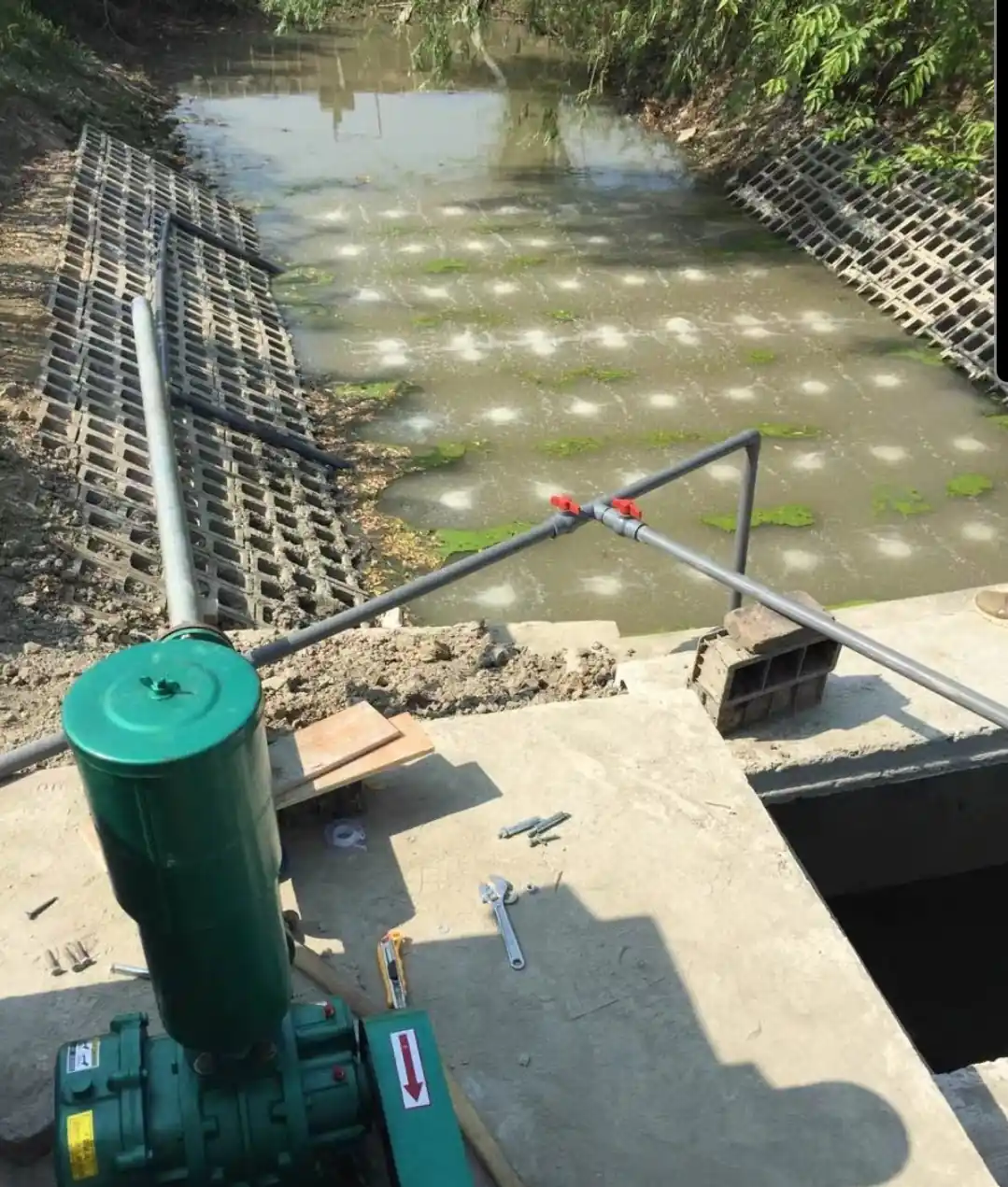
2. At midday on sunny days, when the pond water is rich in dissolved oxygen - when the roots blower starts, oxygen is released through the bottom piping and aeration discs, so the organic matter on the bottom (faeces, leftover feed, dead organisms) is decomposed in advance, preventing oxygen consumption by night-time decomposition.
The first is mechanical aeration - stirring the water with gas to dissolve oxygen from the air and the surface layer into the whole water body. The second is biological aeration: most of the dissolved oxygen in a fish pond comes from photosynthesis by phytoplankton, which only happens in sunlight - the stronger the light, the more oxygen produced. So we start the aerator at midday when sunlight is strongest and photosynthesis is most active, circulating the oxygen-rich surface water and bottom water, decomposing organic matter in advance, and preventing organic matter from breaking down at night to produce harmful substances (ammonia, nitrite, hydrogen sulphide, methane, etc.).
Many farmers who do not understand the principle make these mistakes:
1. No aeration during the day, long aeration at night. Many farmers think the pond is not oxygen-deficient during the day and no aeration is needed; they only recognise mechanical aeration and ignore the more important biological aeration. Using biological aeration well often saves a lot of running time and cost. For example, running the aerator 1-3 hours at midday on a sunny day can reduce night-time running by several hours or even more than ten hours - this method typically saves 100-500 yuan of electricity per mu per year.
2. Running the aerator during the day in overcast or rainy weather. Many farmers think the pond is short of oxygen on cloudy days and should be aerated. This is actually a serious mistake. On overcast or rainy days, aeration should be off during the day: even though photosynthesis is weak, it still aerates far better than mechanical aeration. Store that limited oxygen in the surface layer for the fish to use at night. If you run the aerator on an overcast day, the little oxygen present is stirred down to the bottom and consumed by organic matter, and at night the pond water has no oxygen reserve - hypoxia follows.
3. Starting the aerator at 4 a.m. or after 4 p.m. on sunny days. Some farmers also run it in the morning on sunny days, thinking it adds more oxygen. This is also wrong: mechanical aeration is far weaker than biological aeration. In the morning, as soon as the fish leave the aerator, it should be stopped. Some farmers think that with high density and poor water quality the aerator should be switched on before dark - but from 4 p.m. to nightfall, if the pond is not close to oxygen shortage, no aeration is needed, because starting early consumes the surface dissolved oxygen ahead of time and accelerates night-time hypoxia.
4. No aeration on windy sunny days. Some farmers think wind aerates the water, so midday aeration is unnecessary on sunny days. Not exactly: wind does aerate, but its convection effect on the pond water is weak - oxygen-rich surface water is hard to convect to the bottom. Only a sudden temperature drop (surface water cooling) can drive effective convection. So apart from that case, run the aerator at midday on sunny days whether there is wind or not.
5. No aeration in the first half of the year unless fish gasp. Many farmers think that in April-June the water is cold, the fish are small and, as long as they are not gasping, no aeration is needed. In fact, when the fish are feeding heavily and excreting heavily and the water is fertile, the aerator should be run at midday on sunny days. This postpones the gasping season and reduces its severity, fattens the water in advance and delays water-quality deterioration.
The correct schedule in short: on sunny days run the aerator 1-3 hours at midday (about 1 hour for a 3-mu pond, about 2 hours for a 10-mu pond, about 3 hours for ponds over 10 mu); in the evening, start about one hour before the usual oxygen-shortage time and stop as soon as the fish leave the aerator.
Special notes: on overcast or rainy days with no sun, do not run the aerator during the day; at night, do not run it if the pond is not oxygen-deficient; in the first half of the year, do not run it before the fish are feeding heavily and the water is fertile; once running, do not stop until the fish leave the aerator, and stop as soon as they do after sunrise; after applying medication on a sunny day, run the aerator; on the day you apply fertiliser, do not run it during the day.
Correct aerator use is an important guarantee of overall fish-farming efficiency.