The Short Answer
Buying directly from a Chinese factory costs 30–50% less than buying from a local dealer for the same equipment, and gives you OEM/customization options a dealer cannot offer — but it requires more homework. The honest trade-off: factory-direct wins on price, customization and system design; local dealers win on convenience, local warranty and immediate support. For a farmer or distributor buying aeration systems in volume, factory-direct with a verified manufacturer is usually the better deal — provided you check the factory properly before paying.
Factory Direct vs. Local Dealer: The Real Comparison
| Criterion | China factory (direct) | Local dealer |
|---|---|---|
| Price | 30–50% lower (no middleman margin) | Higher (dealer margin + import costs) |
| Customization / OEM | Yes — your brand, your specs, your packaging | No — off-the-shelf only |
| System design support | Engineer-sized complete systems | Limited (mostly product knowledge) |
| MOQ | Higher (typically container or partial container) | Low (buy one unit) |
| Lead time | 2–6 weeks (manufacturing + shipping) | In stock |
| Warranty handling | Via the manufacturer's terms; parts shipped | Local service network |
| After-sales support | Remote (engineers on WeChat/WhatsApp/email) | On-site possible |
| Best for | Distributors, farmers buying in volume, system buyers | One-off purchases, urgent needs |
The honest line: if you are a farmer buying one aerator urgently, buy from a dealer. If you are a farm manager or distributor buying a system — several blowers, hundreds of metres of tubing, canvas ponds — factory-direct pays for the extra lead time many times over.
How to Verify a Chinese Factory (Before You Pay)
A checklist that separates real manufacturers from trading companies:
1. Check the factory's own website — real manufacturers have product specs, engineering content and a real address. A page with no specs and no technical details is a red flag.
2. Ask for factory photos and video calls — a live WeChat/WhatsApp video walk-through of the workshop, test bench and warehouse takes 10 minutes and filters out most trading companies.
3. Request test reports — for blowers: pressure–flow test data; for aeration tubing: pore density and bubble-size specs. A real manufacturer has these.
4. Check registrations — business license, export license, and certifications relevant to your market (CE, ISO).
5. Ask about after-sales parts — can they ship spare parts (seals, belts, filters) quickly? Real manufacturers stock them.
6. Start with a small order — a sample or small first order builds trust before you commit to a container.
What a Factory Can Do That a Dealer Can't
- OEM / private label: your brand name on blowers, tubing and ponds.
- Custom specs: different tube sizes, voltage (220 V / 380 V / custom), packaging per your market.
- Complete system engineering: blower + manifold + tubing sized as one system with a layout drawing — a dealer sells components, a manufacturer designs systems.
- Spare parts and bulk pricing for distributors building their own local business.
The Buying Process (Step by Step)
1. Send your requirements: pond area, depth, species, quantity, target voltage, and whether you need the full system.
2. Receive a quotation and system layout: a real factory replies with a list (blower model, tubing length, manifold, layout drawing) — not just a price.
3. Verify (see checklist above): video call, test reports, photos.
4. Sample or small order to validate quality and packaging.
5. Scale up: container order with your branding (OEM) if required.
Frequently Asked Questions
Q: How much can I really save buying factory-direct? A: For equivalent equipment, typically 30–50% before shipping. After freight and any import duties, total landed cost is usually still 20–35% below local dealer pricing.
Q: What if something breaks? A: Reputable manufacturers keep spare parts (seals, belts, filters, membranes) and ship them quickly, and provide remote troubleshooting by video. Warranty terms are in the contract — check what's covered before ordering.
Q: How do I know a factory isn't a trading company? A: Video call the workshop, ask for test data and factory photos, check the website's technical depth. Trading companies cannot show you a production line.
Q: What are typical MOQs? A: Often 1 pallet for samples, and container quantities for the best pricing. Ask directly — MOQ varies by product.
Q: Can they put my brand on the equipment? A: Yes — OEM/private label is standard for manufacturers. Specify your brand, colors and packaging in the quotation stage.
Q: How long does shipping take? A: Manufacturing typically 2–4 weeks, sea freight 2–5 weeks depending on destination (Southeast Asia, Middle East, Latin America). Plan your season accordingly.
The Bottom Line
Factory-direct buying is a 30–50% cost advantage plus customization and system engineering — the right choice for volume buyers and system projects. The risk is manageable if you verify the factory properly: video call, test reports, small first order.
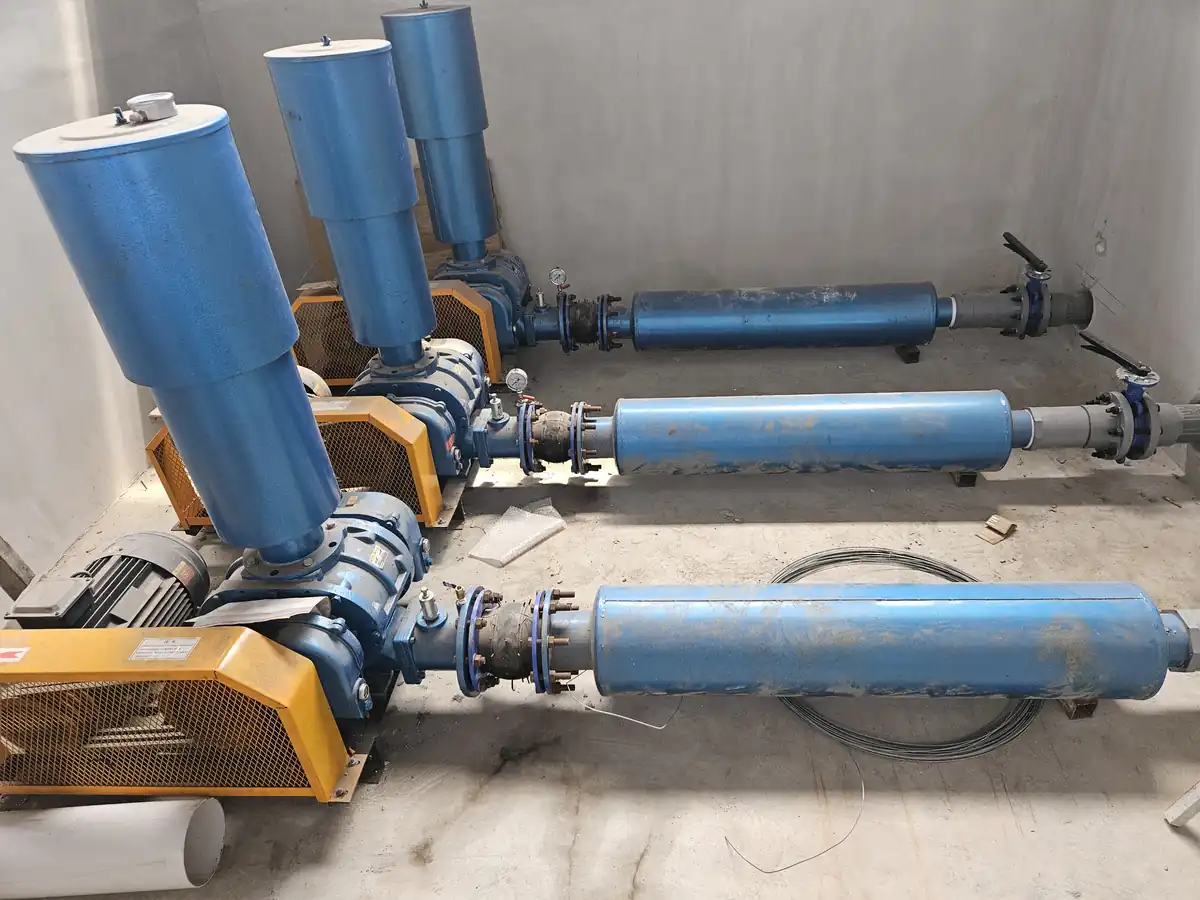
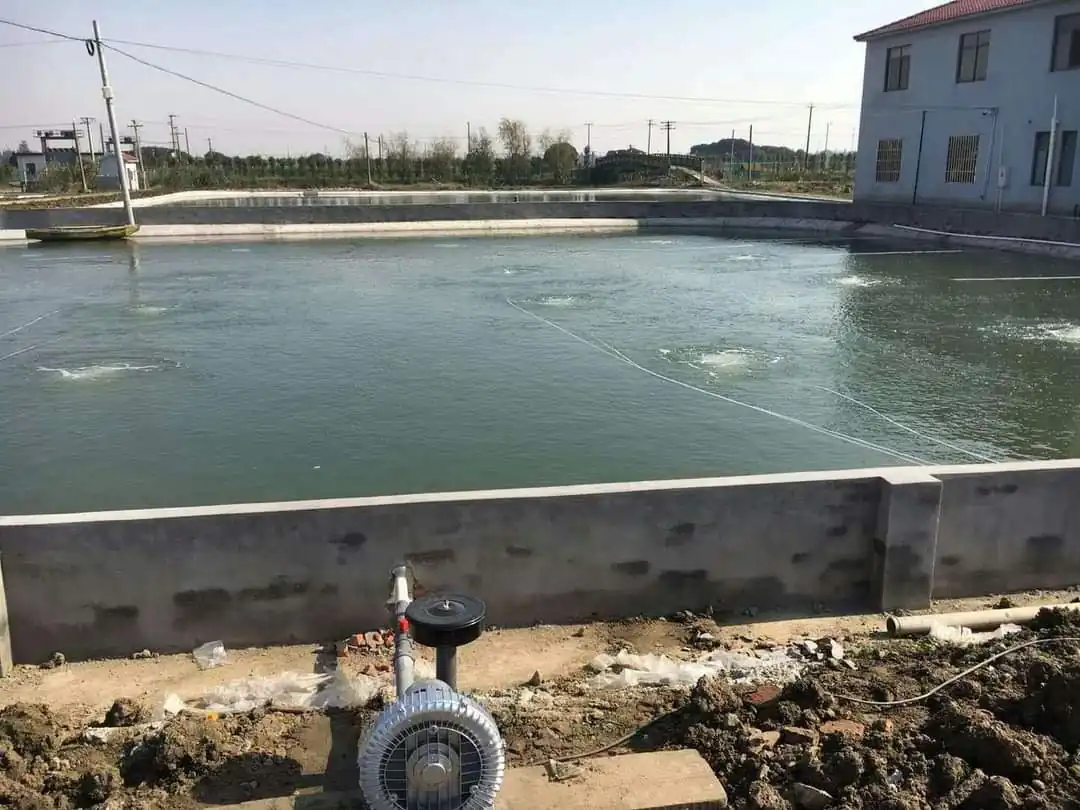
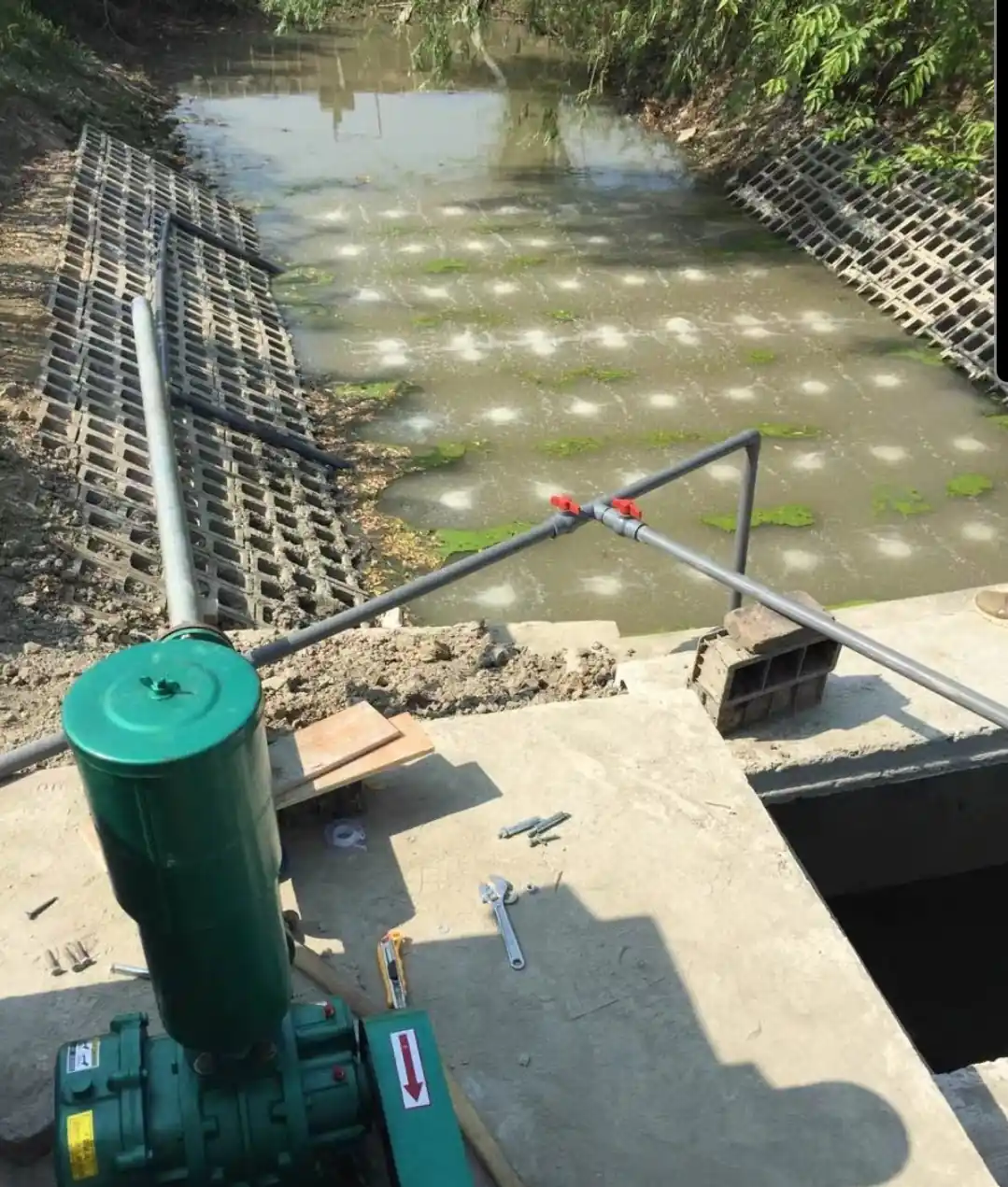
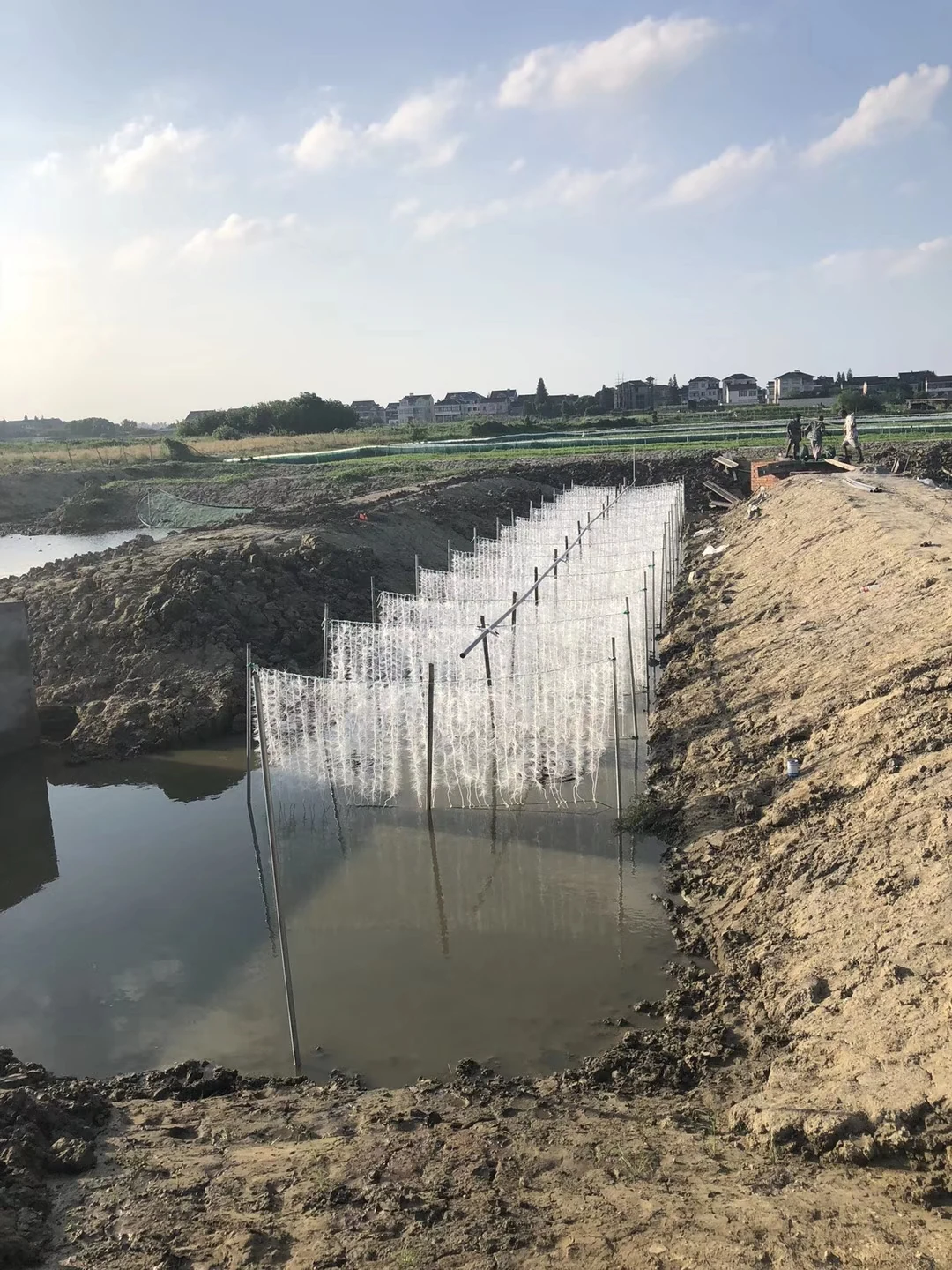
Zhongxin Machinery is a manufacturer (since 2014), not a trading company: we have the production line, the test bench and the engineering team. We supply complete aeration systems — roots blowers, microporous tubing, aeration discs, floating aerators, canvas fish ponds — with OEM service and English documentation. Send us your pond plan and we will reply with a quotation, a system layout, and a factory video if you want one.
Factory audit checklist: what to verify before a deposit
An on-site visit is ideal; if it is not possible, ask for the same evidence in document and video form.
- Production line, not just a showroom. Ask to see the machines that make the product you are buying — casing machining, rotor balancing, winding and assembly, and the test bench where units are run.
- Testing records. Every blower should leave with a pressure/airflow record at your duty point, not a generic datasheet. Ask what is measured and where the record is stored.
- Component sourcing. Which parts are made in-house and which are bought in? Both answers are acceptable — what matters is that the factory knows and can name the brands of the bought-in parts (bearings, motors, seals).
- References at your scale. Installations in a similar climate and stocking density. In aquaculture the reference list matters more than the catalogue.
- Export history. Ask which markets the factory already ships to and what documentation it prepares (packing list, invoice, certificate of origin). A plant that exports routinely will not be confused by your customs paperwork.
Payment options and what they mean for you
- T/T with deposit and balance on copy of B/L. The most common structure in equipment trade: it keeps the factory's material costs covered and gives the buyer a checkpoint before the balance.
- Letter of credit (L/C) for large orders. Slower and with bank charges, but it makes payment conditional on the documents matching — useful when the order value is high or your bank requires it.
- Payment platforms and escrow-style services. Workable for sample-size orders; the fees grow with the order and most factories price them in.
- What to avoid: paying the full amount up front to an unverified supplier, and paying to a personal account that differs from the company name on the invoice and contract.
Container loading and LCL consolidation
Aeration equipment is awkward to ship because it mixes dense and bulky items: blowers and tubing are heavy for their volume, while float rings and galvanized pond panels are large and light.
- FCL (full container). The factory prepares the loading plan; a mixed load of blowers, tubing and floats usually fills a container better than a single product, so freight per unit drops.
- LCL (shared container). Viable for a first trial order, but the goods are handled more often and the cubic-metre rate is higher than in FCL. If you are close to a container, ask for both calculations before choosing.
- Ask for the packing list and volume/weight before payment. It determines the freight quote, and it is also the document your customs broker works from.
- Spare parts in the same shipment. Adding tubing, diaphragms and valve kits to the first container costs far less than shipping them later on their own.
The OEM process, step by step
1. Specification — pond area, depth, species, target dissolved oxygen, grid voltage, branding requirements, destination port.
2. Feasibility and quotation — platform selection (standard unit adapted, or a build to your drawing), tooling needs stated, FOB and CIF quoted.
3. Sampling or first article — for standard configurations a sample can be produced and field-tested before a batch commitment; customized SKUs are sampled alongside the tooling step.
4. Freeze the specification in writing — voltage, materials, float colour, nameplate wording, packaging. Changes after this point reset part of the schedule.
5. Production and inspection — units are assembled and tested against the frozen specification, with test records kept per unit.
6. Loading and documents — loading plan, packing list, invoice and certificate of origin prepared at the factory before shipment.
Quotation traps that cost money later
- A price with no model number. Not comparable, and impossible to hold a supplier to.
- Free-air airflow figures. Airflow quoted without the working pressure overstates what the blower delivers at your pond depth.
- No electrical protection. Panels without overload, phase-loss and RCD protection are the most common reason blowers burn out in rural grids — and the most common omission from cheap quotations.
- Undersized tubing length. A quotation covering only the blower is not a system; tubing, valves and manifolds decide whether the air reaches the pond bottom.
- Vague spare-parts terms. Ask which parts are standard and available after the warranty ends before the order, not after a failure.
- Delivery dates that start before the specification. Lead time runs from the frozen specification; a date promised on the enquiry is a guess.