Facility aquaculture mainly includes factory-style farming, cage farming, artificial reefs and marine ranching.
Since the 1970s, facility aquaculture in China — represented by factory farming, cage farming and artificial reefs — has developed rapidly. Today the country has a new situation of sea farming that adapts to local conditions, uses multiple models side by side and develops water resources in three dimensions.
(1) Factory-style farming.
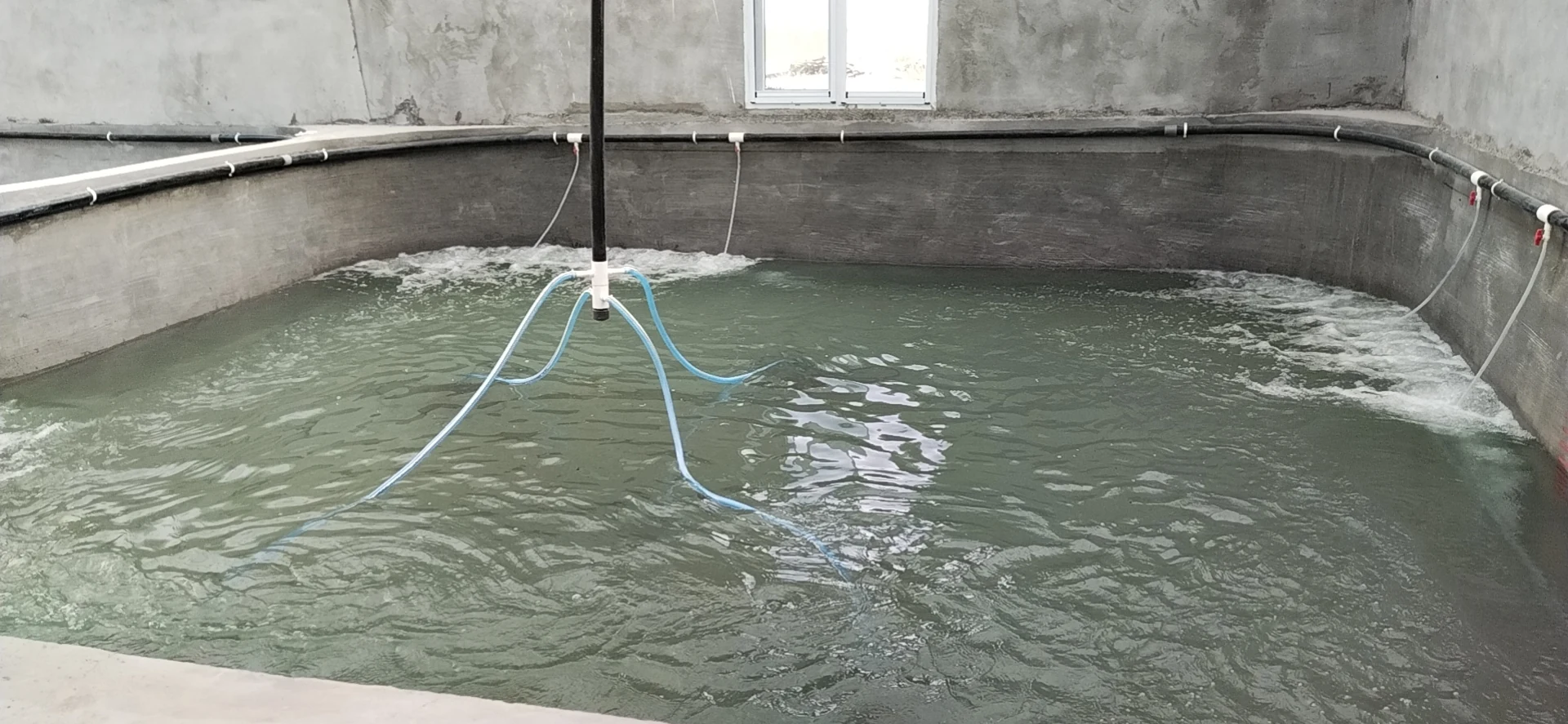
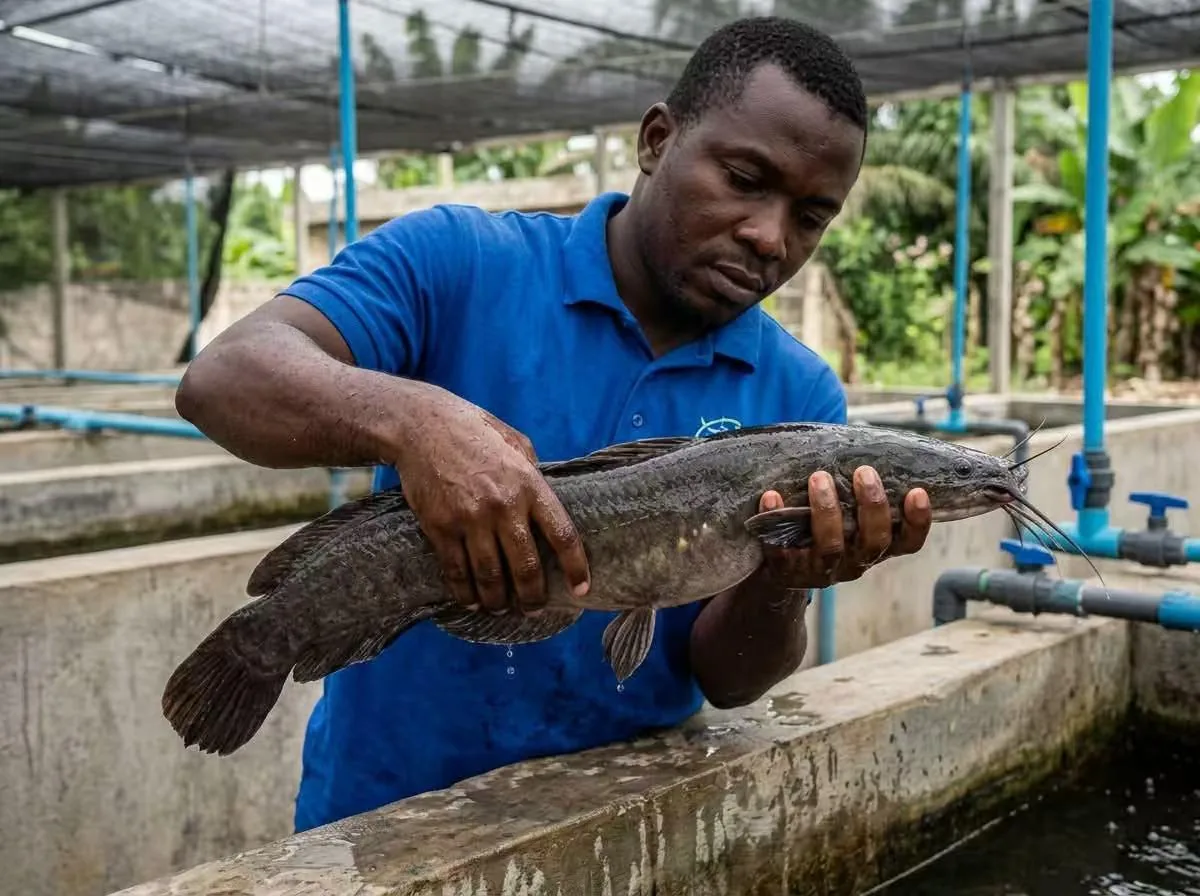
Factory-style farming is high in technology content, investment and output, and is regarded as the representative of modern aquaculture. China started factory farming relatively late — the technology was introduced from abroad in the 1970s, absorbed and digested over more than ten years, and only entered industrial development in the early 1990s. In recent years it has spread quickly, concentrated mainly in Shandong, Hebei and Liaoning, with average fish production of 15–50 kg per square metre. Factory farming can be divided into three types: flow-through culture, semi-closed recirculating culture and fully closed recirculating culture. Flow-through is the most common in China: the buildings typically use light steel structures with dark GRP (fibreglass) roofing and brick-concrete walls; the fish tanks are brick-concrete or fibreglass, in round, oval, raceway or square shapes (square most common), with a surface area of 20–100 m² per tank, using perimeter water intake and central bottom drainage for circulation.
(2) Marine cage farming.
Since the 1970s, after more than 30 years of development, the total number of cages in China has exceeded 1.2 million, but most are traditional structures in harbours and bays made of pine planks, bamboo poles and steel pipes. To develop deep-sea cage farming, coastal provinces such as Shandong, Zhejiang, Fujian and Guangdong place great importance on wave-resistant deep-sea cages. In recent years, universities, research institutes and companies have worked closely on basic research and industrial infrastructure, drawing on foreign technology and local sea conditions to design and build cages that cost less while matching or exceeding foreign performance, accumulating rich experience. Large wave-resistant deep-sea cages are now numerous in Zhejiang, Shandong, Fujian and Guangdong. Their perimeters are mainly 50 m and 60 m, with net depths of 8–12 m; main species include large yellow croaker, red sea bream, red drum, cobia, grouper, black pomfret, sea bass and rockfish — around 30 species in total — with an annual output of about 30,000 tonnes, and several large deep-sea cage farming bases have been established.
(3) Artificial reefs.
Experimental research on artificial reefs in China began in 1979, when Guangxi Zhuang Autonomous Region deployed the country's first artificial reef group in the Beibu Gulf. From 1981, the Yellow Sea Fisheries Research Institute and the South China Sea Fisheries Research Institute of the Chinese Academy of Fishery Sciences successively carried out artificial reef studies off Jiaonan and Penglai in Shandong and in Daya Bay and the southern Guangdong coast. Limited by funding and ideas at the time, the input was small and the results not obvious. In February 2001, the fourth session of the Guangdong Provincial People's Congress passed a proposal "on building artificial reefs to protect marine resources and the environment", driving a new round of reef construction and research in other coastal provinces and cities (Fujian, Shanghai, Shandong).
(4) Marine ranching.
Marine ranching means using a complete set of scaled fishery facilities and a systematic management system in a certain sea area (such as large-scale artificial hatcheries, mass deployment of artificial reefs, fully automatic feeding devices, advanced fish-school control technology), together with the natural marine ecology, to gather released economic marine organisms and conduct planned, purposeful sea farming of fish, shrimp and shellfish on a large scale. The purpose is to raise the production of certain economic species or the fish production of the whole sea area, ensuring stable and sustainable growth of aquatic resources; while using marine resources, it also focuses on protecting the marine ecosystem to achieve sustainable ecological fishery.
The United States proposed a marine ranching plan in 1968, implemented it in 1972, and in 1974 used natural seabeds off California to cultivate giant kelp with good results. In 1971 Japan first proposed the marine ranching concept at the Marine Development Council, implemented a "marine ranching" plan from 1977 to 1987, and built the world's first marine ranch — the Kuroshio Ranch. In 1998 South Korea began its marine ranching plan, first building a core-area marine ranch of about 20 km² off Tongyeong, South Gyeongsang Province (completed June 2007), with initial success. China's marine ranching construction is still in its infancy and developing rapidly.