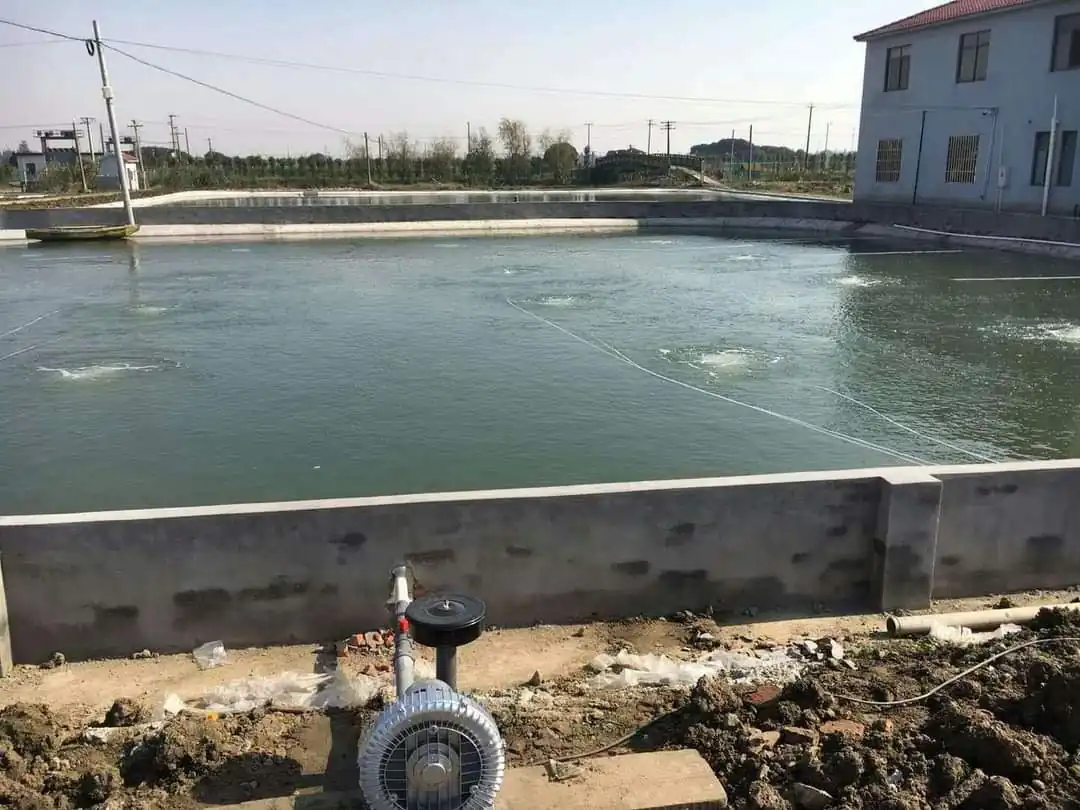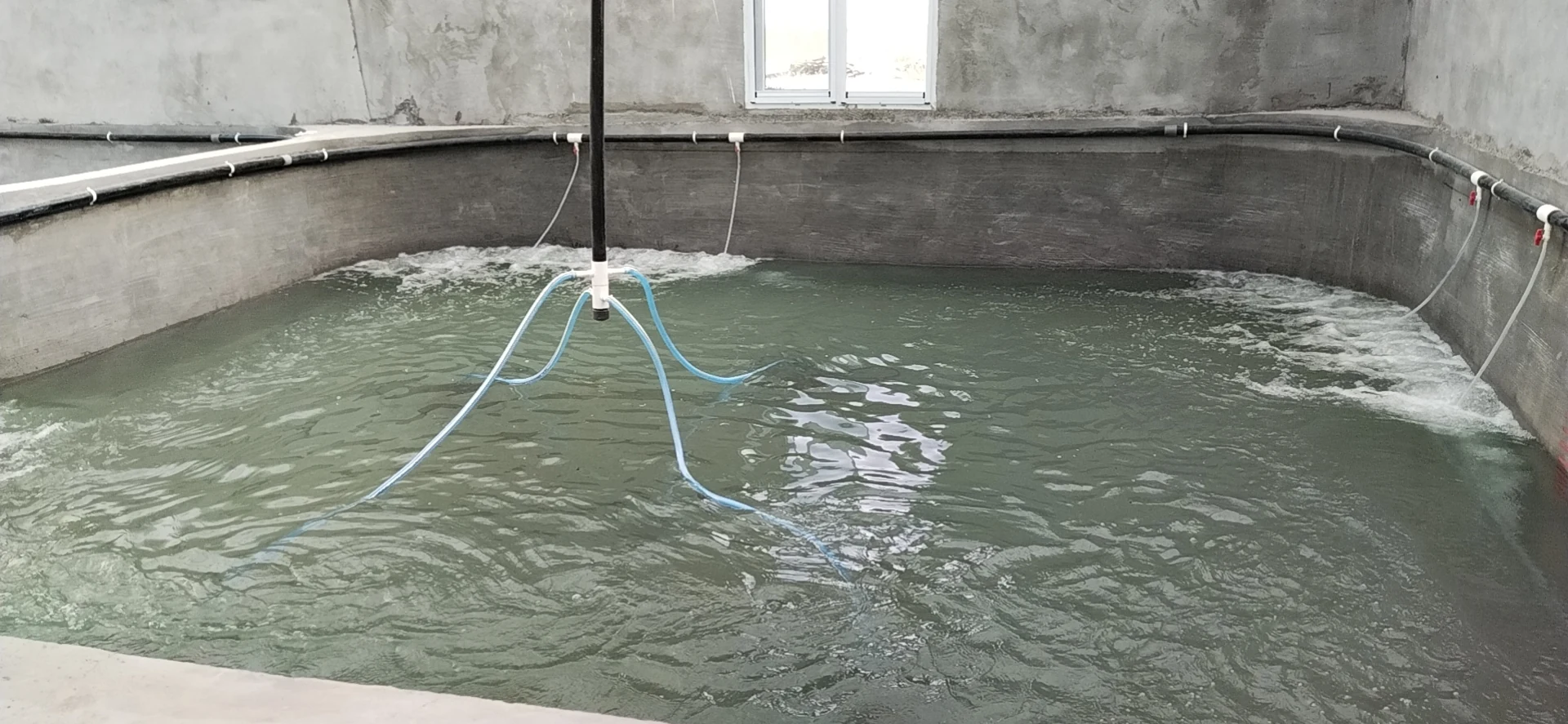
An aerator is the most effective way to increase dissolved oxygen in a pond. Besides adding oxygen, it promotes water circulation and prevents temperature stratification, chemical stratification and oxygen stratification of the water body. The aerator must also work deep in the pond so that it improves the soil quality of the pond bottom, oxygenates the bottom layer and avoids the build-up of toxic gases - effectively reducing the chance of disease and mortality in farmed aquatic animals.
An aerator is a device driven by an electric motor or a diesel engine that rapidly transfers oxygen from the air into the farming water. It combines physical, chemical and biological functions: it not only solves the problem of fish gasping at the surface caused by oxygen shortage in pond culture, but also removes harmful gases, promotes convection and exchange of the water body, improves water quality, lowers the feed conversion ratio, raises the vitality and primary productivity of the pond, and allows higher stocking density, stronger feeding intensity and faster growth - sharply increasing yield per mu and farm income.
Traditional aerators on the market include the following types:
1. Impeller (paddle-wheel) aerator - provides aeration, water stirring and air stripping combined. It is currently the most widely used aerator, with an annual output of about 150,000-200,000 units. Its aeration capacity and dynamic efficiency are better than other types, but the running noise is relatively high. It is generally used for large ponds with a water depth above 1 m.
2. Water-wheel (paddle) aerator - has good aeration and water-flow promotion effects, suitable for ponds with deep silt.
3. Jet (injector) aerator - its aeration dynamic efficiency exceeds that of water-wheel, air-injection and spray types. The structure is simple, it can form a water current and stir the water body. The jet aerator oxygenates the water gently without damaging the fish, making it suitable for fry ponds.
4. Spray (fountain) aerator - has a good aeration function and can quickly raise the dissolved oxygen of the surface water in a short time. It also has an ornamental effect, so it suits fish ponds in gardens and tourist areas.
5. Aerator pump - light and easy to operate with a single aeration function. It is generally suitable for fry-rearing ponds or greenhouse ponds with a water depth below 1.0 m and an area below 1 mu.
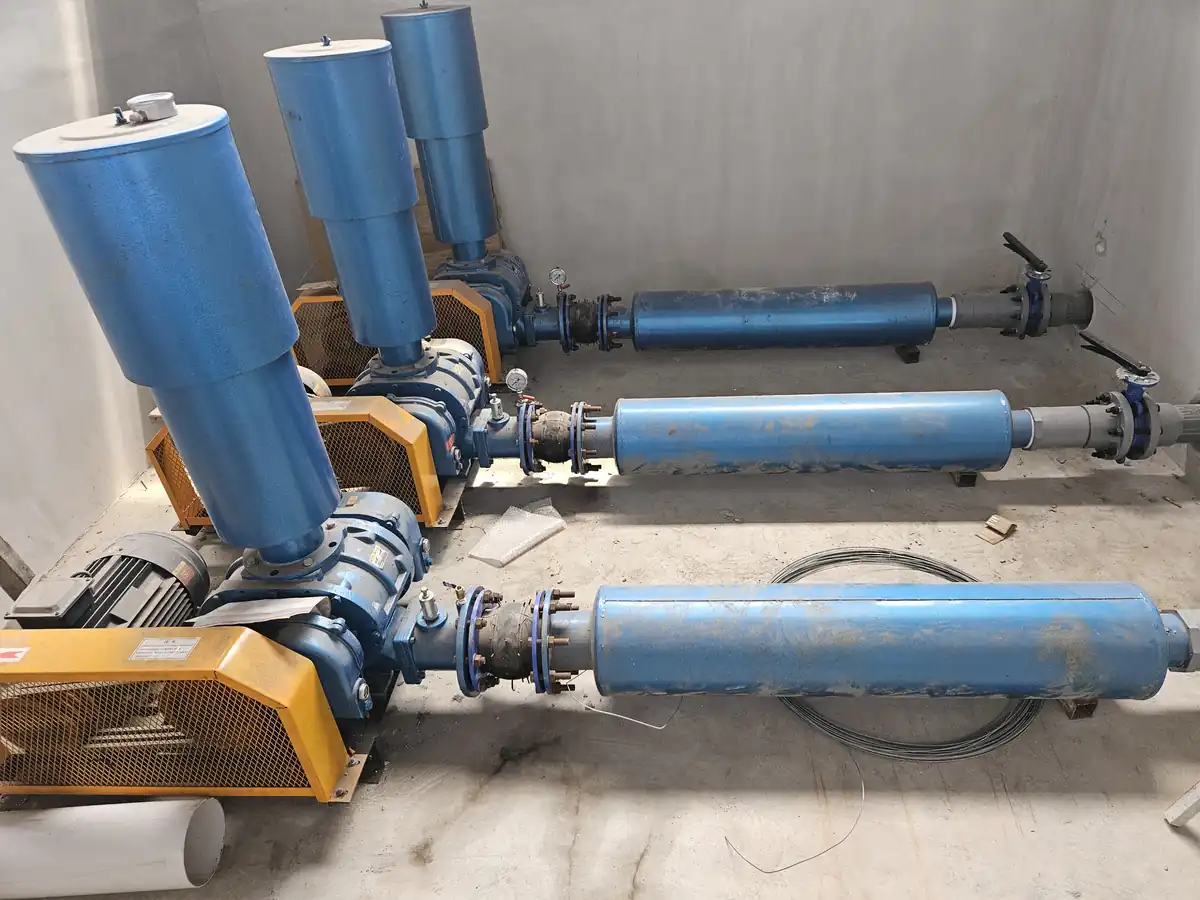
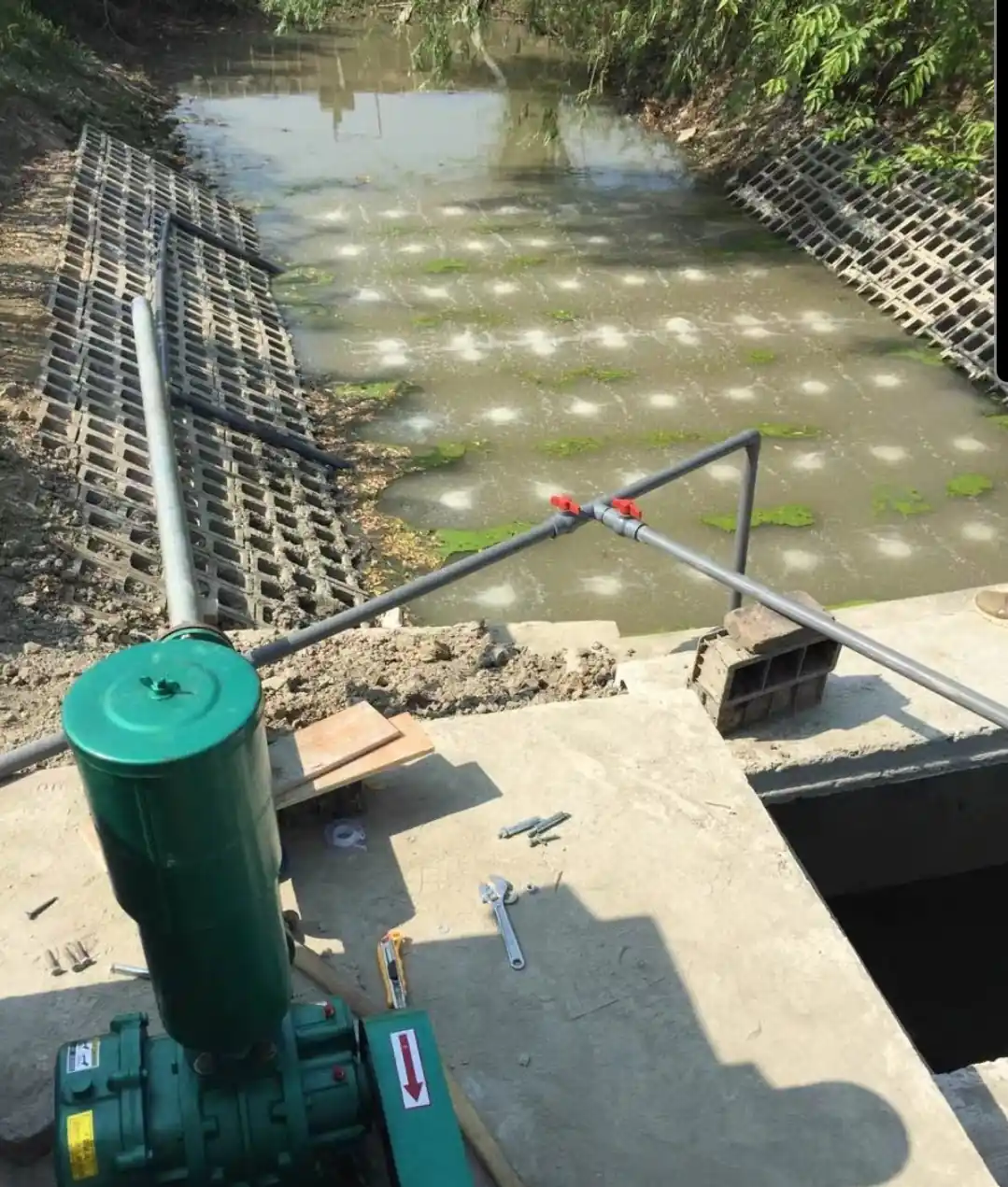
Microporous (bottom) aeration technology is a new pond culture technique developed in recent years. Its working principle is to use advanced nano-technology: a three-lobe roots blower sends air into nano-tubes laid close to the pond bottom, aerating the whole pond in three dimensions from the bottom up. Compared with traditional surface mechanical aeration, it offers uniform aeration area, balanced aeration levels, lower mechanical energy consumption and obvious improvement of the bottom environment. Its characteristics:
1. Aeration forms linear or vortex bubbles at the pond bottom. The contact area with water is large, keeping the dissolved oxygen at the pond bottom at 6-8 g/L (mg/L), accelerating the oxidation of harmful substances such as ammonia nitrogen, nitrite and hydrogen sulphide in the bottom water, reducing toxic side effects on aquatic organisms, suppressing excessive eutrophication and improving the living environment of aquatic products.
2. Compared with other aeration methods, microporous aeration is static bottom aeration, with the least disturbance to the normal life of the cultured stock. It increases the adaptability and appetite of the stock, shortens the culture cycle, and allows the stocking density to reach about 1.5 times the original level - raising both yield and quality for the best economic results.
3. Compared with traditional aeration, it saves 60-80% of electrical energy consumption. Configuration for different pond sizes is shown in Table 1.
Table 1 - Blower configuration by pond size
| Suitable depth (m) | Pond area (mu) | Blower power (kW) | Air flow (m3/h) |
|---|---|---|---|
| 0.5-1.2 | 20 | 1.5 | 80 |
| 1-2 | 30 | 3.0 | 150 |
| 2-3 | 50 | 5.5 | 240 |
| 3-4 | 80 | 6.5 | 320 |
| 4-7 | 100 | 7.5 | 380 |
Table 2 - Water temperature change before and after starting aeration
| Layer / method | Mean temp 30 min before (C) | Mean temp 30 min after (C) | Mean temp 90 min after (C) | Change over 2 h |
|---|---|---|---|---|
| Surface, no aeration | 33.8±0.15 | 32.8±0.78 | 32.7±0.45 | 1.1 |
| Surface, ordinary | 33.7±0.35 | 33.5±0.73 | 32.7±0.41 | 1.0 |
| Surface, microporous | 34.7±0.15 | 31.8±0.57 | 31.6±0.34 | 3.1 |
| 100 cm below surface, no aeration | 33.2±0.50 | 32.3±1.00 | 32.6±0.58 | 0.6 |
| 100 cm below surface, ordinary | 33.0±0.58 | 33.7±0.54 | 32.8±0.31 | 0.2 |
| 100 cm below surface, microporous | 32.9±0.49 | 31.0±0.53 | 31.7±0.20 | 1.2 |
The 120-minute temperature data above show that the surface layer and the 50-100 cm layer cooled the most with microporous aeration - microporous aeration clearly lowers the pond water temperature. After 90 minutes of microporous aeration, the temperature difference between upper and lower water rapidly decreased (ordinary aeration was second, and the no-aeration group showed no obvious change). This shows that microporous aeration effectively reduces the vertical temperature difference and strengthens the vertical exchange of the water body, which benefits the vertical exchange of energy and matter over the whole water column.
Table 3 - Dissolved oxygen change in different water layers
| Layer / method | DO 30 min before (mg/L) | DO 30 min after (mg/L) | DO 90 min after (mg/L) | DO increase % |
|---|---|---|---|---|
| Surface, no aeration | 12.77±1.47 | 13.05±3.93 | 11.88±3.13 | -7.0 |
| Surface, ordinary | 11.46±1.33 | 17.03±4.27 | 17.68±2.72 | 54.4 |
| Surface, microporous | 10.69±0.87 | 11.57±2.28 | 20.2±1.23 | 88.9 |
| 50 cm below surface, no aeration | 12.10±2.56 | 12.71±2.28 | 9.99±2.75 | -17.5 |
| 50 cm below surface, ordinary | 11.21±3.84 | 15.07±3.76 | 13.36±2.74 | 19.2 |
| 50 cm below surface, microporous | 9.12±1.16 | 10.27±3.31 | 14.24±1.75 | 56.2 |
| 100 cm below surface, no aeration | 9.69±1.28 | 7.35±3.25 | 7.69±1.74 | -20.6 |
| 100 cm below surface, ordinary | 8.67±2.17 | 9.00±1.89 | 9.25±0.46 | 6.7 |
| 100 cm below surface, microporous | 8.51±1.17 | 9.84±1.65 | 11.47±0.49 | 34.8 |
The aeration efficiency of the microporous group was clearly higher than that of ordinary aeration. After two hours of microporous aeration, dissolved oxygen in the 100 cm water layer increased by 34.8%, and the rate of DO increase was 5 times that of ordinary aeration - greatly raising the dissolved oxygen at the pond bottom, which helps decompose toxic substances and supports the healthy growth of farmed aquatic animals.
Aquaculture accounts for a considerable share of the rural economy in China. Traditional farming methods seriously harm water protection, reuse and sustainable development: environmental pollution is worsening and water resources are not properly protected or used. The development of microporous aeration technology plays an active and important role in aquaculture, water protection, restoration and reuse.
The hardware side of this is covered on our microporous aeration system page.