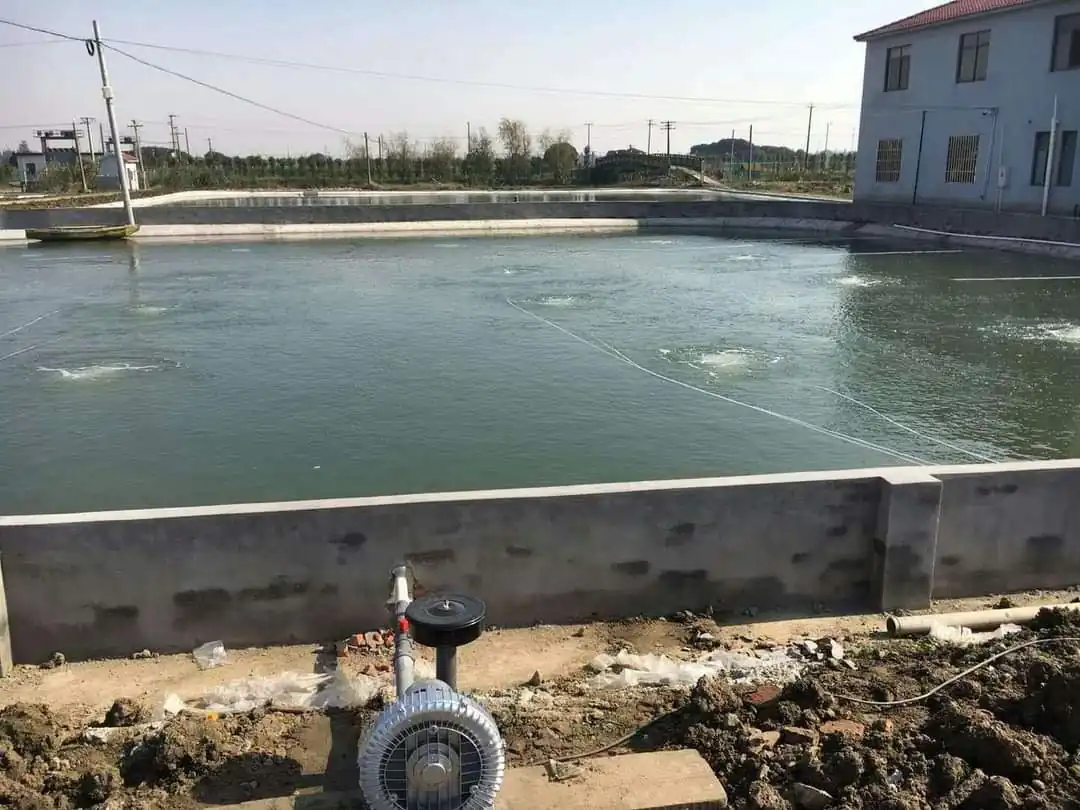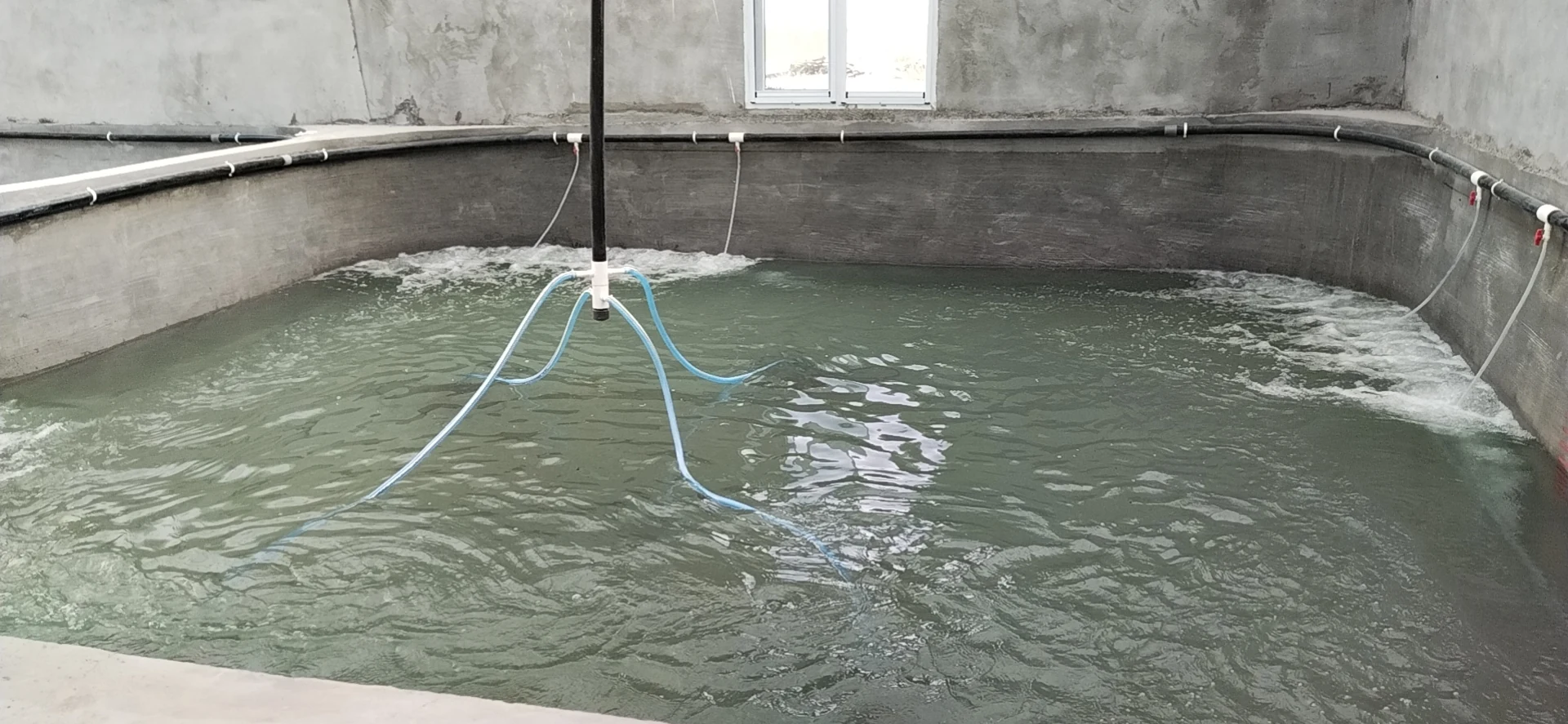
Water is the environment aquatic animals live in, and dissolved oxygen is one of the most basic conditions for their survival. Every aquaculture professional knows that without enough oxygen, stock falls ill and can die. In high-density fish and shrimp culture, the level of dissolved oxygen decides how much biomass the water can carry; even with good water quality, the nutrients and organic matter from feed and waste cause low oxygen. Aeration is therefore essential, and aerators effectively replenish dissolved oxygen. With paddle-wheel aerators, the surface water is rarely oxygen-deficient, but it is hard to deliver enough oxygen to the pond bottom - and oxygen shortage always shows up at the bottom first. Bottom aeration lays pipes on the pond floor and delivers oxygen-rich air straight down, releasing it from the bottom up so the lower layers stay at a high dissolved-oxygen level and sub-hypoxia is prevented.
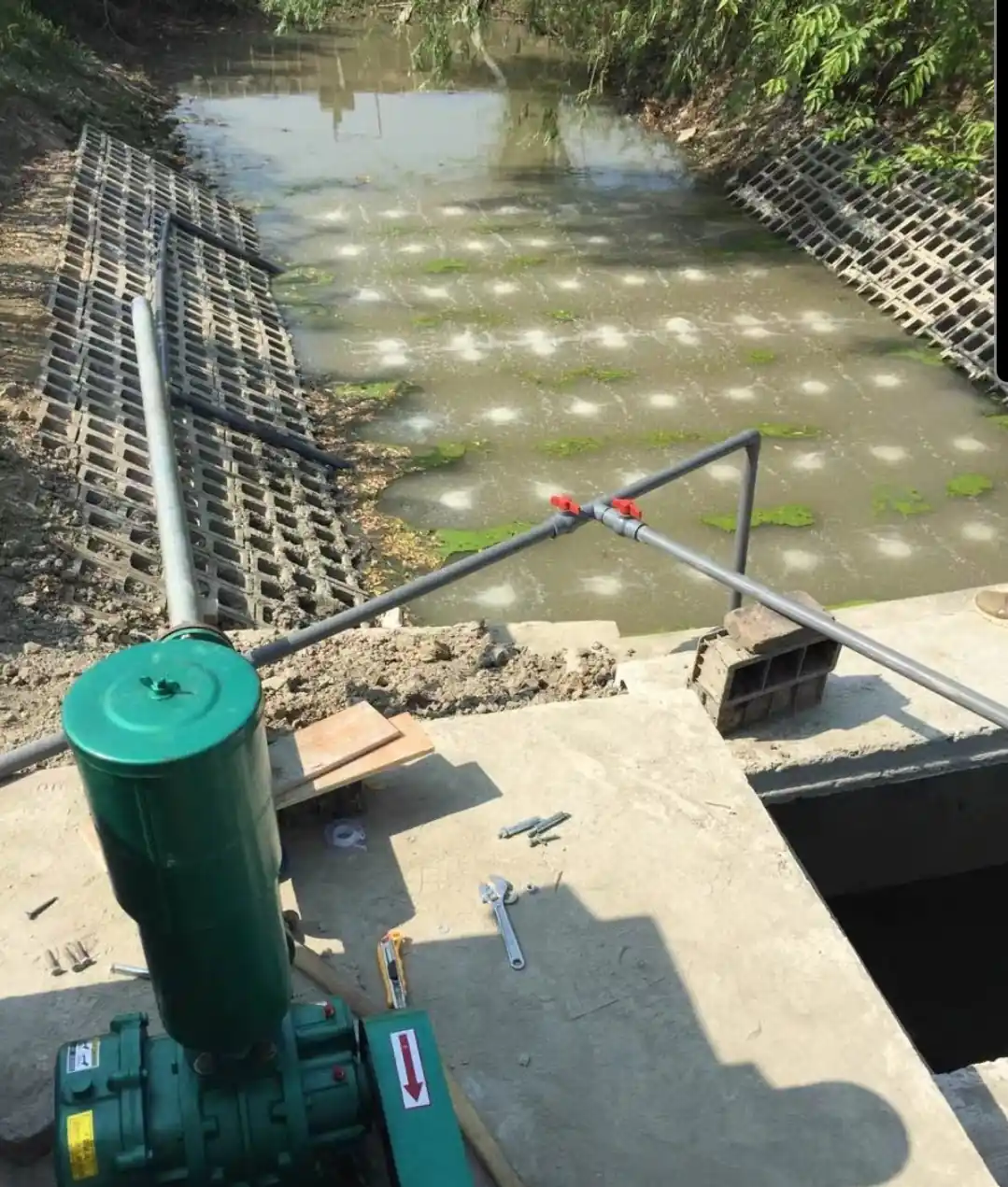
How it works. A roots blower pushes air through charging pipes into the water; the bubbles burst and oxygen diffuses into the water. The charging action makes the water body move vertically, carrying the oxygen-rich surface water produced by photosynthesis down to the bottom and quickly raising bottom dissolved oxygen. Higher dissolved oxygen supports oxidation in the pond, speeds up decomposition of bottom organic matter, and effectively lowers the concentration of sulphides, nitrite and ammonia nitrogen - preventing disease and making full use of the water column. Species that live on the bottom such as shrimp, swimming crab, river crab, shellfish and soft-shell turtle all grow better. And because the system makes full use of photosynthesis, mechanical aeration energy consumption falls.
Results. Bottom aeration saves about 30% of the electricity of conventional aerators, cuts disease incidence in pond fish, shrimp and crab by about 15%, raises yield by about 10% per mu for fish, 15% for shrimp and 20% for crab, and improves overall profitability by 20-60%, while improving survival, growth rate and stocking density.
Key points
1. Pond requirements. The farm needs suitable electricity or matching power equipment. Vannamei shrimp ponds should be 4.5-30 mu, square or rectangular (length:width 2:1), 1.5-2.5 m deep, with a level bottom. Swimming crab ponds should be 15-30 mu, 1.2-2 m deep, rectangular (length:width 3:1). Other ponds can follow these examples.
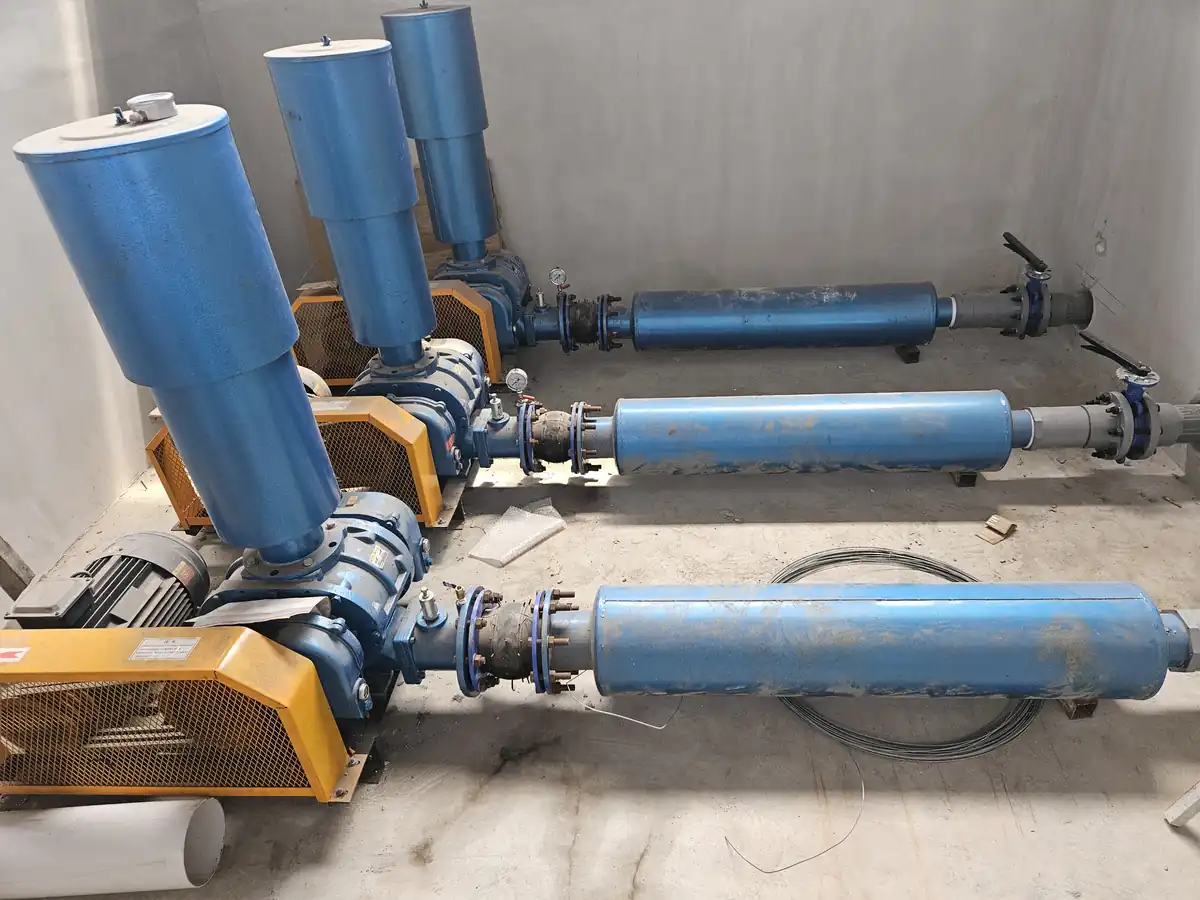
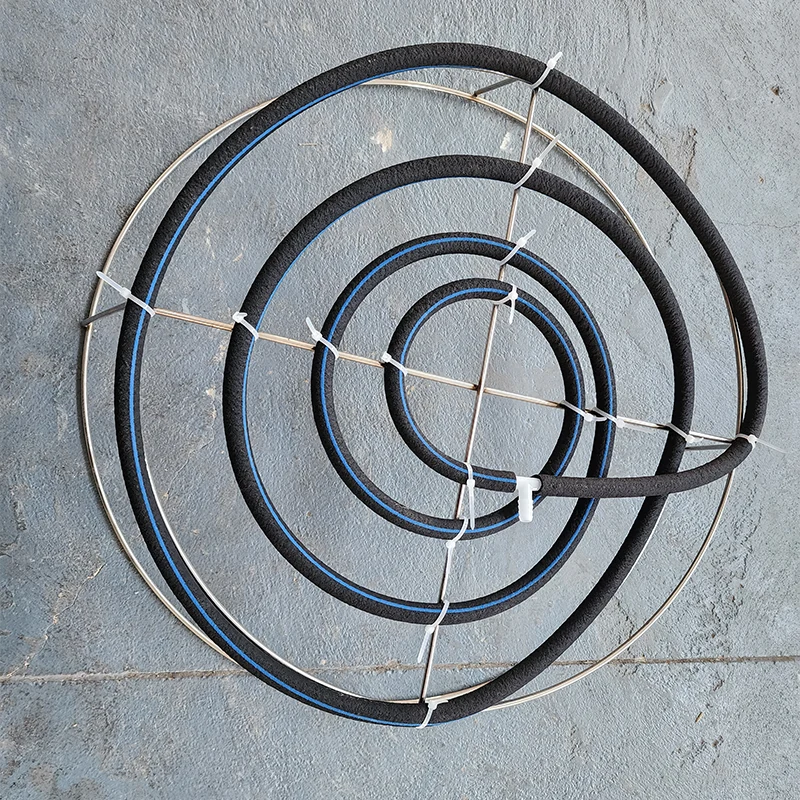
2. Equipment. Roots blower, power unit (electric motor or diesel engine), galvanized steel pipe, microporous aeration tube or PVC pipe, and timed valves, plus water-quality test instruments.
(1) Blower: a roots blower is preferred; outlet pressure must not be below 3,500-5,000 mm water column (HJ/T 225-2006).
(2) Pipe: main pipes in galvanized steel or PVC, diameter matched to the blower outlet, generally 75-100 mm. Charging pipes in microporous tube or PVC, diameter 10-15 mm.
(3) Power: microporous pipe aeration is preferred. Vannamei ponds need 0.35 kW per mu or more; swimming crab ponds 0.1 kW per mu or more, mainly microporous pipe aeration.
3. Installation.
(1) Blower: fit an air-splitting device at the outlet or an exhaust valve on the main pipe near the blower.
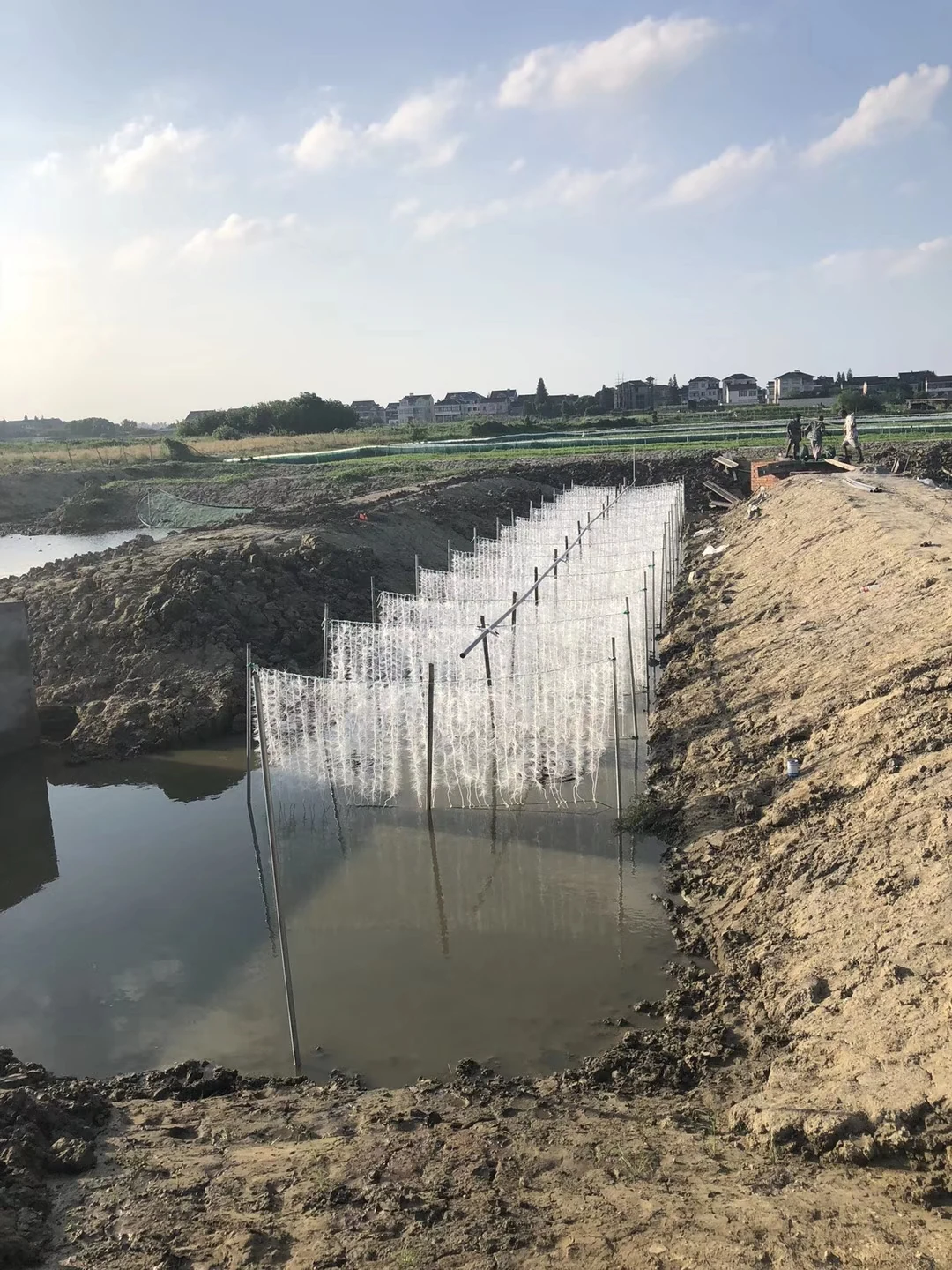
(2) Piping: fit an air buffer tank or exhaust valve at the blower outlet; supply air centrally or per pond, with single or multiple ponds in parallel. Bury the main pipe (100 mm galvanized or PVC) in the soil; charging pipes 25 mm, with valves to regulate air. Arrange charging pipes on one side or in a herringbone layout. For vannamei: microporous tube or PVC pipe, PVC pipe spacing 4-6 m with holes every 1 m (0.4-0.6 mm); microporous tube spacing 6 m. For crab: spacing 8-10 m with holes every 4 m (0.4-0.6 mm). Lay PVC pipe on the bottom; microporous tube 10 cm above the bottom, fixed with bamboo or wooden stakes.
(3) Keep the charging pipes at a consistent height; in ponds with a trench, lay pipes on the flat and the trench in separate circuits with independent valves.
4. Use. Install the system 15-20 days before the season starts. Operating times for vannamei ponds in mid-late culture: 10:00-11:00, 14:00-16:00, 22:00-24:00 and 4:00-6:00; stop for 2 hours after feeding. Crab ponds (mainly in the hot season): 8:00-10:00, 14:00-16:00, 22:00-24:00 and 3:00-5:00.
5. Notes. Keep the phytoplankton community healthy and at the right density, use fishery chemicals carefully to avoid algae die-off; keep pond transparency around 30 cm (20-30 cm for vannamei ponds) and the algae fresh. Do not use algicides in hot weather. Prevent motor overheating; check blower pressure and that the charging holes match the blower air flow. Bury PVC main pipes to avoid sun ageing; do not pull or bend the microporous charging pipes; if holes clog after use, dry them in the sun. Inspect the system often and repair faults promptly.
Suitable regions. Sea-water and freshwater pond culture areas.