Black-odour urban rivers are almost always an oxygen problem first. When the oxygen demand of sediment and organic load outpaces natural reaeration, the water column goes anaerobic, hydrogen sulphide and ammonia accumulate, and the ecosystem collapses. River aeration attacks the root cause: it lifts dissolved oxygen so aerobic microbes can break down organic matter, restore the food chain, and eventually bring the river back to a self-sustaining state.
The right aeration layout depends on four things: the treatment target (eliminating black-odour, improving water quality, or restoring the ecology), the river conditions (depth, flow velocity, cross-section shape and surrounding environment), the functional requirements of the reach (navigation, landscape, recreation), and the pollution source profile (chronic load versus shock load). Based on these, river reoxygenation is normally delivered in one of two forms: a fixed oxygenation station or a mobile oxygenation platform.
Fixed oxygenation stations
A fixed station serves a specific river reach with continuous, around-the-clock oxygenation. It comes in three technical variants.
Diffused air (blower) aeration
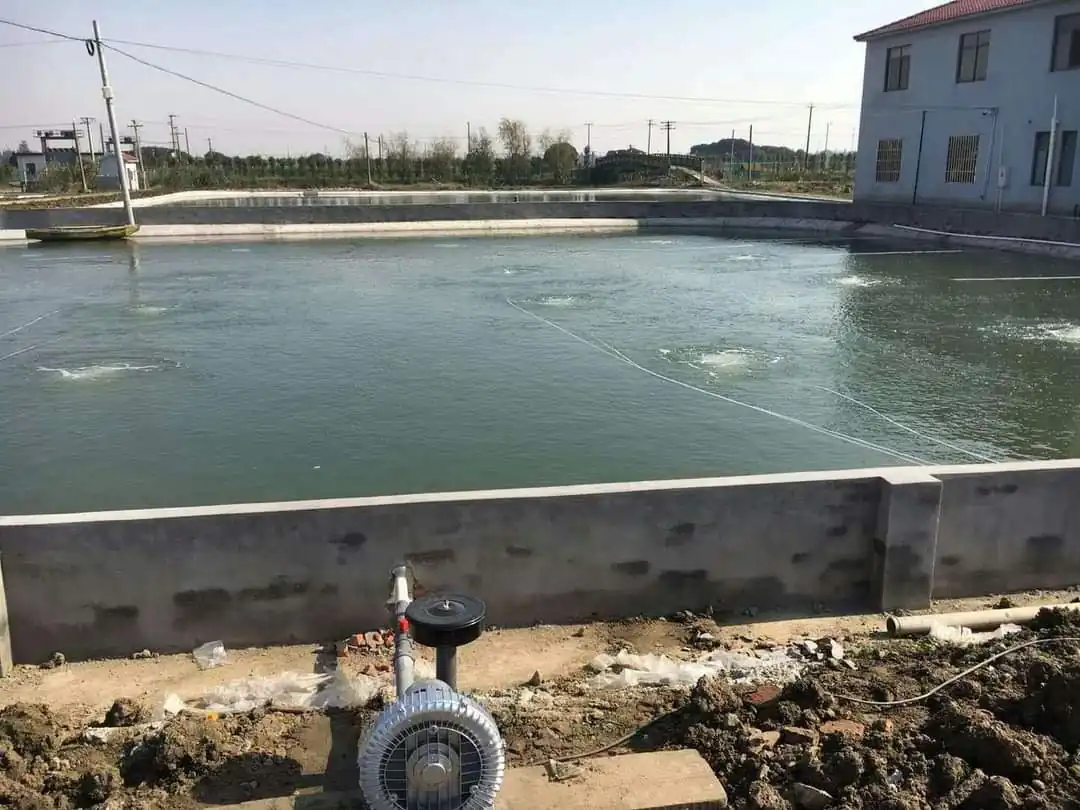
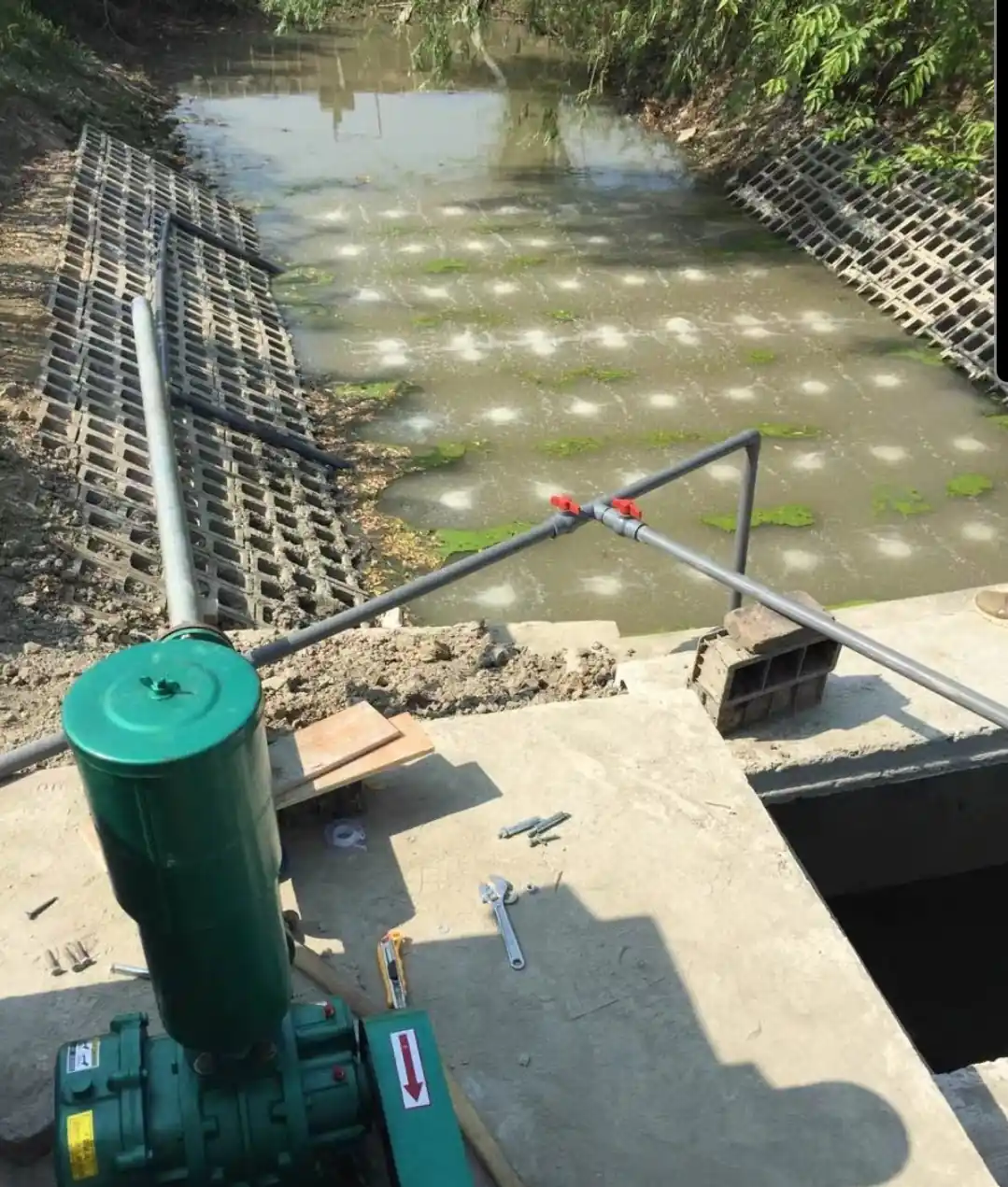
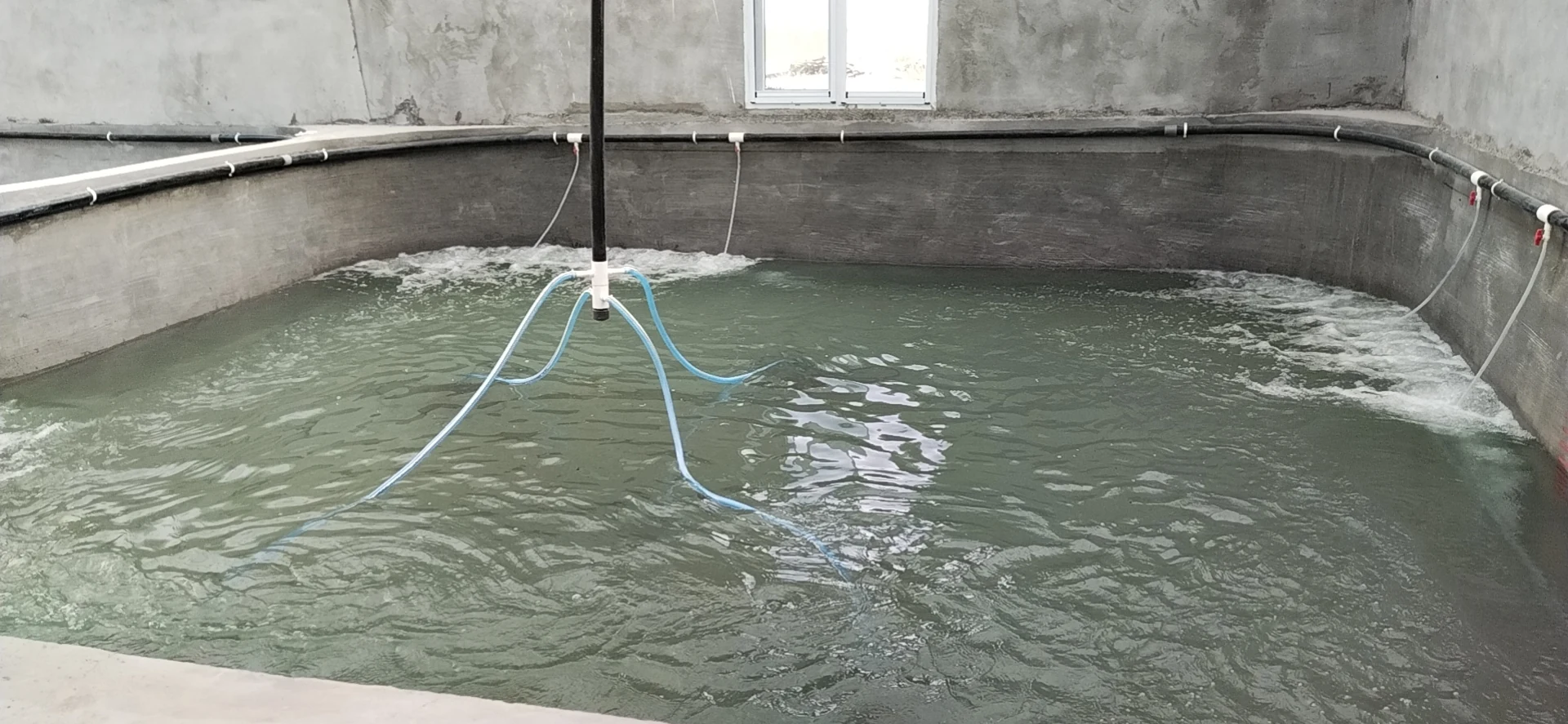
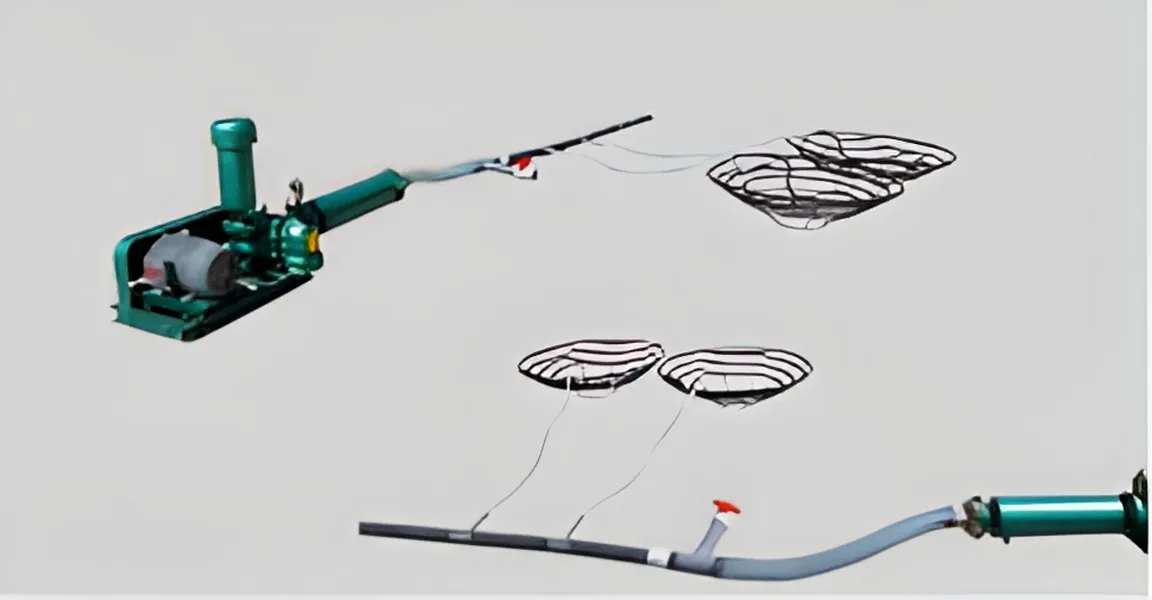
A blower room is built on the bank, and air is pushed through pipework to a diffuser system laid on the riverbed, raising dissolved oxygen throughout the water column. The system consists of the machine room (with the blowers), the air diffusers, and the connecting pipework.
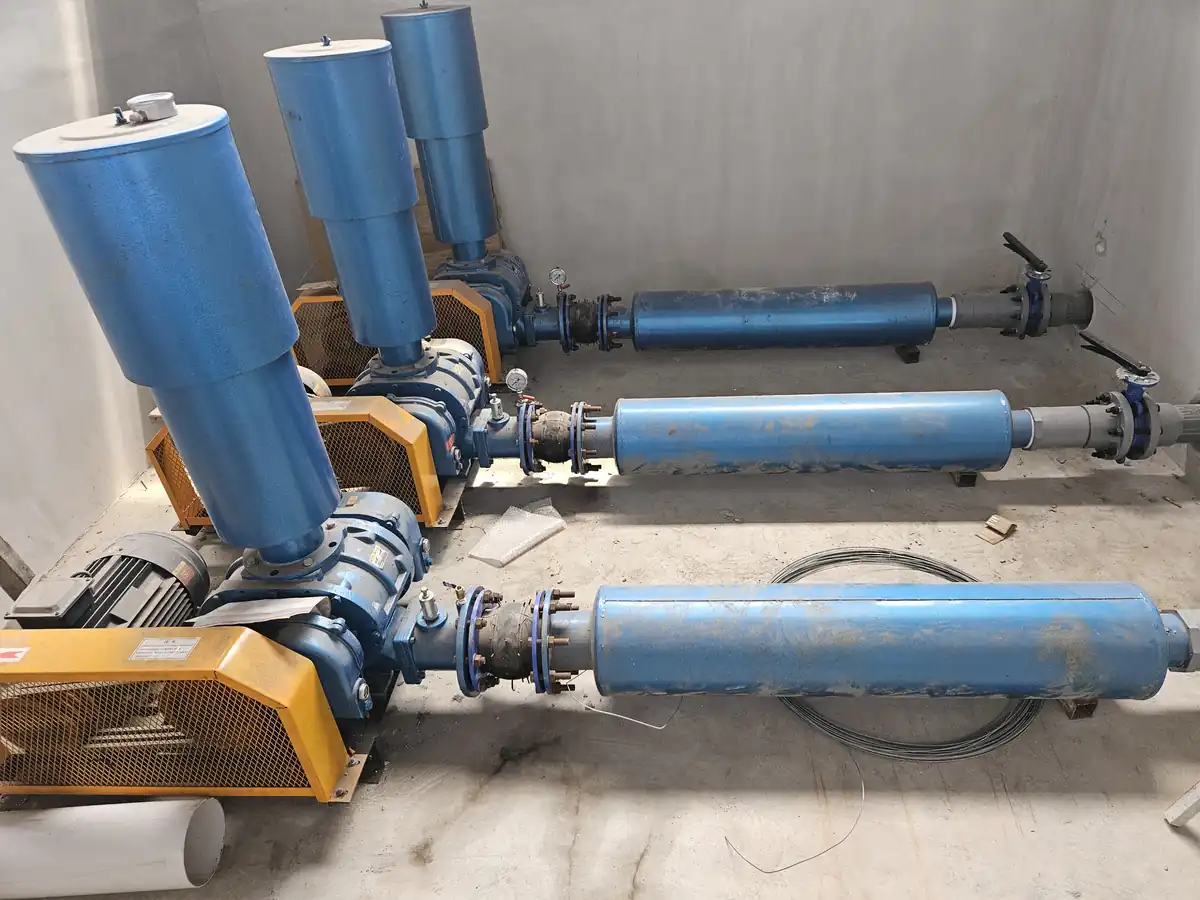
The blowers used today are submersible blowers, roots (positive-displacement) blowers and similar types. Submersible blowers have become the most popular choice because they need no machine room at all - they sit directly in the water or in a simple enclosure, so installation and maintenance are far simpler. For larger duties, our ZXMSR series roots blowers provide the constant-volume, pressure-holding airflow that deep diffuser grids need, and they can be sized precisely to the river's tubing length and depth.
Pure-oxygen aeration
Where the pollution load is high and space is tight, pure oxygen is far more efficient than air - the same dissolved-oxygen gain can be delivered with a fraction of the gas volume. The oxygen source is either liquid oxygen (LOX) or a PSA oxygen generator. Two layouts are common:
1. Pure oxygen + microporous diffuser system - an oxygen source feeding microporous aeration pipe laid on the bed; the fine bubbles dissolve quickly and almost nothing escapes.
2. Pure oxygen + mixed-flow oxygenation system - an oxygen source combined with a pump, a mixer and jet injectors to dissolve oxygen rapidly in a high-turbulence zone.
Mechanical aeration
Mechanical aerators, usually pontoon-mounted, are fixed directly in the river to churn air into the water. Two types dominate:
1. Impeller air-intake push-flow aerators - an impeller draws air in and pushes oxygenated water across a wide area.
2. Submerged jet aerators - jets shear water and air into fine mixtures below the surface, ideal for deeper channels.
Mobile oxygenation platforms
For reaches where a permanent station is not justified - or where an emergency response is needed - mobile platforms move oxygen to the problem. The best-known form is the aeration vessel: a boat, often converted from a ferry, carrying a LOX supply and releasing oxygen into the water as it travels. Aeration vessels are used mainly for targeted reoxygenation of local reaches in emergencies, and they have the decisive advantage of not interfering with navigation.
Choosing the right solution
As a practical guide:
- Emergency black-odour elimination and shock-load events: a mobile aeration vessel can be on-site fast, before a fixed station is even designed.
- Long-term continuous improvement of a reach: a fixed station wins on operating cost - submersible or roots blowers with microporous diffusers give the best energy-per-kg-of-oxygen ratio for most channel depths.
- Shallow, slow-flowing, scenic reaches: mechanical impeller aerators combine oxygenation with gentle water circulation and a low visual footprint.
- Deep channels or very high loads: pure-oxygen systems, particularly mixed-flow oxygenation, deliver the highest oxygen transfer rates in the smallest footprint.
Whatever the scale, the key is to design from the river's actual oxygen demand rather than from equipment catalogues - oversizing wastes power, and undersizing keeps the river anaerobic. Our engineers provide free aeration system design for river restoration projects; contact us with the reach length, depth, flow and the pollution load you are treating.