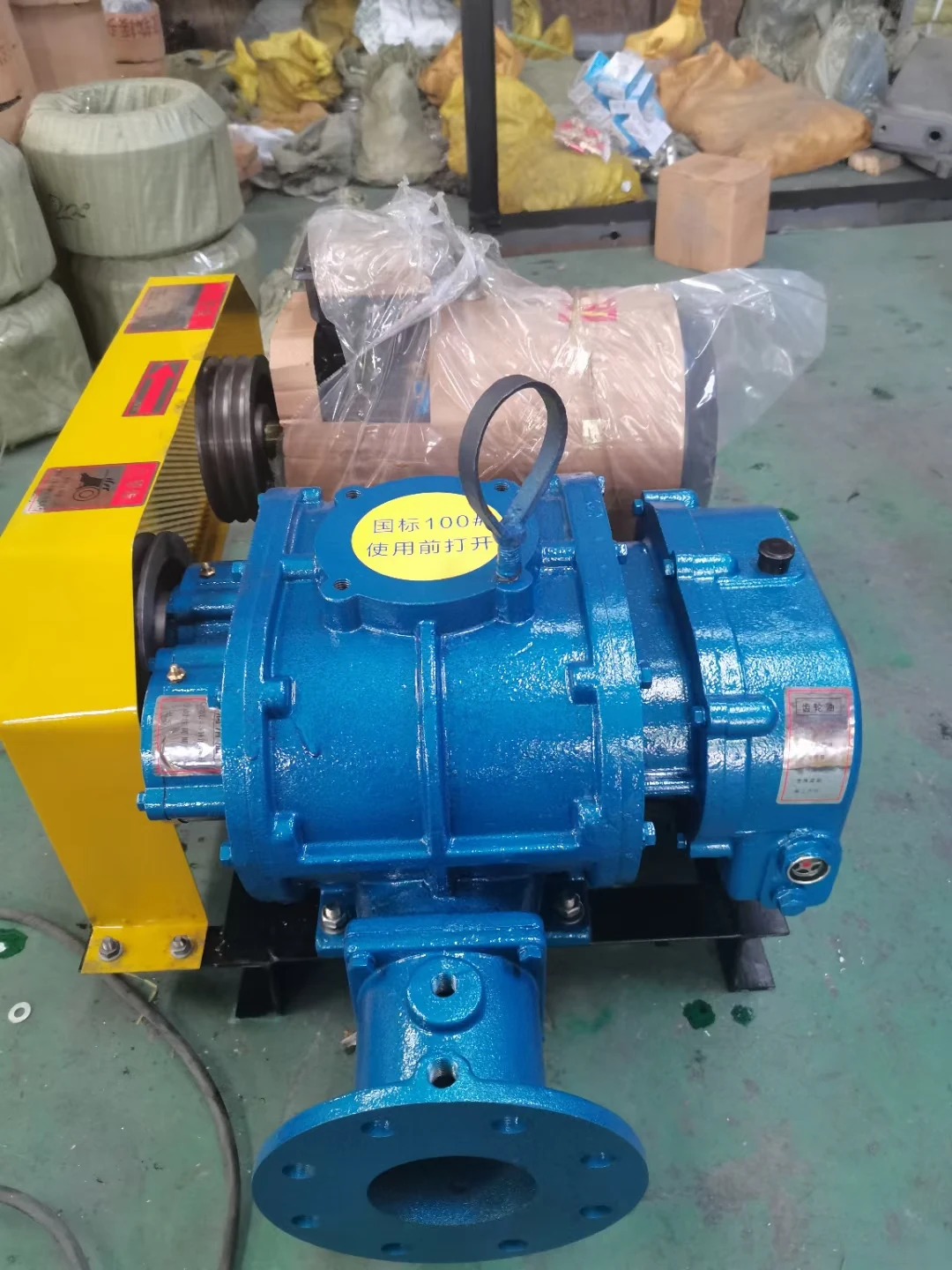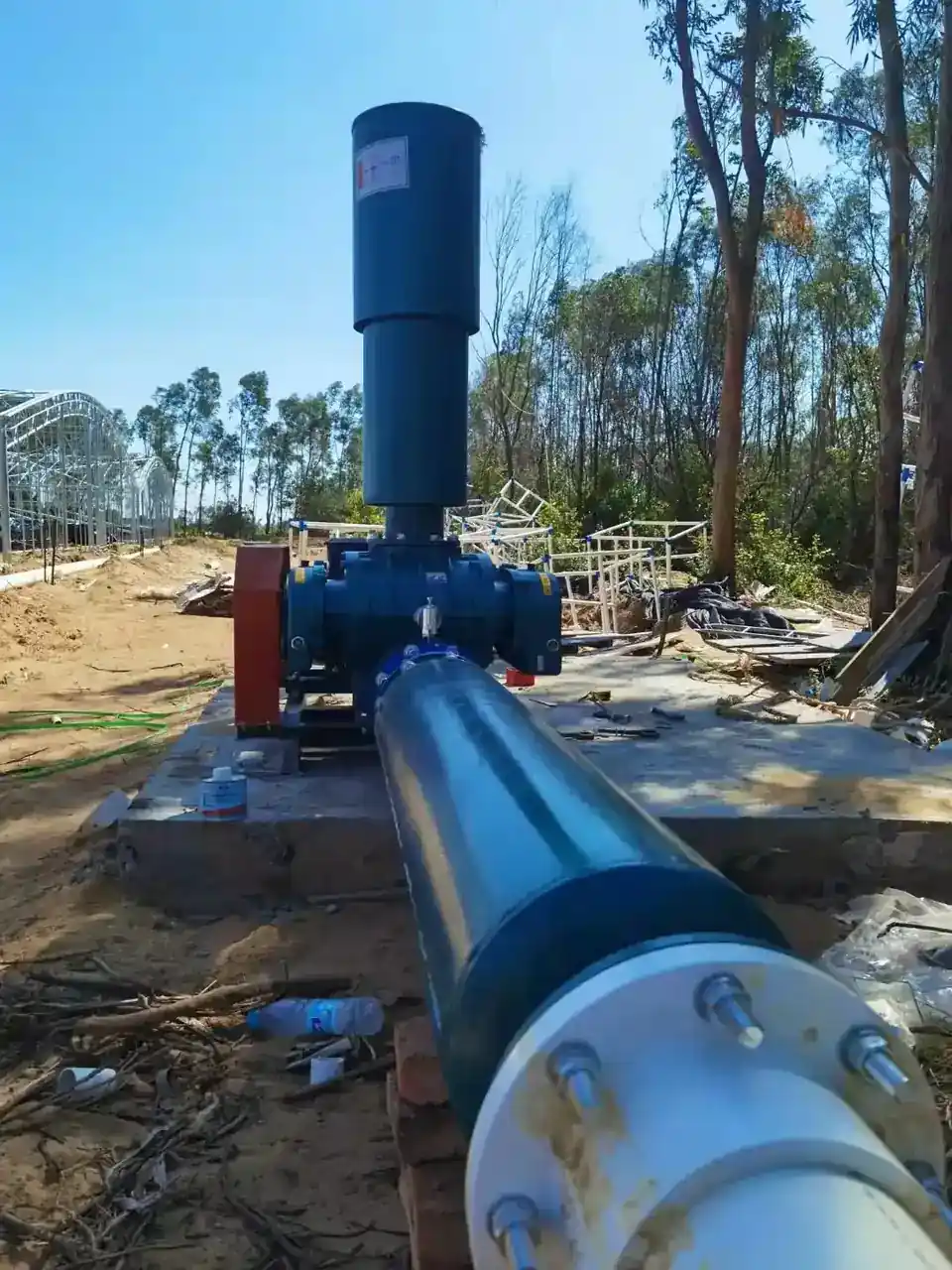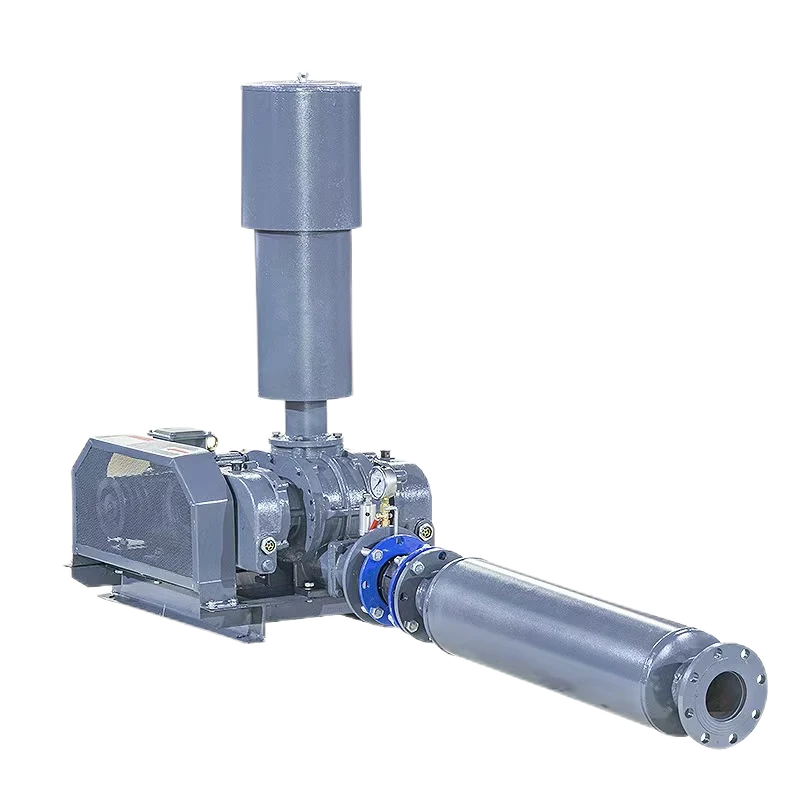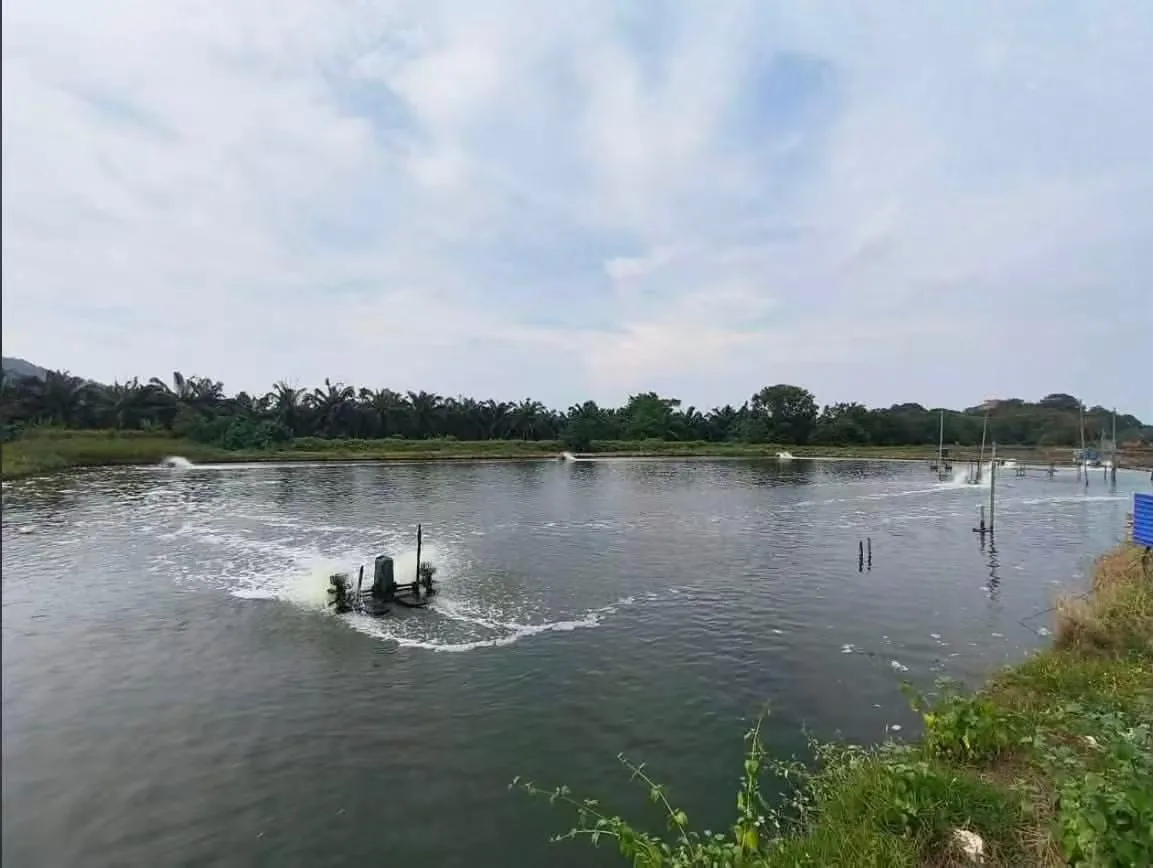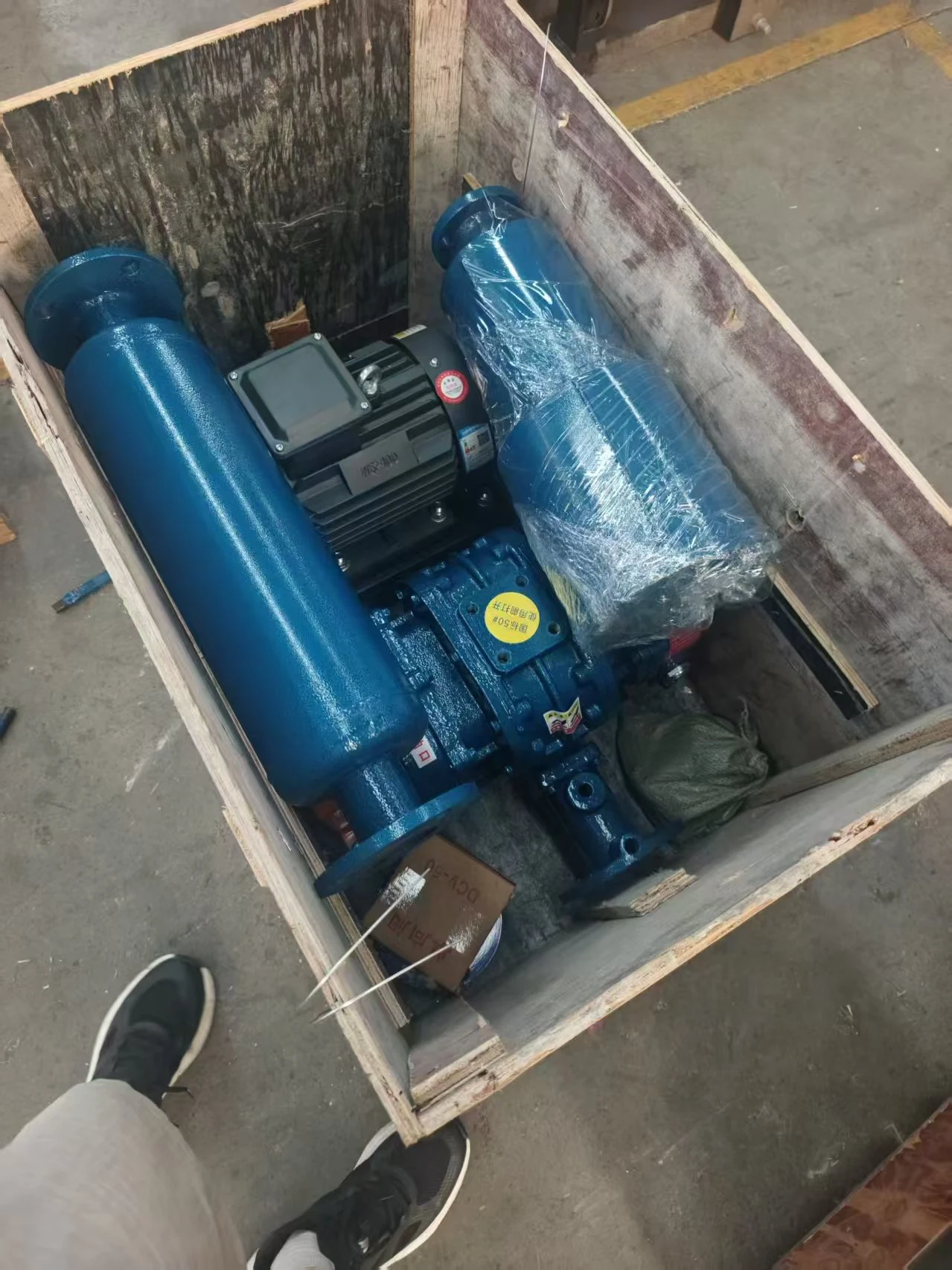
A submersible blower is a roots-type air blower designed to run submerged inside the water tank or basin it serves. Mounting the machine in the water changes five things about how it performs — and each one is a design advantage worth understanding before you buy.
1. Lower energy consumption
The submersible design runs the impeller at higher speed, which reduces backflow (internal leakage) inside the machine. Less backflow means less wasted work, so the blower draws less power for the same delivered airflow.
2. Quiet by construction — no noise pollution
Because the blower sits in the water, its sound is refracted back into the water at the air-water interface instead of traveling into the surrounding air. The water and the tank walls reflect the sound again, producing a silencing effect. The result is quiet operation with no secondary noise pollution above the tank — a genuine advantage for sites near homes, offices or hotels.
3. No soundproof room required
Since the unit is submerged, there is no need to build an acoustic enclosure or a soundproof pump room. The blower simply occupies space inside the water tank, so it does not compete for floor space — a practical benefit for compact plant layouts.
4. Solid construction, worry-free operation
The motor and the blower body are direct-coupled — there is no belt to adjust, replace or slip. The motor and the whole unit are sealed with O-rings, so water cannot enter the motor casing. If the motor stops on thermal overload, clean the exterior housing to restore heat dissipation before restarting.
5. Longer bearing life
Preload washers are applied to the bearings, which reduces internal clearance. Tighter clearance lowers vibration and noise, and extends the service life of the bearings.
Where submersible blowers are used
- Municipal and industrial sewage treatment plants (aeration basins)
- Raw-water aeration channels in drinking-water plants
- Remediation of black and odorous urban rivers and canals
- Packaged wastewater treatment units for rural communities
Submersible vs. ground-mounted roots blowers: which fits your site?
Both machines are positive-displacement blowers — the difference is where they live and what that changes for you.
- Choose a submersible blower when the basin is deep, the operating room would otherwise be hot and cramped, or the environment is corrosive and humid — the unit sits in the water, needs no blower room or acoustic enclosure, and its noise stays in the tank. It is also the practical pick when floor space is scarce and when you want to eliminate belt maintenance entirely.
- Choose a ground-mounted roots blower when you need easy access for routine service, when air volume and pressure requirements are large or vary with load, when the blower room can be properly ventilated, and when you prefer the conventional layout with the motor and blower on a common baseplate. Ground-mounted units are also easier to upsize later as the plant grows.
A useful rule of thumb: submerged design wins on space, noise and corrosion resistance; ground-mounted roots blowers win on service access, flexibility and upgradability. Tell us your basin depth, airflow and pressure and we will recommend the right configuration.
Installation and operating notes
A submersible blower is only as good as its installation. Follow the inspection, electrical and maintenance rules covered in submersible blower installation and operating notes — check the nameplate, keep voltage within ±10%, protect the cable, ground the unit with an RCD, and never bury it in sludge. For blower sizing on your aeration basin or treatment project, send us your required airflow and pressure and we will match the right unit.
Frequently asked questions
Q: Why does a submersible blower use less energy? A: The submersible design runs the impeller at higher speed, which reduces backflow — internal leakage — inside the machine. Less backflow means less wasted work, so it draws less power for the same delivered airflow.
Q: Why is it quiet without an acoustic enclosure? A: Because the unit sits in the water, its sound is refracted back into the water at the air-water interface instead of travelling into the surrounding air, and the water and tank walls reflect it again. The result is quiet operation with no noise pollution above the tank.
Q: What does the belt-free design save in maintenance? A: The motor and blower body are direct-coupled, so there is no belt to adjust, replace or slip. The motor and unit are sealed with O-rings, so water cannot enter the motor casing.
Q: When is a ground-mounted Roots blower the better pick? A: When you need easy access for routine service, when air volume and pressure are large or vary with load, when the blower room can be properly ventilated, or when you prefer a conventional layout on a common baseplate that is easier to upsize as the plant grows.
Q: What if the motor stops on thermal overload? A: Clean the exterior housing to restore heat dissipation before restarting.