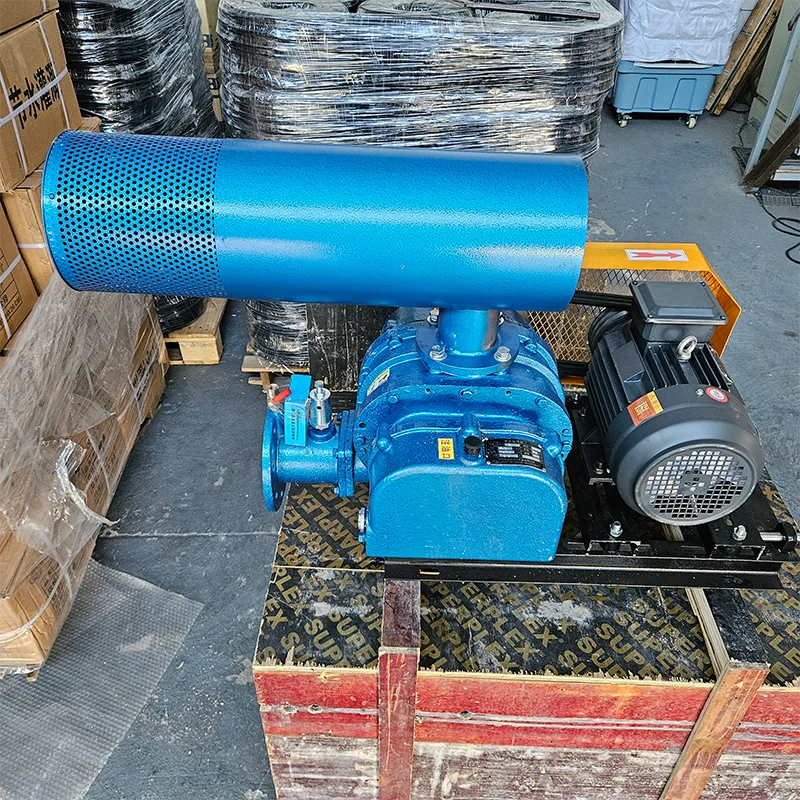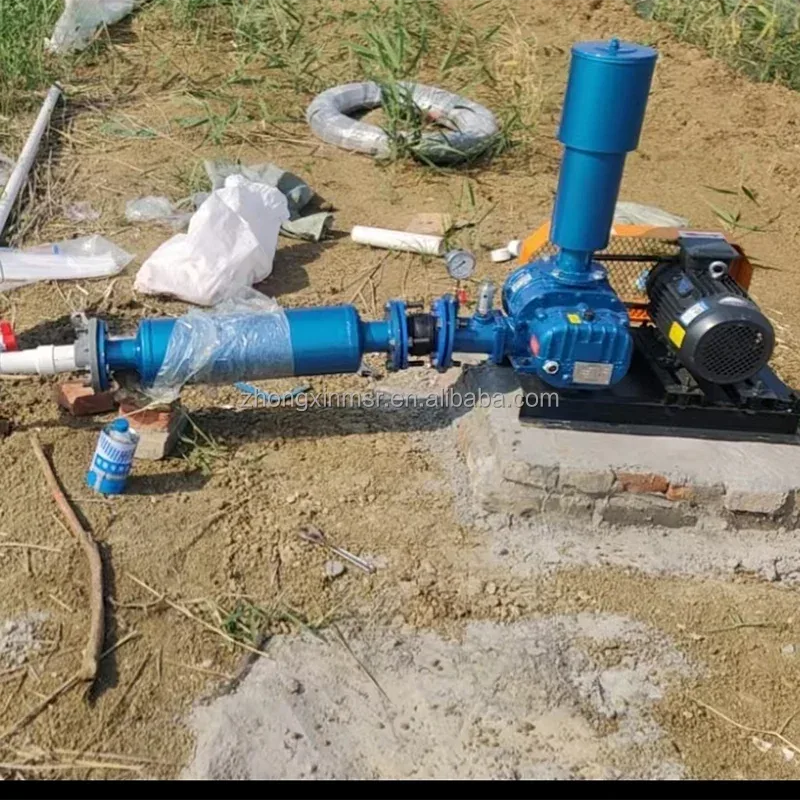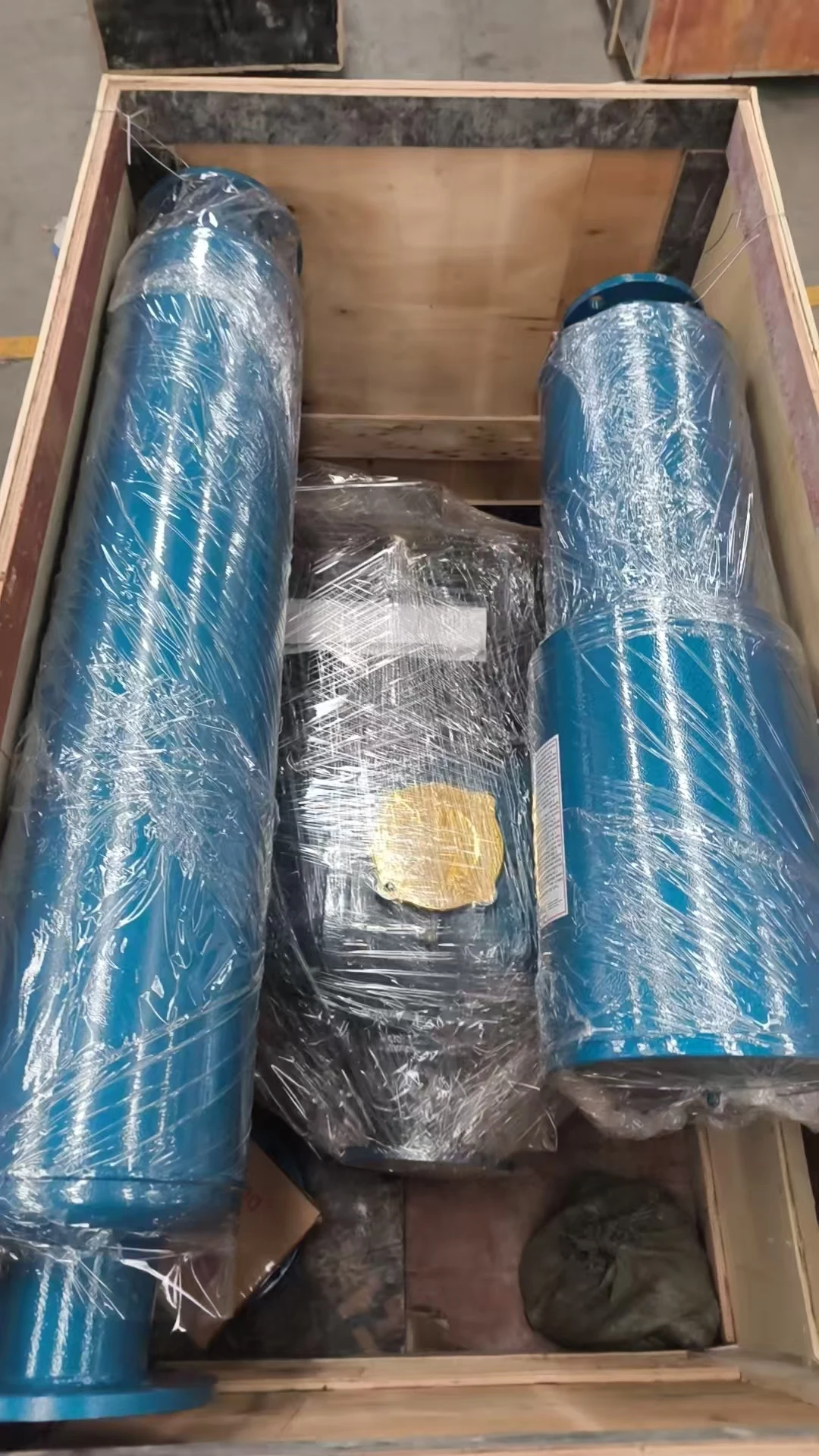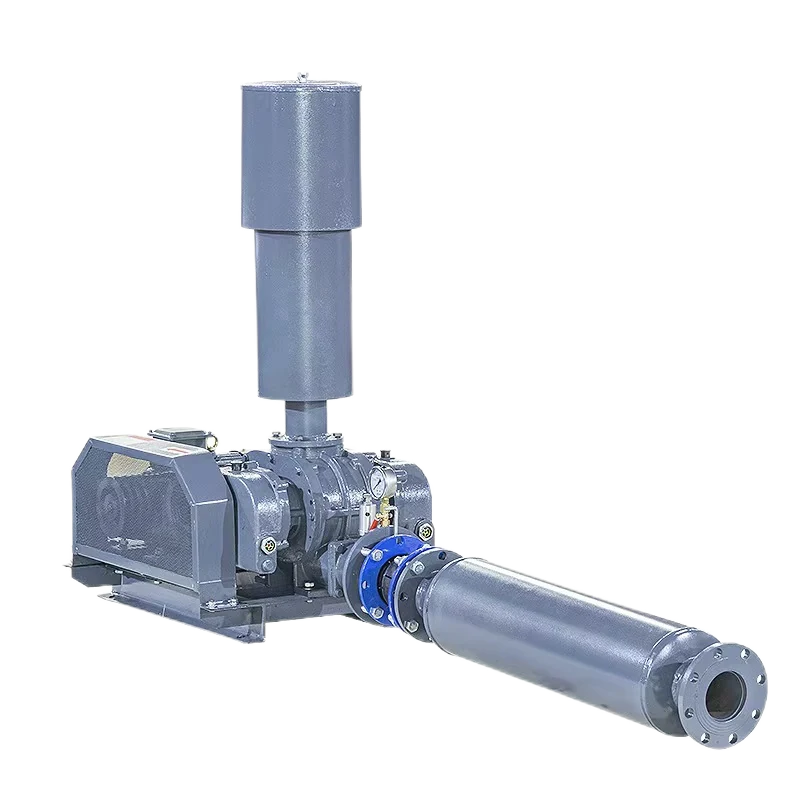
General features of the roots blower:
1. Energy-saving and environmentally friendly, manufactured with CNC precision machining.
2. Compact structure, small size, low noise and light weight; convenient to use, easy to repair and maintain.
3. Can convey clean air and other neutral gases, and can also carry flammable, explosive or corrosive gases such as hydrogen and acetylene, but special modification is required.
Performance features of the roots blower for material conveying:
1. Under normal conditions, pressure changes have little effect on the air volume, which is proportional to speed - the roots blower is essentially a positive-displacement (constant-volume) machine.
2. No pulsation when sucking and discharging, so no buffer air tank is needed.
3. Small footprint, easy to install.
4. There is a clearance of 0.2-0.5 mm between the rotors and between the rotors and the casing, so there is no friction and the airflow can contain a certain amount of dust.
5. Compared with water-jet pumps and water-ring vacuum pumps, there is no "waste water" problem.
6. Reliable operation, convenient maintenance and long service life.
Lubrication notes for the material-conveying roots blower:
The roots blower uses oil-slinger splash lubrication; the lubricated parts are the synchronising gears, the mechanical seals and the front and rear bearings. The oil for the roots blower is a heavy-duty industrial machine oil (No. 46 anti-wear hydraulic oil in summer, No. 32 anti-wear hydraulic oil in winter, kinematic viscosity 198-242 mm2/s at 40 C, flash point >= 200 C). The front bearing is grease-lubricated: add grease to the oil cup on the bearing housing every 1-2 weeks using high-temperature No. 3 lithium-based grease (high-temperature synthetic lithium grease, penetration 220-250, drop point >= 190 C). Replace the grease after the first 8 hours of operation, then monthly. Thereafter, replace it according to the operating environment and grease quality, but replacement within one month is recommended.
In the lubrication series of medium and large high-pressure blowers, the main oil tank has a built-in coil cooler for cooling the lubricating oil (no cooling needed when the discharge pressure is <= 49 kPa). The oil also lubricates the synchronising gears and the rear bearing. The synchronising gears dip into the oil sump at the specified oil level; the splash-feed oil system is formed by the rotation of the gears plus the oil sump and oil-return structure. The oil level must not be too high, or the gear efficiency will drop.
Cooling methods for the material-conveying roots blower:
1. Most roots blowers have soundproof enclosures. In summer, open the soundproof enclosure door. A closed enclosure raises the ambient temperature, increasing the intake and discharge temperatures; many enclosed roots blowers have a summer intake temperature above 45 C.
2. If the blower is installed indoors, install air conditioning if possible - the electricity cost is worth it. A 10 C rise in motor temperature greatly shortens its expected life, so indoor air conditioning extends the service life of the equipment and lowers the discharge temperature.
3. Lowering the intake and discharge pressures helps reduce the temperature.
4. Reduce pipe bends to minimise piping pressure loss and other pressure losses.
Frequently asked questions
Q: Does pressure change the air volume? A: Very little under normal conditions: air volume is proportional to speed, because the Roots blower is a positive-displacement, constant-volume machine.
Q: How much clearance is there, and does dust matter? A: 0.2–0.5 mm between the rotors and between the rotors and the casing, so there is no friction — and the airflow can therefore carry a certain amount of dust.
Q: Which lubricating oil is used, and how often is it changed? A: Oil-slinger splash lubrication with a heavy-duty industrial oil: No. 46 anti-wear hydraulic oil in summer, No. 32 in winter. The front bearing is grease-lubricated — grease added every 1–2 weeks, replaced after the first 8 hours and then monthly.
Q: Why does a soundproof enclosure raise the temperature? A: A closed enclosure raises the ambient temperature, so intake and discharge temperatures rise — many enclosed blowers see an intake temperature above 45 °C in summer. Opening the enclosure door in summer, or air-conditioning an indoor installation, addresses it.
Q: Can it handle gases other than air? A: It conveys clean air and other neutral gases, and can also carry flammable, explosive or corrosive gases such as hydrogen and acetylene — but special modification is required.