The space factor of the farming water body
The farming water area is the activity space of aquatic animals. In pond culture, the size of the activity space each animal has depends on the water area, depth, stocking density, species and size.
As the saying goes, "wide water raises big fish": if the water space is too small, growth and development are limited, the animals become weak, and pathogens also have room to spread - the smaller the pathogen activity space, the higher the infection rate, the stronger the infection intensity, and the more serious the disease.
For example, when rearing fry, if the fry are not separated into ponds in time, growth slows and "white-head white-mouth disease" may occur; if they are separated in time, the disease eases or stops. Similarly, aspidogastrid (side-spot fluke) disease of fry mostly occurs in small fry-culture ponds, and rarely in large ponds.
Space is therefore closely related to both the water area and the water depth. Even when the average stocking density of a large and a small water body is the same, the large water body can withstand or resist natural and man-made factors better, directly or indirectly benefiting the health of the farmed animals. A large pond has more lighting area and lighting time than a small pond, supporting the basic energy source of all organisms. A small water body resists sudden temperature changes poorly; a large water body withstands wind and rain better; and the self-purification capacity against industrial wastewater, domestic sewage or the pond's own pollution is clearly stronger in a large water body.
From the space point of view, large water bodies are therefore generally better than small ones. However, for commercial aquaculture it is not true that the larger and deeper the water, the better. An overly large water body is inconvenient for feeding management and, especially, for disease prevention and control measures, and it does not serve the goal of high yield. So different farming stages should choose different water areas, depths and stocking densities to support healthy growth.
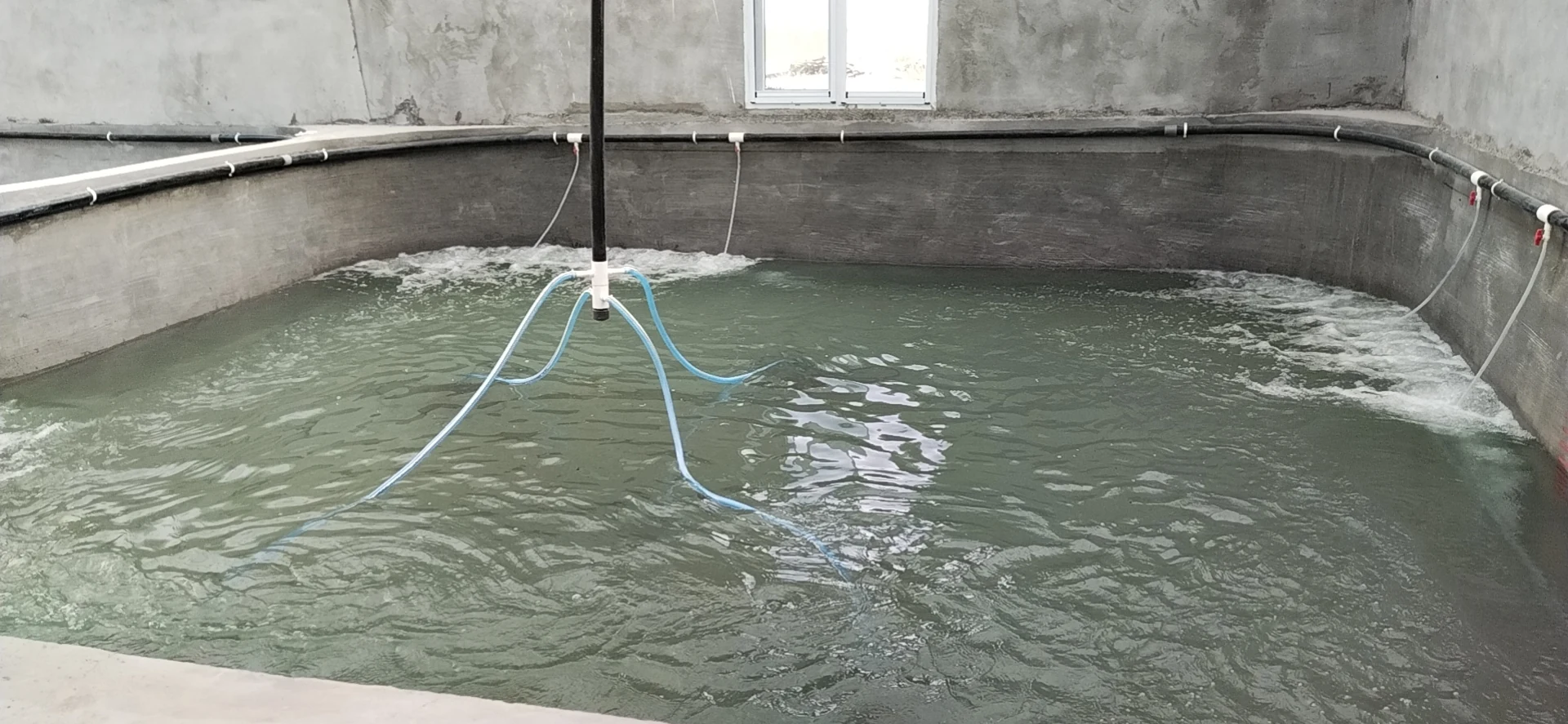
The intensive farming forms developed rapidly in recent years - cage culture, lake pen culture, factory farming and recirculating aquaculture - hold densities several times, even dozens of times higher than pond culture per unit volume. Their foundation is suitable flowing-water conditions or good water-exchange conditions: the constant flow and fluctuation continuously exchange the water within the farming zone, so the effective space is larger than the cage or pen area. Factory and recirculating aquaculture basically belong to the flowing-water category, where the space available to the animals depends on the water flow rate.