Quick Answer
Two techniques cover almost all pond aeration. Bottom microporous aeration uses high-density tubing (16 × 10 mm or 25 × 12 mm) fed by a blower and releases fine bubbles along the pond floor; surface paddle-wheel or impeller aeration sprays water into the air. Bottom aeration is the more efficient of the two, because more of the oxygen leaving the bubble actually dissolves, and in a pond deep enough to stratify it is the only method reaching the layer fish and shrimp occupy at night. Most intensive farms therefore run bottom aeration as the main duty, with a surface machine kept for backup. Against a paddle-wheel system, microporous tubing aeration saves about 30% of electricity on average, cuts disease incidence in pond fish, shrimp and crab by about 15%, and raises output per mu (667 m²) by 10% for fish, 15% for shrimp and 20% for crab — an overall efficiency gain of 20–60%.
Method 1: Bottom Microporous Aeration
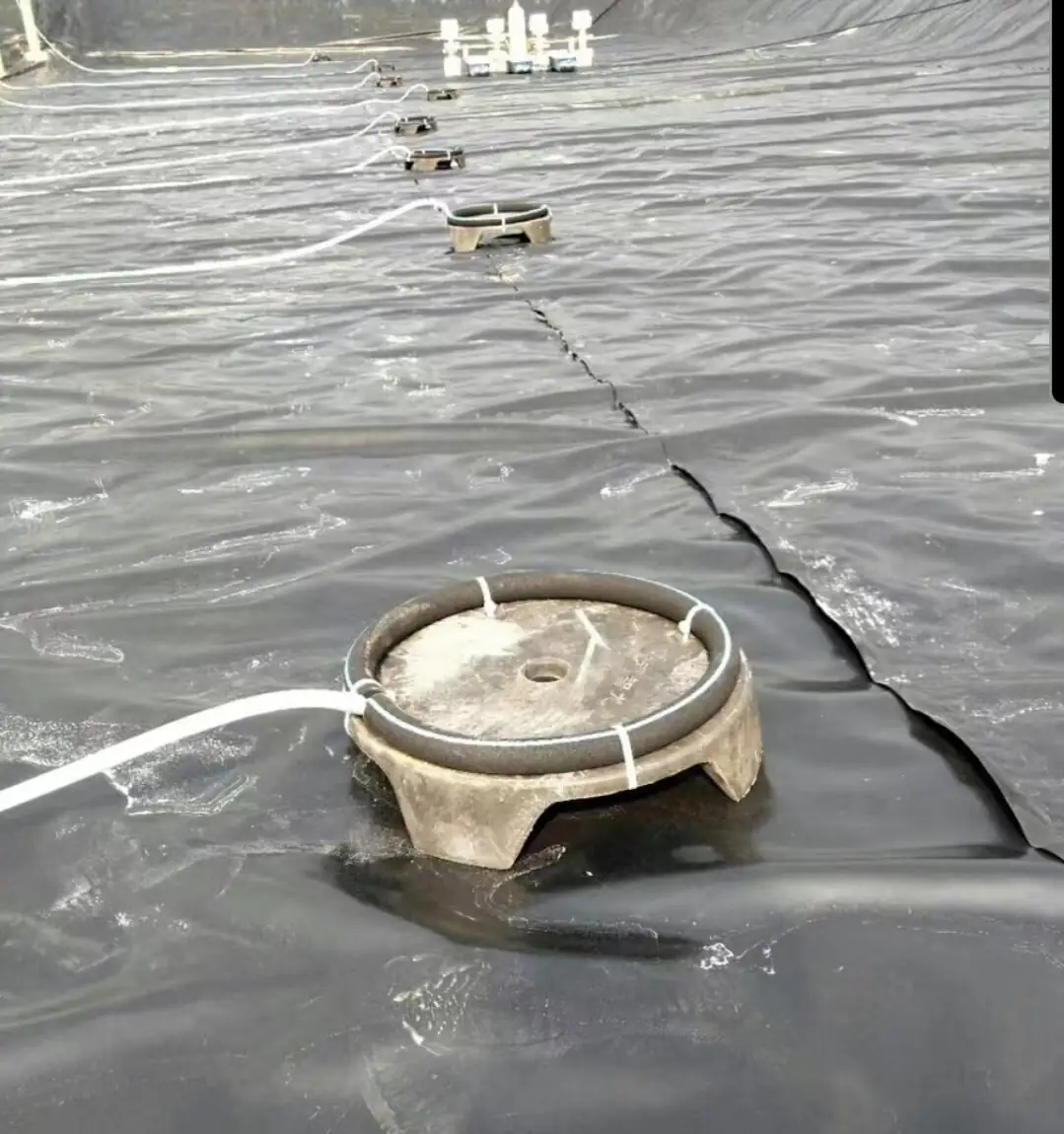
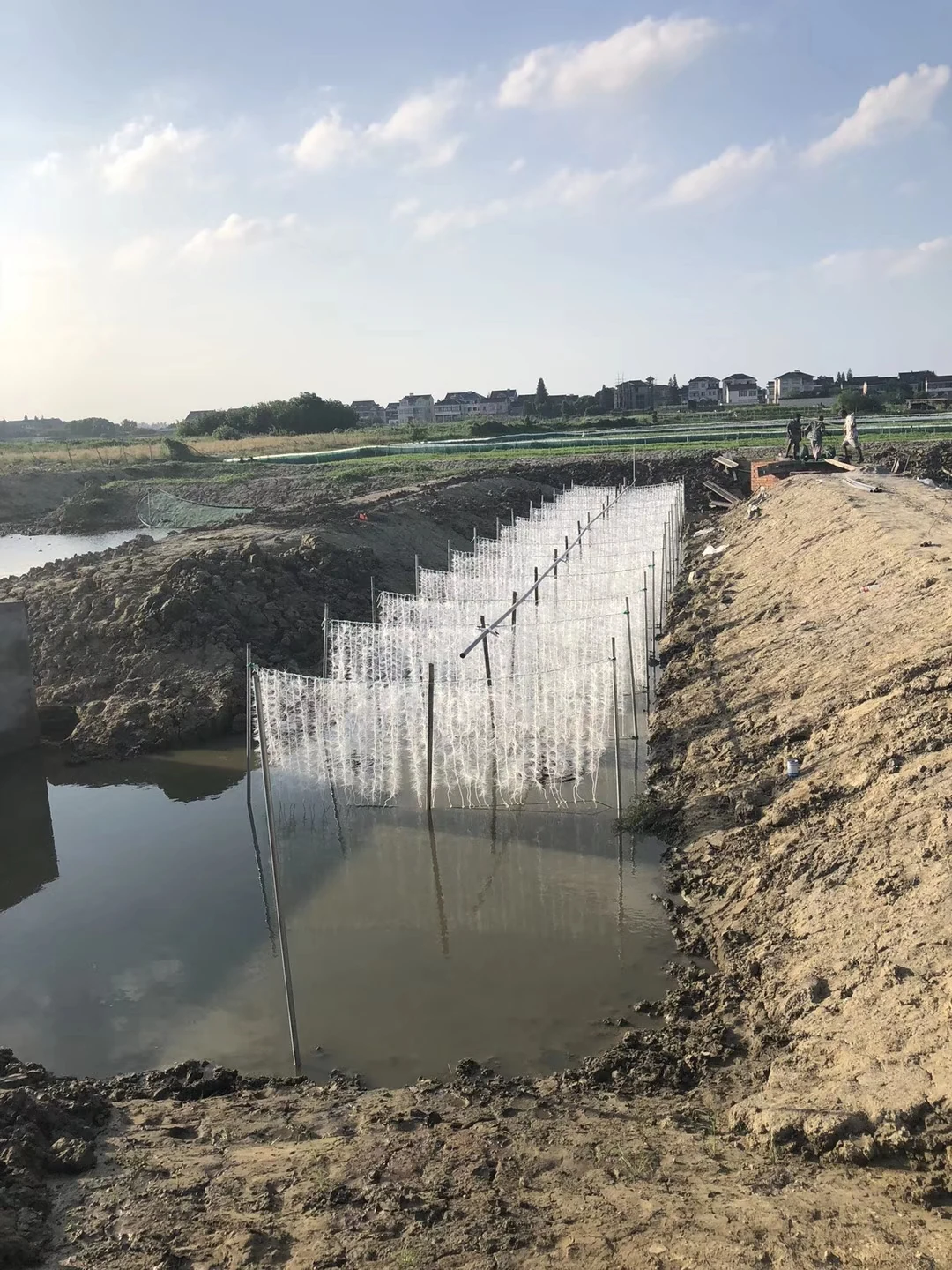
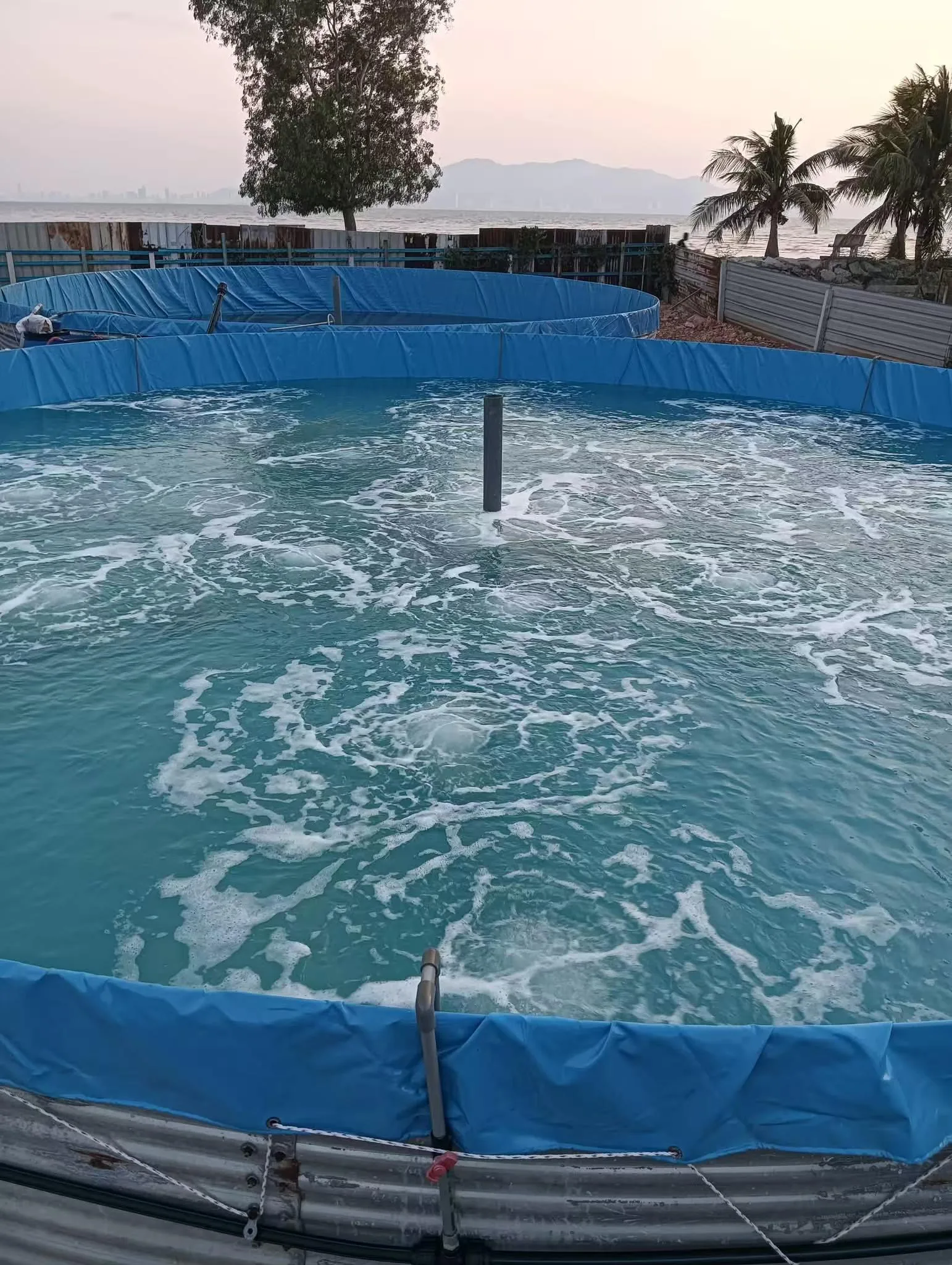
This is the most widely used method in aquaculture today. Air is pushed by a blower through a main line to a diffusion grid on the pond floor: either aeration discs weighted and placed around the pond, or tubing laid directly as a sinking line — one or two loops around the inside of a canvas pond, for example. Because the bubbles are emitted at depth they rise slowly through a long column of water, and the gas transfer happens where the oxygen deficit actually is.
The mechanism explains the energy figure. Oxygen crosses from bubble to water at the bubble's surface, and a microporous tube emits a very large number of very small bubbles, so the total contact area is far greater than the same volume of air leaving one coarse outlet. Small bubbles also rise more slowly, so each has more time to give up its oxygen. Less air delivers the same dissolved oxygen — that is where the saving comes from.
Two details decide whether that works in a real pond. Diffusers must be fixed 10–20 cm above the bottom — laid flat on the sediment they silt up within a season — and lines should run 3–5 m apart, so the oxygenated bands overlap instead of leaving dead lanes between them.
For the hardware side of this, our microporous aeration system page covers the discs, tubing and sinking hoses in detail.
Method 2: Surface Paddle-Wheel / Impeller Aeration
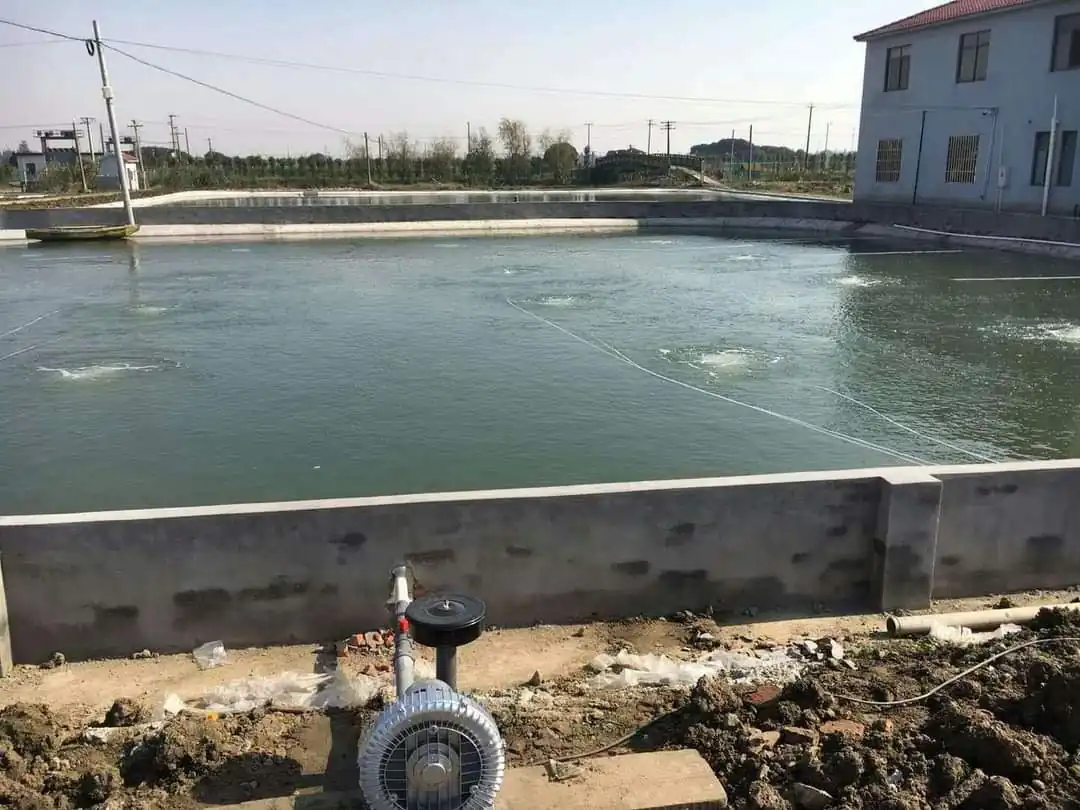
A surface machine — a paddle wheel or an impeller aerator — throws water into the air so it picks up oxygen at the air–water interface and falls back into the pond. It is simple, needs no air line, and doubles as a circulator. Its limitation is transfer efficiency: the water is only briefly airborne, so a much smaller share of the oxygen it contacts is absorbed, and more kilowatts are needed for the same dissolved oxygen.
That is why surface machines are now usually paired with bottom aeration rather than used alone — for two reasons: a surface unit is independent of the blower and air line, so it still runs if the blower fails or a line blocks, and it moves water the diffusion grid cannot reach, such as a corner where feed and waste collect.
There is also a structural limit. A surface machine oxygenates the layer it stands in, so in a pond deeper than about 2 m the bottom can stay short of oxygen while the surface reads comfortably high. On a shallow, well-mixed pond that hardly matters; on a deep intensive one it is the difference between a good night and a bad morning.
What a Microporous System Is Made Of
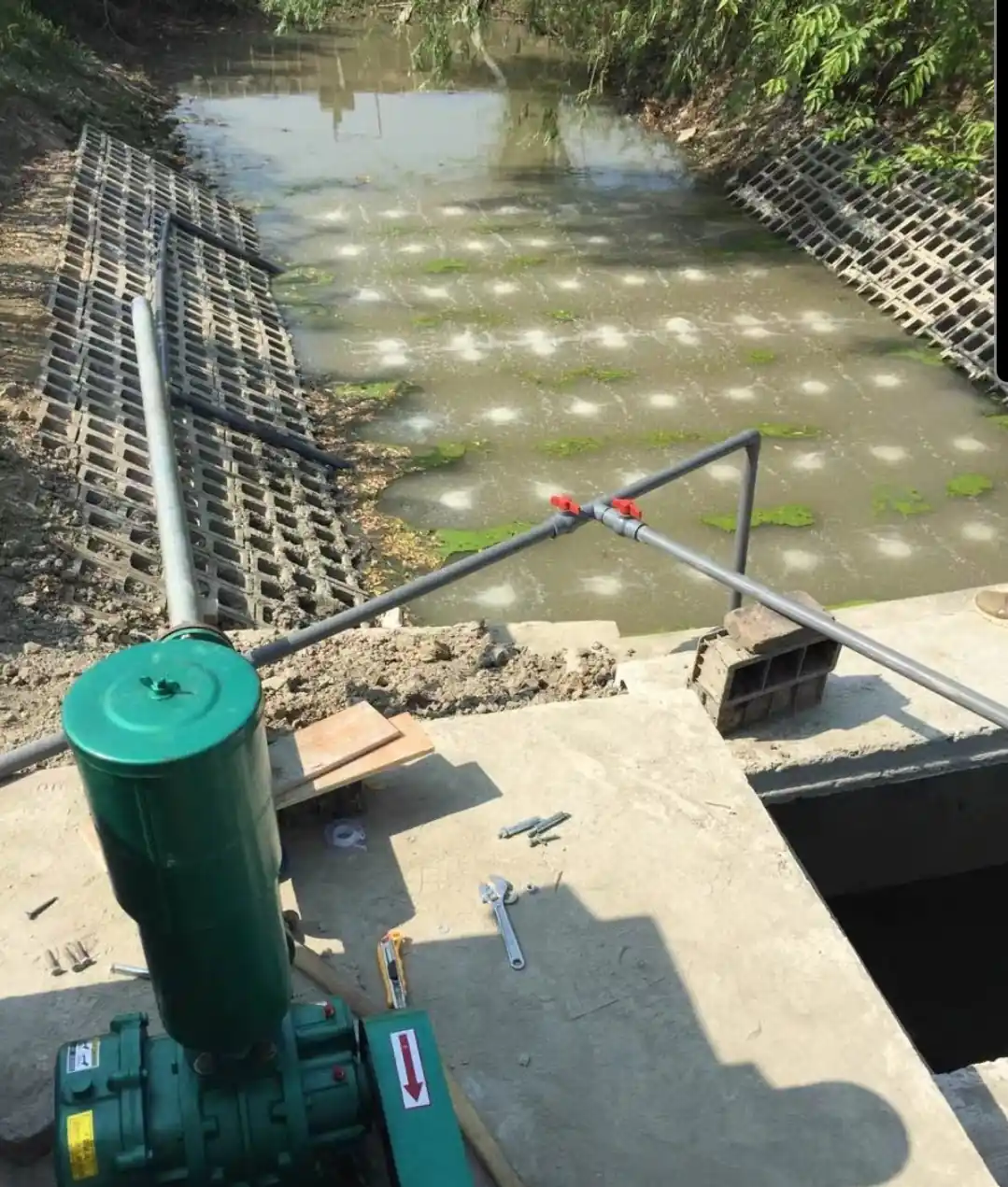
A microporous tubing system has three parts: the blower (the main unit), the main air line, and the aeration tubing. Getting any one of them wrong undermines the other two.
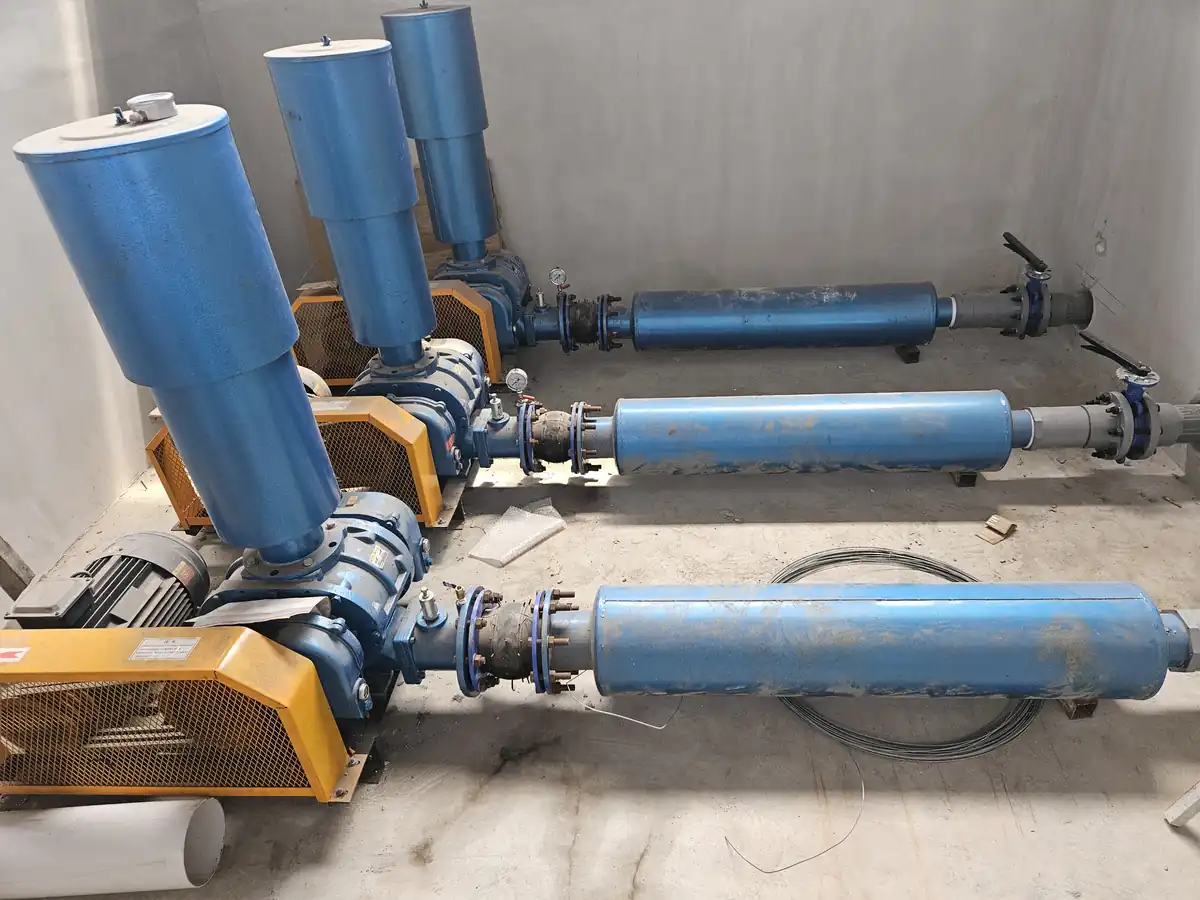
(1) Blower. The main unit, and normally a roots blower — section 5 below covers why, and how to pick a model.
(2) Main air line. Two options: galvanized steel pipe or PVC pipe. A roots blower delivers high-pressure air that runs hot, so most farms alternate galvanized pipe with PVC sections — the steel takes the hot, high-pressure stretch near the blower, and PVC, which is cheaper and easier to work, carries the rest. This combination is both safe and cost-effective.
(3) Aeration tubing. Three common types: PVC pipe, aluminium-plastic pipe, and micro-porous (nano) tubing. In practice PVC and micro-porous tubing dominate, with different trade-offs: micro-porous tubing has better aeration performance, while drilled PVC pipe distributes air less evenly. PVC also has the advantage of being easy to source — available from any pipe supplier, from drinking-water grade to electrical grade. Microporous tubing is specified 0.3–2 mm for freshwater and 0.5–3 mm for seawater.
(4) Installation. Follow the layout sketch supplied with your system. Line spacing, distance from the bottom and the position of the manifold all come from that drawing, and the drawing is written for the pond it was ordered for.
The Blower: Why Roots, and Which Model
For microporous aeration the two common choices are ring blowers and three-lobe roots blower units, and the roots type is what most farms settle on: long service life, high discharge pressure, stable air delivery and reliable operation — which is exactly the duty a pond system imposes, continuous running against the back-pressure of a water column. Published domestic specifications include 2.2 kW, 3.0 kW, 4.0 kW and 5.5 kW models.
Selecting one is a two-figure decision, airflow and pressure, and the figures come from different places. Airflow follows the tubing: roughly 0.1–0.4 m³/h per metre of tubing. Pressure follows the water: pond depth plus 15–20% headroom, which keeps a 3 m pond inside the standard 9.8–58.8 kPa band. A machine chosen on airflow alone is under-sized the first time it has to push to a deeper pond; one chosen on pressure alone will not deliver the volume.
Tubing Choices: PVC, Aluminium-Plastic or Nano
Three types are in common use, and the trade-off is performance against availability.
- Micro-porous (nano) tubing gives the better aeration performance, because the pores release the fine bubbles the whole transfer-efficiency argument depends on. Specify 0.3–2 mm for freshwater and 0.5–3 mm for seawater.
- Drilled PVC pipe distributes air less evenly and produces coarser bubbles, but it is easy to source from any pipe supplier — from drinking-water grade to electrical grade — and it tolerates rough handling.
- Aluminium-plastic pipe sits between the two, and is often used as main-line material rather than as the diffuser itself.
Sizing the Parts Together
Two published rules keep the three parts consistent: 1 kW of motor per 100–150 m of tubing, and ≈0.15 kW per mu (about 0.9 kW per acre). Working back from the pond, a 1-acre (6.07 mu) pond at 1–2 m deep takes roughly 0.9 kW of blower and 90–120 m of tubing. Surface machines are rated differently — a floating pond aerator covers 4–12 mu per unit at 1.5–3 kW — so they are sized by area served rather than by tubing length.
Then check the two figures against each other. A blower sized for the tubing length, running inside its pressure band, holds its airflow; one too small for the length loses volume as the tubing silts. That is why the manifold should carry isolation valves, so one branch can be cleaned without shutting the pond down.
Operating Notes
1. Match the blower to the grid. Oversized wastes electricity; undersized cannot hold pressure at depth.
2. Size the main air line by delivery distance. Long runs need larger pipe, or the pressure is lost before the air arrives.
3. Keep tubing off the bottom. At 10–20 cm, air-flow resistance stays low; on the sediment, sludge back-flows into the pores and resistance rises.
FAQ
Q: What is the most efficient pond aeration method? A: Bottom microporous aeration. The bubbles are fine and rise slowly, so more of the oxygen they carry dissolves, and it reaches the bottom layer that surface machines cannot.
Q: How much power does pond aeration need? A: Budget ≈0.15 kW per mu — about 0.9 kW with 90–120 m of tubing for a 1-acre pond 1–2 m deep. A floating aerator covers 4–12 mu per unit at 1.5–3 kW.
Q: Why a roots blower rather than a ring blower? A: Longer service life, higher discharge pressure and stable air delivery under continuous running against a water column — the duty a pond system imposes.
Q: What tubing should I choose? A: Microporous nano tubing for aeration performance (0.3–2 mm freshwater, 0.5–3 mm seawater). Drilled PVC is easier to source but distributes air less evenly.
Q: Can surface and bottom aeration run together? A: Yes, and that is the usual arrangement: bottom aeration as the main duty, a surface machine for backup and for moving water the diffusion grid cannot reach.
Q: How do I stop aeration tubing clogging? A: Fix it 10–20 cm above the bottom so sludge cannot back-flow into the pores, and fit isolation valves so one branch can be cleaned without stopping the pond.