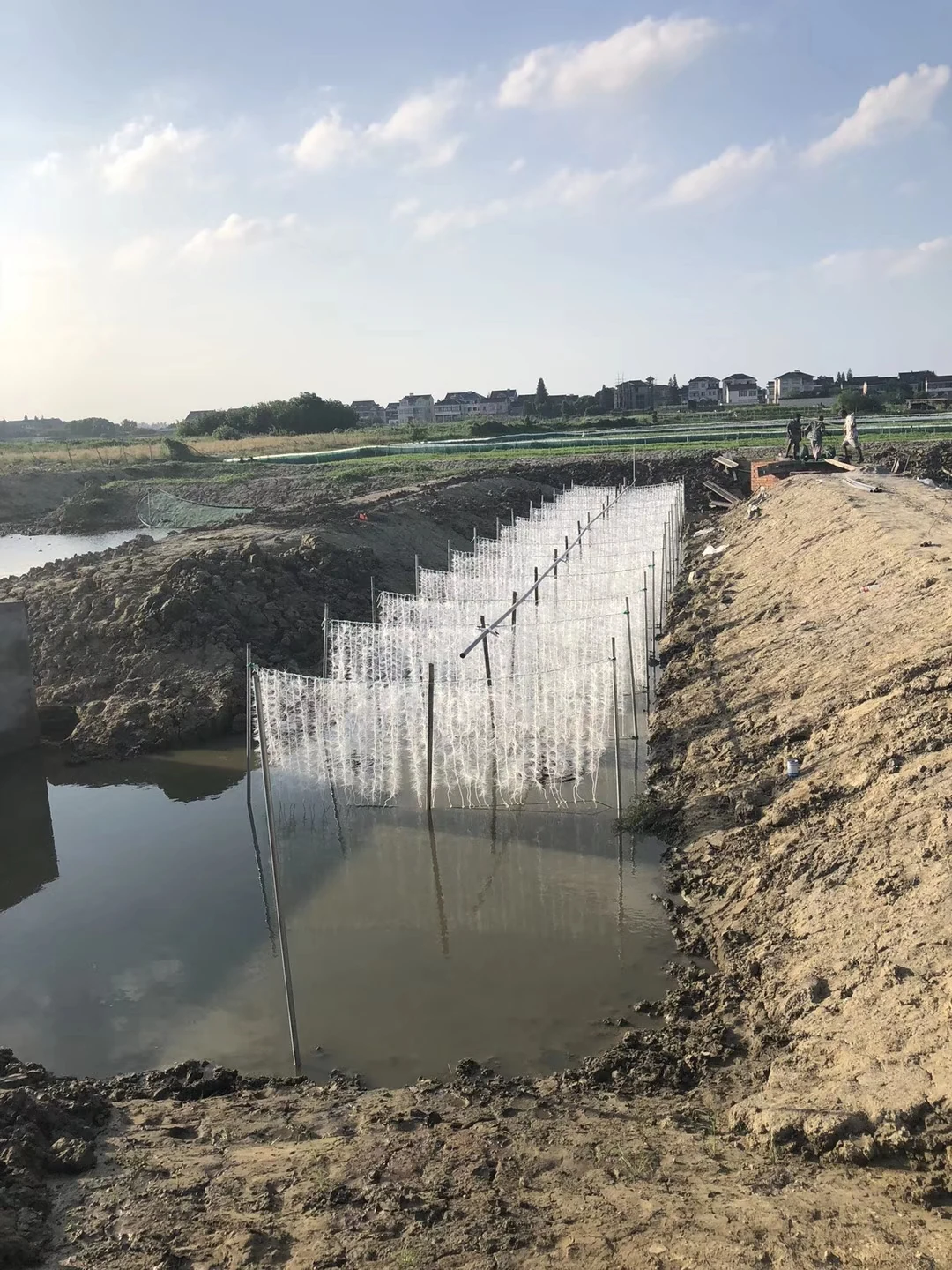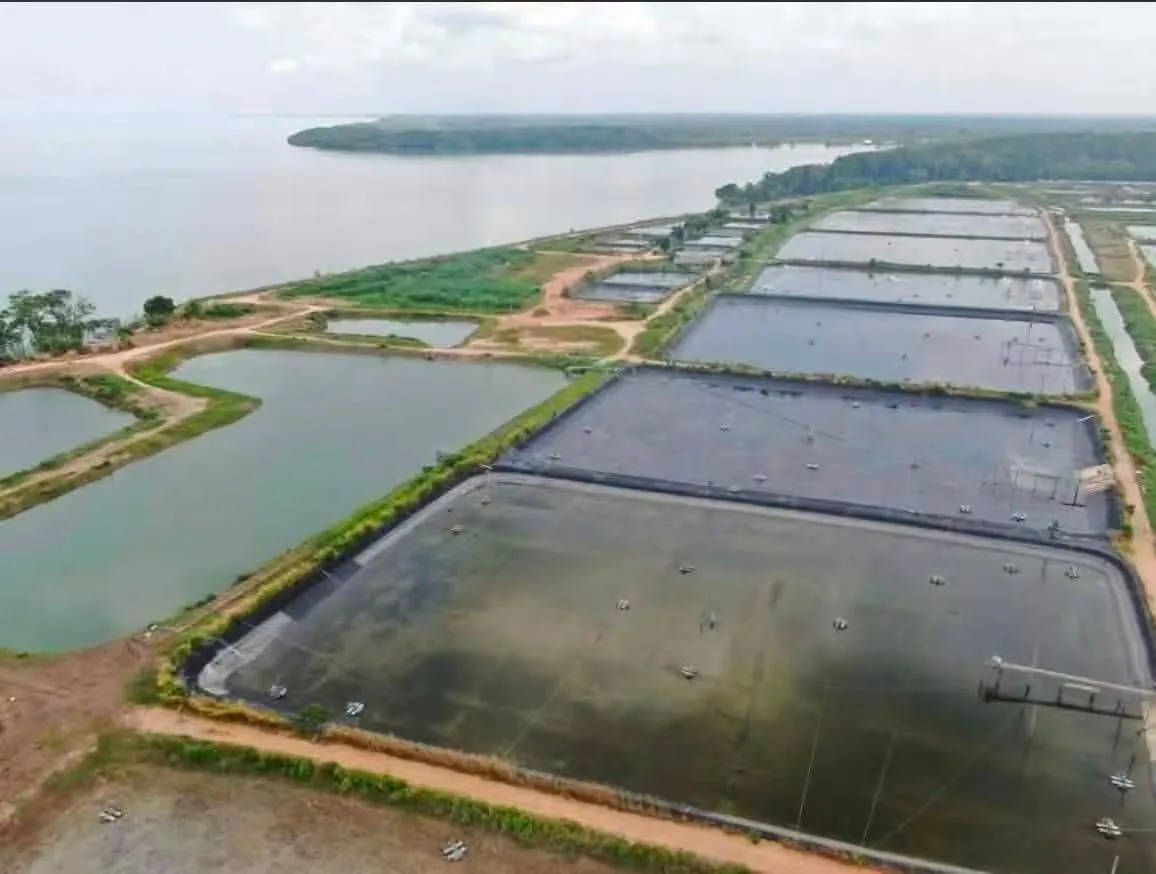
Temperatures and water temperatures have kept climbing — air temperature reached 40 °C for days in a row, and water temperature at 1 m depth hit 35.5 °C. This is a severe test for yellow catfish (Pelteobagrus) farmers. Key emergency management measures for heatwave conditions:
1. Keep the water level high and lower water temperature
Prolonged drought and rising air temperatures push pond water temperature up. Deepen the pond to at least 1.8 m, add water every 3–5 days and watch the level closely. Track the weather forecast — strong convection or thunderstorms may be coming. If the level is high and heavy rain is expected, drain promptly with a pump to prevent overflow. Where possible, set up shade canopies or shade netting, speed up water movement (run aerators more often), and use cooling products such as urea only as an emergency measure (it raises ammonia-nitrogen and is not a routine tool).
2. Disinfect regularly and control pathogens
In hot weather, microorganisms multiply fast and bacterial disease dominates. Disinfect every 15 days or so with chlorine dioxide or bleaching powder at below 250 g per mu·m of water. If using quicklime, monitor pH and adjust the dose: below pH 6.8 use about 30 kg/mu·m; at pH 8.5–9.5 do not exceed 15 kg/mu·m.
3. Feed scientifically — prevent over-eating
Yellow catfish feed aggressively in warm water, and hepatobiliary syndrome is a common warm-season disease. Keep feeding at 70–80% of satiation, reduce further in bad weather (heat, heavy rain), and skip feeding one day a week to rest the fish. Adjust by variety: hybrid yellow catfish tolerate heat better than all-male stocks. Above 32 °C, cut all-male feeding to 1/3–1/5 of normal; hybrid stocks can stay near normal until 33 °C, then cut to 1/3–1/5.
4. Ecological control — reduce accumulation
Hot weather makes algae grow strongly: the upper water column can be supersaturated while the bottom layer is often oxygen-starved — thermal stratification plus heavy microbial oxygen consumption and heavy feeding cause ammonia-nitrogen and nitrite to accumulate. Reduce feed input; add beneficial bacteria (Lactobacillus, Bacillus) to feed to lower ammonia/nitrite output; change water regularly where possible; use microbial preparations (photosynthetic bacteria, EM) regularly; and use carbon-source products to promote nitrogen uptake by beneficial microbes.
5. Cut oxygen consumption and raise dissolved oxygen
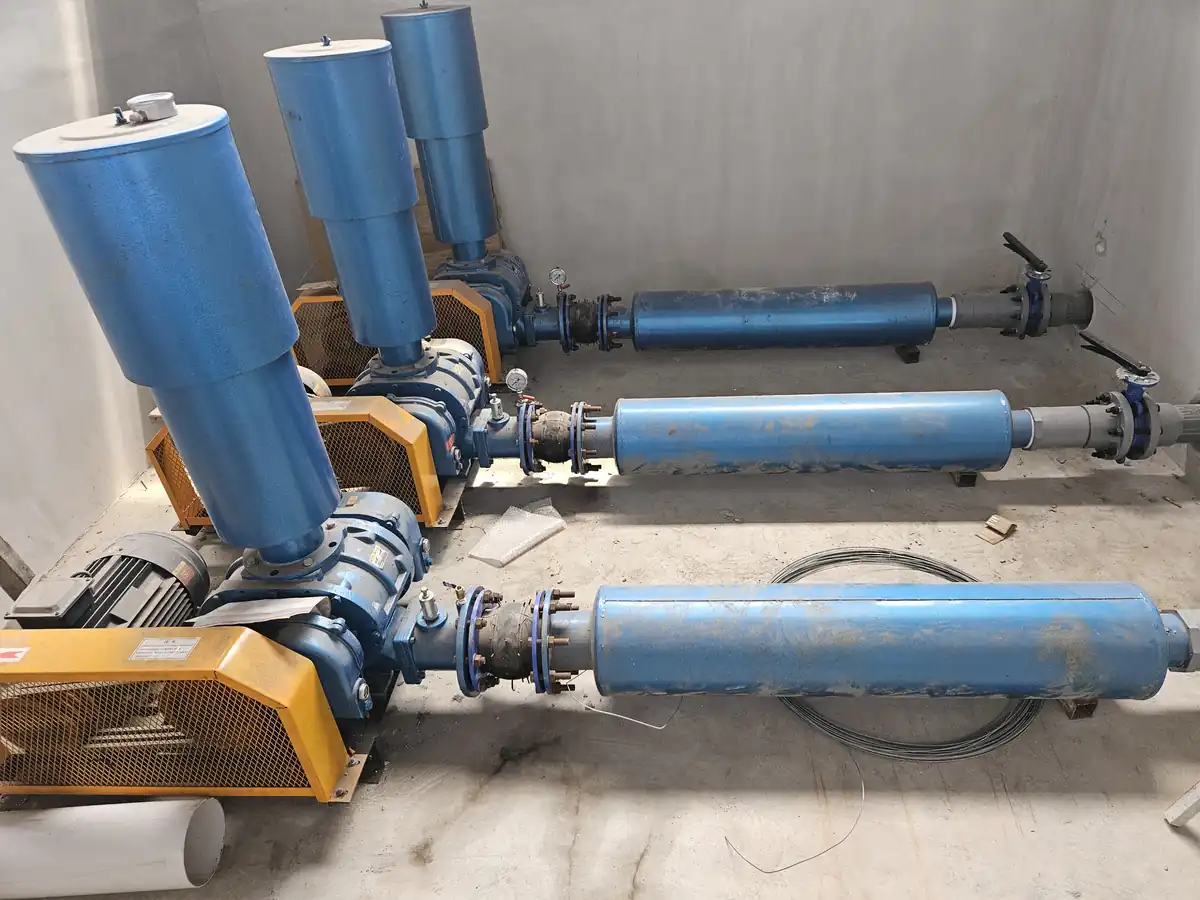
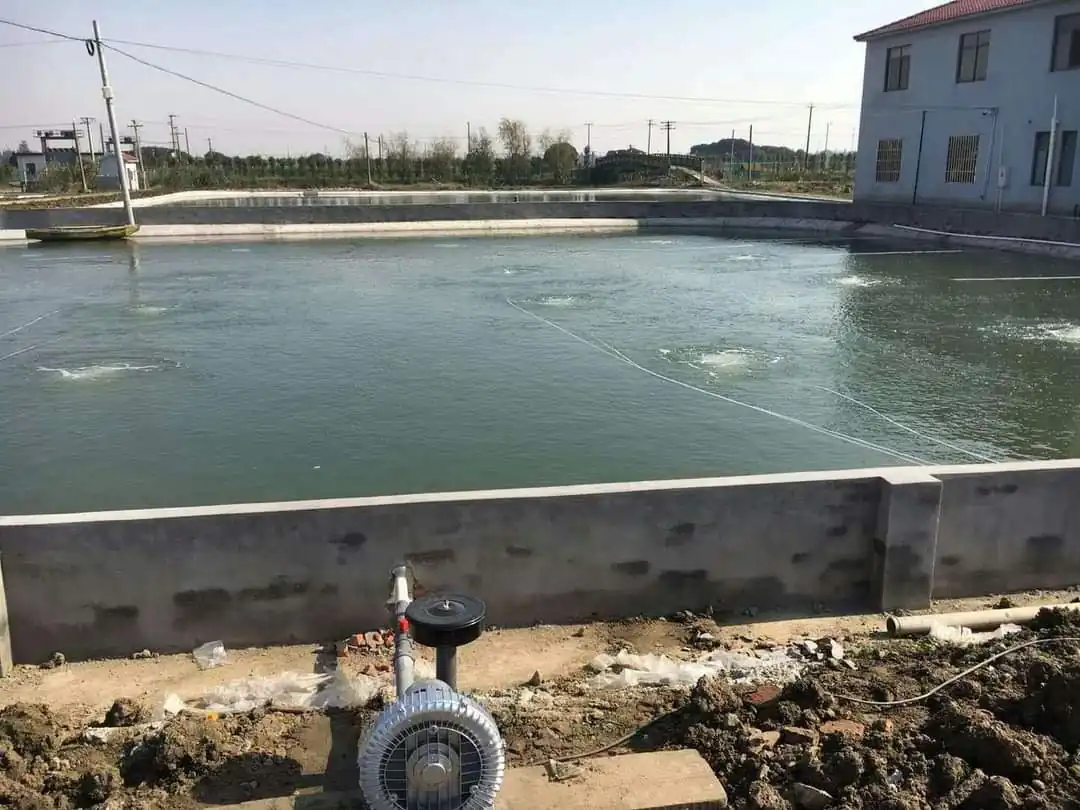
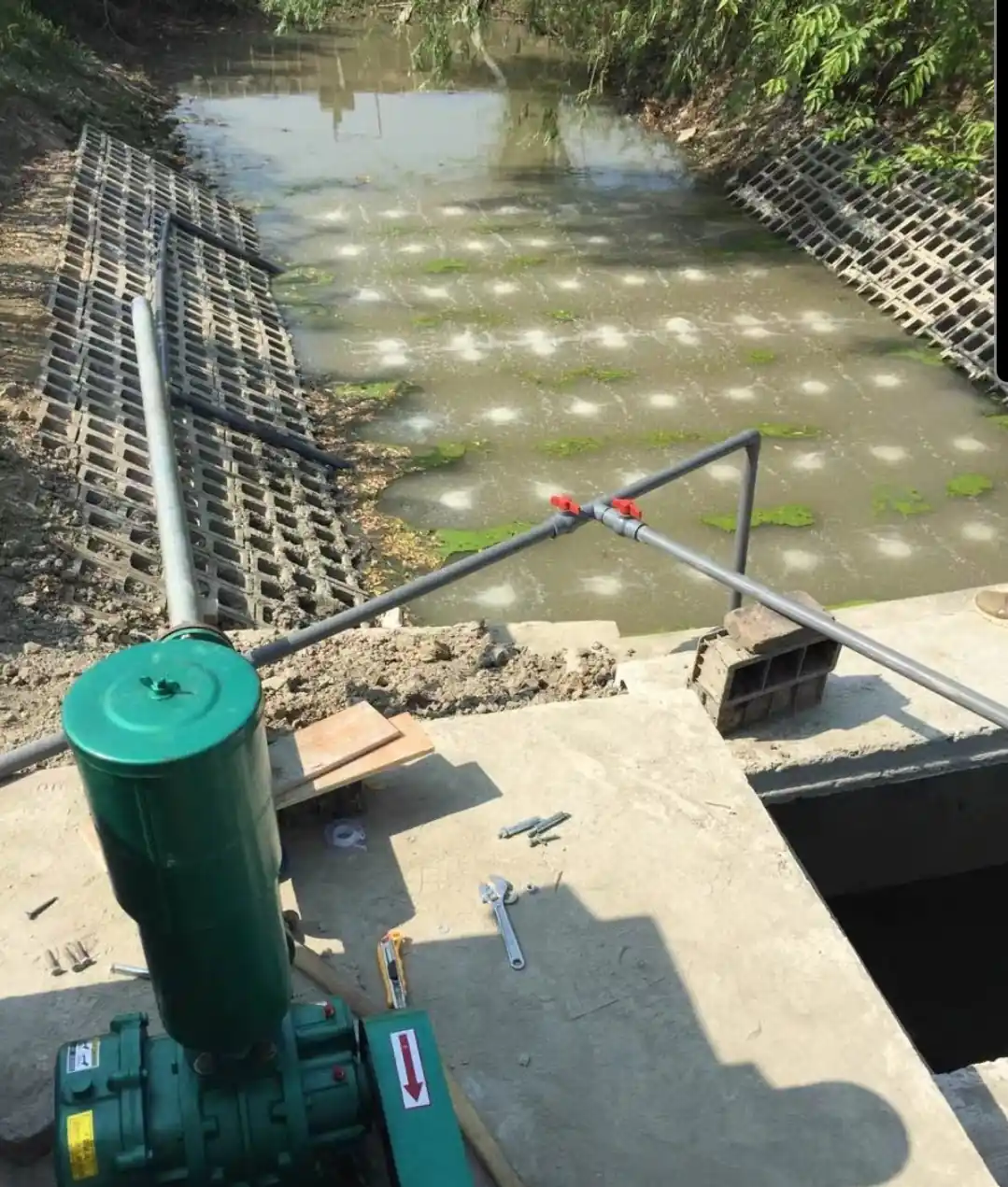
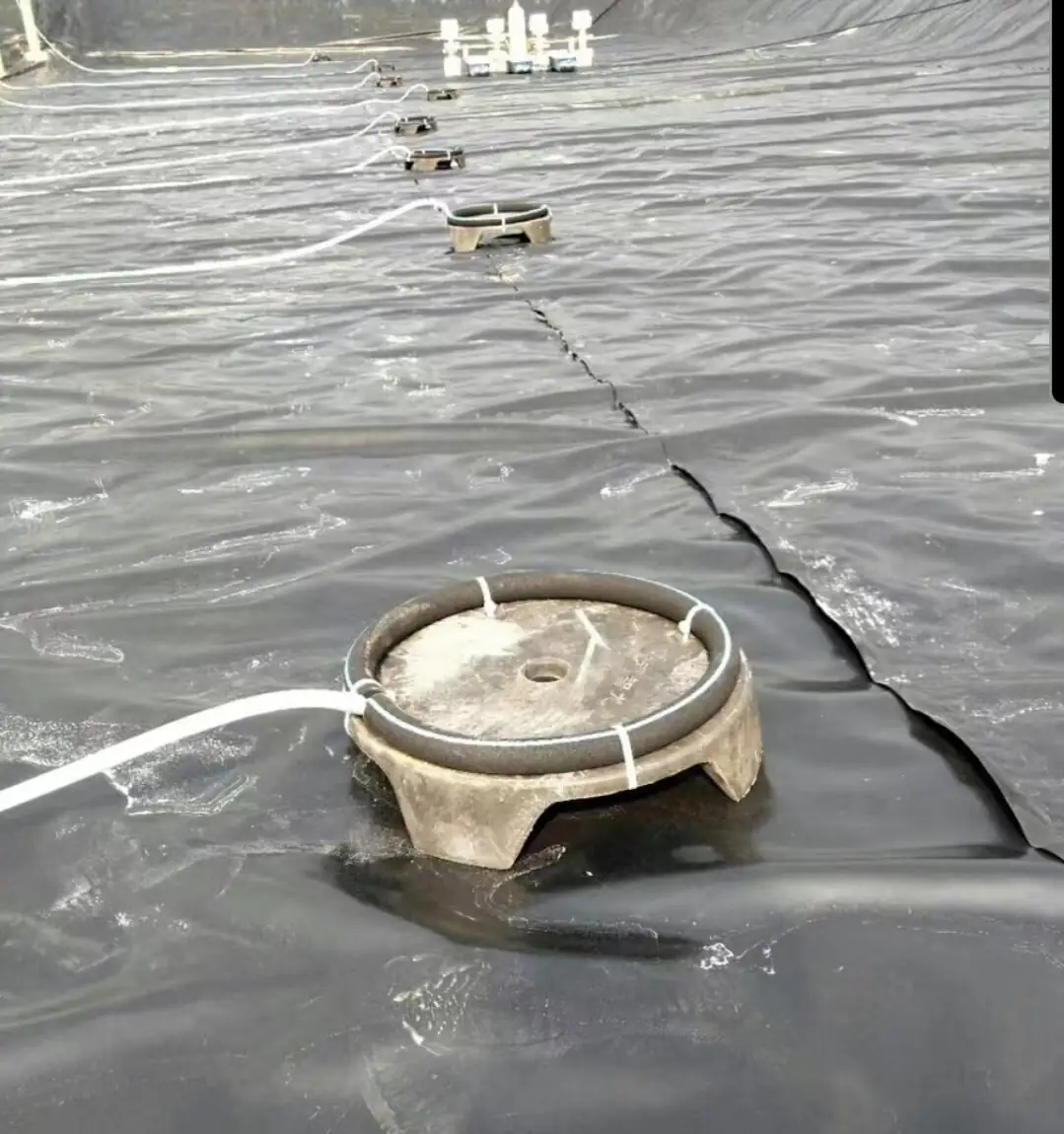
Heavy use of oxygen-consuming microbes (e.g. Bacillus) in hot weather can drop an already-low oxygen level further — even causing total pond kill ("fan tang"). Oxygen-consuming microbes also generate heat while reproducing, raising water temperature and lowering oxygen. Reduce such products, run aerators more — especially at midday, bringing bottom water to the surface to oxygenate the lower layer. Add bottom microporous nano-tubing, diffuser discs and a Roots blower to increase bottom-layer oxygen; in the evening or at night use oxygen-releasing products for the bottom layer.