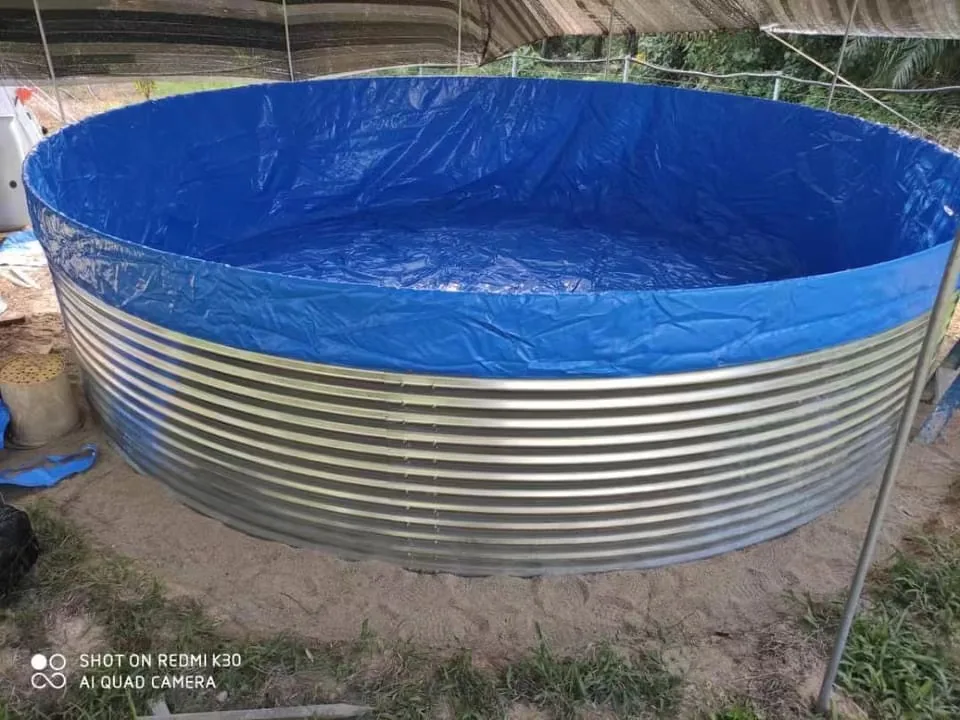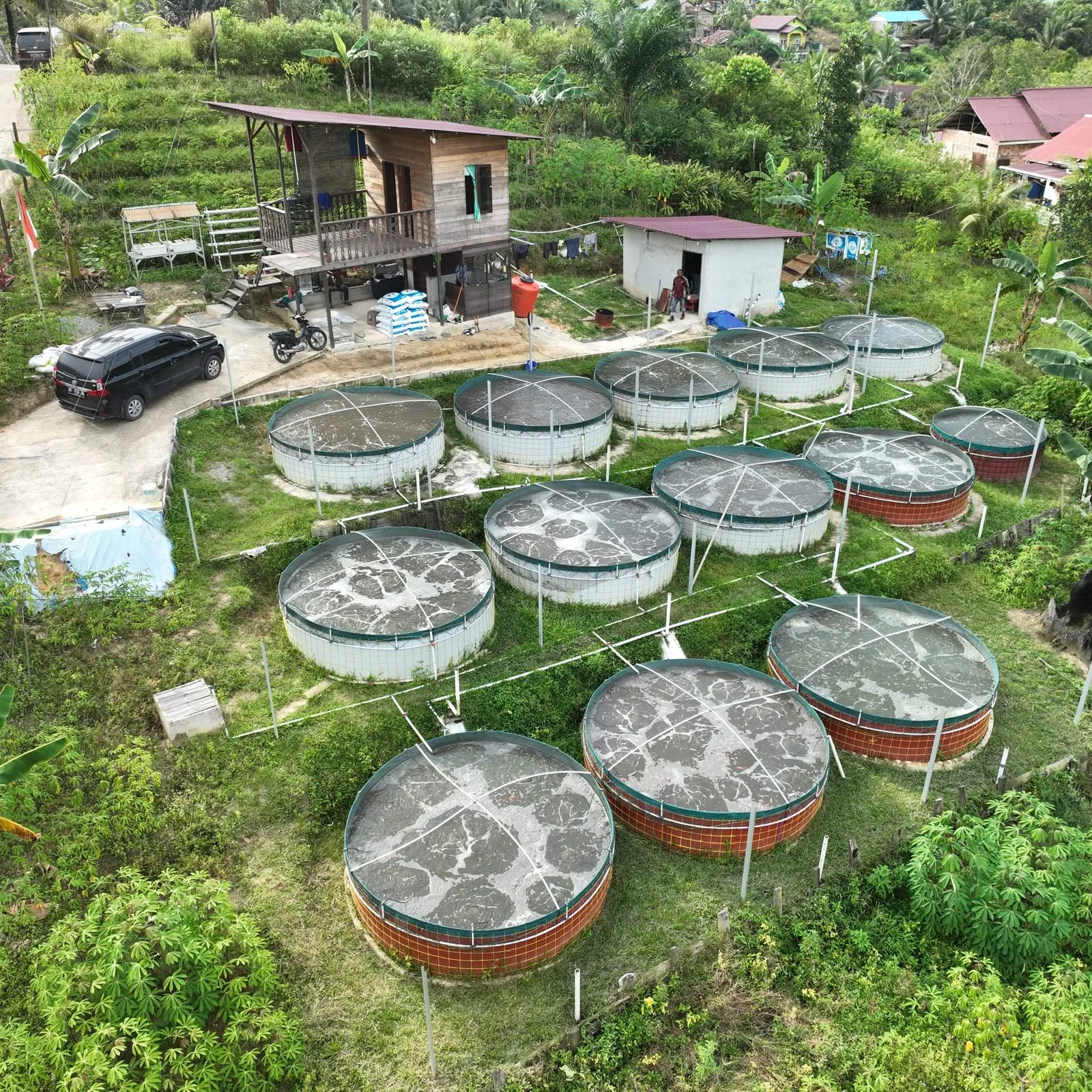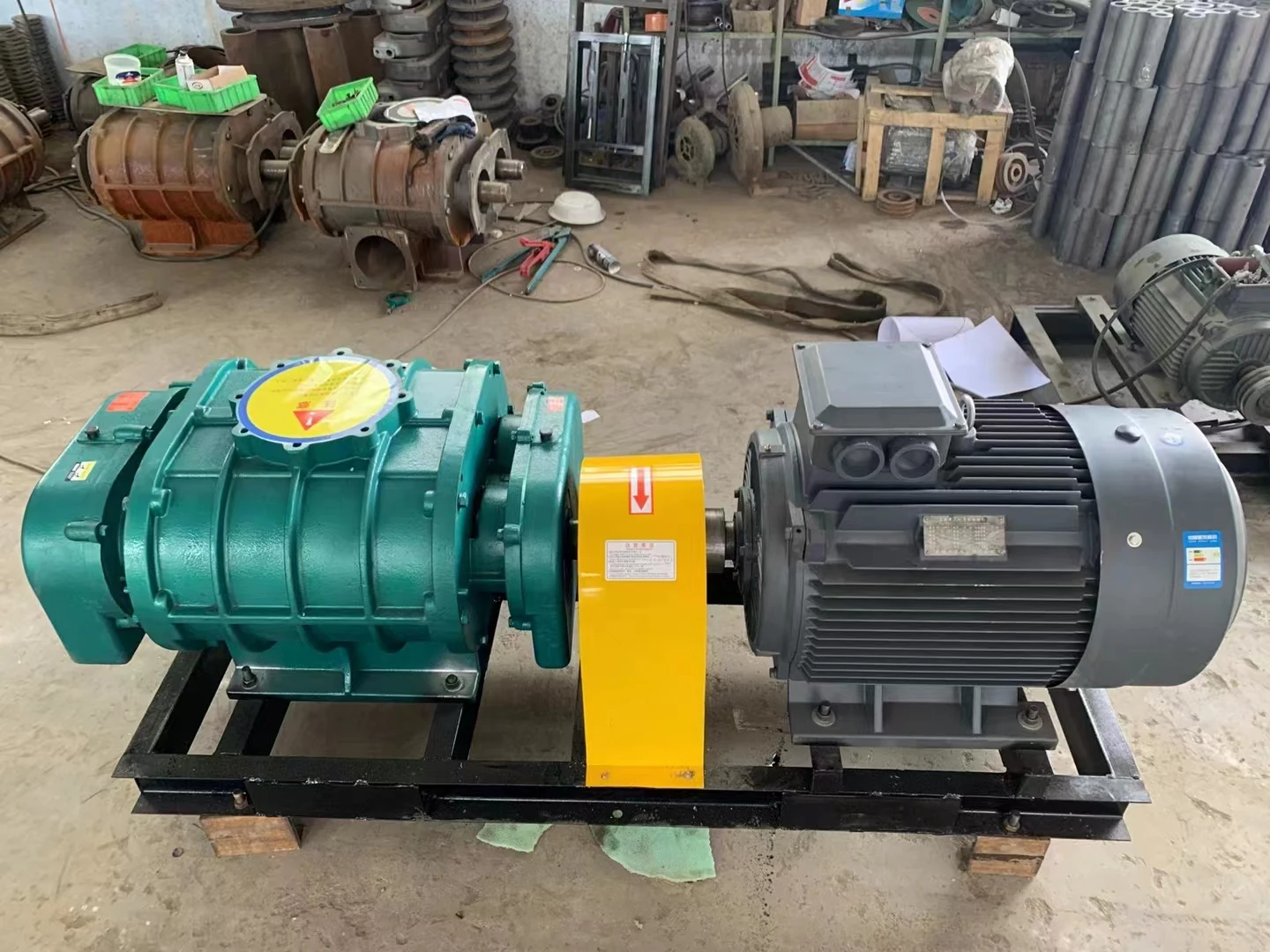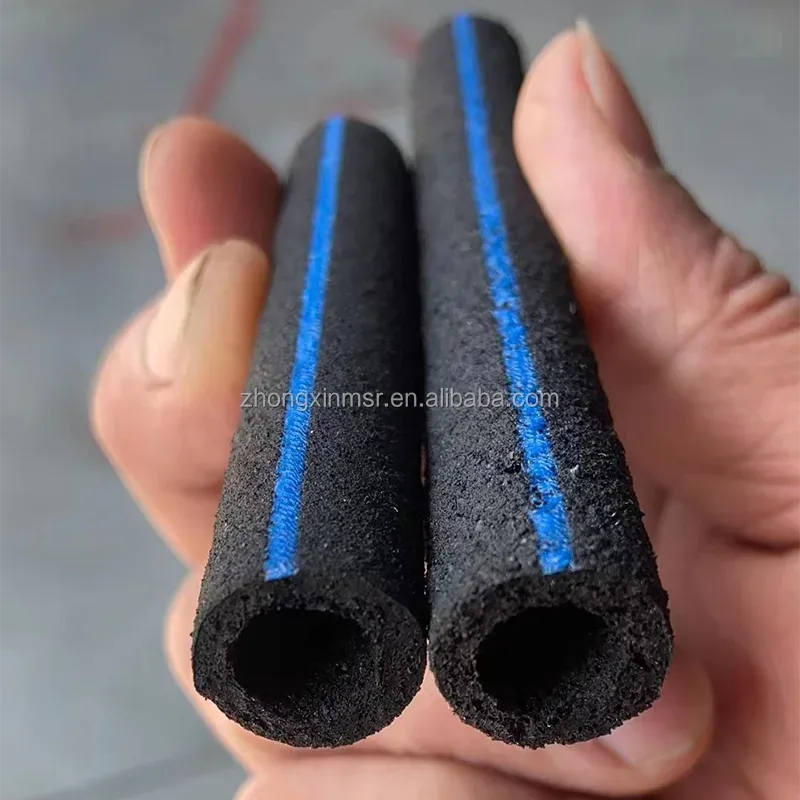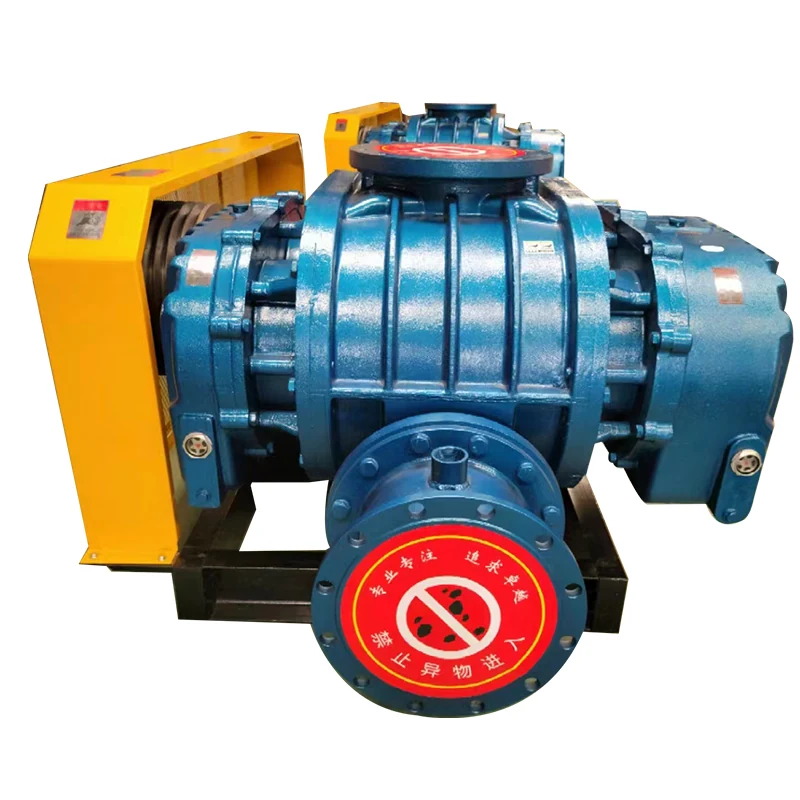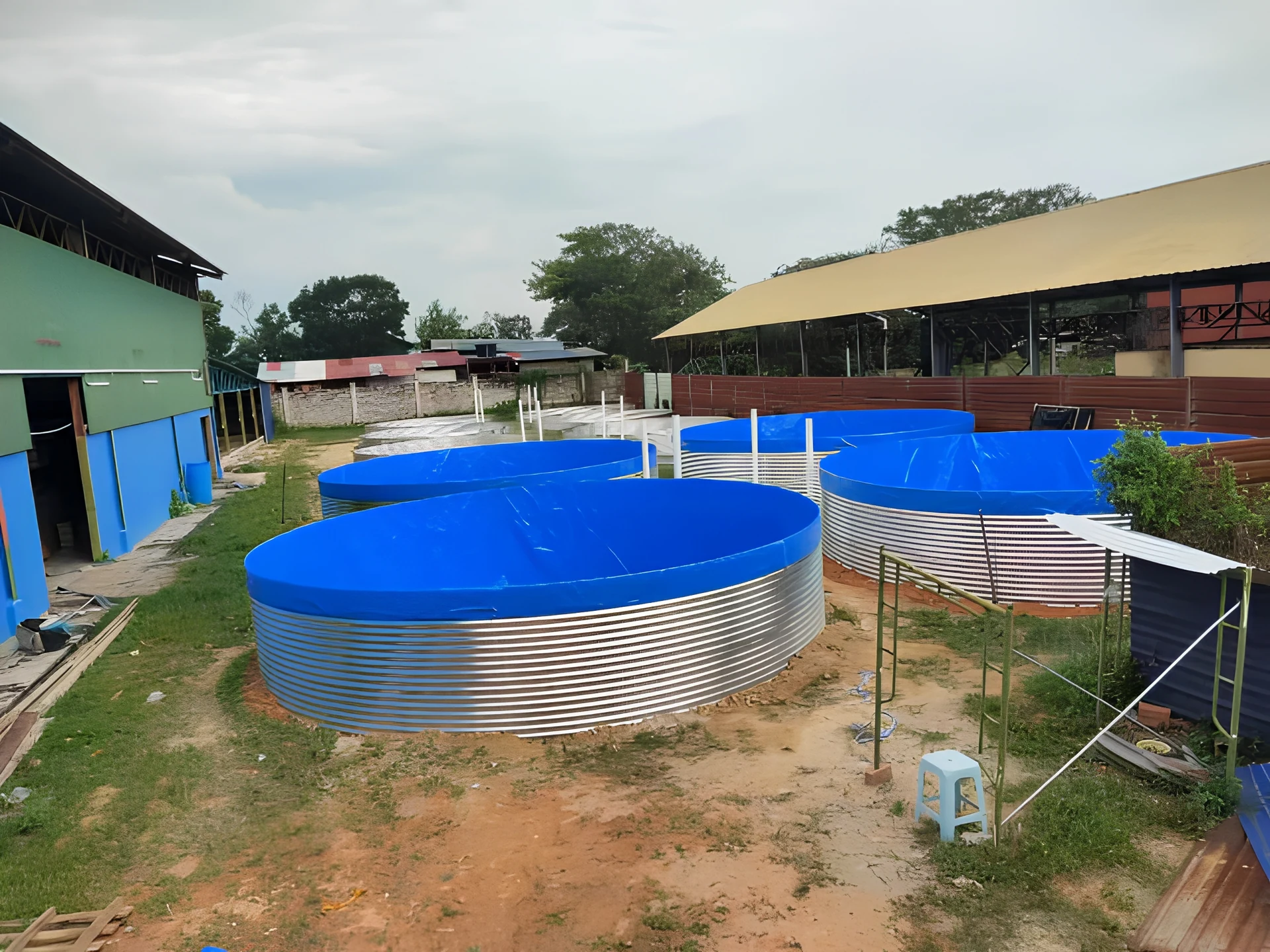
Galvanized-steel canvas fish ponds are the workhorse of above-ground aquaculture: quick to install, easy to manage, and far easier to control water quality than an earthen pond of the same footprint. The one thing every canvas tank still needs is aeration, and for these tanks the standard source of air is a roots (positive-displacement) blower — it holds pressure reliably, runs for long hours without attention, and pairs perfectly with microporous pipe laid inside the tank.
This guide covers the practical layout that has proven itself on farms running the three most common canvas tank sizes: 6 m, 8 m and 10 m in diameter.
The basic ring layout
For a single round tank, the simplest effective design is one ring of microporous aeration pipe laid around the tank floor, roughly 20-30 cm from the wall. The ring should sit at the bottom, not the middle of the water column, so bubbles rise through the deepest water first.
To keep the air output even along the whole ring, add an air inlet every 3-4 m of pipe. A 6 m tank has a circumference of about 19 m, an 8 m tank about 25 m and a 10 m tank about 31 m - so you will typically need 5-8 inlets per ring depending on the size. Each inlet connects the ring back to the air manifold, which in turn connects to the blower's main line. With inlets spaced this way, no section of the ring starves and the whole tank bottom gets an even bubble curtain.
When one ring is not enough
If dissolved oxygen is still short at peak stocking - hot weather, high density, heavy feeding - add capacity in either of two ways:
1. Drop a few aeration discs in the centre. Microporous discs placed in the middle of the tank oxygenate the core, where a ring layout alone leaves the quietest zone. Two or three discs on a short branch from the manifold is enough for the standard sizes above.
2. Add a second ring. A second microporous ring laid inside the first doubles the bubble curtain without changing the blower layout. Space the two rings about 30-50 cm apart and keep the 3-4 m inlet rule on both.
Which pipe to use
A 16 x 10 mm high-density microporous pipe is the recommended default for these tank sizes - it delivers the fine, uniform bubbles that give the best oxygen transfer per kilowatt, and its wall density holds up to years of constant use. You can use other sections if your farm standardises on them; the layout principles above do not change. Whatever pipe you choose, match the blower output to the total pipe length: as a working rule, about 1 kW of blower supports roughly 100-150 m of microporous pipe, so even the largest single canvas tank above needs only a fraction of that.
Choosing the blower
Select the blower by the number of tanks it will feed, not by the size of any one tank. One small blower comfortably serves 2-4 standard canvas tanks at the densities most farms run; larger multi-tank layouts move up through our ZXMSR series, where every model is sized in m³/min and pressure (kPa) so you can match output to total pipe length and water depth exactly. A full step-by-step method is in our roots blower sizing guide.
Pressure is the other half of the equation: blower pressure must cover the water depth plus 15-20% headroom. A canvas tank filled to 1.5 m needs roughly 0.20-0.25 bar, which every blower in the series delivers easily.
Putting it together
For the complete picture - pond selection, water system design and how aeration fits the rest of the tank - see our canvas pond water-system design guide and the galvanized canvas fish pond setup guide. Both are written around the 6-10 m tanks above and the complete canvas fish pond range.
Tell us your tank diameter, water depth, number of tanks and target species, and our engineers will reply within 24 hours with the blower model, pipe length and a full ring-and-manifold sketch - so your canvas pond aeration arrives as one matched package, not a pile of guessing.
For the pond that receives this aeration layout, see the canvas pond aeration design page.
Frequently asked questions
Q: Where should the aeration ring sit in a canvas tank? A: Around the tank floor, roughly 20–30 cm from the wall — at the bottom rather than mid-water, so the bubbles rise through the deepest water first.
Q: How many air inlets does one ring need? A: One every 3–4 m of pipe. A 6 m tank has about 19 m of circumference, an 8 m tank about 25 m and a 10 m tank about 31 m, so typically 5–8 inlets per ring depending on tank size.
Q: What if one ring is not enough at peak stocking? A: Either drop two or three aeration discs into the centre, where a ring alone leaves the quietest zone, or add a second ring 30–50 cm inside the first — keeping the 3–4 m inlet rule on both.
Q: How is the blower sized for canvas tanks? A: By the number of tanks it feeds, not the size of one tank: one small blower comfortably serves 2–4 standard tanks, and about 1 kW of blower supports roughly 100–150 m of microporous pipe. Pressure must cover the water depth plus 15–20% headroom, so a tank filled to 1.5 m needs roughly 0.20–0.25 bar.
Q: Which pipe is the default choice? A: 16 x 10 mm high-density microporous pipe for these tank sizes — fine, uniform bubbles with the best oxygen transfer per kilowatt, and a wall density that holds up to years of constant use.