- Meta: What drives pond aerator price: motor and blower grade, tubing and diffuser material, float hull, control panel, voltage, order size and freight terms — and how to compare two quotes fairly.
Quick Answer: Pond aerator price is set by four things — the motor and blower grade, the tubing and diffuser material, the float hull, and the control panel. Voltage, order quantity and freight terms then shift the total. Two quotes for the "same" aerator are rarely the same machine, so compare specifications before comparing numbers.
Aerator price: the four cost blocks
Every quoted pond aeration system is built from the same four blocks. The specification of each block is what moves the price, which is why two systems described as "3 kW floating aerator" can differ substantially.
| Cost block | What changes the price | Why it matters on site |
|---|---|---|
| Motor and drive | Standard induction motor vs permanent-magnet motor; external VFD vs integrated drive; protection class and copper content | Determines running cost, start-up behaviour on weak rural grids and how long the unit lasts in continuous duty |
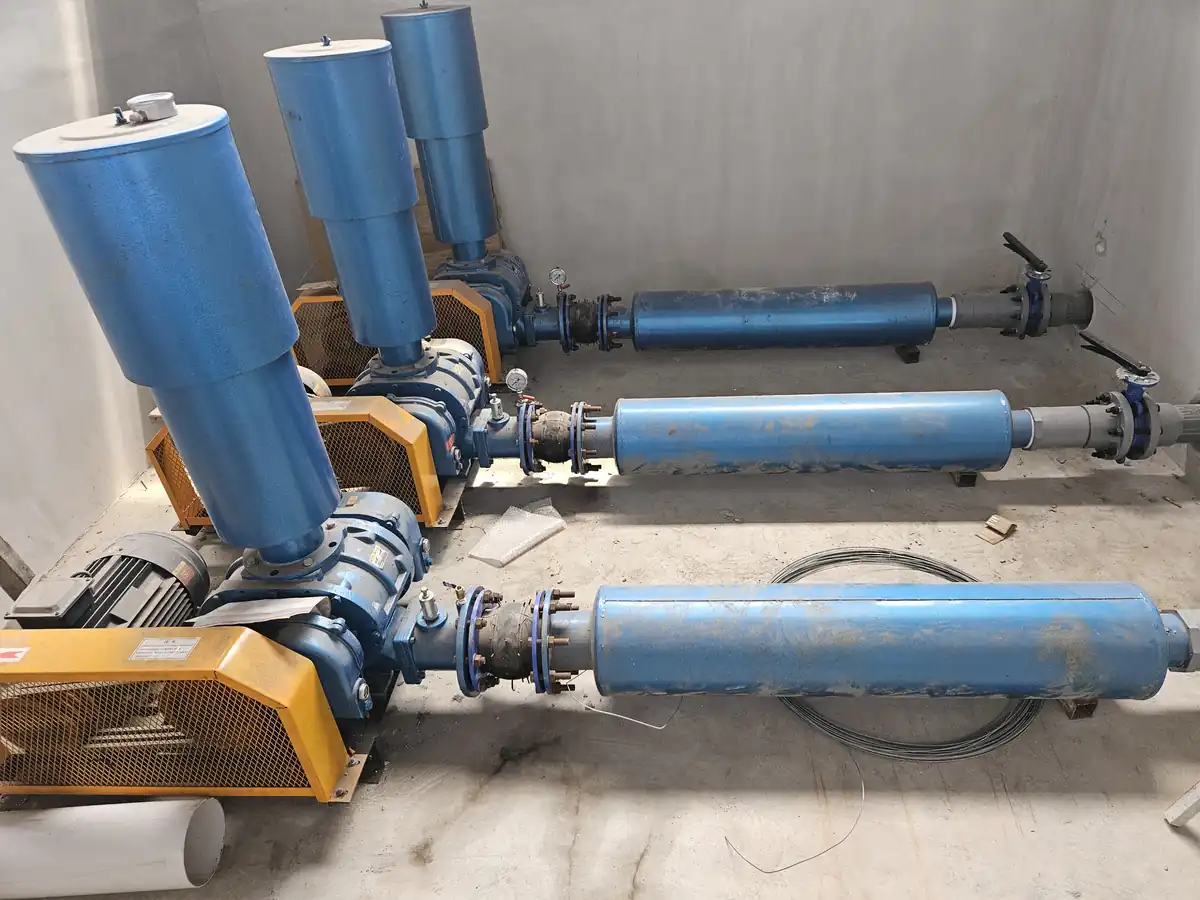
| Blower / pump stage (roots blower systems) | Casing and rotor machining tolerance, bearing grade, oil seals, silencer and filter package | Sets achievable pressure at your pond depth; loose tolerances mean lower real airflow than the nameplate figure |
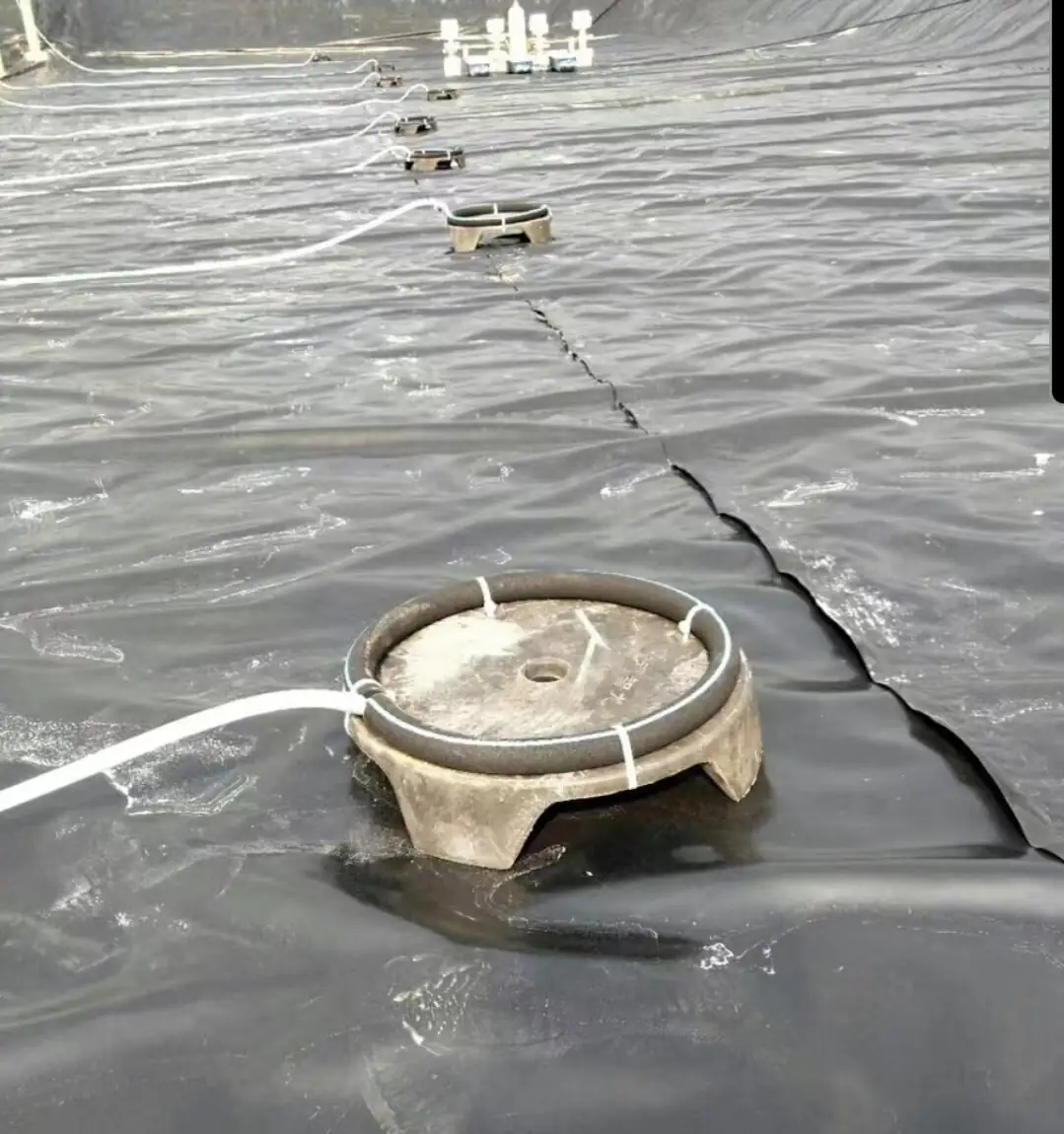
| Aeration tubing and diffusers | Microporous tube vs disc, fresh-water vs seawater compound, wall thickness, anti-clog treatment | Decides oxygen transfer efficiency and replacement interval in your water chemistry |
| Float hull and frame | Welded HDPE/steel float ring, wall thickness of the motor float, coupling between blower and float ring | Governs stability in wind and waves — thin hulls deform and then vibrate, which shortens motor life |
| Control and protection | Manual starter vs panel with overload, RCD, phase-loss protection; optional DO-based control | The aeration system is the farm's critical load; the panel is what keeps a phase loss from burning the motor |
| Voltage and frequency | 220 / 380 / 460 V, 50 or 60 Hz windings | A rewound or mismatched motor runs hot and fails early — always buy for your grid, not a "close enough" one |
Pond aerator price: how to compare two quotes
Ask for these six items in writing. A quotation that cannot state them is a quotation you cannot compare.
- Nameplate figures — rated power, pressure at the working depth, airflow (m³/min or m³/h) at that pressure, and the DO transfer figure if it is claimed.
- Real operating point — the airflow the unit will deliver at *your* depth, not the free-air maximum. Deep ponds trade airflow for pressure, so a number quoted without depth is meaningless.
- Bill of materials — motor brand and type, blower model, tubing type and metres included, valve and manifold, electrical panel.
- Warranty terms — what is covered, for how long, and how a claim is handled from overseas.
- Packing and shipping terms — FOB or CIF, port of loading, estimated volume and weight, whether the loading plan is prepared before payment.
- Spare parts availability — diaphragm/valve kits, tubing, impellers and motors available after the warranty ends.
Be careful with these quote traps
- Door-to-door price without a specification. A total price that names no model is not comparable to anything.
- "Same as photo" offers. Photographs are not specifications. Ask for the drawing or the model number.
- Free-air airflow numbers. Airflow quoted without pressure overstates what reaches the bottom of your pond.
- Undersized panels. Cheap electrical panels without overload or phase protection are the most common cause of burned motors in rural areas.
- FOB prices that exclude packing. Crating and pallet weight change the freight calculation; ask who prepares and charges for it.
FOB vs CIF: what the number includes
FOB (Free On Board) covers the goods delivered to the port of loading and cleared for export — after that, the buyer arranges and pays the sea freight, insurance and destination charges. It is the better choice when you already import regularly and want to control the freight forwarder.
CIF (Cost, Insurance, Freight) covers the goods plus sea freight and insurance to your destination port. The price looks higher because it bundles the shipping, but it simplifies the purchase when you are importing for the first time or want a single landed figure. Customs duties and inland transport are still the buyer's responsibility in both cases.
Ask for both: a factory will quote FOB (Shanghai or Ningbo) or CIF to your port, and comparing the two usually reveals whether the freight component is reasonable.
Getting a comparable quotation
Send four pieces of information and any supplier can quote precisely instead of guessing: pond area and average depth, species and target stocking density, your grid (voltage, phase, frequency) and the destination port. With those, the sizing sheet — blower power, tubing length, diffuser count, panel type — can be worked out, and the price follows from the specification rather than the other way round.
- Size the system first: Aquaculture aeration equipment: how to choose
- Buying direct from a factory instead of a local dealer: Buying Aeration Equipment: China Factory vs Local Dealer
- OEM and private-label options, and how to verify a factory: the factory capability section on our product pages
- Product range: all aquaculture aeration equipment, roots blowers, floating aerators, aeration tubes and discs
FAQ
Q: How much does a pond aerator cost? A: It depends on the four cost blocks above — motor and drive, blower stage, tubing and diffusers, and the control panel — plus voltage, quantity and freight terms. Two systems with the same nominal power can differ substantially once those are specified, so we quote per order against your pond data rather than publishing a fixed figure that would not survive customization.
Q: Why is a permanent-magnet aerator more expensive than an induction-motor one? A: The motor itself and its drive electronics cost more. That premium is recovered through lower running cost: a permanent-magnet motor has no slip losses, so at the same power it converts more electricity into water movement, and the payback shortens where electricity tariffs are high and the units run long daily hours.
Q: Does order quantity change the price much? A: Yes, but mainly for customized builds. For a single standard unit most of the cost is material and labour; for a batch order the setup, tooling and packing costs are spread across the units, and container loading can be planned to use the volume properly. That is why MOQ and lead time are quoted per order — a customized SKU has different economics from a shelf model.
Q: What is the price of an aerator for a fish pond with delivery? A: The aerator for fish pond price depends on the build (motor type, tubing length included, panel protection) and then on the freight terms — FOB leaves the sea freight and insurance to you, CIF bundles them to your destination port. Send the pond size, the grid voltage and the port, and both figures can be quoted against the same specification so the freight component is visible instead of hidden in the total.
Q: Why do fish pond aerator prices vary so much between suppliers? A: Mostly because the four cost blocks are specified differently while the headline description stays the same ("3 kW aerator"). Motor insulation and copper content, tubing compound and wall thickness, panel protection and hull thickness are the usual places where a cheaper unit gives ground — which is why the comparison has to be made item by item against the bill of materials, not on the total figure alone.
Q: Is a cheaper aerator worth it? A: Only if the specification is the same. Where cheap units usually give ground is motor insulation and copper content, tubing compound, panel protection and hull thickness — all of which show up later as burned motors, short tubing life or floating units that deform. If two quotes differ a lot for the same duty point, ask for the bill of materials and compare item by item.
Q: Do you quote FOB or CIF? A: Both. Send the destination port and the order size, and we quote FOB (Shanghai or Ningbo) or CIF to your port, with packing, loading plan and export documents prepared at the factory.